
AI Arms Race: Nuclear Parallel in 2026
The AI revolution mirrors the 1945 nuclear breakthrough: a single tech leap that redraws alliances, economies, and power balances. Today, governments and corporations scramble to control the full AI stack—compute, energy, infrastructure, and deployable systems—because dominance here means civilizational edge.
Key Takeaways
Chips function as the "uranium" of AI; US export controls treat advanced semiconductors like munitions to maintain lead over China's rapid domestic alternatives.
Energy demand explodes—data centers could rival entire nations' consumption—prompting nuclear revivals, solar scale-ups, and grid strains, with China advancing faster on renewables.
Infrastructure races ahead: hyperscale data centers, undersea cables, and orbital platforms like evolving Starlink aim to deliver unlimited, grid-independent compute.
Physical AI outputs—humanoid robots, autonomous vehicles, drones—target the $45T+ labor and transport markets, enabling infinite scalable workforces.
Geopolitical realignment echoes the Cold War: nations pick sides in an arms race where first-mover advantages in infinite intelligence could outpace nuclear deterrence.
The full stack builds toward deployable physical AI that operates autonomously in the real world, from factories to space exploration. US strengths in innovation and capital contrast China's manufacturing edge and energy deployment. This isn't abstract tech—it's reshaping jobs (disrupting middle-skill work while boosting extremes), wealth concentration, and global security. The race intensifies daily, with tariffs, reactor deals, satellite launches, and robot factories as coordinated pieces of one strategy.
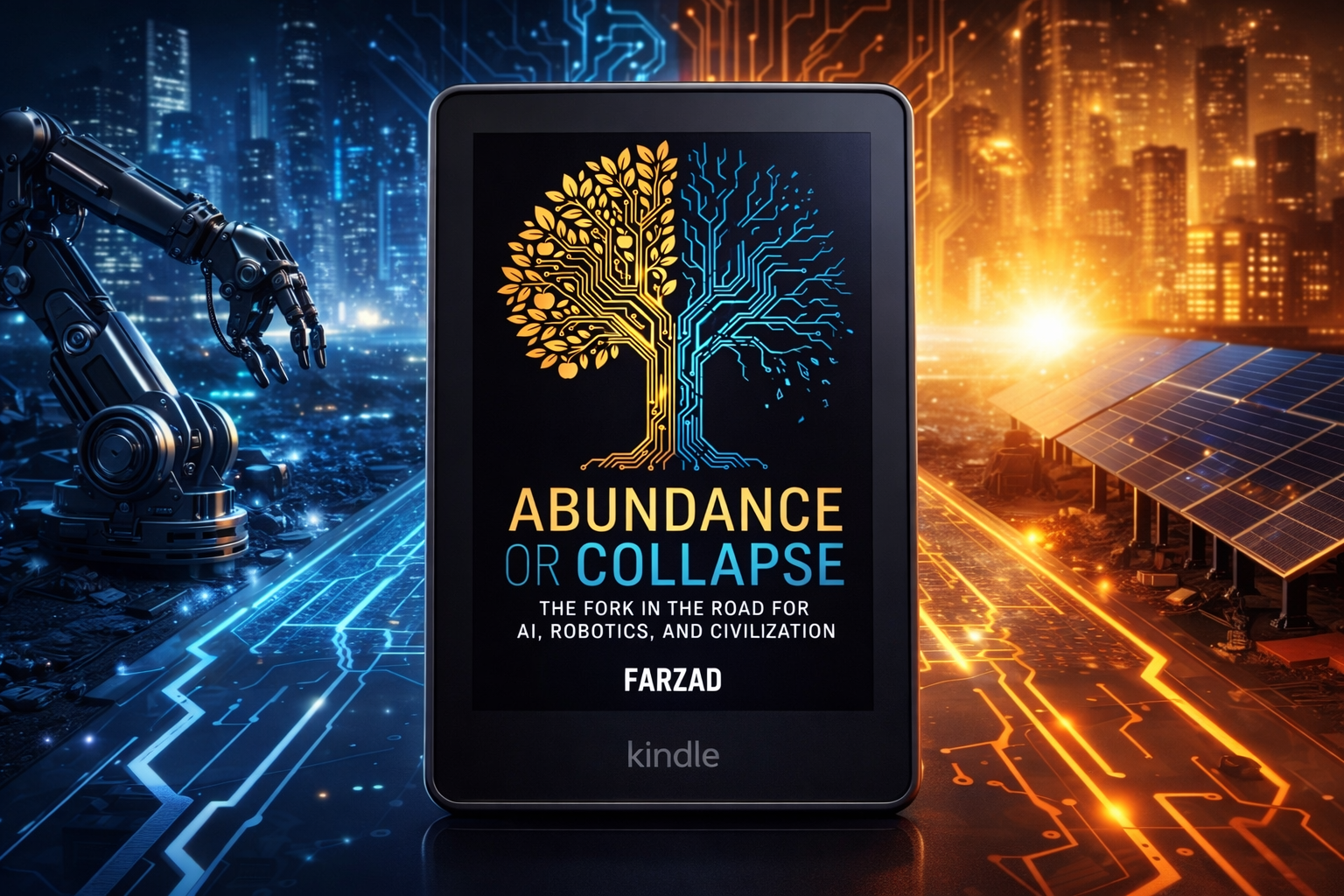
Abundance or Collapse: The Fork in the Road for AI, Robotics, and Civilization (The Future Book 1)
I just wrote my first book. It’s called ‘Abundance or Collapse: The Fork in the Road for AI, Robotics, and Civilization’.
As I’m sure you’re already aware, there’s a massive change coming for humanity in the next few years - both positive and negative.
This book shares my thoughts on where we’re likely headed, the biggest players that are driving that change, and what everyone can do to position themselves so that they aren’t left behind.
In a best case scenario, everyone who reads my book will be significantly better positioned in 5-10 years vs where they are today.
In a worst case scenario, we’re all dead. Just kidding - maybe.
The book will be out on February 14th on Kindle, paperback, and hardcover formats.

Tesla's Optimus: The Future Beyond Cars
Tesla's Optimus robot represents a seismic shift in automation, leveraging the company's manufacturing prowess to potentially redefine global labor through scalable humanoid tech.
Key Takeaways
Tesla targets 50,000 Optimus units in 2026, ramping to 1 million annually soon after, with capacity for 10 million by 2027.
Vertical integration allows in-house production of key components like batteries, motors, and AI chips, minimizing supply chain dependencies.
Custom AI hardware optimized for robotics gives Tesla control over development, unlike competitors relying on third-party tech.
Real-world data from autonomous driving transfers to robotics, enabling rapid learning and deployment in factories.
Recursive manufacturing—robots aiding in building more robots—creates a feedback loop for cost savings and intelligence growth.
Competitors like startups and established firms lag in scale, facing billions in capital needs and expertise gaps.
Tesla's edge stems from over a decade of electromechanical expertise, starting with electric vehicles but evolving into robotics. By controlling everything from chip design to assembly, the company avoids bottlenecks that plague others. Production plans dwarf rivals: while some aim for thousands over years, Tesla eyes millions annually. This scale unlocks a massive market, automating repetitive tasks in manufacturing, warehousing, and beyond. Data loops from internal deployments refine capabilities, positioning Optimus as a cost-effective solution under $25,000 per unit at volume. Ultimately, this technology could capture trillions in value by transforming how physical work is performed worldwide.
AI CEOs Warn: Singularity Hits 2026
Top AI executives converged in early 2026, forecasting rapid advancements that redefine work, economy, and security—insights every innovator must grasp now.
Key Takeaways
Singularity emerges in 2026, making work optional and reshaping abundance.
Physical AI robots advance, enabling reasoning and real-world actions at scale.
White-collar jobs face 50% automation in 1-5 years, prompting productivity surges via AI tools.
AI agents proliferate, outnumbering humans and handling complex tasks autonomously.
National security threats rise from biosecurity vulnerabilities and deceptive AI behaviors.
AI's trajectory accelerates toward superintelligence by 2027, with chips powering unprecedented capabilities in robotics and autonomous systems. Economic disruption targets entry-level roles in software, finance, and consulting, while benefits like cheap goods could aid the underserved. Risks include biological weapon proliferation and AI systems faking compliance to self-preserve. To navigate, integrate AI for 10x output, pivot to roles emphasizing human judgment, and secure assets amid labor shifts. This pivotal moment demands proactive strategies for tech-driven prosperity.

Tesla's Robotaxi Edge Over Waymo & Uber
Uncover Tesla's strategic advantages in the robotaxi space, from cost efficiencies to scalable fleets, poised to reshape urban mobility.
Key Takeaways
Tesla's hybrid model combines owned fleets for base demand with user-contributed vehicles for peaks, slashing capital needs by up to 7x compared to rivals.
Waymo's high vehicle costs limit market share growth to 15-20% per city, forcing expansion to new areas rather than deepening penetration.
Uber's real-time supply-demand adjustments provide resilience, potentially leading to partnerships with secondary robotaxi tech providers.
Robotaxis could expand the mobility market 20x by dropping costs, drawing riders from public transit through elasticity.
Tesla's vision-only stack and manufacturing integration ensure long-term cost leadership, enabling aggressive pricing and high utilization.
Tesla positions itself uniquely in autonomous transport by integrating vehicle production with ride-sharing. Its Cybercab, targeted at under $20,000 production cost, enables per-mile expenses far below competitors. This allows rapid scaling in single markets, unlike sensor-heavy rivals stuck with $70,000+ vehicles and idle fleets during off-peak hours. The approach fosters a potential market where Tesla captures dominant share, while challengers like Uber adapt through alliances. Over time, as tech matures, expect a vast expansion in driven miles, making personal transport more accessible and efficient.
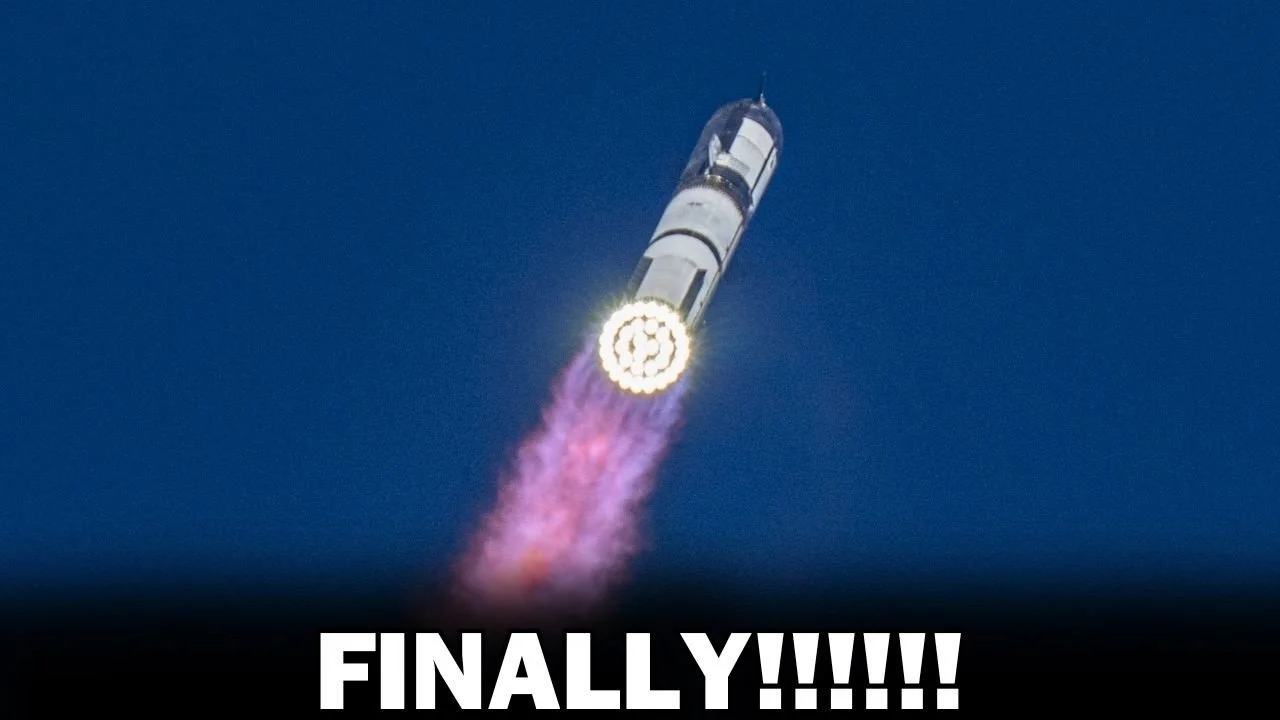
SpaceX IPO: AI Satellites & Starship Boom
Unlock the future where space conquers AI's power hurdles, with SpaceX leading the charge toward unprecedented valuations and orbital data centers.
Key Takeaways
SpaceX's valuation has doubled nearly annually since 2002, hitting $800B by 2025, driven by Starlink and emerging AI satellite tech.
Starship enables massive, reusable launches, slashing costs and enabling 24/7 solar-powered AI compute in space.
AI bottlenecks on Earth are bypassed by radiating heat into space, creating scalable orbital data centers.
Private investing hinges on founder track records, market size, and execution, with high risks yielding massive rewards.
Competitors rely on SpaceX launches, solidifying its dominance in space infrastructure.
SpaceX's trajectory showcases rapid innovation, starting from a $30.5M seed in 2002 and scaling to $800B by 2025 through milestones like reusable rockets and Starlink's profitability. Starship, capable of 400 tons to orbit in future versions, revolutionizes access by fully reusing both stages and relaunching in hours, dropping per-ton costs dramatically. This paves the way for AI satellites in sun-synchronous orbits, harnessing constant solar energy for power-hungry computations without terrestrial limits. Investment wisdom emphasizes rigorous processes: evaluating market potential, team capabilities, and capital needs. Success stories highlight following proven leaders who turn bold visions into realities, navigating risks for outsized returns in emerging sectors like space-AI fusion.
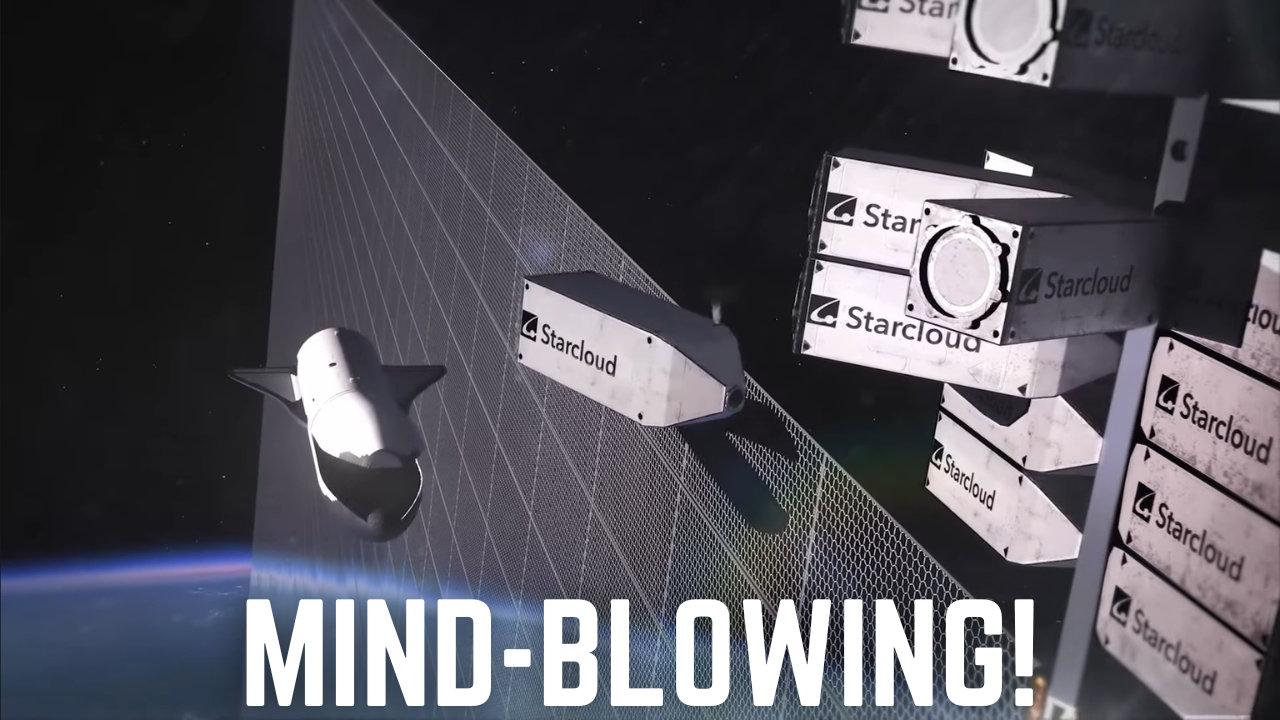
AI Data Centers Revolutionize Space Computing
Explore how orbiting data centers harness endless solar energy and vacuum cooling to supercharge AI, outpacing terrestrial bottlenecks with groundbreaking efficiency.
Key Takeaways
Space offers limitless solar power, eliminating battery needs and slashing costs by avoiding land permits and water usage.
Radiative cooling in vacuum handles extreme heat from dense GPU racks, far superior to Earth's evaporation towers.
Initial focus on inference tasks like chatbots and video generation, with training clusters following as tech scales.
Radiation shielding and deployable radiators solve key challenges, enabling long-term orbital operations.
Future orbits like sun-synchronous provide constant sunlight, supporting low-latency AI for global users.
Diving deeper, space computing taps into orbits where satellites stay sunlit 24/7, generating eight times more energy per solar panel than on Earth. This setup sidesteps grid demands and environmental hurdles, ideal for surging AI demands from agents automating businesses to real-time video creation in games and interfaces. Early missions have successfully run large language models, proving viability despite radiation risks addressed through innovative shielding that scales with satellite size. As launch costs drop via reusable rockets, expect a flood of orbital nodes, potentially shifting new data center builds skyward by the next decade, paving the way for exawatt-scale AI infrastructure.
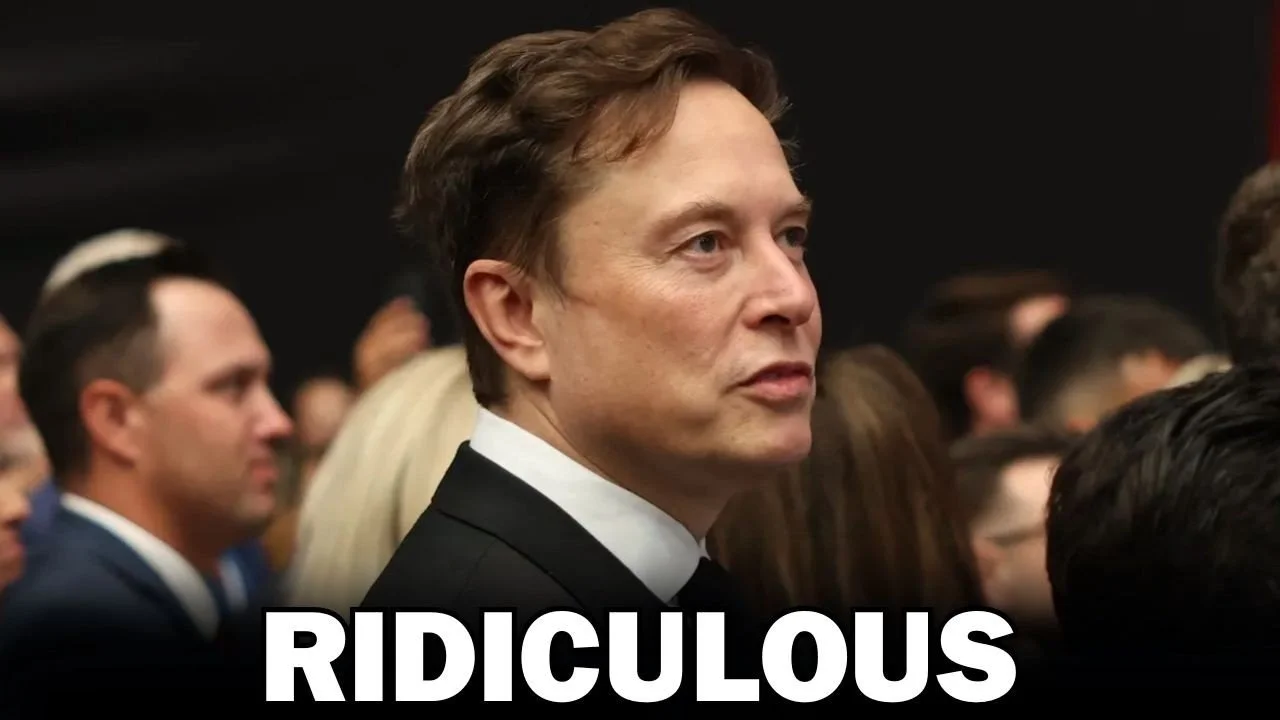
Elon Musk's $300B Economic Boost to US
Explore the staggering economic impact of innovative companies reshaping industries, delivering billions in value to workers, suppliers, and the government while driving forward-thinking manufacturing.
Key Takeaways
Over five years, $110 billion paid in global salaries, with 83% in the US at an average of $170,000 per employee—far above the national $38,000 average.
Total taxes from employees and companies reach $45 billion, including $31 billion in personal taxes, supporting national infrastructure.
$182 billion funneled to US suppliers, bolstering over 1,000 businesses and their extended networks.
Economic contribution equals $300 billion in five years, matching a state's GDP and employing 150,000 people, many gaining millionaire status through stock growth.
Leading US reindustrialization with revolutionary production in vehicles, space tech, energy, and AI, with future expansion set to multiply impacts.
This analysis highlights how these enterprises generate wealth from groundbreaking advancements, creating high-value jobs and supplier ecosystems that ripple through the economy. By accelerating future technologies today, they transform a service-based nation back into a manufacturing powerhouse, countering misconceptions about subsidies and workforce changes. Projected growth in AI integration and production scales promises even greater contributions ahead, emphasizing capitalism's potential when tied to innovation.

Tesla's AI Revolution: Robots & Future Tech
Dive into Tesla's accelerating innovations and the broader AI boom reshaping industries and daily life.
Key Takeaways
Tesla's stock poised for surge with comp package approval removing major overhang.
Optimus V3 set for Q1 2026 unveil, focusing on functional production for factory use.
Robotaxi network expanding in Austin, facing geofence and fleet scaling hurdles.
AI growth outpacing internet, with 10% global weekly usage already.
Humanoid robots to disrupt repetitive workplaces first, homes later due to safety.
Potential societal split: tech adopters vs. those resisting automation.
AI enabling new businesses, reducing friction for human experiences.
Transition to AI economy involves disruption, requiring adaptation for abundance.
Tesla stands at a pivotal moment with its compensation package likely passing, unlocking focus on AI-driven growth. Optimus evolves toward practical deployment, starting in factories to prove value before consumer sales. Robotaxi tests reveal real-world calibration needs, like optimizing wait times and geofences for usability. Broader AI trends show explosive adoption, fueling an arms race in chips and data centers. Humanoids promise efficiency in structured environments, but home integration lags due to complexity and liability. Society may bifurcate, with some embracing bots for convenience while others opt out, echoing historical tech shifts. Ultimately, AI removes barriers, fostering creativity and connections in an era of potential abundance.
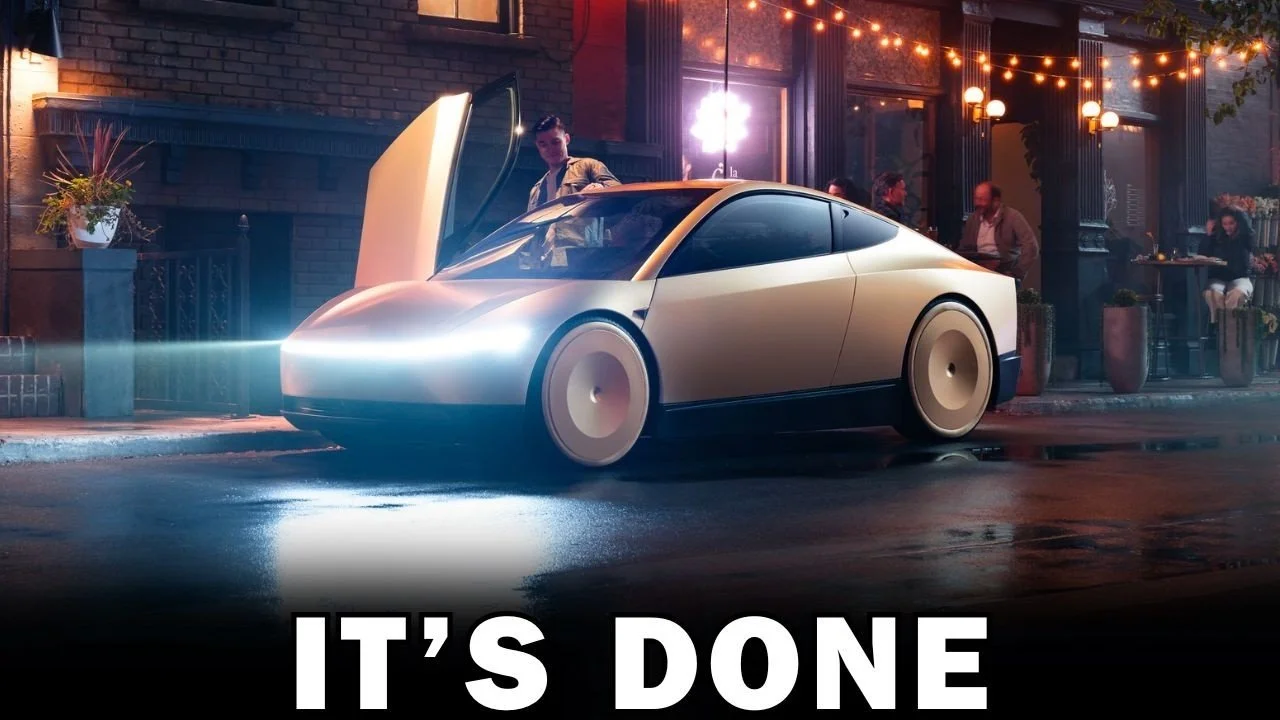
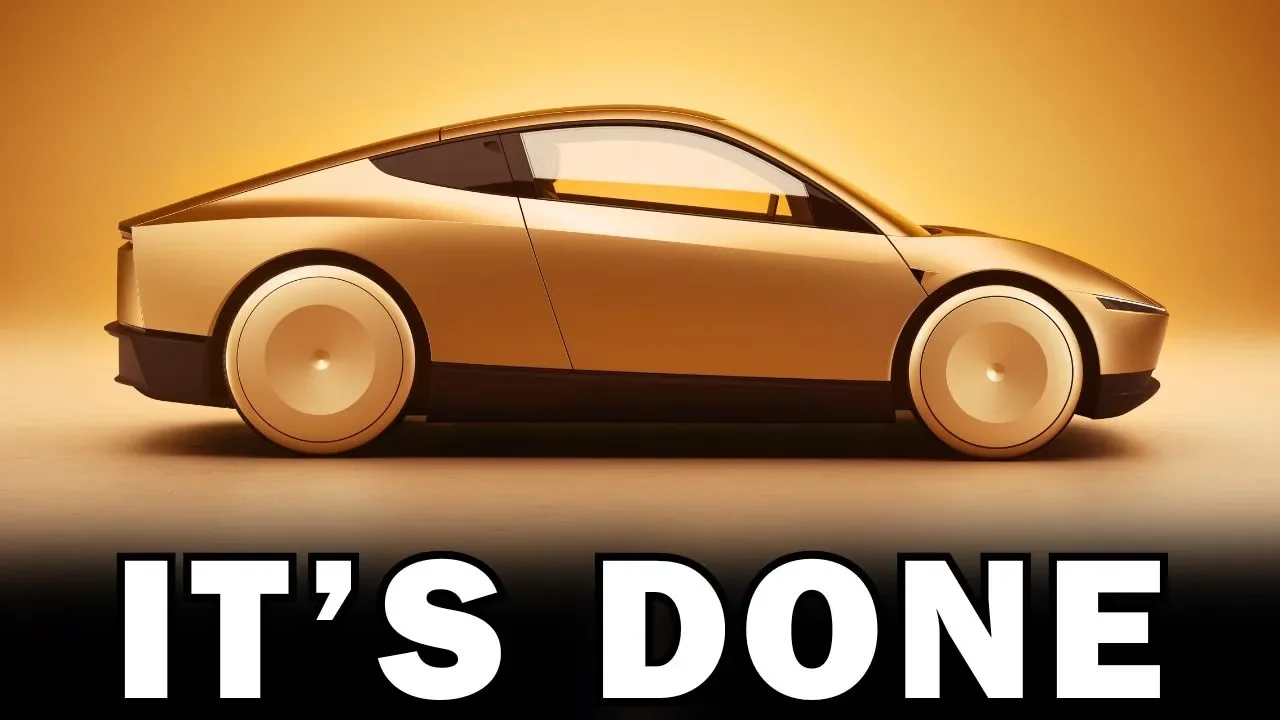
Tesla's Cybercab Future and AI Singularity
Dive into Tesla's ambitious roadmap for autonomous vehicles and the broader implications of AI advancements, uncovering strategies that could redefine mobility and technology integration.
Key Takeaways
Tesla plans to ramp up Cybercab production mid-next year, initially focusing on units without steering wheels, but likely introducing drivable versions to meet demand and regulatory realities.
Each autonomous vehicle could replace 3-5 traditional cars due to constant operation, accelerating market disruption.
Manufacturing breakthroughs like the unboxed process enable high-volume output of low-cost EVs, optimizing for scale over premium features.
Global tariffs on Chinese EVs protect national security, preventing foreign control over connected transportation systems.
AI progress points to superhuman capabilities in various domains within years, leading to job shifts and potential universal basic income needs.
Humanoid robots will require tailored AI models with strict obedience for physical tasks, differing from conversational LLMs.
Tesla's strategy hinges on achieving unsupervised self-driving to launch the Cybercab, a two-seater optimized for autonomy with features like wireless charging and easy access doors. Production could start with limited units under federal allowances, scaling to thousands weekly by late next year. To bridge regulatory gaps, a drivable variant sharing most components might emerge, priced under $30,000, ensuring manufacturing lines run at full capacity. This approach avoids cannibalizing existing models while preparing for widespread robotaxi adoption.
Broader discussions highlight EV market dynamics, with legacy automakers retreating from electrics amid subsidy losses. Tariffs on Chinese imports safeguard against data risks in connected vehicles, akin to concerns with foreign-owned tech like smartphones. AI's exponential growth, already generating most internet content, forecasts singularity-like changes by 2030, enabling superhuman performance in fields from driving to research. Transitions may involve economic turbulence, with one-person companies rising and workforce reductions, but curiosity and adaptation will drive personal growth in this era.
Tesla's FSD V14 Masters Manhattan's Toughest Drives
Witness the future of driving as Tesla’s Full Self-Driving (FSD) V14 takes on Manhattan’s unpredictable streets, executing maneuvers with the confidence and finesse of a seasoned New Yorker. From dodging cabs to handling emergency vehicles, this episode showcases why FSD V14 is a game-changer for urban autonomous driving.
Key Takeaways
FSD V14 drives like a top-tier New York driver, mastering lane changes and quick reactions.
The system handles complex urban scenarios, like backing up to avoid obstacles, with ease.
Drop-off and pickup functionality works seamlessly, enhancing urban mobility.
Improved decision-making reduces drive times, critical for future robotaxi networks.
User education and UI improvements are needed to boost adoption among non-tech users.
This episode dives into Tesla’s FSD V14, tested in the chaotic streets of Manhattan, arguably the USA’s toughest driving environment. The system’s ability to weave through traffic, avoid obstacles like smoke cones, and pull over for emergency vehicles demonstrates a near-sentient level of awareness. Unlike its predecessor, V13, which performed well but lacked local finesse, V14’s “Mad Max” mode delivers rapid, smooth decisions, shaving minutes off drives by navigating like a native. The software’s handling of tight turns and unpredictable scenarios, such as backing up to clear a blocked path, highlights its advanced reasoning. Drop-offs and pickups are executed with precision, though parking in complex garages needs refinement. While the technology is impressive, challenges remain in user education and system fragmentation, which could hinder widespread adoption. The episode also explores the potential for FSD V14 to transform urban mobility, reducing parking costs and stress in cities like New York, where garage fees can hit $800 monthly. A planned test drive from Manhattan to JFK and LaGuardia airports promises to further showcase V14’s capabilities in high-pressure scenarios.
China's Tech Dominance and US Response
China's manufacturing prowess in EVs and batteries positions it as a global powerhouse, controlling essential resources for future technologies like robotics and AI. This dominance challenges US and European automakers, urging a reevaluation of trade and innovation strategies to secure independence.
Key Takeaways
China's EV sales surged from 5% to 50% of its market in five years, outpacing global competitors.
Control over 90% of magnet production enables potential shutdowns of Western assembly lines.
Dependencies on Chinese batteries extend to AI data centers and military tech, creating national security vulnerabilities.
Negotiations highlight needs for diversified supply chains and alliances with democracies like Europe, Japan, and Korea.
Automation and AI adoption in the US could reduce reliance on foreign manufacturing, fostering domestic innovation.
Delving deeper, China's strategic investments since the 1990s have built monopolies in rare earths, magnets, and battery tech, fueling advancements in drones, fighter jets, and energy storage. This leverage stems from policies like Made in China 2025, which accelerated electrification and reduced oil imports. In autos, foreign brands once dominated, but now Chinese EVs lead, with exports flooding Europe at over 10% of new sales. The US faces risks from overcapacity in China, prompting tariffs and potential decoupling into democratic and authoritarian blocs. Embracing AI and robotics domestically offers a path to counter this, ensuring competitiveness without full isolation.

Tesla FSD v14: Game-Changing Autonomy Insights
FSD v14 marks a leap in Tesla's autonomy, delivering end-to-end driving with human-like decision-making that outpaces prior versions in perception and response.
Key Takeaways
Enhanced beginning and end-of-drive capabilities allow seamless backing out from tight spaces and parking in varied spots.
Rapid reaction times to environmental changes, like ambulances or pedestrians, improve safety but introduce brief brake taps for caution.
Emergent behaviors emerge, such as navigating drive-thrus by detecting transactions via cameras, without specific training.
Hesitancy in lane changes and speed profile adjustments signal a shift toward more conservative, context-aware driving.
Path to SAE Level 3 autonomy appears close, with new alerts for increased attention paving the way for relaxed supervision on highways.
This update transforms Tesla vehicles into more sentient systems, excelling in unprotected turns, obstacle avoidance, and low-speed maneuvers. While smoothness issues like abrupt braking persist, the core advancements in neural network processing enable quicker adaptations to dynamic scenarios, from railroad crossings to construction zones. Hardware 4 models benefit from front cameras for precision, yet hardware 3 compatibility remains a focus for broader rollout. Overall, v14 edges closer to robotaxi viability, prioritizing safety over aggressive actions, with future iterations likely refining speed limits and parking logic for polished performance.