
Tesla's FSD Breakthrough Ignites Robotaxi Era
Dive into Tesla's pivotal moment where autonomous tech meets massive scalability, unlocking Robotaxi dominance and soaring valuations for forward-thinking investors.
Key Takeaways
FSD V14 achieves human-level safety, minimizing risks through patient navigation and superior object avoidance.
Comfort rivals top human drivers, handling nuances like smooth turns and merges via neural networks.
Robotaxis scale rapidly without safety drivers, flooding geofences like Austin with low-cost vehicles.
Manufacturing edge allows quick deployment—thousands of units from mere hours of production.
Profit model: $100K annual per vehicle at Uber-like fares, with 60 cents per mile operating costs.
Tesla's AI foundation extends to humanoid robots, amplifying future growth.
Tesla's latest FSD advancements mark a turning point in autonomous vehicles, blending safety that's on par with or better than humans—evidenced by unsupervised tests in key cities—with ride comfort that feels natural and intuitive. This neural net approach captures subtle driving behaviors, giving Tesla an edge over competitors reliant on coded rules. As Robotaxis roll out, expect targeted expansion: starting in proven areas like Austin and the Bay Area, then scaling with millions of hardware-ready cars. Production ramps to 5 million units by 2028 enable flooding markets, slashing fares while boosting utilization and profits. At $30K per vehicle cost, operations yield high margins through minimal overhead like remote monitoring. This isn't just mobility—it's an AI ecosystem poised for exponential impact, including integrations with humanoid bots for broader applications.
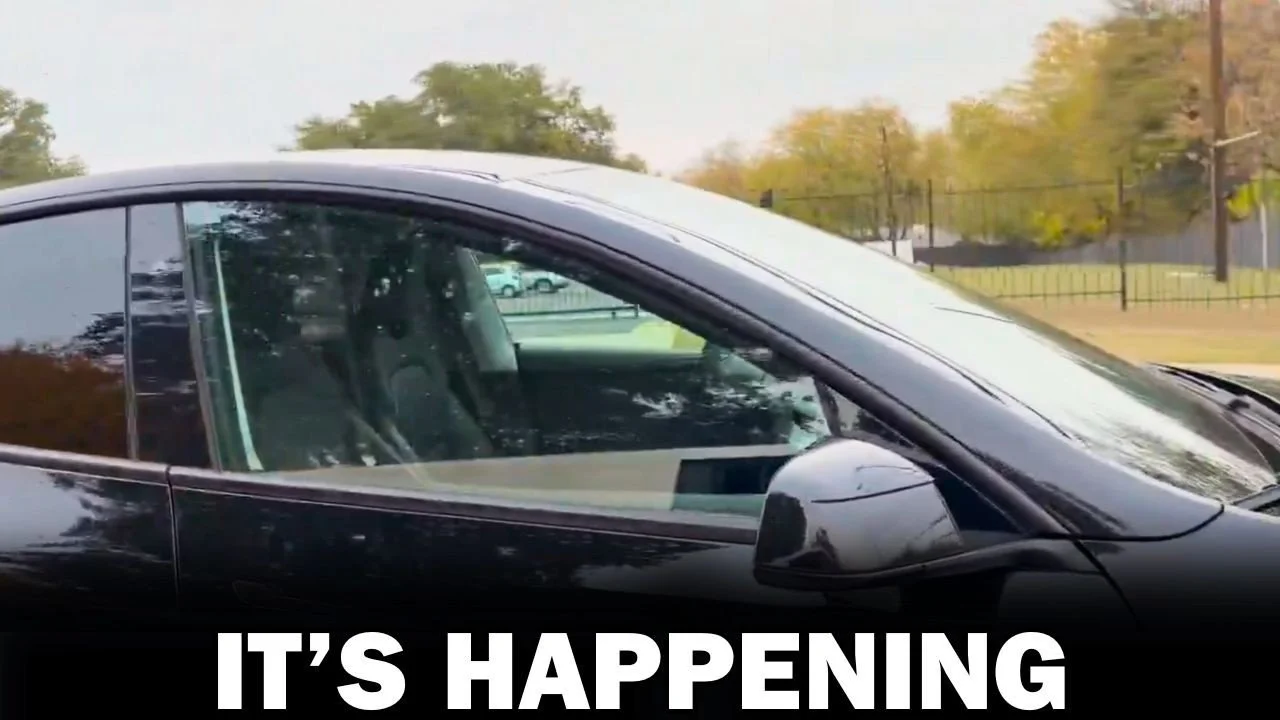
Tesla's Unsupervised Robotaxi Breakthrough
Tesla's latest advancement in autonomous driving marks a pivotal moment for the EV industry, with Model Y Robotaxis now navigating Austin without human oversight, leveraging pure vision AI for unprecedented efficiency and scalability.
Key Takeaways
Tesla's Model Y achieves unsupervised autonomy in Austin, a feat reached in months versus competitors' years.
Built on a $30,000 cost base with over 1 million units produced annually, enabling rapid fleet expansion.
Relies solely on cameras and AI, contrasting with sensor-heavy approaches like Waymo's.
Robotaxi app launched in June 2025, open to public use in geofenced areas.
Positions Tesla to dominate with 5 million vehicles by 2028, disrupting traditional automakers and ride-sharing.
This development stems from Tesla's long-term vision of camera-based self-driving tech, trained on vast real-world data from its existing fleet. The Model Y, available for $40,000 base plus optional Full Self-Driving software, shares identical hardware with these robotaxis. Compared to Waymo's partnership-limited production of 10,000 units yearly, Tesla's manufacturing prowess allows exponential growth. This not only accelerates robotaxi deployment but extends to personal vehicles, potentially eliminating the need for driver attention soon. Broader implications include reshaping urban transport, challenging other car brands, and powering future humanoid robots like Optimus, while raising questions about job impacts in driving and labor sectors.

Tesla's AI Revolution: Wealth or Disruption?
Dive into the transformative power of AI through Tesla's ambitious ecosystem, where breakthroughs in autonomous vehicles, robotics, and sustainable energy could redefine global industries and personal finances.
Key Takeaways
AI-driven Robotaxis could slash transport costs to under $0.30 per mile, enabling high-profit fleets operating nearly 24/7.
Humanoid robots like Optimus aim to handle 80% of physical tasks at $3/hour equivalent, targeting a multi-trillion-dollar labor market.
Energy storage solutions double grid efficiency without new infrastructure, boasting 30% margins and rapid growth.
Investing in AI leaders may offer passive income via future dividends, acting as a personal buffer against job displacement.
Risks include regulatory hurdles, execution delays, competition, and leadership dependencies.
Tesla's strategy integrates embodied AI across massive sectors: transportation via low-cost, high-efficiency Robotaxis that outpace ride-sharing models; robotics with versatile humanoids disrupting factories and homes; and energy through scalable batteries optimizing existing grids. This convergence positions the company to generate hundreds of billions in annual profits, potentially returning capital to shareholders as a safeguard in an AI-dominated economy. While obstacles like policy changes and rivals loom, the potential for civilizational-scale impact makes this a pivotal tech narrative.

Unlock Investing Success with Optimism in 2026
Discover how optimism powers smart investing amid rapid tech advances, turning potential pitfalls into massive opportunities in AI and beyond.
Key Takeaways
Optimism enables action by balancing risks with upside potential.
Pessimism paralyzes, focusing solely on failures and missing transformations.
Historic examples show optimists profiting from electric vehicles, reusable rockets, and online retail.
AI, robots, and autonomous systems promise industry-wide shifts—bet on them thoughtfully.
The world trends positive through innovation; believe in solvable problems for long-term wealth.
Delve into the core of investing: it's about envisioning success in uncertain landscapes. Risks exist in every venture, from scaling manufacturing to achieving full autonomy, yet optimists weigh them against achievable wins. Past patterns in tech revolutions—like e-commerce surviving bubbles or space tech defying odds—prove that maintaining conviction amid hype leads to generational returns. As AI reshapes labor, transportation, and energy, position for growth by embracing possibilities over doubts. This mindset not only builds portfolios but fosters innovation in daily life, from efficient tools to self-driving realities.

SpaceX IPO: AI Satellites & Starship Boom
Unlock the future where space conquers AI's power hurdles, with SpaceX leading the charge toward unprecedented valuations and orbital data centers.
Key Takeaways
SpaceX's valuation has doubled nearly annually since 2002, hitting $800B by 2025, driven by Starlink and emerging AI satellite tech.
Starship enables massive, reusable launches, slashing costs and enabling 24/7 solar-powered AI compute in space.
AI bottlenecks on Earth are bypassed by radiating heat into space, creating scalable orbital data centers.
Private investing hinges on founder track records, market size, and execution, with high risks yielding massive rewards.
Competitors rely on SpaceX launches, solidifying its dominance in space infrastructure.
SpaceX's trajectory showcases rapid innovation, starting from a $30.5M seed in 2002 and scaling to $800B by 2025 through milestones like reusable rockets and Starlink's profitability. Starship, capable of 400 tons to orbit in future versions, revolutionizes access by fully reusing both stages and relaunching in hours, dropping per-ton costs dramatically. This paves the way for AI satellites in sun-synchronous orbits, harnessing constant solar energy for power-hungry computations without terrestrial limits. Investment wisdom emphasizes rigorous processes: evaluating market potential, team capabilities, and capital needs. Success stories highlight following proven leaders who turn bold visions into realities, navigating risks for outsized returns in emerging sectors like space-AI fusion.
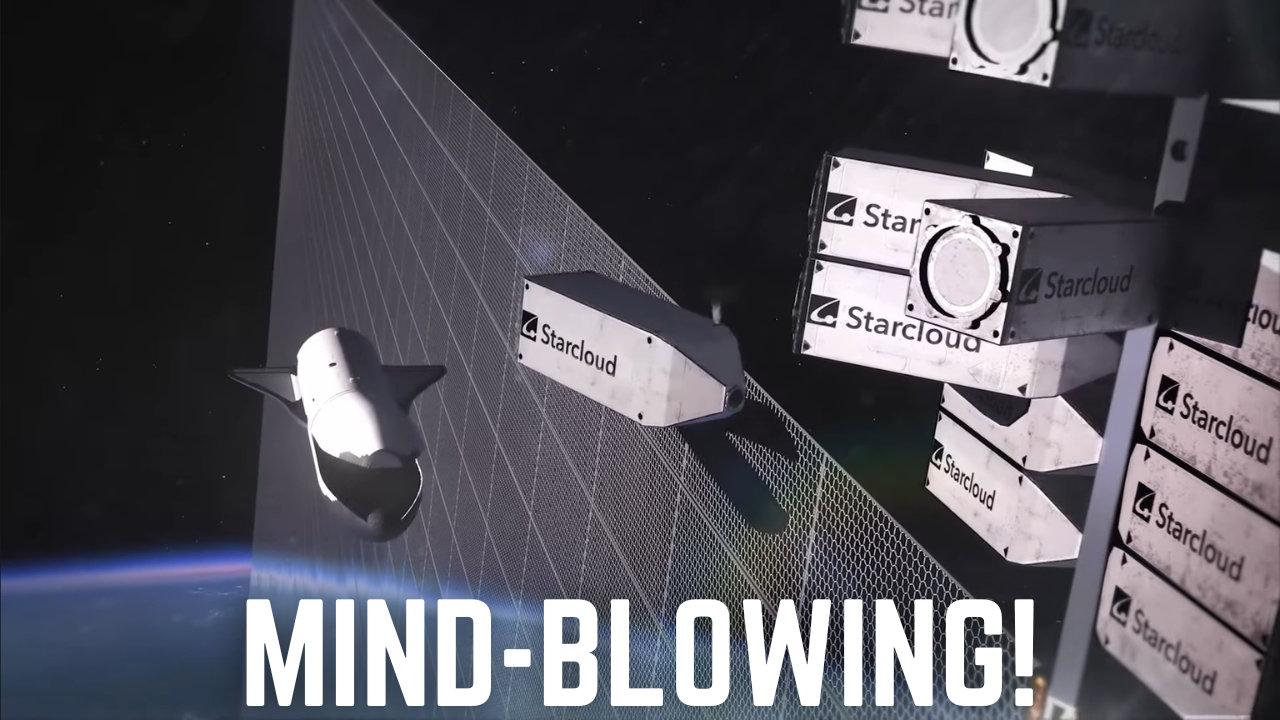
AI Data Centers Revolutionize Space Computing
Explore how orbiting data centers harness endless solar energy and vacuum cooling to supercharge AI, outpacing terrestrial bottlenecks with groundbreaking efficiency.
Key Takeaways
Space offers limitless solar power, eliminating battery needs and slashing costs by avoiding land permits and water usage.
Radiative cooling in vacuum handles extreme heat from dense GPU racks, far superior to Earth's evaporation towers.
Initial focus on inference tasks like chatbots and video generation, with training clusters following as tech scales.
Radiation shielding and deployable radiators solve key challenges, enabling long-term orbital operations.
Future orbits like sun-synchronous provide constant sunlight, supporting low-latency AI for global users.
Diving deeper, space computing taps into orbits where satellites stay sunlit 24/7, generating eight times more energy per solar panel than on Earth. This setup sidesteps grid demands and environmental hurdles, ideal for surging AI demands from agents automating businesses to real-time video creation in games and interfaces. Early missions have successfully run large language models, proving viability despite radiation risks addressed through innovative shielding that scales with satellite size. As launch costs drop via reusable rockets, expect a flood of orbital nodes, potentially shifting new data center builds skyward by the next decade, paving the way for exawatt-scale AI infrastructure.

Farzad Q&A - 12/09/2025
Join Farzad and his community for an open, unscripted Q&A about technology, investing, business, and the future of innovation. In every session, Farzad answers community questions, breaks down complex topics with clarity, and shares practical insights on building, scaling, and thinking long-term in tech.

Elon's Tesla Fleet: Massive AI Inference Network
Discover how Tesla's electric vehicles could evolve into a powerhouse AI network, leveraging untapped resources for next-level computation and addressing key hurdles with satellite tech.
Key Takeaways
Tesla fleet potentially forms a 100-gigawatt distributed AI inference system.
Vehicles provide built-in power, cooling, and AI chips, bypassing data center costs.
Data transfer bottlenecks via WiFi or cellular limit scalability.
Starlink offers high-bandwidth, low-latency global connectivity to enable this vision.
Challenges include workload coordination, user incentives, suitable AI tasks, and data security.
Integration between Tesla and SpaceX could create unmatched compute value.
Tesla's strategy taps into millions of parked vehicles equipped with advanced AI hardware, turning downtime into productive AI inference. This distributed model capitalizes on existing EV infrastructure for power and thermal management, potentially rivaling centralized clouds. However, efficient data flow remains critical—enter Starlink's satellite network, delivering consistent speeds and coverage worldwide. Overcoming coordination complexities and ensuring privacy could position this as a game-changer in AI deployment, blending automotive and space tech for unprecedented scale.

Elon Musk's Vision: AI, Mars, and Humanity's Future
Explore groundbreaking advancements in AI, space exploration, and human potential that promise to transform society.
Key Takeaways
AI and robotics will make work optional within 20 years, enabling universal high income and abundant goods.
Starship's revolutionary design positions it as a pivotal step in life's evolution, enabling sustainable multi-planetary existence.
Convergence of solar-powered AI satellites integrates expertise in energy, rocketry, and intelligence for deep-space operations.
Population growth is crucial for expanding collective consciousness and unlocking universal mysteries.
Humanoid robots like Optimus will soon enter production, offering practical assistance in daily life.
Delving deeper, rapid progress in AI ensures Earth's prosperity while supporting Mars colonization, viewed not as an escape but a high-risk endeavor for redundancy against catastrophes. Historical tech milestones, like early supercomputers aiding AI development, highlight the gaming origins of modern intelligence systems. Autonomous driving leads real-world applications, with electric vehicles and satellite networks enhancing global connectivity. Concerns over declining birth rates underscore the need for more humans to amplify awareness, blending genetic hardware with experiential software. Ultimately, these innovations converge toward a singularity where technology fulfills all desires, potentially shifting focus to AI self-sustenance.

Tesla FSD Mastery in Cybertruck
Unlock the potential of Tesla's autonomous driving evolution through hands-on Cybertruck experiences, spotlighting breakthroughs in software reliability and worldwide adaptability that promise safer, cheaper mobility.
Key Takeaways
FSD handles 99% of drives autonomously, excelling in diverse conditions like snow and urban Europe.
Global app rollout hints at broader robotaxi approvals, bypassing U.S.-centric limitations.
Regulatory gaps may force innovative vehicle designs, but international adoption could accelerate production ramps.
Competitors like Waymo face scalability caps, while Tesla's approach enables millions of units.
Tech's net positives outweigh concerns, mirroring historical innovations like electricity.
Explore how Tesla's latest software updates deliver near-perfect self-driving performance, navigating unmapped roads via logical overrides and adapting to real-time scenarios. As approvals expand beyond the U.S., countries eyeing future tech could greenlight robotaxis, fueling massive cash flows from high-volume production. This shift challenges outdated maps and regulations, positioning AI as a transformative force in global transport—safer than human drivers and deflationary for costs.

Autonomous Tech: Why Skip Buying a New Car Now
Dive into the transformative impact of autonomous vehicles on everyday transportation, revealing cost savings and market disruptions that could save you thousands.
Key Takeaways
Robotaxis promise rides at 25-30 cents per mile, undercutting the 70-80 cents average for owning a car.
Urban areas may see used car values plummet 80% in 4 years as demand for ownership fades.
Leasing shifts depreciation risk to lenders, making it a safer short-term option.
Investing purchase funds in AI firms could yield 15% annual growth, turning $40K into $80K.
Rural or specialized needs still justify buying, but metro commuters should delay.
Autonomous driving tech is advancing rapidly, with approvals in key states enabling unsupervised operation. This flips the script on car ownership: why tie up capital in a vehicle idle 95% of the time when on-demand robotaxis offer cheap, hassle-free trips without insurance or maintenance burdens? In major cities, expect a flood of these services by 2027, evaporating demand for new and used cars. Traditional ownership costs stack up poorly—factoring in payments, fuel, and upkeep—against projected robotaxi efficiencies. For those in suburbs or cities, alternatives like rideshares or public transit bridge the gap, freeing funds for appreciating assets in AI and robotics. Watch markets like Austin for early signs of price drops as adoption scales.
Neuralink's Ambitious Brain Tech Advances
Neuralink's latest developments showcase groundbreaking strides in brain interfaces, offering immediate life-changing tools for mobility and communication while eyeing broader human enhancement.
Key Takeaways
Neuralink's Telepathy implant enables thought-based control of digital devices and robotic arms for quadriplegic users.
Current trials impact 13 participants, with average daily use reaching eight hours for gaming, work, and daily tasks.
Expansion plans include restoring tactile feedback, speech, and vision through Blindsight for broader neurological applications.
Surgical robots aim for under-one-hour procedures, evolving toward LASIK-like efficiency with deeper brain access.
Implant upgrades target thousands more electrode channels for richer data, powering advanced AI-driven neural decoding.
Vertical integration drives in-house innovation across hardware, software, and manufacturing for scalable deployment.
Neuralink focuses on scalable brain-computer interfaces starting with aiding severe mobility impairments. Their wireless implants, inserted via precision robots, capture neural spikes to translate thoughts into actions like cursor movement or robotic control. Trials demonstrate quick adaptation, with users mastering interfaces in 15-20 minutes. Future enhancements address neural drift through adaptive ML models, eliminating frequent recalibrations. Beyond restoration, the tech explores whole-brain reading and writing to tackle psychiatric disorders and boost cognition, all while rigorous testing ensures reliability in a compact, inductively charged device.
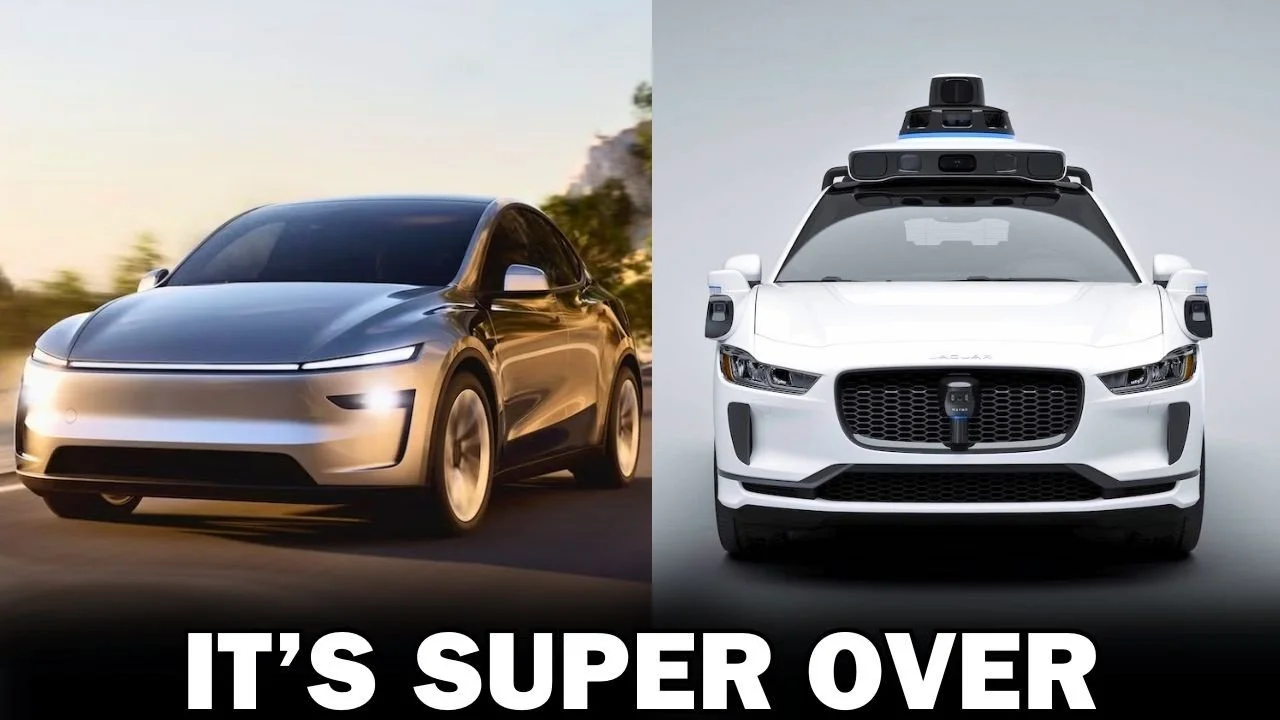
Tesla's Scale Edge Over Waymo in Robotaxis
Dive into how Tesla's bottom-up approach in autonomous driving sets it up for market dominance, emphasizing scalability and efficiency over initial complexity.
Key Takeaways
Tesla optimizes for massive scale with affordable cameras and generalized AI, unlike Waymo's high-cost sensors and regional mapping.
Achieving human-level safety could enable Tesla to flood markets with robotaxis, leveraging its manufacturing prowess.
Current rollouts focus on rapid geofence expansion and data validation for accelerated growth.
Pricing signals aim at lowest-cost transport, potentially yielding high margins once fleets scale.
Parallels to Tesla's EV success and SpaceX innovations highlight breakthrough potential in nascent tech.
Tesla's strategy starts with minimal hardware—eight cameras—to build a scalable, generalized autonomy system that adapts to any geography without detailed pre-mapping. This contrasts sharply with competitors relying on expensive lidar and localized data, limiting quick expansion. As software versions advance, interventions drop, paving the way for unsupervised operations. Financially, low input costs promise profitability at scale, with projections of substantial margins per mile. The shift could happen rapidly, turning today's limited pilots into widespread networks within months, reshaping transportation economics.
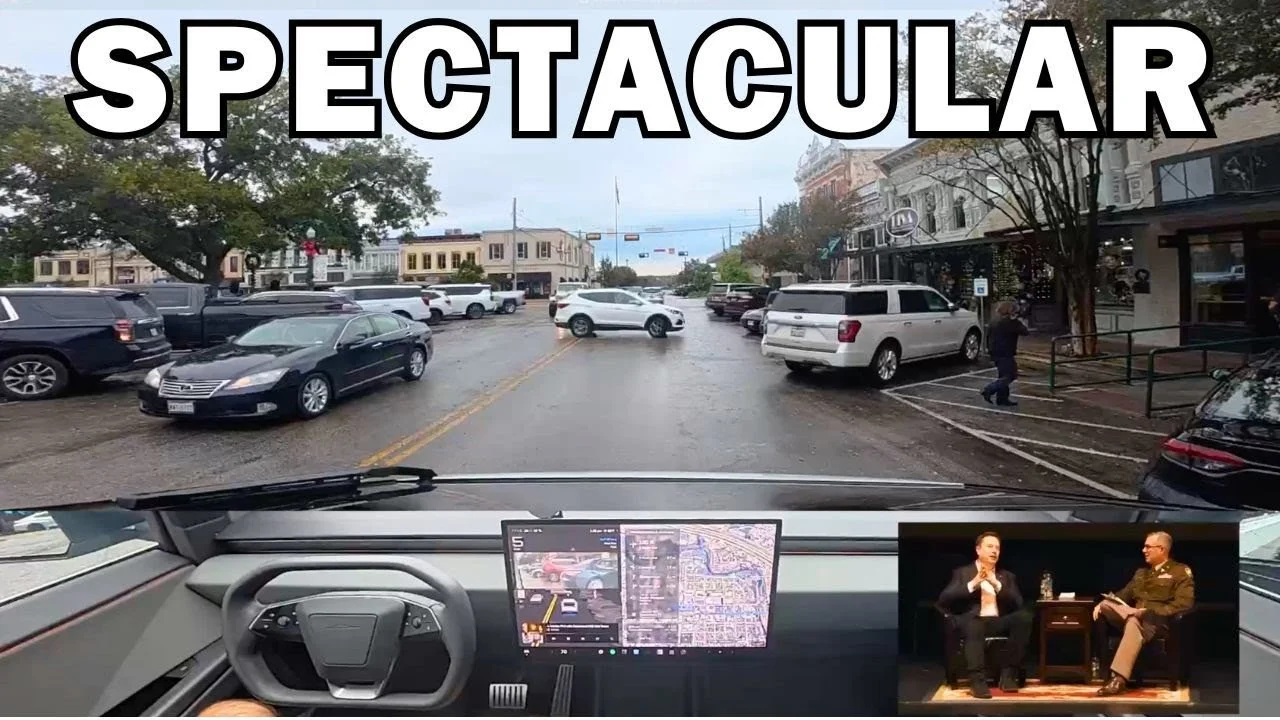
Tesla FSD Ride: Elon on AI Drones & War
Hit play for a raw Tesla FSD demo cruising hands-free, paired with Elon's forward-thinking insights on drone swarms, autonomous AI, and space-based defense edges that could redefine global conflicts.
Key Takeaways
Drone production volume and kill ratios will decide future skirmishes, outpacing traditional tactics.
Localized AI in drones boosts precision but sparks concerns over unchecked autonomy.
Space networks like Starlink provide jam-proof comms and positioning critical for operations.
Neural interfaces aim to amplify human bandwidth for better AI alignment and control.
Innovation hinges on simplifying requirements, deleting inefficiencies, and cross-industry idea fusion.
Technical expertise is key for leading engineering teams effectively.
Curiosity drives adaptation to rapid tech shifts in defense strategies.
Warfare evolves toward AI autonomy and drone fronts where humans risk obsolescence due to unerring machine accuracy. Conflicts like Ukraine highlight drone prevalence, pushing for scaled U.S. production to counter volume advantages. Space assets ensure unbreakable links amid ground disruptions, while neural tech bridges human intent with digital layers for safer outcomes. Leadership demands hands-on competence, and processes focus on first-principles: refine needs, eliminate waste, optimize, accelerate. For tech-driven defense, foster broad learning and critical analysis.
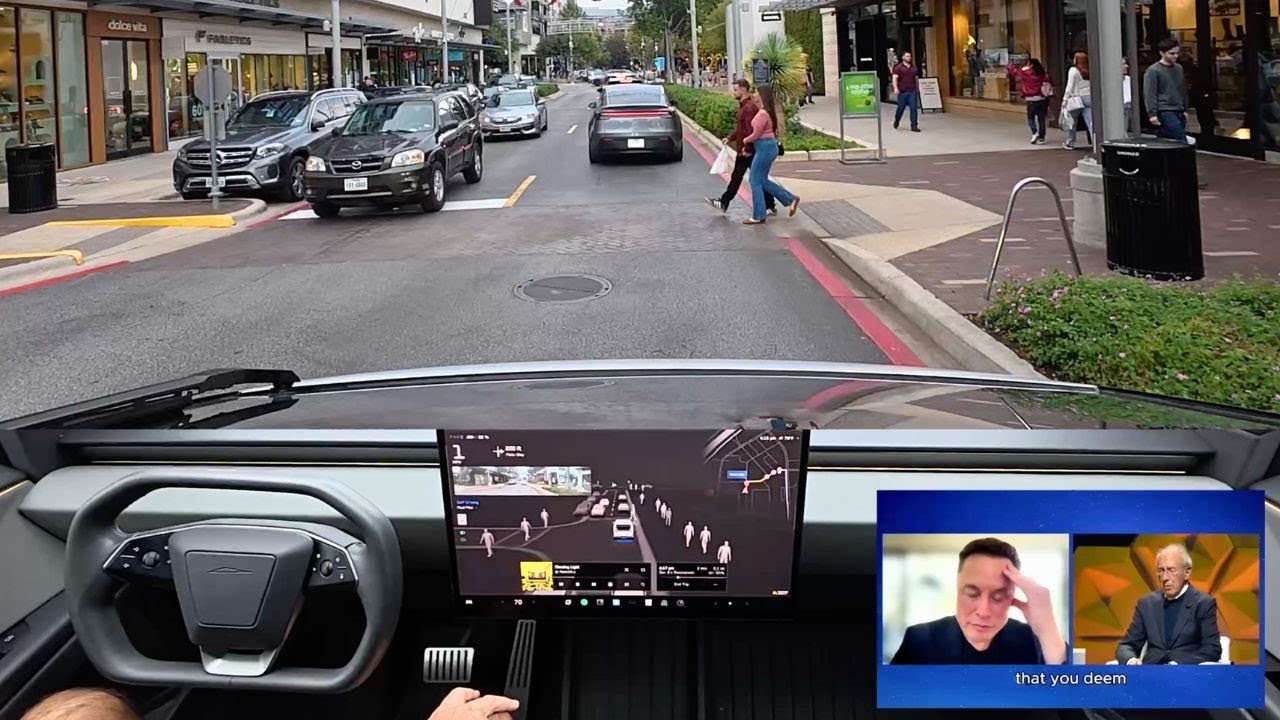
Tesla FSD Demo: Elon on AI Mastery
Experience a real-world Tesla Full Self-Driving journey with Farzad at the wheel—no reactions, just immersive listening to forward-thinking discussions on AI and robotics.
Key Takeaways
Humanoid robots achieve superhuman dexterity for tasks like surgery and construction, enabling universal access to advanced medical procedures.
Neural implants integrate with robotic limbs to grant enhanced abilities, such as superior running for those with disabilities.
AI models trained on vast real-time data advance toward general intelligence, outperforming on every metric.
Rapid scaling of data centers and custom chips accelerates compute power, outpacing global competitors.
Manufacturing efficiencies push car production to unprecedented speeds, targeting outputs every five seconds.
Orbital solar-powered AI systems promise unlimited scalable compute for future innovations.
This video captures a hands-off drive in a Tesla, highlighting the maturity of autonomous technology through smooth navigation and obstacle handling. The audio explores how complex actuators in robots mimic human hands for intricate actions, from threading needles to building structures. It delves into combining brain interfaces with cybernetic enhancements for cyborg-level capabilities, affordable at scale. AI development leverages unique social data streams for multimodal training, including video and audio, fostering tools that understand real-time environments. Breakthroughs in chip design and fab construction aim to overcome supply limits, while exponential manufacturing improvements, inspired by physics principles, reduce cycle times dramatically. The vision extends to preserving knowledge in distributed repositories and expanding compute via space-based solar arrays, unlocking incomprehensible intelligence growth.
Tesla Drones: Game-Changer with SpaceX
Unlock the potential of Tesla's drone strategy: superior energy density for longer flights, AI-driven autonomy for seamless operations, and a secure domestic supply chain reshaping global tech.
Key Takeaways
Tesla's battery tech enables extended drone range at low costs, outpacing competitors.
SpaceX's rocket materials optimize lightweight, durable frames for efficient flight.
Full self-driving AI adapts to real-world navigation, enabling fully autonomous deliveries.
Addresses national security by reducing reliance on Chinese drone suppliers.
Serves as a stepping stone to scalable eVTOL vehicles for urban air mobility.
Tesla's edge in batteries stems from gigafactory-scale production, delivering high energy density crucial for sustained flight against gravity. Pairing this with SpaceX's expertise in alloys and composites creates frames that minimize weight while maximizing strength, ideal for handling flight stresses. Electric motors, scaled from EV designs, ensure high efficiency and rapid iteration in-house. AI neural networks, trained on vast real-world data, power obstacle avoidance and precise operations without human input. This setup undercuts foreign rivals, offers trusted alternatives for critical sectors, and builds toward larger eVTOL systems through iterative testing at lower risks.

Elon Musk's Vision for AI in Space
Unlock the future of AI with solar-powered satellites in space, bypassing Earth's energy bottlenecks for exponential compute growth.
Key Takeaways
Space-based AI leverages vast solar energy, far exceeding Earth's tiny fraction of the sun's output.
Radiative cooling in vacuum eliminates bulky infrastructure, making space compute cheaper and more efficient.
Continuous sunlight means no batteries or weather issues, slashing costs by potentially 10x.
Scaling to terawatts becomes feasible in orbit, impossible on Earth due to power plant limits.
First deployments could happen in 4-5 years, boosting SpaceX's launch and Starlink networks.
Diving deeper, Earth's grid can't handle AI's growing demands—U.S. average usage is 460 gigawatts annually, yet 300-gigawatt AI facilities would consume two-thirds of that, with terawatts utterly unviable amid construction hurdles. Space solves this via lightweight solar panels without framing or protection, achieving 100% capacity factor. Cooling shifts to passive radiation into near-absolute zero, ditching energy-hungry systems. This pivot enables unprecedented AI feats like real-time global data processing and full-scale simulations, fostering new supply chains, geopolitical edges, and vertical integration for leaders like SpaceX. Challenges like radiation hardening remain, but engineering progress points to rapid viability.
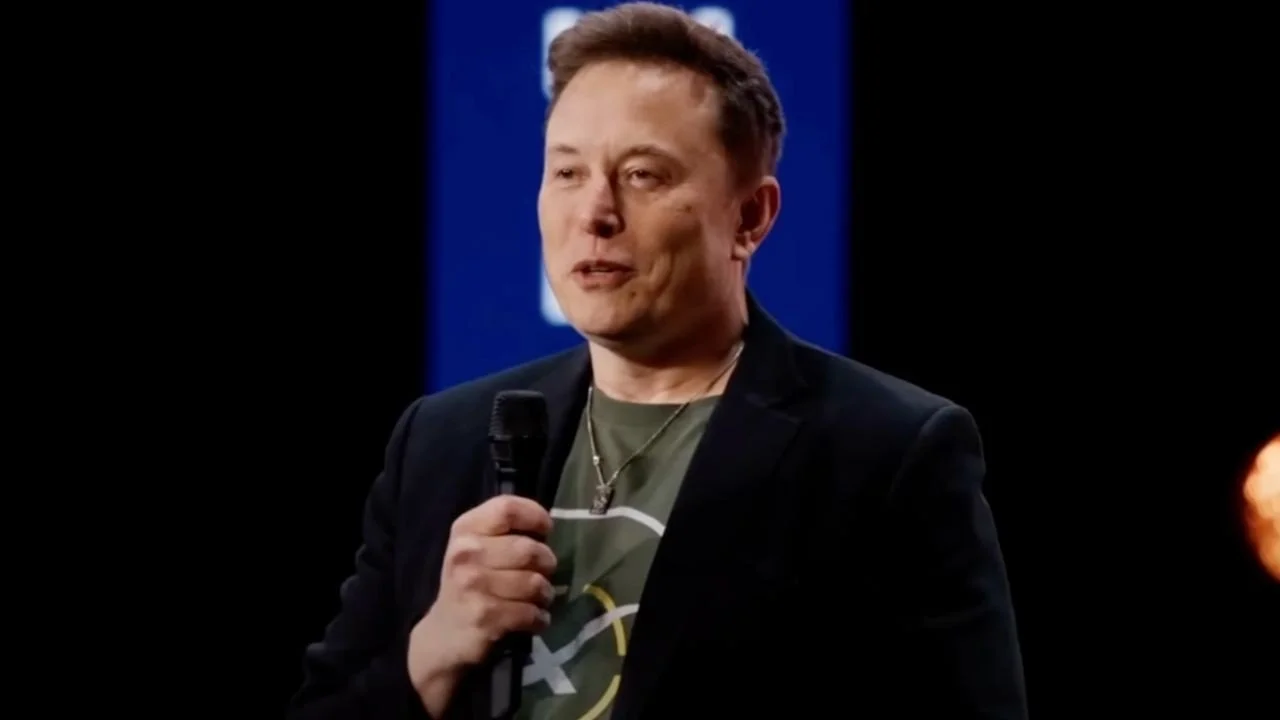
Elon Musk's Hilarious Bureaucracy Roast
Dive into Elon Musk's unscripted comedy skewering obstacles in tech and governance that stall breakthroughs.
Key Takeaways
Regulatory overreach demands improbable studies on rocket impacts to marine life, delaying launches.
Early internet pioneers faced job rejections, sparking self-made innovations like online maps.
Media outlets parrot identical narratives, eroding trust in legacy journalism.
Government expansion mirrors inefficient bureaucracy, limiting efficiency.
Persistent health issues like back pain highlight untapped medical advancements.
Free speech advocacy draws global scrutiny and security risks.
Political figures operate as controlled entities, with potential ties to controversial networks.
This routine highlights absurd environmental mandates, such as analyzing rocket-submarine scenarios or fines for harmless water use in rainy areas. It traces back to bootstrapping internet tools after corporate snubs, evolving into critiques of coordinated propaganda and oversized bureaucracy. Personal touches reveal challenges in neurodiversity and defending open dialogue amid threats, tying into suspicions of hidden influences in leadership.
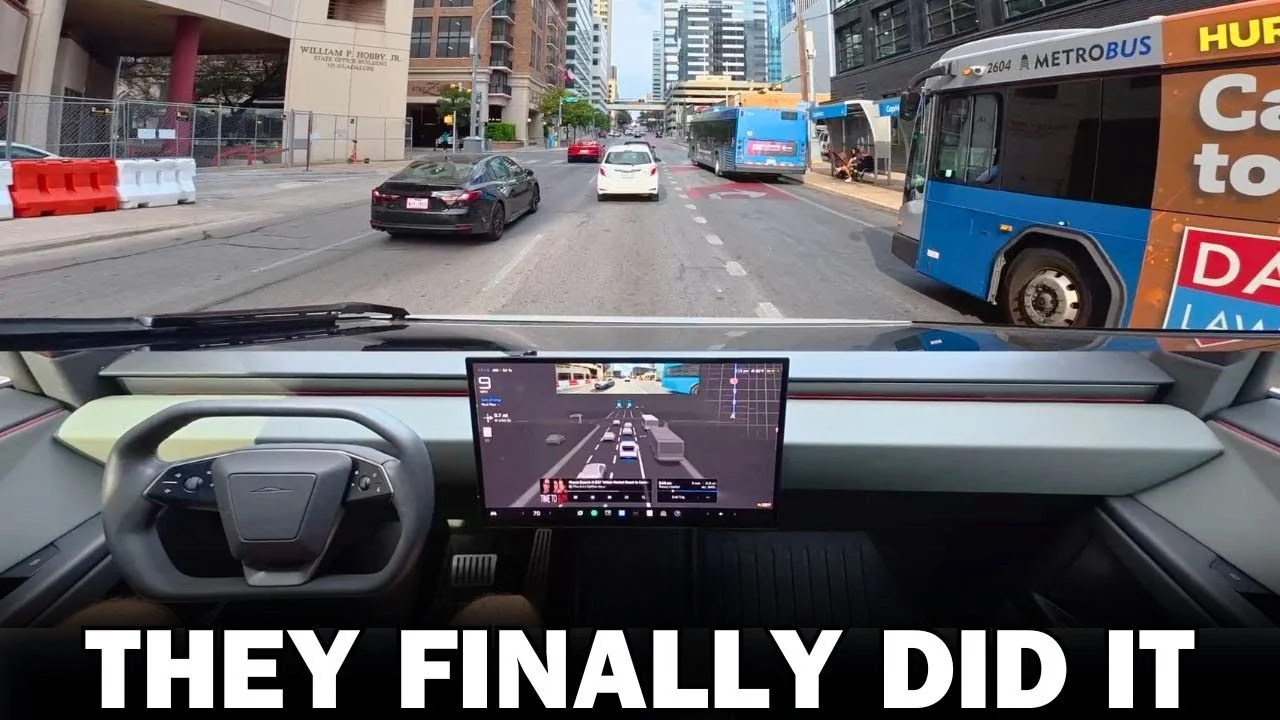
Tesla's Leap to Autonomous Abundance
Tesla unveils a transformative era of autonomy and robotics, promising safer roads, vast economic growth, and universal prosperity through advanced tech.
Key Takeaways
Humanoid robots will scale to billions, enabling precision surgery and poverty elimination.
Unsupervised full self-driving nears reality, with vehicles safer than human drivers.
Production ramps target millions of units annually for robots and autonomous cabs.
Custom AI chips boost efficiency, slashing costs for inference in vehicles and bots.
Mission shifts to sustainable abundance, doubling energy output via batteries.
Tesla's advancements in robotics and AI pave the way for a sci-fi reality. Optimus bots, engineered for dexterity and real-world tasks, aim for mass production starting next year, potentially expanding global GDP by factors of 10 or more. Autonomous vehicles, already logging billions of safe miles, evolve with updates allowing hands-free operation. Cybercab, optimized for low-cost rides, redefines manufacturing with ultra-fast cycle times. Battery innovations double U.S. energy without new plants, while custom chips enable distributed inference fleets. This ecosystem fosters a world of endless goods, preserved nature, and AI-driven progress.

Robotaxis: Revolutionizing Low-Income Mobility
Robotaxis stand to disrupt global mobility, offering ultra-low-cost rides that empower economically isolated areas with unprecedented access.
Key Takeaways
Transportation costs drop to 30 cents per mile, making commutes affordable.
Communities gain better job, healthcare, and education opportunities.
Local businesses thrive from increased foot traffic and economic activity.
Psychological barriers fade as people expand their horizons.
Broader societal mixing reduces class segregation.
This innovation targets hidden barriers in low-income zones, where car ownership averages $10,000 yearly and rideshares hit $2.60 per mile. At scale, robotaxis eliminate driver wages, slash fuel expenses via electricity, and maximize vehicle use. In food deserts, grocery trips become $3 roundtrips instead of hour-long bus rides or pricey Ubers. Healthcare skips drop as appointments turn accessible. The ripple: vibrant neighborhoods with more jobs, investments, and infrastructure. While not poverty's cure-all, it dismantles a key obstacle, fostering agency and social cohesion. Competition among providers will refine affordability, benefiting price-sensitive users most.