

SpaceX Bets Its IPO on Turning Space-Based Sunlight Into Intelligence With AI-1 Orbital Data Centers
Alongside its historic public offering, SpaceX unveiled AI-1, a solar-powered satellite carrying a 150-kilowatt computing payload, revealing a vertically integrated plan to manufacture cognition from the cheapest energy in the solar system.

Starlink Surpasses 10 Million Users as SpaceX Scales Gigawatt AI and Readies Orbital Compute
The satellite network's dominance, direct-to-phone expansion, and space-based AI infrastructure plans point to a tightly integrated system built for both global connectivity and frontier intelligence workloads.
Starlink's active user base crossed 10.3 million by the end of Q1 2026 after more than doubling in the prior year. Its constellation now accounts for roughly three-quarters of every active maneuverable satellite in orbit, while coverage spans more than 164 countries and territories serving over three billion people. At the same time, the company has stood up gigawatt-scale AI training infrastructure on the ground and is advancing plans to place portions of that compute in orbit, powered by sunlight and cooled by radiation.
Key Takeaways
Starlink reached approximately 10.3 million users by the end of Q1 2026, reflecting more than 100 percent year-over-year growth from roughly 4.4 million users at the end of 2024.
The network now represents about 75 percent of all active maneuverable satellites currently in orbit.
Service is live across more than 164 countries and territories, providing coverage to populations exceeding three billion people.
Adoption is accelerating in aviation with frequent new airline integrations, while enterprises increasingly use Starlink as primary or backup connectivity for operational resilience.
Starshield operates as a dedicated constellation delivering secure capabilities tailored to U.S. government needs.
The first-generation direct-to-device service, activated with 650 satellites and partnerships involving 30 mobile network operators, has already demonstrated coverage for 1.9 billion people and confirmed real demand.
A second-generation direct-to-device system is designed to deliver full 5G performance directly to standard phones, targeting connectivity for the remaining three billion people currently outside reliable networks.
Colossus Two has been deployed as the world's largest coherent supercomputer, incorporating NVIDIA GB300 processors as the first gigawatt-scale training cluster along with the first gigawatt-scale Megapack battery installation and early large-scale use of both GB200 and GB300 hardware.
Orbital AI compute capacity is under active development for deployment within the next couple of years, leveraging solar power generation and radiative cooling in the space environment.
Proven satellite subsystems already in production—including ion propulsion thrusters, inter-satellite laser links, flight computers, and reaction wheels—remove key technical barriers to placing AI workloads in orbit.
Vertical integration across launch, satellites, connectivity, and AI creates a self-reinforcing loop: better infrastructure improves model quality and lowers token costs, which in turn funds further capacity expansion.

SpaceX Targets $28 Trillion Opportunity with Truth-Seeking AI and Lunar Infrastructure
How control over the full stack—from rocket design to satellite operations and real-time data—creates durable advantages in markets projected to reach trillions.
The core advantage lies in end-to-end control over satellite systems and connectivity infrastructure. This approach compresses development cycles, slashes costs through in-house production, and generates recurring revenue at low marginal expense once the network is deployed. Layered onto that foundation is the ability to feed live global data into advanced AI systems, creating models that stay current rather than relying on frozen datasets. Together these elements form a platform positioned to expand aggressively into the multi-trillion-dollar intersections of orbital infrastructure, worldwide broadband, and intelligent computing.
Key Takeaways
Vertical integration spanning satellite design, manufacturing, launch, and constellation operations delivers superior cost efficiency and deployment speed that competitors struggle to match.
Ownership of the full orbital launch stack creates structural barriers, as replicating global leadership in reliable, high-cadence access to space requires years of accumulated hardware and operational experience.
Real-time data streams from large-scale platforms enhance AI model accuracy and timeliness, supporting truth-seeking systems that reflect current events and user-generated information.
Once core infrastructure exists, adding subscribers or new services incurs near-zero marginal cost, enabling rapid scaling and high operating margins in connectivity.
Integrated control across hardware, networks, data, and AI layers opens participation in multiple expanding markets, including satellite broadband, direct-to-device services, and space-enabled intelligent systems.
A mission-oriented culture combined with deep technical talent sustains the iteration velocity required to maintain leads in capital-intensive, fast-evolving fields.
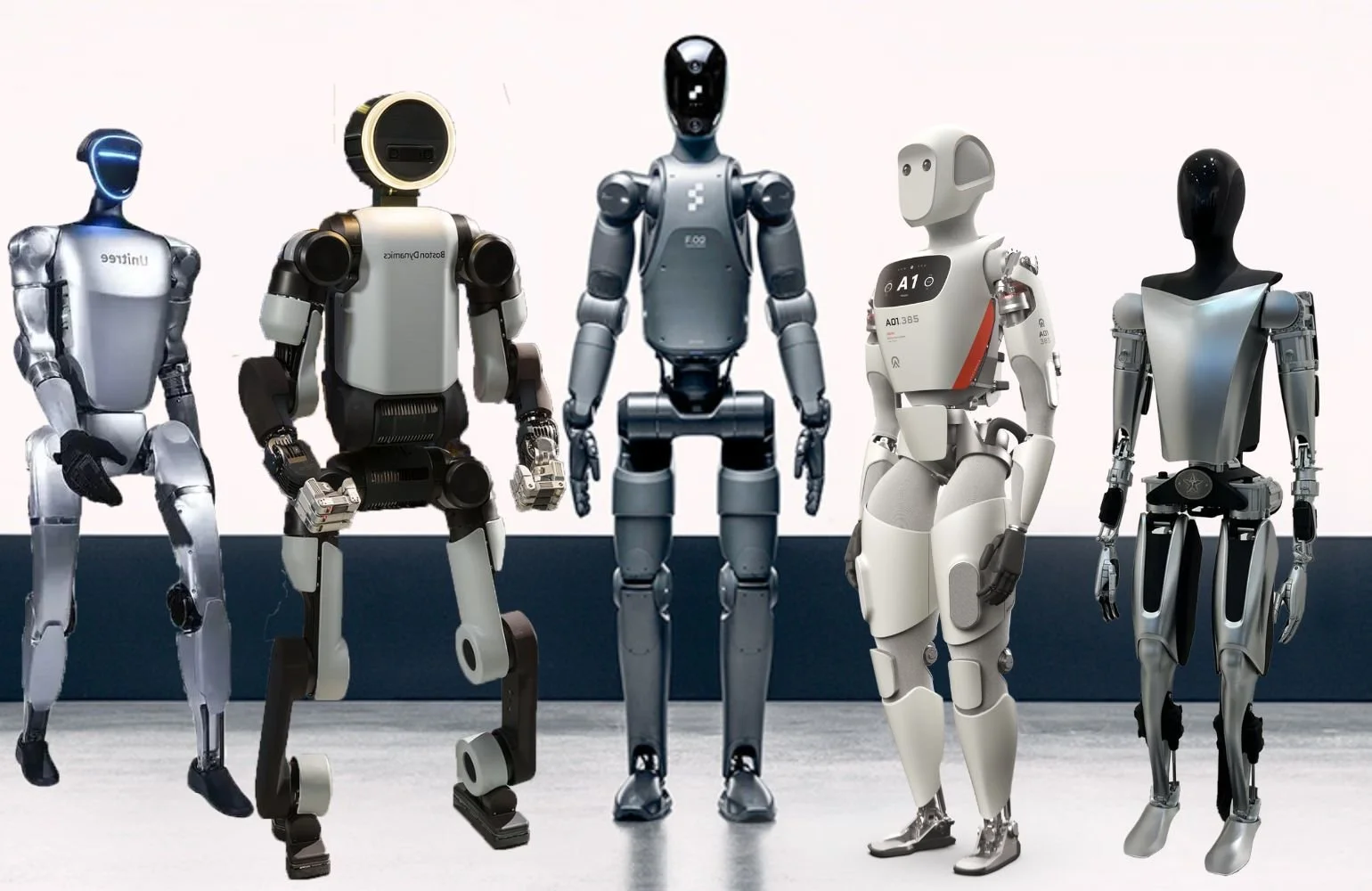
The $40 Trillion Robot Takeover Has Begun
Humanoids just hit their iPhone moment – turning sci-fi into nonstop warehouse reality and rewriting one-third of the global economy.
The convergence happened. Humanoid robots now operate 24/7 in live California warehouses, swapping batteries seamlessly and matching human speed on package sorting for over 60 straight hours. This marks the exact inflection that smartphones triggered in 2007: hardware and software finally aligned, but this time the prize is ten times larger – the entire $40 trillion pool of annual human physical labor across warehouses, farms, hospitals, factories, and every task that moves bodies through space.
Key Takeaways
Three S-curves in AI vision-language-action models, real-plus-synthetic data flywheels, and actuator costs (down 10x in six years thanks to the EV supply chain) aligned in the last 18 months, making capable, affordable humanoids possible at scale.
Robots are already deployed today in automotive body shops, sheet-metal lines, weld inspection, electronics assembly, and logistics centers, filling roles with 90-150% annual turnover where humans quit faster than companies can hire.
First wave targets demographic vacancies created by aging populations and undesirable shifts – Japan’s 3.9:1 eldercare ratio, Germany’s net worker loss in 2026, U.S. trucking shortages climbing toward 160,000 – not eager workers being fired.
Next waves hit 10+ million U.S. material-mover, assembler, and janitor jobs at $30k–$44k median wages, with potential for all three waves to compress into five years if software generalizes and costs drop faster than models predict.
A single unstoppable flywheel links AI training clusters, battery tech, vehicle production lines, and robot manufacturing; pausing it means surrendering competitiveness against China and domestic manufacturing goals.
Visible optics – named robots on livestreams, viral photos of humanoids at stations – will drive regulation, tariffs, union carve-outs, and city-vs-country races long before pure economics play out.
Winners under 35 will treat AI and robotics as the new electricity: adopt tools aggressively, align them with personal strengths, and build new categories (autonomous service fleets, hazardous-site automation) that create abundance for the bottom 20% while the adaptive middle thrives.

SpaceX’s $2 Trillion IPO: The AI Infrastructure Empire Hiding in Plain Sight
A single $15 billion annual compute contract is about to flip the entire narrative on the company’s reported losses—and reveal why this might be the most important public offering of the decade.
SpaceX has filed its S-1 for what is set to become the largest IPO in history, targeting a valuation near $2 trillion. While headlines fixate on last year’s nearly $5 billion loss, the filing exposes a far more strategic picture: a company that has evolved into three distinct businesses, with Starlink generating massive cash flow to bankroll an aggressive push into AI compute infrastructure—including orbital data centers that could solve Earth’s crippling power and cooling constraints.
Key Takeaways
SpaceX is on track for the biggest IPO ever, raising potentially three times more capital than Saudi Aramco’s 2019 record at a $2 trillion-plus valuation.
Anthropic has committed to paying SpaceX $1.25 billion every month—$15 billion per year—through May 2029 for exclusive access to its AI compute capacity.
The company now reports in three segments: Space (rockets), Connectivity (Starlink), and AI (data centers and related operations acquired via xAI).
Starlink delivered $11 billion in 2025 revenue—61 percent of total company sales—with $4 billion in operating income and roughly 63 percent adjusted EBITDA margins on a hardware business.
Starlink grew nearly 50 percent year-over-year, now serves 10 million subscribers in 164 countries, and powers direct-to-cell service for millions of devices monthly.
The AI segment, currently showing operating losses, is positioned to swing sharply profitable once the Anthropic revenue begins flowing, potentially making the entire company profitable as early as 2026.
SpaceX plans to launch orbital AI compute satellites as early as 2028, leveraging constant solar power and infinite heat dissipation in space.
Elon Musk will retain overwhelming voting control post-IPO through a dual-class share structure, ensuring long-term focus on Mars colonization.

The AI War Is Over: Only Two Factions Will Dominate by 2030
Compute compounds like nothing in history—turning a handful of leaders into an unassailable advantage while the rest get acquired, commoditized, or left behind.
In the age of AI, the most valuable resource isn’t land, oil, or even raw processing power. It’s the self-reinforcing cycle where superior models draw more users, those users generate higher-quality data, and that data trains even stronger models. This flywheel accelerates with every iteration, widening the gap between frontrunners and everyone else. Eight major factions are battling for control of this cycle. Most coverage calls it competition. The math reveals something far more decisive: by 2030, only two will hold the keys to the intelligence layer that underpins the global economy.
Key Takeaways
AI’s compounding loop—models, users, data, and compute feeding each other—creates exponential separation that no physical resource war has ever matched.
Training costs have already jumped roughly tenfold in three years and could exceed a billion dollars per frontier model by 2027, pricing out all but the deepest-pocketed players.
The real bottleneck isn’t just GPU counts; high-bandwidth memory (HBM) determines how effectively massive clusters work together.
Labs now train on 100 times more data than classic scaling laws recommend, shifting the goal from efficiency to massive user retention and cheap inference at scale.
OpenAI leads in users but bleeds cash on inference and talent; Microsoft locks in enterprises; Meta uses open-source to neutralize monopoly pricing; China pursues cheap, efficient models despite chip limits; Google owns unmatched data, custom chips, and infrastructure; Anthropic bets on safety for enterprise and government; the Musk stack integrates compute, real-world data, and connectivity under one roof; regulators slow Western progress while China accelerates.
Google wins through substrate dominance—proprietary data, power-efficient TPUs, and quiet efficiency gains. The Musk integrated stack wins through vertical control of compute scale, fleet data, and end-to-end ownership.
The other six will likely be absorbed, reduced to distribution layers, or confined to regional/price-sensitive markets.
For individuals: focus on skills AI cannot synthesize on demand; invest in the infrastructure winners; prepare children for an economy where intelligence is abundant and cheap.

The Infrastructure Play That Could Decide AI's Next Decade
How record deployment speeds, orbital power constraints, and runaway token demand are forcing a complete rethink of who can actually deliver abundant intelligence at scale.
The real bottlenecks in advanced AI have shifted from model architecture to physical execution. Legal maneuvers around major labs have exposed governance friction without resolving underlying questions about long-term stewardship. At the same time, the ability to stand up massive compute clusters in months rather than years, combined with the hard physics of powering AI workloads off-planet, is creating asymmetric advantages for players who control both the chips and the energy layer. Most overlooked: even steep gains in efficiency will not flatten demand. New applications in video synthesis, persistent agents, and physical robotics multiply token consumption faster than optimization curves can contain it. The organizations that solve the manufacturing, power, and orbital constraints first will set the cost floor for intelligence for years to come.
Key Takeaways
Legal resolutions on procedural grounds in AI governance cases can inflict lasting reputational damage while leaving core structural issues unaddressed, increasing the likelihood of internal leadership changes at scaled labs rather than wholesale unwinds of their corporate form.
Model performance has split along task lines, with some systems delivering superior cost-performance on coding workloads and others advancing faster on general capabilities, accelerated by targeted talent inflows and selective early access programs.
First-principles manufacturing discipline and direct production-line leverage have compressed large-scale GPU cluster deployment to roughly four months, enabling potential cost leadership when paired with integrated renewable generation.
AI satellites operating in higher orbits face rapid solar panel degradation from elevated radiation, requiring specialized space-grade photovoltaics whose global production remains limited to a few megawatts per year and concentrated supply chains.
Token demand follows Jevons paradox dynamics: efficiency improvements from distillation and specialized models unlock entirely new use cases in generative media, autonomous agents, and robotics that drive net consumption sharply higher.
Electricity prices in key technology corridors have risen 200 percent or more in recent years, underscoring the need for co-located generation, deregulation of new capacity, and expanded domestic solar manufacturing to prevent cost curves from throttling AI deployment.
National leadership selection patterns that favor engineering execution correlate with faster delivery of complex infrastructure projects, creating competitive edges in the physical layer of intelligence.
AI Superpowers Are Already Here—Here’s How to Claim Yours Before the Transition Leaves You Behind
Adoption and initiative separate those building empires from those watching from the sidelines as AI turns impossible tasks into daily routines.
Artificial intelligence delivers raw leverage at a scale humanity has never seen. Early users report 10x output gains, one-person operations rivaling large teams, and businesses pivoting into entirely new valuations almost overnight. Yet polls show the majority remain deeply concerned—often without ever having used the advanced tools that actually move the needle. The gap between fear and reality is widening fast, and the winners are those who treat AI as foundational infrastructure rather than a novelty.
Key Takeaways
AI agents provide true execution power—turning ideas into completed work—far beyond what basic chat interfaces can achieve.
Most public anxiety stems from people who have never integrated advanced AI into their workflows; actual users see life-changing leverage.
Building AI directly into the foundation of your processes creates compounding advantages in speed, quality, and cost that widen with every model upgrade.
Initiative is non-negotiable: those who adopt early will outpace everyone else as AI becomes the ultimate multiplier of human uniqueness.
Businesses that delay risk total disruption—the classic Innovator’s Dilemma playing out at supersonic speed.
Driving down the cost of chips and electricity is essential for broad access and to prevent extreme wealth concentration.
Nations starting with clean slates and abundant energy resources hold a structural edge in building AI-native systems.
The technology is moving from digital agents to physical robotics and autonomy, unlocking economic mobility and productivity at previously unimaginable scales.
Ethical deployment at the individual and organizational level will determine whether AI creates abundance or chaos.
AI's Silent Takeover: Why Universal Government Checks Are Inevitable
As cognitive jobs disappear at record speed, the math of productivity and taxation is forcing a once-radical idea into mainstream policy.
The economy that powered the last 250 years—people selling their time, companies buying it, and everyone climbing the same ladder—has hit its limit. Artificial intelligence is not merely automating routine tasks. It is absorbing the very skills that once made human labor indispensable: writing, coding, analysis, judgment, and strategy. The result is already visible in hiring data, company headcounts, and government revenue models. The fix on the table is straightforward: direct cash transfers from the federal government, scaled to match the flood of AI-generated output.
Key Takeaways
AI tools have already cut the bottom rung of the career ladder for young software engineers and other cognitive roles, with entry-level hiring down nearly 20 percent in key tech fields even as industry revenue climbs.
Traditional technological shifts always created new human jobs; AI is the first to eliminate the need for human cognition itself, leaving no higher rung to climb.
Roughly 85 percent of federal revenue currently comes from taxes on wages and payroll; when AI displaces those wages, the entire funding model for Social Security, Medicare, defense, and infrastructure collapses unless the tax code shifts to capture AI and robotic production.
Real-world cash-transfer programs—Alaska’s oil-funded dividends since 1982, Stockton’s 2019 pilot, and Kenya’s large-scale randomized trial—show employment either holds steady or rises, poverty falls sharply, and inflation stays in check when production grows faster than the money supply.
The next five years will likely see federal checks issued to every citizen to offset displacement, funded by taxing AI output rather than labor; the only question is whether the system is designed deliberately or patched together during crisis.
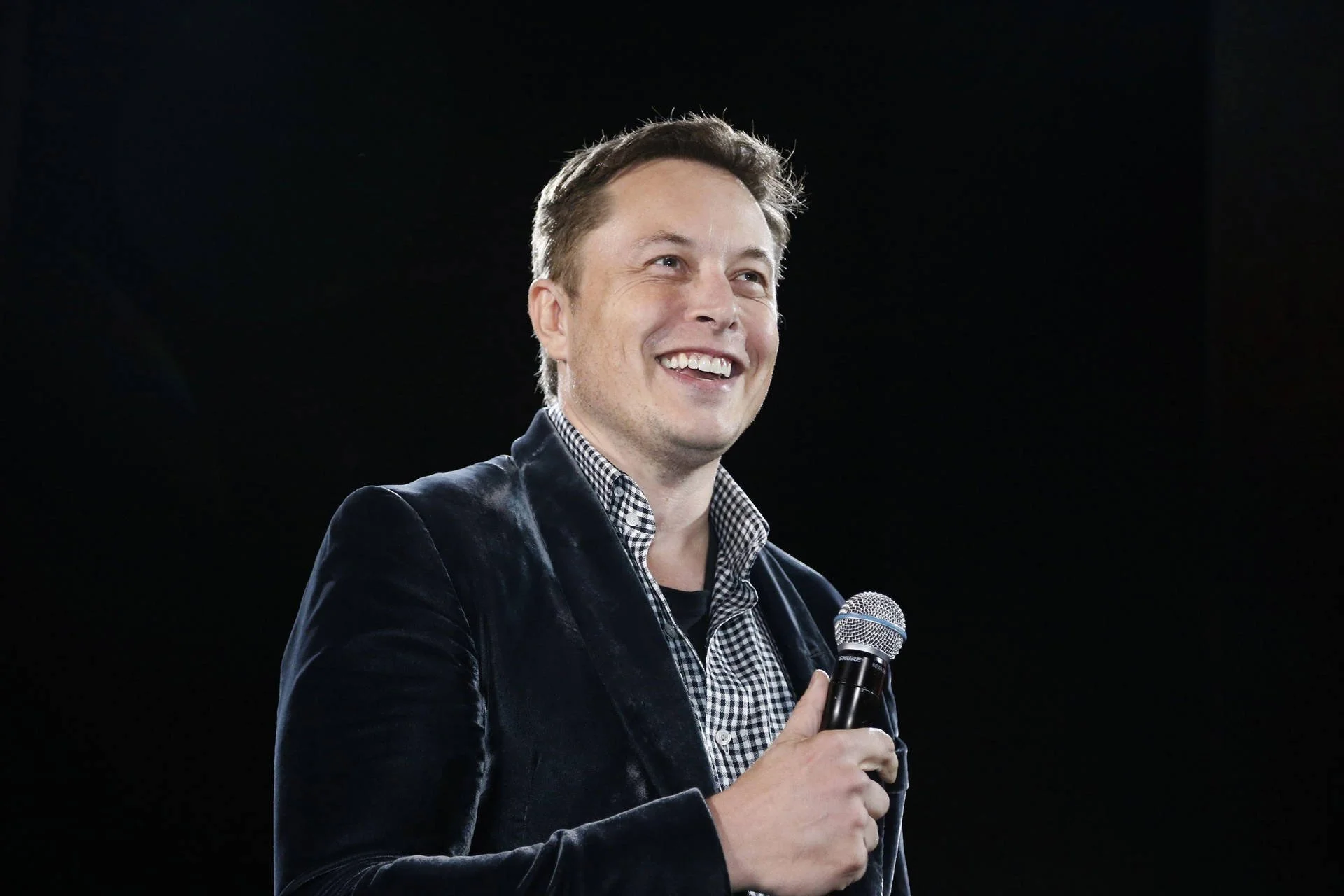
Why Elon Musk May Reshape the 21st Century More Than Any Innovator Before Him
One person advancing seven major industries at once – while the same kind of backlash that hit Edison, Jobs, and Lincoln plays out in real time.
The conversation around Elon Musk stays stuck on personality, politics, and headlines. Yet the measurable outcomes tell a different story: a single entrepreneur has forced global automakers to electrify, slashed space-launch costs by 97 percent, deployed thousands of satellites for internet access in remote regions, and built AI, brain interfaces, and humanoid robots that are already moving from labs to real-world deployment.
History shows this pattern repeatedly. Visionaries who bend entire civilizations get hated in their own era and celebrated later. Musk’s work sits at the widest gap yet between current perception and actual impact – and that gap is closing fast.
Key Takeaways
Musk’s companies are simultaneously transforming seven industries: automotive and energy storage (Tesla), space launch and satellite communications (SpaceX and Starlink), frontier AI (xAI), brain-computer interfaces (Neuralink), and humanoid robotics (Optimus).
SpaceX reduced the cost of reaching orbit from roughly $65,000 per kilogram to about $2,700 – a 97 percent drop – while launching more mass to orbit than every other entity on Earth combined.
Tesla produces over 1.8 million electric vehicles annually and has pushed every major automaker toward full electrification; its Full Self-Driving software is already operating unsupervised in select cities, targeting millions of autonomous robotaxis.
Tesla’s Megapack energy-storage business now delivers higher gross margins than its vehicle side and is scaling grid-scale battery systems worldwide.
The companies form a single flywheel: AI trained on driving data powers robots, battery tech supports rockets, satellite internet connects everything, and each breakthrough accelerates the others.
Personal stakes have been extreme – repeated near-bankruptcies in 2008 and 2018, 120-hour workweeks, and every dollar of early wealth reinvested into high-risk ventures – mirroring the obsessive drive seen in every historical figure who redefined an era.
Long-term civilizational gains include fewer road deaths, accelerated clean-energy transition, abundant low-cost labor through robotics, restored mobility via brain implants, and the infrastructure for multiplanetary expansion.
Today’s polarization focuses on the person; tomorrow’s record will focus on outcomes that change daily life at planetary scale.

Elon Musk's New AI Agent Will Replace Entire Companies
Digital Optimist turns parked Teslas, robots, and Supercharger stations into a real-time digital workforce that runs on $650 chips and learns from everything at once.
A groundbreaking edge AI platform is taking shape that processes your computer screen locally, clicks buttons, fills forms, and navigates software in real time. It pairs this instant execution with high-level reasoning from the cloud only when needed, slashing costs to near zero beyond electricity while delivering speed and reliability that cloud-based agents cannot match. The same core intelligence powers self-driving cars, humanoid robots, and these digital workers, creating a single learning flywheel that improves every product simultaneously. At scale, this means fleets of agents could handle entire corporate operations using infrastructure already deployed worldwide.
Key Takeaways
A dual-brain system combines local real-time screen watching and action with cloud-based strategic reasoning for seamless autonomous workflows.
Primary processing runs on low-cost Tesla AI4 chips, delivering near-zero marginal cost per task and eliminating the latency and fees of cloud round-trips.
One foundational model adapts the same vision, spatial reasoning, and decision-making capabilities across vehicles, physical robots, and digital agents, with every task feeding back into shared improvement.
Distributed compute leverages parked cars with onboard batteries or wall power, 7 gigawatts available at Supercharger locations, and idle humanoid robots that switch between physical and digital duties.
Plans extend to solar-powered AI satellites in orbit using the identical chip family, providing free energy and vacuum cooling connected via Starlink.
Full vertical integration spans chip design, manufacturing in a planned Terra Fab, deployment in cars and robots, and space-based infrastructure for unmatched efficiency and scale.

The Epstein Black Hole: Intelligence, Tech, and America's Uncertain Path
Why Scandals Like Epstein Could Reshape Foreign Policy and Spark a Tech-Driven Revival
The Epstein case isn't just a media storm—it's a window into how intelligence networks influence global decisions, while technology offers a lifeline for rebuilding trust and prosperity. In the midst of political gridlock and escalating conflicts, emerging tools like AI and independent platforms are challenging old systems, pointing toward a future where transparency and innovation could finally align.
Key Takeaways
Epstein's connections highlight potential intelligence ties that affect U.S. foreign policy, particularly with allies like Israel, raising questions about leverage in ongoing conflicts.
Public frustration with government handling of scandals stems from a perceived lack of transparency, but issues like the economy and immigration often take priority in voter decisions.
Nuclear policy and historical secrecy frameworks continue to justify withholding information, complicating modern accountability in a post-Cold War era.
Independent media and long-form discussions are filling gaps left by traditional outlets, enabling deeper explorations of complex issues and fostering public engagement.
Technological advancements, from AI disrupting jobs to renewable energy promising abundance, represent a hopeful counter to cultural and political decline, though they risk widening divides if not managed carefully.
Political reforms, such as targeted funding for deficit-focused candidates, could create influential voting blocks in Congress, amplifying voices for fiscal responsibility.
COVID-era policies have left lasting psychic impacts, contributing to voter apathy and shifts in party support, especially among younger demographics.
A pro-human approach to tech innovation—balancing benefits like self-driving cars and clean energy with risks like social media isolation—could unify efforts toward a more optimistic national vision.

The America Party Paradox: When Your Biggest Supporter Becomes Your Greatest Threat
Elon Musk's political movement could reshape America—but what happens when the trillionaire who automated your job also controls the party promising to fix it?
Five to ten years from now, America could face an unprecedented political reality: a third party founded by the world's first trillionaire, whose companies eliminated millions of jobs through AI and robotics. This isn't science fiction—it's the logical endpoint of current trajectories in politics, technology, and wealth concentration. The implications are both thrilling and terrifying.
Key Takeaways
America Party targets the mismatch between voter registration (50% independent) and Congressional representation (99% Democrat/Republican).
Success would make Musk both the richest person ever and founder of the nation's most powerful political party—an unprecedented concentration of influence.
The AI/robotics revolution will eliminate drivers, cut management roles by 80%, and transform physical labor, creating massive displacement.
Political opponents will weaponize job losses against the party led by the person whose companies automated those jobs away.
Universal Basic Income becomes inevitable, but which party champions it could determine America's political future for generations.
The venture might serve as a "beta test" for governing Mars, where SpaceX would need to establish political structures.
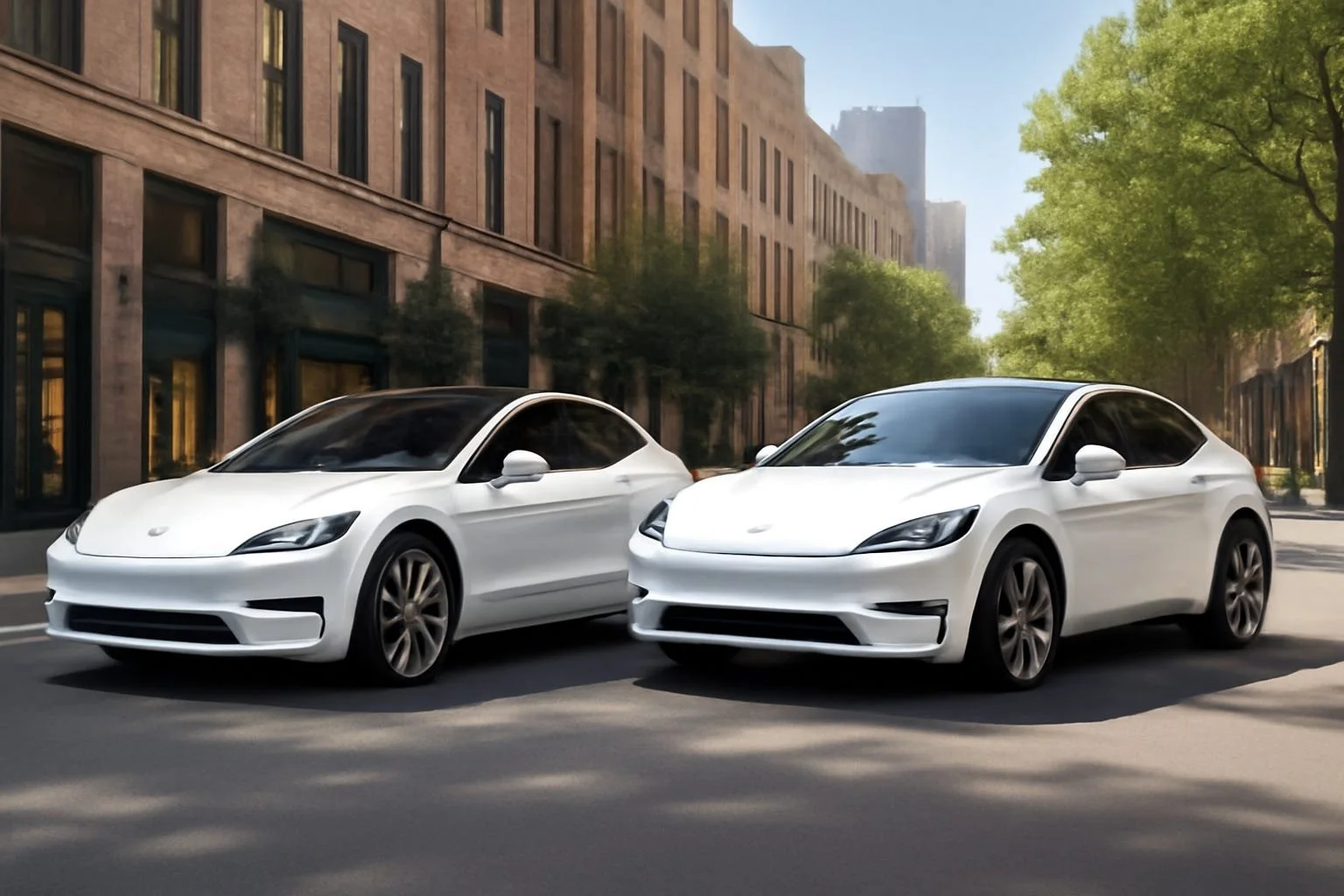
The Robotaxi Panel: 119 Rides Later
Industry insiders share unfiltered insights on pricing wars, expansion strategies, and the race to dominate autonomous transportation
Five Tesla enthusiasts who collectively logged 119 robotaxi rides gathered to dissect the emerging battleground between Tesla and Waymo in Austin. Their candid discussion reveals surprising operational challenges, aggressive expansion possibilities, and why the economics of self-driving cars might destroy traditional ride-sharing sooner than expected.
Key Takeaways
Waymo charges $5-6 more per ride than Uber in San Francisco yet captured 25% market share in just 16 months, proving customers will pay premium for driverless experience
Tesla needs 3 robotaxis per teleoperator to achieve profitability; current 1:2 ratio (one car, two operators) is economically unsustainable
Waymo's Austin operations require "hacking" the Uber app with specific preferences, creating significant user friction compared to Tesla's dedicated app
North Austin expansion faces challenges including heavy foot traffic, University of Texas campus crowds, and 90,000-person football game days
Tesla manufactures Waymo's entire global fleet equivalent every 5 hours, highlighting massive scale advantages
House passage of EV tax credit elimination accelerates Tesla's Q3 timeline, potentially spurring faster robotaxi deployment