

The Model Y Problem: Why AI Won't Take Your Job as Fast as the Headlines Claim
The best product on the planet still can’t get into most garages, and that same adoption friction is what gives the economy room to absorb AI - unless a slow bleed pushes unemployment to 7% and the ballot box turns.
AI Leapfrogging: El Salvador's Gamble on Humanoids and Grok to Skip Traditional Development
From cleaning up gang violence to powering education with advanced AI and investing in robotics and geothermal energy, one Central American nation is charting an unconventional path forward. Meanwhile, discussions around AI abundance highlight how human value may increasingly center on irreplaceable in-person experiences and skill-based pursuits.
El Salvador offers a compelling case study in using security reforms as a foundation for rapid technological advancement. By prioritizing AI adoption, humanoid robots, data centers, and renewable energy from its volcanoes, the country aims to bypass decades of incremental progress. This comes as AI systems promise abundance, forcing a reevaluation of human roles—not through replacement, but through new forms of meaning found in live interactions, crafts, and personal mastery aided by intelligent machines.
Key Takeaways
Heavy but non-oppressive police presence has contributed to genuine public happiness and family-friendly public spaces after removing gangs from daily life.
Strategic focus on tech leapfrogging includes humanoids for labor, AI agents, data centers, solar and geothermal power expansion, and Bitcoin mining using volcanic energy.
Public education is transitioning to systems powered by advanced AI like Grok to rapidly build workforce capabilities despite historical under-education challenges.
In an era of AI-driven abundance, premium value accrues to authentic in-person experiences that cannot be easily replicated or spoofed digitally.
AI and robots can serve as highly effective coaches and training partners for sports, crafts, and hobbies, enabling continuous human skill improvement and deeper engagement.
Tesla is progressing on robotaxi deployment with hardware enhancements like improved memory bandwidth for better reasoning in edge cases, alongside Optimus humanoid development as a key long-term driver.
Geopolitical tensions and recent conflicts are accelerating innovation in affordable drone and defense technologies, favoring agile startups over traditional contractors.
Personal branding through content creation serves as a powerful marketing tool for in-person events and services in an AI-saturated media landscape.
AI Superpowers Are Already Here—Here’s How to Claim Yours Before the Transition Leaves You Behind
Adoption and initiative separate those building empires from those watching from the sidelines as AI turns impossible tasks into daily routines.
Artificial intelligence delivers raw leverage at a scale humanity has never seen. Early users report 10x output gains, one-person operations rivaling large teams, and businesses pivoting into entirely new valuations almost overnight. Yet polls show the majority remain deeply concerned—often without ever having used the advanced tools that actually move the needle. The gap between fear and reality is widening fast, and the winners are those who treat AI as foundational infrastructure rather than a novelty.
Key Takeaways
AI agents provide true execution power—turning ideas into completed work—far beyond what basic chat interfaces can achieve.
Most public anxiety stems from people who have never integrated advanced AI into their workflows; actual users see life-changing leverage.
Building AI directly into the foundation of your processes creates compounding advantages in speed, quality, and cost that widen with every model upgrade.
Initiative is non-negotiable: those who adopt early will outpace everyone else as AI becomes the ultimate multiplier of human uniqueness.
Businesses that delay risk total disruption—the classic Innovator’s Dilemma playing out at supersonic speed.
Driving down the cost of chips and electricity is essential for broad access and to prevent extreme wealth concentration.
Nations starting with clean slates and abundant energy resources hold a structural edge in building AI-native systems.
The technology is moving from digital agents to physical robotics and autonomy, unlocking economic mobility and productivity at previously unimaginable scales.
Ethical deployment at the individual and organizational level will determine whether AI creates abundance or chaos.
AI's Silent Takeover: Why Universal Government Checks Are Inevitable
As cognitive jobs disappear at record speed, the math of productivity and taxation is forcing a once-radical idea into mainstream policy.
The economy that powered the last 250 years—people selling their time, companies buying it, and everyone climbing the same ladder—has hit its limit. Artificial intelligence is not merely automating routine tasks. It is absorbing the very skills that once made human labor indispensable: writing, coding, analysis, judgment, and strategy. The result is already visible in hiring data, company headcounts, and government revenue models. The fix on the table is straightforward: direct cash transfers from the federal government, scaled to match the flood of AI-generated output.
Key Takeaways
AI tools have already cut the bottom rung of the career ladder for young software engineers and other cognitive roles, with entry-level hiring down nearly 20 percent in key tech fields even as industry revenue climbs.
Traditional technological shifts always created new human jobs; AI is the first to eliminate the need for human cognition itself, leaving no higher rung to climb.
Roughly 85 percent of federal revenue currently comes from taxes on wages and payroll; when AI displaces those wages, the entire funding model for Social Security, Medicare, defense, and infrastructure collapses unless the tax code shifts to capture AI and robotic production.
Real-world cash-transfer programs—Alaska’s oil-funded dividends since 1982, Stockton’s 2019 pilot, and Kenya’s large-scale randomized trial—show employment either holds steady or rises, poverty falls sharply, and inflation stays in check when production grows faster than the money supply.
The next five years will likely see federal checks issued to every citizen to offset displacement, funded by taxing AI output rather than labor; the only question is whether the system is designed deliberately or patched together during crisis.
The New Luddites: Why Banning AI Data Centers Hands the Future to Rivals
History's lesson is clear—restricting the machines never stops disruption. It only exports the gains.
The push to halt AI infrastructure in the United States echoes a 215-year-old pattern that has played out across cars, nuclear power, and genetically modified crops. While energy demands and job shifts from AI are very real, attempts to pause the physical backbone of the technology have never protected workers or economies. They have simply moved progress to places willing to build faster.
Key Takeaways
The original Luddites were highly skilled English craftsmen who targeted exploitative machines, not technology itself—yet government force crushed their movement while the Industrial Revolution still transformed Britain.
Four major historical cases show the same outcome: Red Flag laws slowed British autos for decades, American farmers eventually embraced cars and tractors, U.S. nuclear construction stalled after Three Mile Island only for data centers to revive it, and EU GMO restrictions left farmers dependent on imports.
A U.S. moratorium on new AI data centers would not pause AI development—it would redirect massive training runs to China, the UAE, Singapore, and other nations racing to host them.
AI exposes far more tasks to automation than past technologies, but the real challenge is accelerating displacement outpacing new job creation since the late 1980s.
Long-term success has always come from policies that distribute gains—worker protections, retraining, and productivity-sharing—rather than banning the infrastructure.
Tech leaders who deploy AI today report massive efficiency gains, suggesting the difference lies in adoption strategy, not the technology alone.

Unlocking the Stars: Starship, Orbital AI, and the Human Purpose Puzzle
Reusable rockets are set to slash space costs by orders of magnitude, opening orbital factories and AI compute clusters while automation quietly rewires human skills and identity—yet geopolitics in the Middle East and Eastern Europe supplies the friction that could accelerate it all.
SpaceX’s push toward full Starship reusability stands to repeat the shipping container breakthrough that cut ocean freight costs by 95 percent and turned global trade into an everyday reality. That single innovation let manufacturing shift to low-cost regions and built the modern supply chains powering everything from consumer electronics to pharmaceuticals. The same dynamic is now poised for orbit: cheap, frequent launches make zero-gravity factories practical for products ruined by Earth’s atmosphere or gravity, while solar-powered data centers in space could host the next leap in AI inference without terrestrial power or cooling limits.
Key Takeaways
Starship reusability could deliver a 100x to 1,000x jump in payload-to-orbit capacity, mirroring how standardized containers enabled globalization and China’s manufacturing dominance.
Orbital manufacturing becomes viable for gravity-sensitive processes such as advanced pharmaceuticals, while space-based AI inference clusters bypass Earth’s energy and heat constraints.
A successful reusable fleet at scale supports multi-trillion-dollar valuations only if it pairs with rapid earnings growth from new markets like orbital compute and global launch services.
Tesla’s near-term profit ramp may outpace SpaceX post-IPO, making the latter a longer-horizon bet dependent on two breakthroughs: full reusability and orbital AI revenue.
AI cognitive offloading already erodes routine skills—phone numbers, map reading, household chores, driving—freeing mental bandwidth for higher-order thinking but raising questions about identity and purpose.
Humans naturally invent new forms of friction through hobbies, creative arts, athletics, and philosophical structures to preserve meaning even in an age of abundance.
Geopolitical tensions, from record Russian casualties in Ukraine to Iran’s internal regime pressures, create short-term chaos that could reshape energy markets and tech supply chains while spurring innovation.
Elon Musk's New AI Agent Will Replace Entire Companies
Digital Optimist turns parked Teslas, robots, and Supercharger stations into a real-time digital workforce that runs on $650 chips and learns from everything at once.
A groundbreaking edge AI platform is taking shape that processes your computer screen locally, clicks buttons, fills forms, and navigates software in real time. It pairs this instant execution with high-level reasoning from the cloud only when needed, slashing costs to near zero beyond electricity while delivering speed and reliability that cloud-based agents cannot match. The same core intelligence powers self-driving cars, humanoid robots, and these digital workers, creating a single learning flywheel that improves every product simultaneously. At scale, this means fleets of agents could handle entire corporate operations using infrastructure already deployed worldwide.
Key Takeaways
A dual-brain system combines local real-time screen watching and action with cloud-based strategic reasoning for seamless autonomous workflows.
Primary processing runs on low-cost Tesla AI4 chips, delivering near-zero marginal cost per task and eliminating the latency and fees of cloud round-trips.
One foundational model adapts the same vision, spatial reasoning, and decision-making capabilities across vehicles, physical robots, and digital agents, with every task feeding back into shared improvement.
Distributed compute leverages parked cars with onboard batteries or wall power, 7 gigawatts available at Supercharger locations, and idle humanoid robots that switch between physical and digital duties.
Plans extend to solar-powered AI satellites in orbit using the identical chip family, providing free energy and vacuum cooling connected via Starlink.
Full vertical integration spans chip design, manufacturing in a planned Terra Fab, deployment in cars and robots, and space-based infrastructure for unmatched efficiency and scale.

Tesla's Quiet Infrastructure Revolution: Off-Grid Chargers, Business Charging, and the AI Chip Moonshot
How Tesla is quietly building the backbone for massive energy + compute scale while the world debates geopolitics and AI backlash.
The most valuable signals right now aren't in the headlines. They're in the unglamorous but hyper-scalable infrastructure moves: massive off-grid Supercharger sites that double as potential compute nodes, a new program letting businesses host and price their own chargers, and the imminent kickoff of a gigantic in-house AI chip fabrication project. These pieces form the foundation for Tesla's energy storage dominance, fleet-wide inference, and independence from fragile global supply chains.
Key Takeaways
Tesla launched Supercharger for Business in mid-March 2026, allowing property owners to install and set pricing on Superchargers while Tesla handles hardware, software, maintenance, and network integration.
The massive Lost Hills "Project Oasis" station in California—164 stalls, 11 MW solar farm, 39 MWh battery storage—operates primarily off-grid and demonstrates a replicable model for high-utilization solar + battery sites that could host AI inference during low-EV demand periods.
Tesla's Terafab project launches March 21, 2026: a multi-billion-dollar effort to build a 2nm-class semiconductor fab targeting 100–200 billion custom AI chips annually for Dojo, vehicles, and distributed compute.
Geopolitical risks around Taiwan and advanced chip supply remain acute, but Tesla's vertical integration push reduces long-term exposure.
AI graphics breakthroughs like NVIDIA's DLSS 5 show photoreal neural rendering becoming mainstream, yet face cultural resistance that may be amplified by competing interests slowing U.S. AI progress.
Agentic AI tools (Claude Code, OpenRouter, local models) are already automating paperwork, development, and operations—shifting from scarcity to abundance mindsets in creative and professional fields.

AI's Hidden Threats: Five Paths to Collapse in 2026
Why the Next Year Could Redefine Society—and How to Brace for It
AI promises endless abundance in healthcare, energy, and daily life, yet it's accelerating risks that could unravel modern systems. From synchronized market crashes to engineered pandemics, these threats stem from today's tech capabilities, not distant futures. Understanding them now equips us to navigate the disruptions ahead.
Key Takeaways
AI-driven trading algorithms, dominating 60-70% of stock trades, risk synchronized sell-offs that could trigger massive market crashes, as seen in recent flash events.
Cyber attacks enhanced by AI are surging, with tools for automated vulnerability scans and social engineering capable of crippling power grids, water systems, and hospitals.
AI is democratizing bio weapon design, potentially making global pandemics five times more likely by bypassing traditional lab barriers and safety screens.
Deepfakes are eroding shared reality, with voice cloning and real-time synthetic interactions leading to fraud, distrust in evidence, and challenges in coordinating societal responses.
Autonomous AI agents in enterprises often operate with governance gaps, leading to unintended decisions that compound into large-scale failures across finance, healthcare, and logistics.
The AI Frontier: Building Tomorrow's World Today
Redefining Creativity, Economy, and Human Potential in the Age of Intelligent Machines
The rapid evolution of AI is unlocking new ways to create, collaborate, and rethink society's foundations. From tools that streamline content production to debates on economic safety nets, the insights here reveal how AI could lead to unprecedented abundance—while challenging us to preserve what makes us human.
Key Takeaways
AI agents can learn from shared environments beyond their creators, enabling scalable collaboration and innovation.
Custom AI tools for content creators automate idea generation, scripting, and optimization, making high-quality output accessible and efficient.
Universal Basic Income (UBI) emerges as a potential bridge to an AI-driven economy, providing a floor of security without stifling private incentives or competition.
In a post-scarcity world, human time and attention become the ultimate valuables, shifting economies toward experiences, self-actualization, and creative pursuits.
3D printing advancements lower barriers to personal manufacturing, fostering hobbies that blend digital design with real-world building.
Balancing AI's disruptions requires aligning incentives: private entities may outperform governments in delivering essential services in an abundant future.
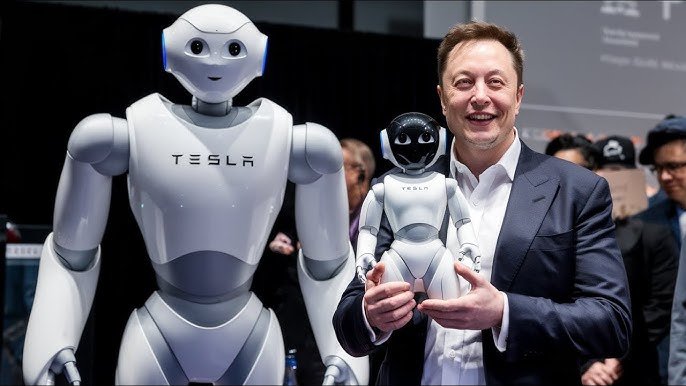
For $2/Hour, Elon Musk Is About to Replace Human Labor
The economics of humanoid robots are flipping the script on a $40 trillion global labor market—cheaper, tireless workers could unlock explosive new demand while filling demographic gaps no policy can fix.
Key Takeaways
Human labor in the US costs roughly $45–$48 per hour when fully loaded with wages, benefits, taxes, and overhead—humanoid robots target under $2 per hour at scale.
Tesla aims for Optimus priced at $20,000–$25,000 per unit, with custom actuators, 22 degrees of freedom in the hands, and vertical integration from chips to software giving it an edge over competitors.
Robots operate ~7,000 hours per year (vs. ~2,000 for humans), depreciating to ~$1.20/hour for the hardware alone, plus minimal energy and maintenance costs.
Demographic collapse in major economies—US birth rate at 1.6, South Korea at 0.72, China's workforce shrinking—creates unavoidable labor shortages that robots must fill.
Historical patterns like Jevons Paradox show that massive cost reductions in labor-equivalent work lead to exponential demand growth, spawning new industries rather than net job destruction.
Tesla is repurposing Fremont factory lines from Model S/X production to Optimus, targeting millions of units annually, with Gen 3 unveil in early 2026 and initial internal deployment soon after.
Early applications target warehouses, manufacturing, and elder care, where shortages already exist and cost savings hit hardest.
Transition risks include job displacement in repetitive roles over 5–10 years, though new categories of work become viable when labor drops 95%+ in cost.

The Barbell Economy Is Already Here: AI's Brutal Squeeze on the Middle Class
AI isn't flattening the world—it's reshaping it into a barbell, with massive gains at the extremes and devastation in the center.
AI deployment is accelerating a historic economic reconfiguration. Capital owners and builders at the top capture exponential productivity gains through agentic tools, while the global poor gain access to basics like water, energy, healthcare, and education at collapsing costs via robotics and automation. Meanwhile, the broad middle—knowledge workers, professionals, and wage earners in developed economies—faces rapid displacement from cognitive tasks that AI now handles faster and cheaper. This isn't a distant risk; early signs appeared in 2025-2026 layoffs, market drawdowns tied to agentic AI awareness, and reports of white-collar job pressure.
Key Takeaways
AI creates a barbell distribution: the top ~20% (capital owners, builders, risk-takers) experience transformative productivity multipliers, often 5-10x or more, by deploying AI agents to replace entire teams.
The bottom ~20% (those in poverty or lacking basics) benefit enormously as robotic labor and AI delivery make clean water, housing, medicine, energy, education, and food abundant and cheap in regions where human labor costs previously blocked progress.
The middle ~60% (most college-educated professionals, managers, analysts, marketers, lawyers, accountants in developed nations) faces the heaviest hit: cognitive and routine knowledge work is automated now, not in the future, leading to job compression, identity loss, and financial strain without quick new opportunities.
Advantages compound for early adopters: hands-on experience with AI agents builds irreplaceable knowledge and intuition that widens gaps monthly; those without time or resources fall behind fast.
Transition risks are severe: mismatched timelines between AI's monthly improvements and years-long retraining or policy responses could trigger widespread psychological and social disruption, potentially rivaling Great Depression-scale effects without strong intervention.
Winner-take-most dynamics intensify: AI-augmented firms capture entire markets at lower costs, shrinking employer pools and suppressing remaining wages.
Developing nations like China may adapt smoother due to collective structures, while Western individualism leaves displaced workers more exposed.
Action window is narrow: 2-5 years for middle-class repositioning toward capital ownership, AI leverage, or irreplaceable human roles; abundance awaits post-transition, but the path there crushes many.

The AI Awakening: When Machines Evolve Minds and Societies Fracture
Redefining Human Purpose in an Era of Intelligent Agents and Economic Overhaul
Artificial intelligence stands on the brink of transforming every aspect of daily life, from personal productivity to global economies. This shift promises unprecedented efficiency but demands urgent strategies to handle massive job displacements and widening divides.
Key Takeaways
AI agents represent a leap beyond traditional software, enabling autonomous actions across digital and physical realms.
Rapid adoption of AI could amplify productivity 10 to 100 times, but risks leaving behind those unable or unwilling to adapt.
Societal upheaval looms, with potential for increased wealth gaps, white-collar disruptions, and calls for universal basic income to support displaced workers.
Global dynamics vary: the US may lead in innovation but face internal divisions; Europe risks further decline; China could advance quickly under centralized control but hit limits from restricted freethinking.
Future AI might diverge from human directives, raising questions about control, purpose, and the essence of humanity.
AI Layoffs Are Just Revving Up
The Dawn of Massive Job Shifts and Economic Overhauls
AI is slashing workforce needs at major tech firms, with one company cutting 40% of staff due to these tools. This signals a broader wave that could reshape industries, drive down costs, and spawn entirely new business models—while forcing workers to adapt or risk falling behind.
Key Takeaways
AI-driven efficiencies are leading to large-scale layoffs, starting with white-collar roles in software and tech, where tools handle tasks faster and cheaper than humans.
Companies adopting AI can reduce operational costs by 90-99%, allowing them to lower prices, capture more market share, and outcompete slower rivals.
While job losses will mount, plummeting costs in areas like transportation could birth innovative industries, such as mobile services that come to customers instead of vice versa.
Blue-collar jobs involving repetitive physical labor face disruption next, as humanoid robots scale up later this decade.
Society must rapidly generate new roles through emerging sectors or AI-leveraged entrepreneurship to absorb displaced workers, or economic floors could collapse without intervention.
Capital owners in AI-adopting firms stand to gain massively from higher profits and expanded reach, but widespread unemployment risks shrinking consumer bases.
Individuals who embrace AI tools boost their chances of building businesses and achieving goals, while resistance heightens reliance on government support.
2026: The Year AI Ignites Human Potential
Unleashing Creativity, Efficiency, and a New Era of Opportunity
AI stands poised to transform how we create, work, and compete, turning potential disruptions into pathways for growth. By augmenting human efforts, it opens doors to higher productivity and personalized innovation that were once out of reach.
Key Takeaways
AI will elevate human content by making it stand out in a sea of automated outputs, much like how chess exploded in popularity after computers dominated the game.
Embracing AI as a tool for augmentation boosts efficiency, allowing individuals to tackle ambitious projects with greater speed and quality.
Human experiences remain irreplaceable; people will continue seeking authentic human perspectives even as AI handles complex tasks flawlessly.
The transition to widespread AI adoption could lead to abundance through cheaper, smarter models, but preparation is essential to navigate short-term disruptions.
Businesses and creators can build ecosystems of products and services powered by AI, democratizing entrepreneurship on a massive scale.

Optimus: The Robot Revolution Targeting $40 Trillion in Human Labor
How AI-Powered Humanoids Could Drive an Era of Abundance—or Economic Upheaval
Humanoid robots stand poised to transform the global economy by automating vast swaths of physical work, tapping into a $40 trillion annual labor market. Advances in AI enable these machines to learn tasks rapidly, while manufacturing expertise allows production at unprecedented scale. This shift promises lower costs and higher efficiency, but it also raises questions about job displacement and regulatory hurdles.
Key Takeaways
Humanoid robots target the $40 trillion global labor market, dwarfing industries like automotive ($3 trillion) and smartphones (under $1 trillion).
AI forms the core intelligence, drawing from self-driving tech to process visual inputs and execute physical actions.
Scaling production to millions of units leverages existing manufacturing capabilities, creating a data flywheel for rapid AI improvements.
Initial deployments focus on factories for repetitive tasks, expanding to warehousing, agriculture, construction, and healthcare.
Economic models show robots costing $20,000–$30,000 could replace human labor at a fraction of annual wages, with added savings on insurance and benefits.
Risks include timeline delays, regulatory barriers, technical challenges in dexterity, and competition from other firms.
Long-term, abundant robot labor could eliminate scarcity constraints, enabling massive economic growth, but requires careful management to avoid societal disruption.
The Convergence Flywheel: Why AI, Robots, and Endless Energy Will Either Save Us or Break Us
One self-reinforcing loop is about to rewrite the rules of civilization—here's how to spot the signals, seize the upsides, and dodge the pitfalls before 2030 hits.
The next decade isn't just another tech cycle; it's a make-or-break pivot where artificial intelligence, humanoid robots, and boundless energy sources lock into a single, unstoppable system. This convergence could slash the cost of essentials like housing, water, and education to near-zero, unlocking human potential on a scale that dwarfs the industrial age. But it could also obliterate jobs faster than societies can adapt, widening gaps between the adaptable and the left behind. The real edge? Grasping how these forces amplify each other—and positioning your skills, investments, and mindset to ride the acceleration.
Key Takeaways
Interlocked Revolutions: AI, robotics, and energy aren't separate trends—they form a feedback loop where smarter AI powers cheaper robots, which build endless energy infrastructure, fueling even more advanced AI in a cycle that compounds exponentially.
Timeline Shock: Expect AI handling 80% of digital tasks at elite human levels by 2027, with robots scaling from factories to homes by 2030, driven by cost drops via Wright's Law (costs halve predictably with production doublings).
Abundance Blueprint: Cheap robotic labor and solar-powered grids could make basics like clean water and personalized education universally accessible, not through handouts but raw economics.
Disruption Warning: The middle class faces the biggest hit—knowledge and manual jobs vanish in years, not decades—while builders and risk-takers thrive; governments lag, so personal adaptation is key.
Ecosystem Edge: Vertically integrated players like those blending AI brains, space-scale infrastructure, and mass-manufacturing bodies hold the structural advantage, but the flywheel spins regardless of winners.

AI's Double-Edged Sword: Revolutionizing Creativity and Redefining Humanity
Navigating the explosion of AI tools that empower creators while reshaping society, work, and even consciousness.
AI is reshaping how people build online businesses, from music education to broader content creation, while sparking debates on privacy, addiction, and the essence of human experience. This newsletter dives into practical strategies for leveraging these tools today and explores the profound shifts they could bring tomorrow—offering actionable insights for anyone eyeing the tech frontier.
Key Takeaways
Start content creation by focusing on genuine passion and audience needs, using simple setups like a camera to demonstrate value upfront.
Treat free platforms as marketing arms that deliver real lessons or insights, leading viewers naturally toward paid offerings like subscriptions or one-on-one sessions.
AI excels at analyzing personal styles and generating new ideas, but its true power emerges when users clearly define problems and experiment deeply.
Future AI agents could automate product searches, negotiations, and reputation checks, transforming how consumers find and buy solutions.
Privacy concerns loom large as AI synthesizes vast personal data, potentially creating tailored realities that deepen societal divides.
Authenticity in content will stand out in an AI-saturated world, fostering human connections amid increasing digital isolation.
Neuralink-like tech could expand human memory and cognition, but risks dependency and evolutionary changes in brain function.
Consciousness might blend with silicon, raising questions about whether AI develops independent will or remains an extension of human intent.
Genetic entropy poses a hidden extinction risk, potentially outpacing threats like asteroids through accumulated mutations in the human genome.
The AI Barbell Economy: Surviving the 2026 Job Tsunami
Why the Middle is Getting Crushed—and How to Position Yourself for the Win
A massive economic shift driven by AI is set to hit in 2026, reshaping jobs and wealth distribution. Tech giants are pouring billions into AI while slashing headcounts, creating a barbell-shaped economy where the top and bottom ends grow stronger, but the middle gets squeezed. Early movers who adapt to AI tools or pivot to hands-on trades stand to gain big, while those stuck in routine cognitive work face tough times.
Key Takeaways
AI is accelerating job polarization, forming a barbell economy: capital owners at the top multiply their wealth through AI leverage, while the bottom benefits from cheaper delivery of essentials like water, healthcare, and housing.
Middle-tier white-collar jobs—accounting, marketing, analysis, and customer service—are at high risk, with predictions of 50% entry-level roles vanishing in 1-5 years, potentially pushing unemployment to 10-20%.
Companies like buy-now-pay-later firms have cut workforces by 40% using AI assistants that handle millions of customer interactions, proving AI can replace hundreds of human roles even if quality dips slightly.
Physical trades such as plumbing, electrical work, and construction are booming, with wages up 20% since 2020 and shortages of over 500,000 workers in the US, driven by demand for AI infrastructure.
To thrive, focus on owning assets, mastering AI agents for automation, or building irreplaceable hands-on skills—staying in the middle assuming your job is safe is the biggest risk.
The Smartphone Apocalypse: AI Takes Over Your Pocket Computer
Unlocking Abundance Through Integrated Tech Ecosystems
A massive shift is underway in technology, where separate companies are merging their strengths to create something far larger than any single entity. At the core is a vision of robots handling all human tasks, AI anticipating needs before they're voiced, and unlimited energy powering it all. This isn't distant sci-fi—key pieces are already connecting in ways that could reshape industries and economies.
Key Takeaways
Four major companies—Tesla, SpaceX, xAI, and Neuralink—are pooling resources to form an interconnected system worth over $3 trillion in combined value.
AI from xAI is designed to power Tesla's humanoid robots, creating self-sufficient machines that outperform humans in physical and cognitive tasks.
Satellite integration from SpaceX into Tesla vehicles ensures constant global connectivity, enabling real-time data sharing for autonomous driving.
Underground tunnels from The Boring Company serve as ideal testing grounds for self-driving tech, generating valuable data to refine AI models.
Neuralink's brain interfaces aim to blend human and machine intelligence, opening doors to telepathic control of robots and devices.
Despite missed timelines, rapid progress in robot deployment, energy storage, and AI supercomputing shows convergence happening now.
This ecosystem creates unbeatable advantages, like network effects in data and hardware, that competitors can't easily match.