

Musk Lifts Tesla Voting Power to 20% Days After the $1.7 Trillion SpaceX-xAI IPO
By exercising 304 million options from his 2018 award five days after the newly merged SpaceX-xAI began trading, Musk is quietly assembling the control stack needed to bolt Tesla onto a nascent $4 trillion machine.

SpaceX Bets Its IPO on Turning Space-Based Sunlight Into Intelligence With AI-1 Orbital Data Centers
Alongside its historic public offering, SpaceX unveiled AI-1, a solar-powered satellite carrying a 150-kilowatt computing payload, revealing a vertically integrated plan to manufacture cognition from the cheapest energy in the solar system.

SpaceX Absorbs xAI and Bets Its $1 Trillion Revenue Target on Compute, Not Rockets
Fresh off the largest IPO in history, Elon Musk is claiming SpaceX can multiply revenue 54x by 2030 — a promise that only makes sense because the company quietly became an AI infrastructure play whose addressable market it pegs at $28.5 trillion.

Virginia's Data Center Alley Hits a Political Wall as the AI Buildout Outgrows the Grid
The nation’s densest cluster of compute is now cycling backup generators as primary power and colliding with a new governor’s moratorium, exposing how permitting fights over nuclear and battery storage are throttling the AI boom’s real bottleneck: electricity.

The Infrastructure Play That Could Decide AI's Next Decade
How record deployment speeds, orbital power constraints, and runaway token demand are forcing a complete rethink of who can actually deliver abundant intelligence at scale.
The real bottlenecks in advanced AI have shifted from model architecture to physical execution. Legal maneuvers around major labs have exposed governance friction without resolving underlying questions about long-term stewardship. At the same time, the ability to stand up massive compute clusters in months rather than years, combined with the hard physics of powering AI workloads off-planet, is creating asymmetric advantages for players who control both the chips and the energy layer. Most overlooked: even steep gains in efficiency will not flatten demand. New applications in video synthesis, persistent agents, and physical robotics multiply token consumption faster than optimization curves can contain it. The organizations that solve the manufacturing, power, and orbital constraints first will set the cost floor for intelligence for years to come.
Key Takeaways
Legal resolutions on procedural grounds in AI governance cases can inflict lasting reputational damage while leaving core structural issues unaddressed, increasing the likelihood of internal leadership changes at scaled labs rather than wholesale unwinds of their corporate form.
Model performance has split along task lines, with some systems delivering superior cost-performance on coding workloads and others advancing faster on general capabilities, accelerated by targeted talent inflows and selective early access programs.
First-principles manufacturing discipline and direct production-line leverage have compressed large-scale GPU cluster deployment to roughly four months, enabling potential cost leadership when paired with integrated renewable generation.
AI satellites operating in higher orbits face rapid solar panel degradation from elevated radiation, requiring specialized space-grade photovoltaics whose global production remains limited to a few megawatts per year and concentrated supply chains.
Token demand follows Jevons paradox dynamics: efficiency improvements from distillation and specialized models unlock entirely new use cases in generative media, autonomous agents, and robotics that drive net consumption sharply higher.
Electricity prices in key technology corridors have risen 200 percent or more in recent years, underscoring the need for co-located generation, deregulation of new capacity, and expanded domestic solar manufacturing to prevent cost curves from throttling AI deployment.
National leadership selection patterns that favor engineering execution correlate with faster delivery of complex infrastructure projects, creating competitive edges in the physical layer of intelligence.
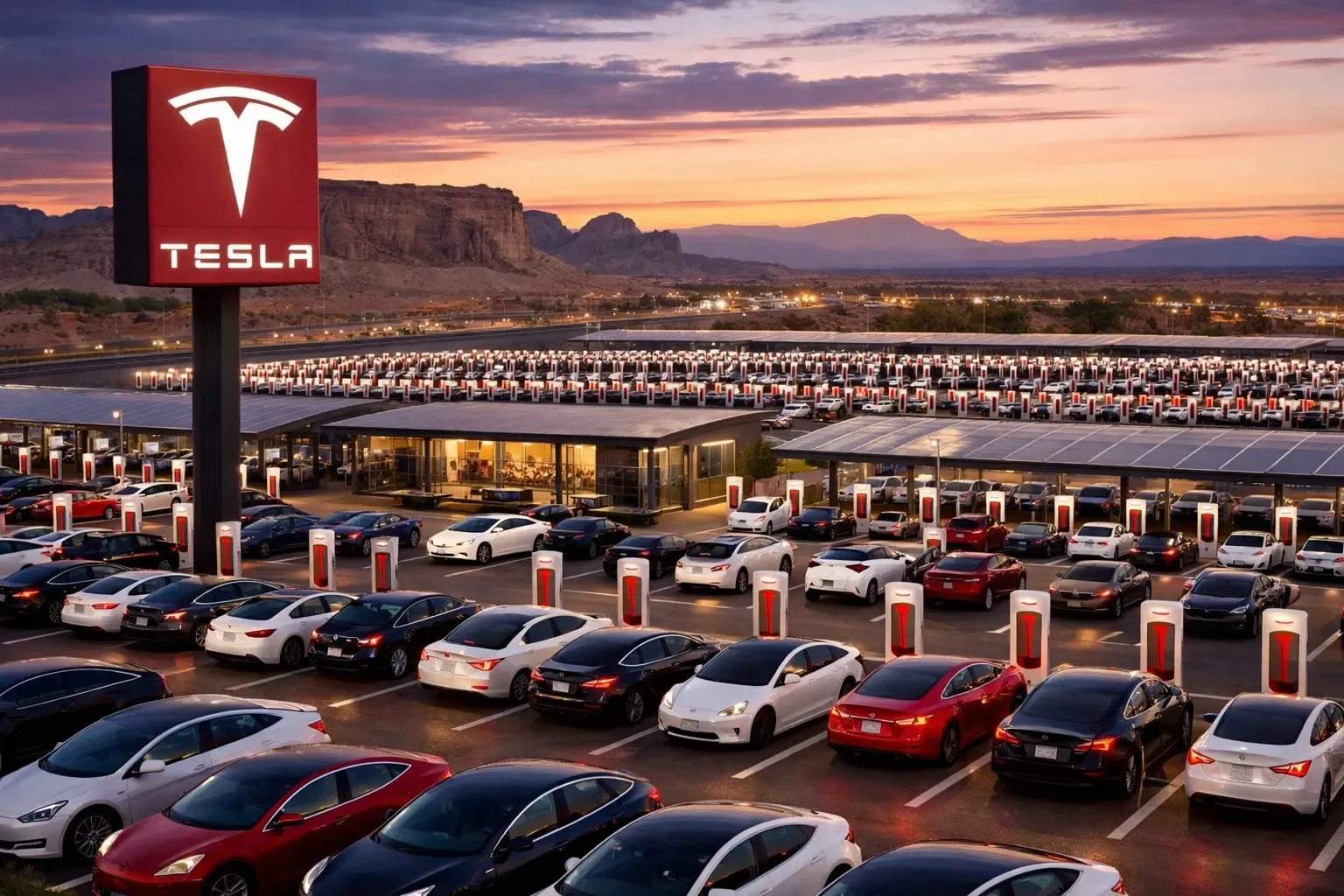
Tesla's Quiet Infrastructure Revolution: Off-Grid Chargers, Business Charging, and the AI Chip Moonshot
How Tesla is quietly building the backbone for massive energy + compute scale while the world debates geopolitics and AI backlash.
The most valuable signals right now aren't in the headlines. They're in the unglamorous but hyper-scalable infrastructure moves: massive off-grid Supercharger sites that double as potential compute nodes, a new program letting businesses host and price their own chargers, and the imminent kickoff of a gigantic in-house AI chip fabrication project. These pieces form the foundation for Tesla's energy storage dominance, fleet-wide inference, and independence from fragile global supply chains.
Key Takeaways
Tesla launched Supercharger for Business in mid-March 2026, allowing property owners to install and set pricing on Superchargers while Tesla handles hardware, software, maintenance, and network integration.
The massive Lost Hills "Project Oasis" station in California—164 stalls, 11 MW solar farm, 39 MWh battery storage—operates primarily off-grid and demonstrates a replicable model for high-utilization solar + battery sites that could host AI inference during low-EV demand periods.
Tesla's Terafab project launches March 21, 2026: a multi-billion-dollar effort to build a 2nm-class semiconductor fab targeting 100–200 billion custom AI chips annually for Dojo, vehicles, and distributed compute.
Geopolitical risks around Taiwan and advanced chip supply remain acute, but Tesla's vertical integration push reduces long-term exposure.
AI graphics breakthroughs like NVIDIA's DLSS 5 show photoreal neural rendering becoming mainstream, yet face cultural resistance that may be amplified by competing interests slowing U.S. AI progress.
Agentic AI tools (Claude Code, OpenRouter, local models) are already automating paperwork, development, and operations—shifting from scarcity to abundance mindsets in creative and professional fields.
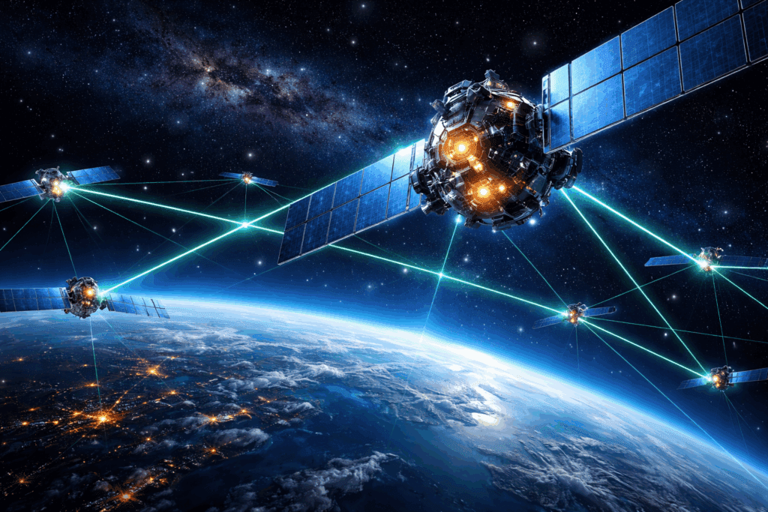
The Orbital AI Boom: Musk's Master Plan for Infinite Compute
Merging Rockets and Intelligence to Fuel the Future
The convergence of space tech and AI is accelerating at a pace that could transform global industries. Recent developments point to orbital data centers becoming a reality, powered by unlimited demand for intelligence and energy. Robotaxis are scaling fast, promising to disrupt transportation with low costs and high safety. These shifts open up massive economic opportunities, from cheaper compute to redefined urban mobility.
Key Takeaways
Orbital AI data centers leverage space for unlimited compute, driven by endless demand for intelligence and energy.
Robotaxis could scale to millions of vehicles, undercutting ride-hail prices and expanding to new use cases like mobile businesses.
SpaceX's launch capacity enables rapid deployment of satellites, potentially shifting focus from Earth networks to space-based AI.
Regulatory frameworks at the federal level will accelerate adoption, prioritizing safety data over hardware specs.
Tesla's vertical integration gives it a cost edge, enabling profitable pricing as low as 25 cents per mile at scale.
Unlimited energy and intelligence create a flywheel for growth, with space as the ideal environment for AI expansion.

The AI Revolution: Tesla, Nvidia, and the Future of Compute
Why Tesla and Nvidia Are Poised to Redefine the Global Economy
The AI revolution is reshaping industries, and at its core are two juggernauts: Tesla and Nvidia. Their advancements in artificial intelligence, robotics, and compute infrastructure signal a future where energy, data, and intelligence converge to create unprecedented economic value. From autonomous robotaxis to distributed inference networks, the synergy of these technologies could disrupt entire markets, leaving traditional players like Uber struggling to adapt. Here’s why the stakes are higher than ever and what it means for the future.
Key Takeaways
Tesla’s Robotaxi Dominance: Tesla’s robotaxi network, with dynamic pricing and unmatched cost efficiency, is set to capture significant market share from Uber and Waymo, potentially rendering traditional ride-hailing models obsolete.
Nvidia’s Compute Supremacy: Nvidia’s platform strategy fuels the AI boom, but its long-term margins may face pressure as compute becomes commoditized, creating opportunities for specialized players like Tesla.
Energy and Compute Synergy: Pairing energy storage (like Tesla’s Megapacks) with AI chips enables distributed inference, turning idle energy into valuable computational output.
Video Data as the Ultimate Resource: Video data’s infinite scalability makes it the backbone of AI training, giving Tesla a unique edge with its vast fleet of camera-equipped vehicles.
Retail Investing’s AI Edge: Advanced AI tools are empowering retail investors to uncover opportunities in stocks like Tesla, potentially increasing market liquidity and driving more IPOs.