

Tesla's Robotaxi Push Gains Momentum: Arizona Unlocks Statewide Access
Regulatory Wins Fuel Autonomous Ride-Hailing Growth
Tesla's latest permit in Arizona marks a critical advancement in scaling robotaxi services, enabling paid autonomous rides across an entire state and positioning the company for broader U.S. deployment amid improving software capabilities.
Key Takeaways
Tesla obtained a Transportation Network Company permit from Arizona authorities, allowing legal operation of paid robotaxi services without city-specific limits.
The approval process was expedited, with the application submitted and granted within days, highlighting efficient navigation of regulatory requirements.
This development supports plans to reach multiple new metro areas nationwide by the end of the year, leveraging existing vehicle fleets.
Initial launches will incorporate safety monitors and teleoperators to ensure reliability, with software updates driving toward unsupervised operations.
Similar statewide frameworks in places like Texas could enable quick expansions to cities such as Dallas and Houston.
Tesla's Autonomous Rental Revolution
Redefining Mobility in the Age of Autonomy
Tesla's latest rental offering signals a shift toward flexible, on-demand transportation that could upend traditional car ownership and rental models.
Key Takeaways
Tesla now offers short-term rentals for models like the Model 3 or Model Y, covering charging, maintenance, and insurance for a hassle-free experience.
This program lays the groundwork for a subscription-based transportation system, where vehicles can be summoned via app and returned autonomously.
Self-driving technology enables vehicles to operate without human intervention, maximizing their utility and reducing idle time compared to conventional cars.
Tesla's direct control over sales, service, and fleet management gives it a competitive edge over legacy automakers reliant on dealership networks.
Future expansions could include long-term subscriptions, ride-hailing, and even package delivery, dramatically boosting revenue per vehicle.
Competitors like Waymo face scalability challenges due to higher costs and smaller fleets, while Tesla leverages millions of existing vehicles for rapid deployment.
This model could lower transportation costs globally but may displace jobs in driving and logistics sectors.

Tesla's Cybercab Hits Public Roads: Accelerating Toward an Autonomous Revolution
Why Legacy Automakers Are Braking While Tesla Charges Ahead
Tesla's push into fully autonomous vehicles is gaining momentum with the Cybercab now testing on public streets, signaling production readiness by mid-2026. This comes amid broader EV market challenges, including the end of federal tax credits, which are forcing competitors to scale back while Tesla builds its edge in profitable, self-driving tech.
Key Takeaways
Tesla's Cybercab prototype has begun public road testing in California, starting with sightings in Los Altos near the company's engineering headquarters.
Production is on track for Q2 2026 at Gigafactory Texas, supported by a hiring surge in manufacturing and engineering roles.
Regulatory exemptions from NHTSA could allow Tesla to produce and sell vehicles without steering wheels or pedals beyond the current 2,500-unit annual limit.
Legacy automakers like GM are laying off thousands due to slowing EV demand and the loss of tax incentives, highlighting Tesla's unique position in the market.
Tesla's integrated ecosystem—spanning vehicles, software, charging, insurance, and service—positions it to offer affordable, hands-off mobility solutions under $500 monthly.
Tesla’s Autonomous Revolution: The Dawn of Robotaxis and Beyond
Why Tesla’s FSD v14 Could Redefine Transportation Forever
Tesla’s latest advancements in autonomous driving technology are poised to reshape the automotive and transportation industries. With Full Self-Driving (FSD) version 14, the company appears to have cracked the code on unsupervised self-driving, a milestone that could transform millions of vehicles into autonomous assets. This breakthrough isn’t just about cars—it’s about a seismic shift in how people move, how cities function, and how businesses compete in a rapidly evolving market.
Key Takeaways
Unsupervised FSD Breakthrough: Tesla’s FSD v14 demonstrates near-human or superhuman driving capabilities, enabling vehicles to navigate complex scenarios without driver intervention.
Massive Fleet Potential: With 3–4 million Tesla vehicles worldwide potentially upgradable to unsupervised FSD, the company could deploy a vast robotaxi network.
Cost and Scale Advantage: Tesla’s ability to produce affordable vehicles (around $30,000) with advanced AI gives it a significant edge over competitors like Waymo.
Market Disruption: The expansion of Tesla’s robotaxi network could challenge ride-hailing giants like Uber by offering lower-cost, driverless services.
Regulatory and Data Hurdles: While the technology is advanced, Tesla must accumulate extensive data and secure regulatory approval to scale unsupervised driving.
Tesla's FSD v14: Sentient Driving Arrives, Unlocking Robotaxi Riches
The upgrade that makes your Tesla feel alive—smoother, smarter, and primed for hands-off autonomy that could redefine car ownership.
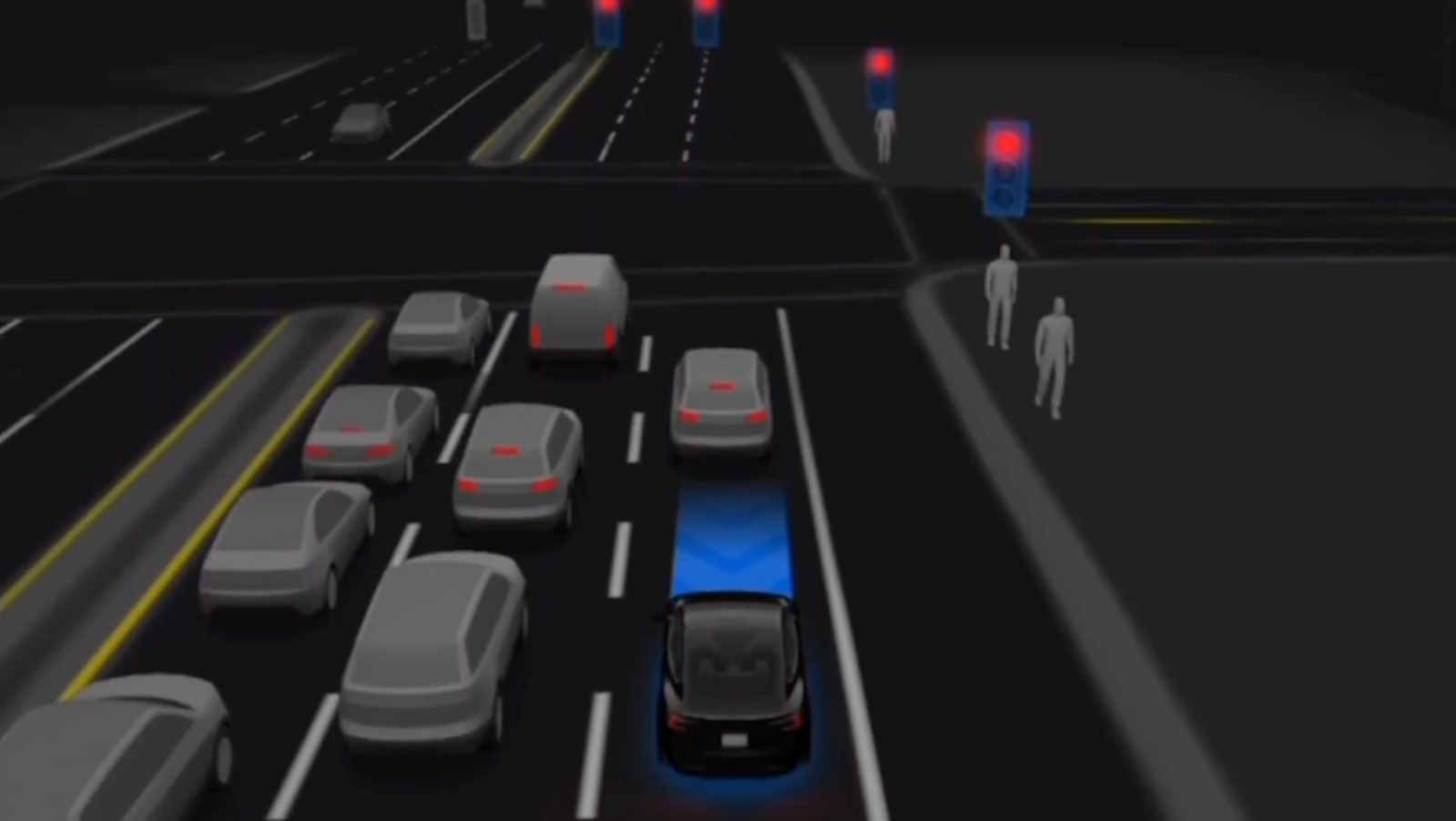
Full Self-Driving (FSD) version 14 hits the road with a leap in human-like intuition, turning everyday drives into effortless experiences while paving the way for unsupervised rides that generate income. Early tests show flawless parking in tight spots and adaptive behaviors that outpace prior versions, signaling Tesla's push toward a future where vehicles earn their keep.
Key Takeaways
FSD v14 introduces customizable arrival options, letting drivers pick parking spots like driveways, curbside, or garages for precise, user-directed endings to trips.
New driving profiles—Sloth for ultra-conservative pacing, alongside Chill, Standard, and Hurry—cater to varied comfort levels, with overall gains in smoothness and decision confidence.
Hands-free mode activates in supervised settings, but alerts ramp up in tricky zones like construction or rail crossings, hinting at broader attention relaxation elsewhere.
Parking precision shines: vehicles now navigate narrow gates, ticket booths, and spots flawlessly, often without human tweaks, feeling like a glimpse of tomorrow.
Minor hitches persist, such as brief braking jolts in low-speed maneuvers or speed nudges beyond limits, but these pale against zero-intervention drives spanning hours.
Broader rollout suggests boosted safety metrics, with rapid follow-ups expected to polish edges, much like the neural net evolutions in v12 and v13.
Unsupervised horizons loom: Robotaxi fleets in Austin and the Bay Area already test advanced variants, collecting data and fares to validate attention-free ops by early 2026.
Economic upside: Autonomous cars could slash ride costs below Uber levels, enabling owners to monetize vehicles via Tesla's network—potentially 10-30% cuts per mile—while fueling decades of demand.
Tesla's FSD V14: On the Verge of Sentient Autonomy
Unlocking Driverless Freedom and Massive Scale in Robotaxis
Tesla stands at the edge of a major breakthrough with its Full Self-Driving software, where vehicles could soon handle complex real-world scenarios with human-like intuition. This update promises to boost safety far beyond current levels, enable hands-off driving for owners, and accelerate the expansion of autonomous ride-hailing networks.
Key Takeaways
Tesla plans to roll out FSD V14 in stages, starting with an early wide release next week, followed by V14.1 in about two weeks, and V14.2 soon after, where the system may exhibit near-sentient behavior.
The update increases parameters by roughly 10 times, allowing the AI to process more variables for nuanced decision-making in unpredictable situations.
Safety could reach 2-3 times better than human drivers, or even up to 10 times, potentially meaning accidents only every 1-5 million miles.
Existing Tesla owners with Hardware 4 could access unsupervised driving via software updates, possibly at a premium monthly fee around $99-200.
The same technology will power Tesla's robotaxi fleets in locations like Austin, the Bay Area, and Arizona, enabling rapid scaling with minimal human oversight.
Higher safety reduces the need for remote operators, potentially allowing one overseer per 1,000 vehicles at 10x human safety levels.
This positions Tesla to undercut competitors like Uber with operating costs as low as 40 cents per mile, driving massive market disruption.
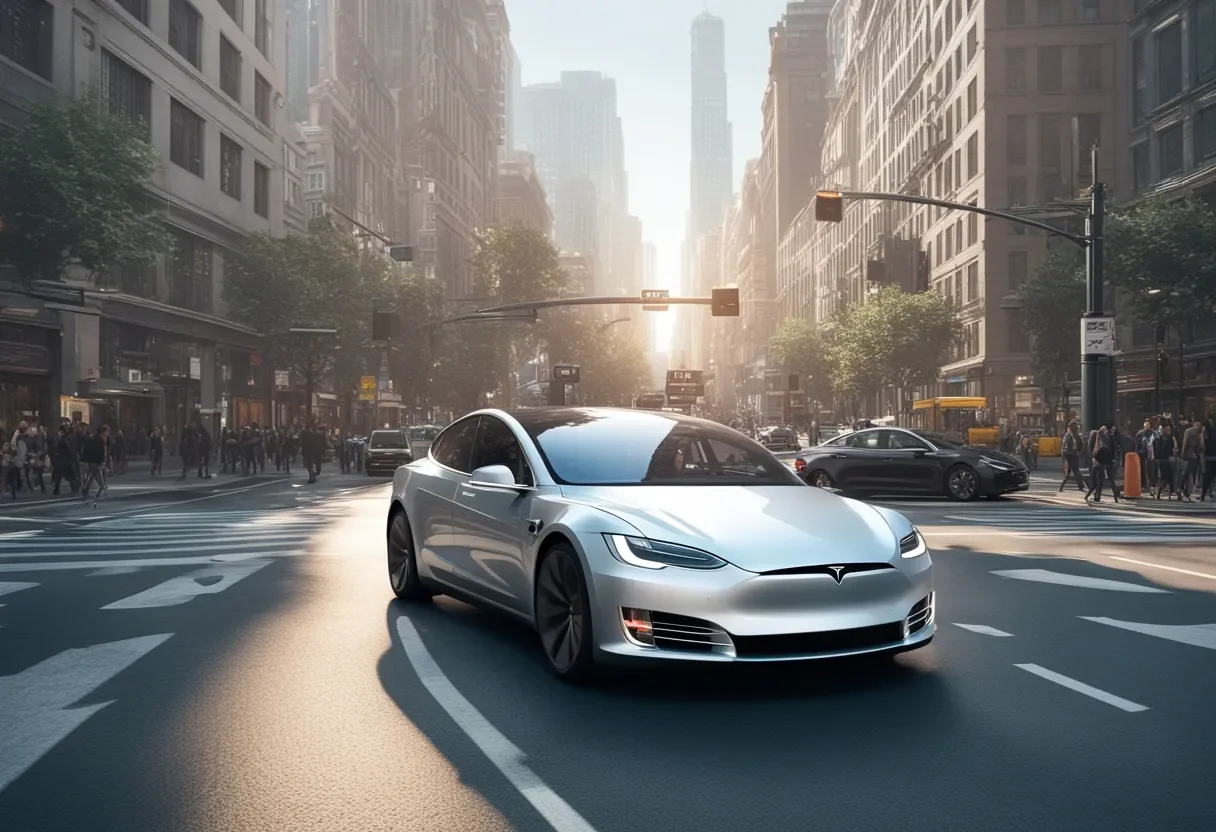
Tesla's Robotaxi Surge: Public Rollout Set to Transform Mobility
Unlocking Autonomy: Why Tesla's Next Move Could Redefine Urban Transport
Tesla's robotaxi service stands at a pivotal moment, with plans to open access to the general public starting next month. This shift promises lower-cost rides, massive efficiency gains, and a leap in vehicle utilization, potentially turning every Tesla into a revenue-generating asset while slashing personal car ownership expenses.
Key Takeaways
Tesla's robotaxi fleet in Austin uses Model Y vehicles with advanced Full Self-Driving software, currently operating with safety monitors but advancing toward unsupervised autonomy.
Expansion to public access is slated for September, beginning in Austin and potentially extending to California, with job postings indicating growth into cities like New York, Las Vegas, and Miami.
Operating costs could drop to around 60 cents per mile once safety drivers are removed, enabling profits of up to $2 per mile in high-demand areas like the Bay Area.
The service validates Tesla's hardware-first approach, embedding sensors and computers in mass-produced cars to gather billions of miles of real-world data for AI training.
Broader adoption may displace millions of ride-hailing jobs but could save thousands of lives annually by reducing accidents from human error, while increasing mobility access for underserved populations.
Regulatory hurdles remain, especially in California, where permits for driverless operations are pending, but Texas approvals pave the way for statewide scaling.
Tesla Accelerates: CEO Rewards and Robo-Taxi Expansion Signal a New Era in Autonomy
Unlocking Leadership and Low-Cost Rides in the AI-Driven Future
Tesla has taken decisive steps to secure its leadership in electric vehicles, AI, and robotics by approving an interim compensation package for its CEO while rapidly expanding its robo-taxi network in Austin, Texas. These moves address ongoing legal battles over past awards and position the company to capitalize on surging demand for autonomous services, potentially transforming urban mobility and shareholder value.
Key Takeaways
Tesla's board approved 96 million restricted stock shares as an interim award, increasing CEO ownership to about 14.6% and aligning incentives amid AI talent competition.
The award includes a two-year vesting period, a $23 per share purchase price, and restrictions on sales to minimize market impact.
If the 2018 performance award is reinstated by courts, this interim package will be adjusted to avoid overlap.
Robo-taxi rides in Austin are priced at roughly half of Uber's rates, with a 50-minute trip costing around $18 compared to $31–$34 on Uber.
The Austin geo-fence for robo-taxi operations has doubled in size twice in the past six weeks, now covering expanded areas without major incidents reported.
New Texas regulations effective September 1, 2025, could enable unsupervised robo-taxi operations, paving the way for profitability through low operational costs.
An upcoming shareholder meeting on November 6, 2025, will vote on a long-term CEO compensation strategy and potential investment in xAI, enhancing synergies in AI development.
Retaining top talent, including leadership, is critical as Tesla shifts toward AI, robotics, and services, with the award designed to boost focus and voting control.
Tesla's Robotaxi Revolution: Unlocking Trillions in Autonomous Mobility
Why Self-Driving Fleets Could Reshape Transportation and Deliver Massive Profits
Tesla's push into robotaxis represents a pivotal shift in mobility, blending advanced AI with massive manufacturing scale to potentially generate enormous profits. At the core are insights into cost efficiencies that could yield up to $150,000 in annual profit per vehicle at scale, paving the way for a business valued in the trillions. This isn't just about cars driving themselves—it's about an ecosystem where data, compute, and smart economics converge to outpace competitors and transform urban travel.
Key Takeaways
Tesla's AI-driven approach to autonomy relies on cameras and massive compute clusters, enabling low-cost vehicles ($35,000 or less) compared to competitors' sensor-heavy setups costing $150,000–$200,000 per unit.
Profitability hinges on the ratio of robotaxis to human supervisors: at 3:1, fleets break even; at higher ratios like 100:1, annual profits per vehicle could hit $136,000 with Uber-like pricing.
A fleet of 1 million robotaxis could generate $136 billion in yearly net profit, leading to a 5-year ROI of $650 billion, assuming conservative costs and average ride data.
The upcoming Cybercab vehicle slashes costs further—to around $20,000 per unit—with enhanced AI hardware, potentially boosting per-vehicle profits to $155,000 annually at extreme scales.
Challenges include regulatory hurdles, safety improvements via more data and compute, and competition, but Tesla's existing factories (producing 1.2 million similar vehicles yearly) provide unmatched scaling potential.