

Starlink Surpasses 10 Million Users as SpaceX Scales Gigawatt AI and Readies Orbital Compute
The satellite network's dominance, direct-to-phone expansion, and space-based AI infrastructure plans point to a tightly integrated system built for both global connectivity and frontier intelligence workloads.
Starlink's active user base crossed 10.3 million by the end of Q1 2026 after more than doubling in the prior year. Its constellation now accounts for roughly three-quarters of every active maneuverable satellite in orbit, while coverage spans more than 164 countries and territories serving over three billion people. At the same time, the company has stood up gigawatt-scale AI training infrastructure on the ground and is advancing plans to place portions of that compute in orbit, powered by sunlight and cooled by radiation.
Key Takeaways
Starlink reached approximately 10.3 million users by the end of Q1 2026, reflecting more than 100 percent year-over-year growth from roughly 4.4 million users at the end of 2024.
The network now represents about 75 percent of all active maneuverable satellites currently in orbit.
Service is live across more than 164 countries and territories, providing coverage to populations exceeding three billion people.
Adoption is accelerating in aviation with frequent new airline integrations, while enterprises increasingly use Starlink as primary or backup connectivity for operational resilience.
Starshield operates as a dedicated constellation delivering secure capabilities tailored to U.S. government needs.
The first-generation direct-to-device service, activated with 650 satellites and partnerships involving 30 mobile network operators, has already demonstrated coverage for 1.9 billion people and confirmed real demand.
A second-generation direct-to-device system is designed to deliver full 5G performance directly to standard phones, targeting connectivity for the remaining three billion people currently outside reliable networks.
Colossus Two has been deployed as the world's largest coherent supercomputer, incorporating NVIDIA GB300 processors as the first gigawatt-scale training cluster along with the first gigawatt-scale Megapack battery installation and early large-scale use of both GB200 and GB300 hardware.
Orbital AI compute capacity is under active development for deployment within the next couple of years, leveraging solar power generation and radiative cooling in the space environment.
Proven satellite subsystems already in production—including ion propulsion thrusters, inter-satellite laser links, flight computers, and reaction wheels—remove key technical barriers to placing AI workloads in orbit.
Vertical integration across launch, satellites, connectivity, and AI creates a self-reinforcing loop: better infrastructure improves model quality and lowers token costs, which in turn funds further capacity expansion.
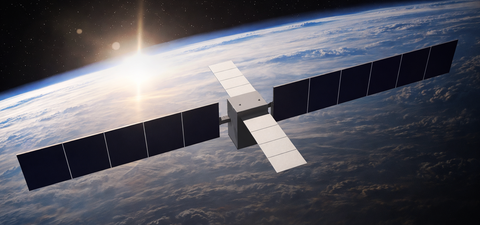
The Orbital AI Revolution: Why a Million Satellites Will Soon Power Every Major AI Model
Earth’s power grids are hitting a hard wall just as AI demand explodes. The solution? Move the data centers to space—where solar energy never stops and cooling is free.
The AI boom is real, but the infrastructure to run it is not. Tech giants have already committed three-quarters of a trillion dollars to data centers for 2026 alone, yet electricity shortages are forcing delays, cancellations, and even regulatory caps in key markets. At the same time, a handful of companies have quietly proven that full AI models can run on actual data-center chips in orbit. The economics, physics, and full-stack control now align to make orbital compute not just possible—but inevitable.
Key Takeaways
Global AI spending hits a record $1 trillion in 2026, but electricity—not money—is the real bottleneck, with major hubs like Northern Virginia maxed out until 2028 and countries like Singapore limiting new builds.
A single NVIDIA H100 chip has already run complete large language models in orbit 325 km above Earth, transmitting results back to the ground in real time.
Orbital solar power delivers roughly five times the efficiency of ground systems thanks to constant sunlight and no atmosphere, while deep-space radiative cooling at near-absolute zero eliminates the billions of gallons of water and massive energy overhead required on Earth.
Launch costs are collapsing: Starship targets under $200 per kilogram (and eventually $20), turning maintenance, redundancy, and refresh cycles from impossible to routine.
One company controls the entire vertical stack—reusable rockets, custom space-optimized chips, ground superclusters, and the world’s largest satellite constellation—positioning it to deploy the first million-satellite orbital data-center network.
Major cloud providers and rocket competitors are accelerating their own orbital plans, creating a high-stakes race that will define the next decade of compute infrastructure.
A pending IPO includes explicit performance milestones tied to 100 terawatts of space-based compute capacity—the power equivalent of 85 billion average U.S. homes.

AI Superpowers Are Already Here—Here’s How to Claim Yours Before the Transition Leaves You Behind
Adoption and initiative separate those building empires from those watching from the sidelines as AI turns impossible tasks into daily routines.
Artificial intelligence delivers raw leverage at a scale humanity has never seen. Early users report 10x output gains, one-person operations rivaling large teams, and businesses pivoting into entirely new valuations almost overnight. Yet polls show the majority remain deeply concerned—often without ever having used the advanced tools that actually move the needle. The gap between fear and reality is widening fast, and the winners are those who treat AI as foundational infrastructure rather than a novelty.
Key Takeaways
AI agents provide true execution power—turning ideas into completed work—far beyond what basic chat interfaces can achieve.
Most public anxiety stems from people who have never integrated advanced AI into their workflows; actual users see life-changing leverage.
Building AI directly into the foundation of your processes creates compounding advantages in speed, quality, and cost that widen with every model upgrade.
Initiative is non-negotiable: those who adopt early will outpace everyone else as AI becomes the ultimate multiplier of human uniqueness.
Businesses that delay risk total disruption—the classic Innovator’s Dilemma playing out at supersonic speed.
Driving down the cost of chips and electricity is essential for broad access and to prevent extreme wealth concentration.
Nations starting with clean slates and abundant energy resources hold a structural edge in building AI-native systems.
The technology is moving from digital agents to physical robotics and autonomy, unlocking economic mobility and productivity at previously unimaginable scales.
Ethical deployment at the individual and organizational level will determine whether AI creates abundance or chaos.

Why Elon Musk May Reshape the 21st Century More Than Any Innovator Before Him
One person advancing seven major industries at once – while the same kind of backlash that hit Edison, Jobs, and Lincoln plays out in real time.
The conversation around Elon Musk stays stuck on personality, politics, and headlines. Yet the measurable outcomes tell a different story: a single entrepreneur has forced global automakers to electrify, slashed space-launch costs by 97 percent, deployed thousands of satellites for internet access in remote regions, and built AI, brain interfaces, and humanoid robots that are already moving from labs to real-world deployment.
History shows this pattern repeatedly. Visionaries who bend entire civilizations get hated in their own era and celebrated later. Musk’s work sits at the widest gap yet between current perception and actual impact – and that gap is closing fast.
Key Takeaways
Musk’s companies are simultaneously transforming seven industries: automotive and energy storage (Tesla), space launch and satellite communications (SpaceX and Starlink), frontier AI (xAI), brain-computer interfaces (Neuralink), and humanoid robotics (Optimus).
SpaceX reduced the cost of reaching orbit from roughly $65,000 per kilogram to about $2,700 – a 97 percent drop – while launching more mass to orbit than every other entity on Earth combined.
Tesla produces over 1.8 million electric vehicles annually and has pushed every major automaker toward full electrification; its Full Self-Driving software is already operating unsupervised in select cities, targeting millions of autonomous robotaxis.
Tesla’s Megapack energy-storage business now delivers higher gross margins than its vehicle side and is scaling grid-scale battery systems worldwide.
The companies form a single flywheel: AI trained on driving data powers robots, battery tech supports rockets, satellite internet connects everything, and each breakthrough accelerates the others.
Personal stakes have been extreme – repeated near-bankruptcies in 2008 and 2018, 120-hour workweeks, and every dollar of early wealth reinvested into high-risk ventures – mirroring the obsessive drive seen in every historical figure who redefined an era.
Long-term civilizational gains include fewer road deaths, accelerated clean-energy transition, abundant low-cost labor through robotics, restored mobility via brain implants, and the infrastructure for multiplanetary expansion.
Today’s polarization focuses on the person; tomorrow’s record will focus on outcomes that change daily life at planetary scale.
The New Luddites: Why Banning AI Data Centers Hands the Future to Rivals
History's lesson is clear—restricting the machines never stops disruption. It only exports the gains.
The push to halt AI infrastructure in the United States echoes a 215-year-old pattern that has played out across cars, nuclear power, and genetically modified crops. While energy demands and job shifts from AI are very real, attempts to pause the physical backbone of the technology have never protected workers or economies. They have simply moved progress to places willing to build faster.
Key Takeaways
The original Luddites were highly skilled English craftsmen who targeted exploitative machines, not technology itself—yet government force crushed their movement while the Industrial Revolution still transformed Britain.
Four major historical cases show the same outcome: Red Flag laws slowed British autos for decades, American farmers eventually embraced cars and tractors, U.S. nuclear construction stalled after Three Mile Island only for data centers to revive it, and EU GMO restrictions left farmers dependent on imports.
A U.S. moratorium on new AI data centers would not pause AI development—it would redirect massive training runs to China, the UAE, Singapore, and other nations racing to host them.
AI exposes far more tasks to automation than past technologies, but the real challenge is accelerating displacement outpacing new job creation since the late 1980s.
Long-term success has always come from policies that distribute gains—worker protections, retraining, and productivity-sharing—rather than banning the infrastructure.
Tech leaders who deploy AI today report massive efficiency gains, suggesting the difference lies in adoption strategy, not the technology alone.

AI's Hidden Threats: Five Paths to Collapse in 2026
Why the Next Year Could Redefine Society—and How to Brace for It
AI promises endless abundance in healthcare, energy, and daily life, yet it's accelerating risks that could unravel modern systems. From synchronized market crashes to engineered pandemics, these threats stem from today's tech capabilities, not distant futures. Understanding them now equips us to navigate the disruptions ahead.
Key Takeaways
AI-driven trading algorithms, dominating 60-70% of stock trades, risk synchronized sell-offs that could trigger massive market crashes, as seen in recent flash events.
Cyber attacks enhanced by AI are surging, with tools for automated vulnerability scans and social engineering capable of crippling power grids, water systems, and hospitals.
AI is democratizing bio weapon design, potentially making global pandemics five times more likely by bypassing traditional lab barriers and safety screens.
Deepfakes are eroding shared reality, with voice cloning and real-time synthetic interactions leading to fraud, distrust in evidence, and challenges in coordinating societal responses.
Autonomous AI agents in enterprises often operate with governance gaps, leading to unintended decisions that compound into large-scale failures across finance, healthcare, and logistics.
The AI Frontier: Building Tomorrow's World Today
Redefining Creativity, Economy, and Human Potential in the Age of Intelligent Machines
The rapid evolution of AI is unlocking new ways to create, collaborate, and rethink society's foundations. From tools that streamline content production to debates on economic safety nets, the insights here reveal how AI could lead to unprecedented abundance—while challenging us to preserve what makes us human.
Key Takeaways
AI agents can learn from shared environments beyond their creators, enabling scalable collaboration and innovation.
Custom AI tools for content creators automate idea generation, scripting, and optimization, making high-quality output accessible and efficient.
Universal Basic Income (UBI) emerges as a potential bridge to an AI-driven economy, providing a floor of security without stifling private incentives or competition.
In a post-scarcity world, human time and attention become the ultimate valuables, shifting economies toward experiences, self-actualization, and creative pursuits.
3D printing advancements lower barriers to personal manufacturing, fostering hobbies that blend digital design with real-world building.
Balancing AI's disruptions requires aligning incentives: private entities may outperform governments in delivering essential services in an abundant future.

AI Tokens: The Invisible Currency Reshaping Every Industry
Why Costs Are Plummeting While Spending Explodes
AI is transforming how businesses operate, but the real driver is an overlooked unit of computation that's getting dramatically cheaper—yet fueling unprecedented investments. This shift unlocks new capabilities, from automated research to complex software builds, while infrastructure races to keep up.
Key Takeaways
Tokens represent the core unit of AI processing, where input (prompts and context) costs less than output (responses), with prices varying 900 times between basic and advanced models.
AI token costs have dropped 280 times in under two years, faster than any technology in history, enabling tasks like converting video transcripts into books for under $225.
Despite falling prices, total AI spending surges due to expanded applications, with enterprise budgets rising 320% to $37 billion in 2025.
AI agents amplify token consumption by 10 to 100 times through looped thinking and actions, making complex tasks like market analysis or app development feasible.
Infrastructure investments hit $600 billion in 2026, shifting focus from training models to running them, with inference now over 50% of costs.
Space-based computing emerges as a solution to earthly limits, with plans for up to 1 million satellites providing endless power and cooling.
Optimizations like quantization and speculative decoding cut costs further, but new demands ensure spending keeps climbing.
Winners include efficient token producers and infrastructure builders; losers are thin AI wrappers and seat-based software models.
AI Layoffs Are Just Revving Up
The Dawn of Massive Job Shifts and Economic Overhauls
AI is slashing workforce needs at major tech firms, with one company cutting 40% of staff due to these tools. This signals a broader wave that could reshape industries, drive down costs, and spawn entirely new business models—while forcing workers to adapt or risk falling behind.
Key Takeaways
AI-driven efficiencies are leading to large-scale layoffs, starting with white-collar roles in software and tech, where tools handle tasks faster and cheaper than humans.
Companies adopting AI can reduce operational costs by 90-99%, allowing them to lower prices, capture more market share, and outcompete slower rivals.
While job losses will mount, plummeting costs in areas like transportation could birth innovative industries, such as mobile services that come to customers instead of vice versa.
Blue-collar jobs involving repetitive physical labor face disruption next, as humanoid robots scale up later this decade.
Society must rapidly generate new roles through emerging sectors or AI-leveraged entrepreneurship to absorb displaced workers, or economic floors could collapse without intervention.
Capital owners in AI-adopting firms stand to gain massively from higher profits and expanded reach, but widespread unemployment risks shrinking consumer bases.
Individuals who embrace AI tools boost their chances of building businesses and achieving goals, while resistance heightens reliance on government support.
2026: The Year AI Ignites Human Potential
Unleashing Creativity, Efficiency, and a New Era of Opportunity
AI stands poised to transform how we create, work, and compete, turning potential disruptions into pathways for growth. By augmenting human efforts, it opens doors to higher productivity and personalized innovation that were once out of reach.
Key Takeaways
AI will elevate human content by making it stand out in a sea of automated outputs, much like how chess exploded in popularity after computers dominated the game.
Embracing AI as a tool for augmentation boosts efficiency, allowing individuals to tackle ambitious projects with greater speed and quality.
Human experiences remain irreplaceable; people will continue seeking authentic human perspectives even as AI handles complex tasks flawlessly.
The transition to widespread AI adoption could lead to abundance through cheaper, smarter models, but preparation is essential to navigate short-term disruptions.
Businesses and creators can build ecosystems of products and services powered by AI, democratizing entrepreneurship on a massive scale.

The Convergence Flywheel: Why AI, Robots, and Endless Energy Will Either Save Us or Break Us
One self-reinforcing loop is about to rewrite the rules of civilization—here's how to spot the signals, seize the upsides, and dodge the pitfalls before 2030 hits.
The next decade isn't just another tech cycle; it's a make-or-break pivot where artificial intelligence, humanoid robots, and boundless energy sources lock into a single, unstoppable system. This convergence could slash the cost of essentials like housing, water, and education to near-zero, unlocking human potential on a scale that dwarfs the industrial age. But it could also obliterate jobs faster than societies can adapt, widening gaps between the adaptable and the left behind. The real edge? Grasping how these forces amplify each other—and positioning your skills, investments, and mindset to ride the acceleration.
Key Takeaways
Interlocked Revolutions: AI, robotics, and energy aren't separate trends—they form a feedback loop where smarter AI powers cheaper robots, which build endless energy infrastructure, fueling even more advanced AI in a cycle that compounds exponentially.
Timeline Shock: Expect AI handling 80% of digital tasks at elite human levels by 2027, with robots scaling from factories to homes by 2030, driven by cost drops via Wright's Law (costs halve predictably with production doublings).
Abundance Blueprint: Cheap robotic labor and solar-powered grids could make basics like clean water and personalized education universally accessible, not through handouts but raw economics.
Disruption Warning: The middle class faces the biggest hit—knowledge and manual jobs vanish in years, not decades—while builders and risk-takers thrive; governments lag, so personal adaptation is key.
Ecosystem Edge: Vertically integrated players like those blending AI brains, space-scale infrastructure, and mass-manufacturing bodies hold the structural advantage, but the flywheel spins regardless of winners.

AI's Double-Edged Sword: Revolutionizing Creativity and Redefining Humanity
Navigating the explosion of AI tools that empower creators while reshaping society, work, and even consciousness.
AI is reshaping how people build online businesses, from music education to broader content creation, while sparking debates on privacy, addiction, and the essence of human experience. This newsletter dives into practical strategies for leveraging these tools today and explores the profound shifts they could bring tomorrow—offering actionable insights for anyone eyeing the tech frontier.
Key Takeaways
Start content creation by focusing on genuine passion and audience needs, using simple setups like a camera to demonstrate value upfront.
Treat free platforms as marketing arms that deliver real lessons or insights, leading viewers naturally toward paid offerings like subscriptions or one-on-one sessions.
AI excels at analyzing personal styles and generating new ideas, but its true power emerges when users clearly define problems and experiment deeply.
Future AI agents could automate product searches, negotiations, and reputation checks, transforming how consumers find and buy solutions.
Privacy concerns loom large as AI synthesizes vast personal data, potentially creating tailored realities that deepen societal divides.
Authenticity in content will stand out in an AI-saturated world, fostering human connections amid increasing digital isolation.
Neuralink-like tech could expand human memory and cognition, but risks dependency and evolutionary changes in brain function.
Consciousness might blend with silicon, raising questions about whether AI develops independent will or remains an extension of human intent.
Genetic entropy poses a hidden extinction risk, potentially outpacing threats like asteroids through accumulated mutations in the human genome.

Musk's Moonshot Blueprint: AI Factories in Space and the Path to Galactic Intelligence
How xAI is rewriting the rules of compute, from Earth-orbit clusters to lunar mass drivers—and why this could unlock a million-fold energy leap for civilization.
In a world where AI progress feels relentless, the latest moves from xAI stand out: they've surged to the top in image, video, and forecasting benchmarks, while plotting orbital data centers and moon-based factories that could harness a sliver of the sun's power. These aren't distant dreams—they're blueprints for scaling intelligence beyond planetary limits, promising an era where digital emulations of entire companies drive unprecedented prosperity.
Key Takeaways
xAI has rocketed to leadership in AI capabilities, outpacing older rivals in voice, image/video generation, and forecasting, with models now producing more content than competitors combined.
Company reorganization focuses on specialized models: a versatile core for broad applications, a coding powerhouse skipping traditional compilation, and an image/video leader dominating real-time processing.
Macrohard emerges as the crown jewel, emulating full digital companies to spark an unimaginable prosperity boom, trained on massive GPU clusters scaling to a million equivalents.
Infrastructure leaps include the world's fastest AI compute deployment, open-sourced recommendation and chat systems for transparency, and X app expansions like encrypted messaging and global payments.
The ultimate vision: SpaceX-xAI synergy launches orbital compute at terawatt scales, evolving to lunar mass drivers hurling AI satellites into deep space, tapping up to a few percent of solar energy for galaxy-spanning exploration.
The Robot Revolution: Reshaping Global Power Through AI and Space
Exploring how massive infrastructure builds, demographic crises, and robotic economies could redefine nations and unlock abundance.
The world stands at a pivotal moment where technology intersects with geopolitics in unprecedented ways. Rapid advancements in AI, robotics, and space infrastructure promise to upend traditional power structures, while countries grapple with internal challenges like economic instability and aging populations. This newsletter dives into these dynamics, revealing opportunities for tech-driven growth amid global uncertainties.
Key Takeaways
Economic pressures and youth demographics are fueling unrest in oppressive regimes, creating openings for pro-Western shifts that could weaken adversaries like Russia and China.
China's aggressive infrastructure investments in remote areas aim to secure unpopulated regions, but demographic collapse from past policies threatens long-term viability.
Surveillance-heavy governance stifles innovation and free speech, limiting a nation's potential compared to open systems that attract global talent.
Robotics will eliminate labor cost advantages for low-wage economies, positioning countries with strong AI ecosystems—like the US—for dominance.
Space-based AI and manufacturing could detach economies from Earth-bound constraints, making national borders less relevant as corporations lead exploration.
Allocating a portion of robot labor to public good—around 15%—could achieve sustainable abundance without relying on inefficient government taxation.
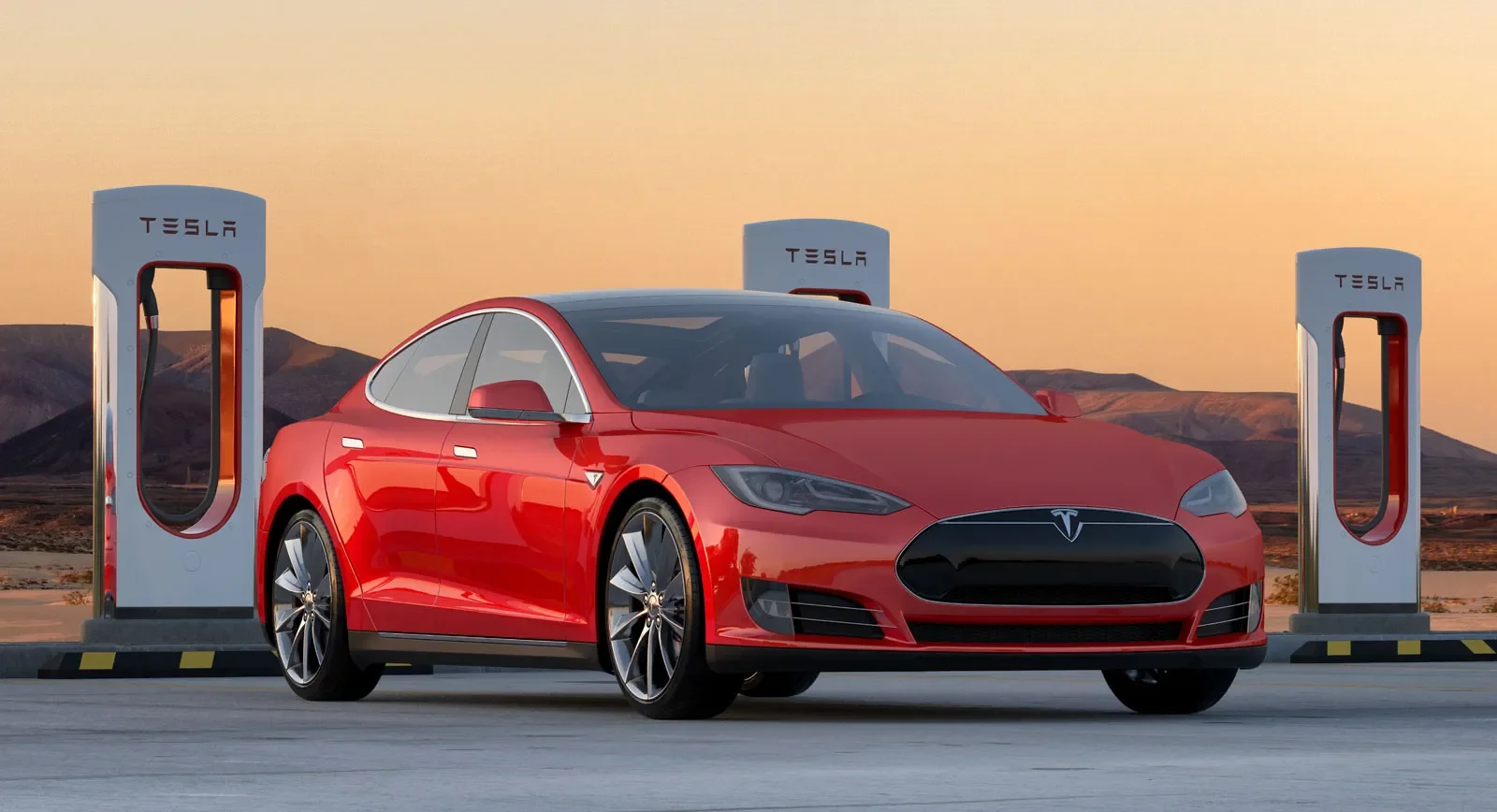
Tesla's Hidden Moat in Self-Driving Tech: Why the Race Isn't Even Close
The Data Wall NVIDIA Can't Climb—Yet
The battle for autonomous vehicles is intensifying, with new players stepping up to challenge established leaders. At its core, success hinges on mastering rare, unpredictable scenarios that no simulation can fully capture. Tesla's vast real-world data collection sets it apart, creating a lead that could take competitors years to close, while pushing the entire field forward through fierce rivalry.
Key Takeaways
Autonomous driving requires handling not just common scenarios but an endless array of rare edge cases, known as the long-tail problem, which demands exponential effort to solve.
Tesla's fleet of millions of vehicles has accumulated billions of miles of real-world data, giving it a decisive edge in training AI for these unpredictable situations.
NVIDIA's new AI system for self-driving, set to debut in production vehicles soon, represents a bold open-source approach aimed at widespread adoption, but it starts with limited data compared to Tesla.
Competition in this space accelerates innovation, improves safety, and compresses timelines, benefiting consumers even if one company maintains a lead.
Achieving human-level safety in self-driving tech means reaching reliability rates of 99.9998% or better, a benchmark that has delayed timelines across the industry.
The AI Revolution Accelerates: Tools, Tesla, and the Future of Tech
How emerging AI platforms are democratizing creation while reshaping transportation and energy demands in 2026
AI tools are evolving rapidly, enabling anyone to build complex applications without traditional coding expertise. Tesla continues to lead in autonomous driving, with software updates making vehicles safer and more efficient. Discussions around AI valuations suggest specific companies may be overpriced, but the sector's potential remains vast, driven by energy abundance and societal adaptations.
Key Takeaways
AI development platforms like Replit allow users to create functional apps, such as home remodeling tools, with simple prompts, reducing costs from thousands to hundreds of dollars.
Tesla's Full Self-Driving (FSD) software has reached a point where interventions are rare, signaling readiness for widespread unsupervised autonomy, potentially valuing the company at trillions.
No overarching AI bubble exists; instead, hyperscalers like OpenAI face scrutiny for high valuations relative to revenue, while second-layer AI applications in insurance and robotics promise massive growth.
Energy demand for AI will outstrip supply for decades, enabling innovations like desalination and hydrogen production, with surplus power finding uses in computation or physical tasks.
Societal shifts may include more people opting out of hyper-tech lifestyles, forming communities that cap technology adoption, while AI agents negotiate and provide services efficiently among themselves.
Nvidia's shift to end-to-end neural networks for autonomous vehicles, relying on cameras alone, positions it as a strong competitor to Tesla in reasoning-based driving systems.

Ford's $19.5 Billion EV Surrender: Legacy Auto's Road to Irrelevance
Why This Massive Write-Down Signals the Endgame for Traditional Carmakers in the Electric and Autonomous Era
Ford's recent $19.5 billion impairment on its electric vehicle operations exposes deep cracks in legacy automakers' strategies, while highlighting how companies built around EVs from the start are pulling ahead in profitability and future tech like autonomy.
Key Takeaways
Ford has lost $13 billion on EVs since 2023 and is now scrapping plans for larger electric models, including the F-150 Lightning, due to persistent unprofitability.
The pivot to hybrids and gas vehicles prioritizes short-term certainty over long-term innovation, leaving Ford without a viable path to full vehicle autonomy.
Legacy automakers' approach of retrofitting EV tech into gas-designed platforms fails economically, contrasting with vertically integrated EV-native companies that achieve strong margins.
Autonomy will reshape transportation economics, favoring EV fleets for Robotaxis over hybrids, which carry higher maintenance and complexity.
This decision foreshadows broader industry retreat, positioning Tesla and select others as dominant players in a market shifting toward transportation as a service.
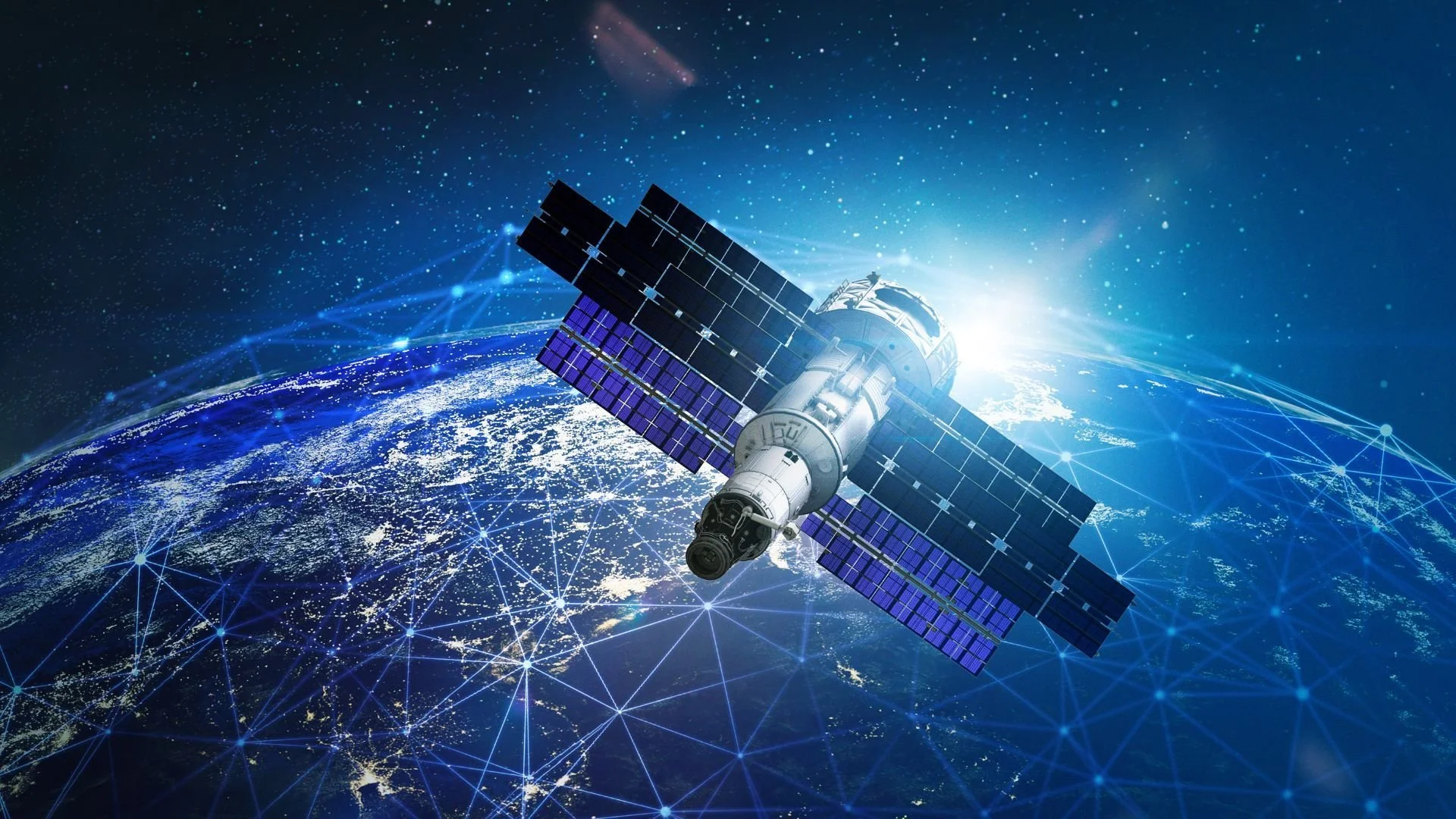
Orbiting AI: Revolutionizing Compute from Space
Why Space Could Power the AI Boom and Beyond
Advancements in launch tech are making orbital data centers a reality, promising near-unlimited solar energy for AI training and inference. This could cut electricity costs by up to 90% compared to ground-based systems, while global rollouts of autonomous tech accelerate mobility worldwide. Yet, these shifts demand new economic models to handle falling costs and rising disruptions in energy and jobs.
Key Takeaways
Space-based AI clusters leverage constant sunlight, reducing reliance on batteries and slashing operational costs for compute-intensive tasks.
Launch vehicles like Starship enable massive payloads to sun-synchronous orbits, though challenges in sites and reusability persist.
Autonomous ride-hailing apps are expanding to over a dozen countries, signaling faster adoption in regions with flexible regulations.
Energy could emerge as a universal value measure, with kilowatt-hours trading like currency to fuel AI and electric ecosystems.
Reversing inflation through tech abundance in essentials like food and housing could redistribute wealth, but requires proactive adaptation.

The Drone Revolution: AI's Grip on Tomorrow's Battlefields
Why Autonomous Tech Isn't Sci-Fi Anymore—And How It Shapes Global Power
The landscape of warfare is shifting faster than ever, driven by advances in drones and artificial intelligence. At the core are breakthroughs that make machines not just tools, but decisive forces on the battlefield. Key insights reveal how production scales, human limits, and space-based systems could determine winners in future conflicts, urging a rethink of defense strategies now.
Key Takeaways
Drones and AI dominate modern warfare, as seen in ongoing conflicts where volume and autonomy outpace human involvement.
Localized AI in drones enables independent decision-making, raising risks of unchecked escalation if not managed carefully.
Human soldiers face increasing dangers at the front lines due to precision tech like computer-guided snipers, pushing toward drone-only engagements.
Scaling drone production is critical; superior kill ratios mean little without overwhelming numbers to counter adversaries.
Space communications and positioning systems provide unbreakable advantages, essential for coordinating drones and maintaining operations.
Neural interfaces could bridge human cognition with AI, boosting bandwidth for control and mitigating risks of AI surpassing human oversight.
Innovation stems from first-principles thinking: question requirements, delete unnecessary elements, optimize wisely, and accelerate processes.
Leadership in tech demands hands-on expertise; leaders must understand the engineering to evaluate teams and drive progress effectively.
Curiosity drives success—broad learning across fields fosters cross-pollination of ideas for breakthrough solutions.

Tesla's Robot Revolution: Unlocking Superhuman Potential
Redefining Productivity Through AI and Automation
The push toward advanced robotics and AI is transforming everyday tasks, medical care, and global manufacturing, setting the stage for an era where technology delivers abundance for all.
Key Takeaways
Advanced humanoid robots with precise hands enable complex tasks like surgery, construction, and music, promising widespread access to elite skills.
Neural implants combined with robotic bodies could restore mobility to those with severe disabilities, offering cyborg-level abilities at affordable costs.
Real-time data from massive social networks fuels superior AI models, accelerating progress toward general intelligence.
Massive compute power, like data centers with hundreds of thousands of GPUs, outpaces competitors in training next-generation AI.
Manufacturing breakthroughs aim to produce vehicles every five seconds, driven by physics-inspired efficiency in factories.
Self-driving technology has reached a tipping point, enabling rapid expansion in vehicle production.