
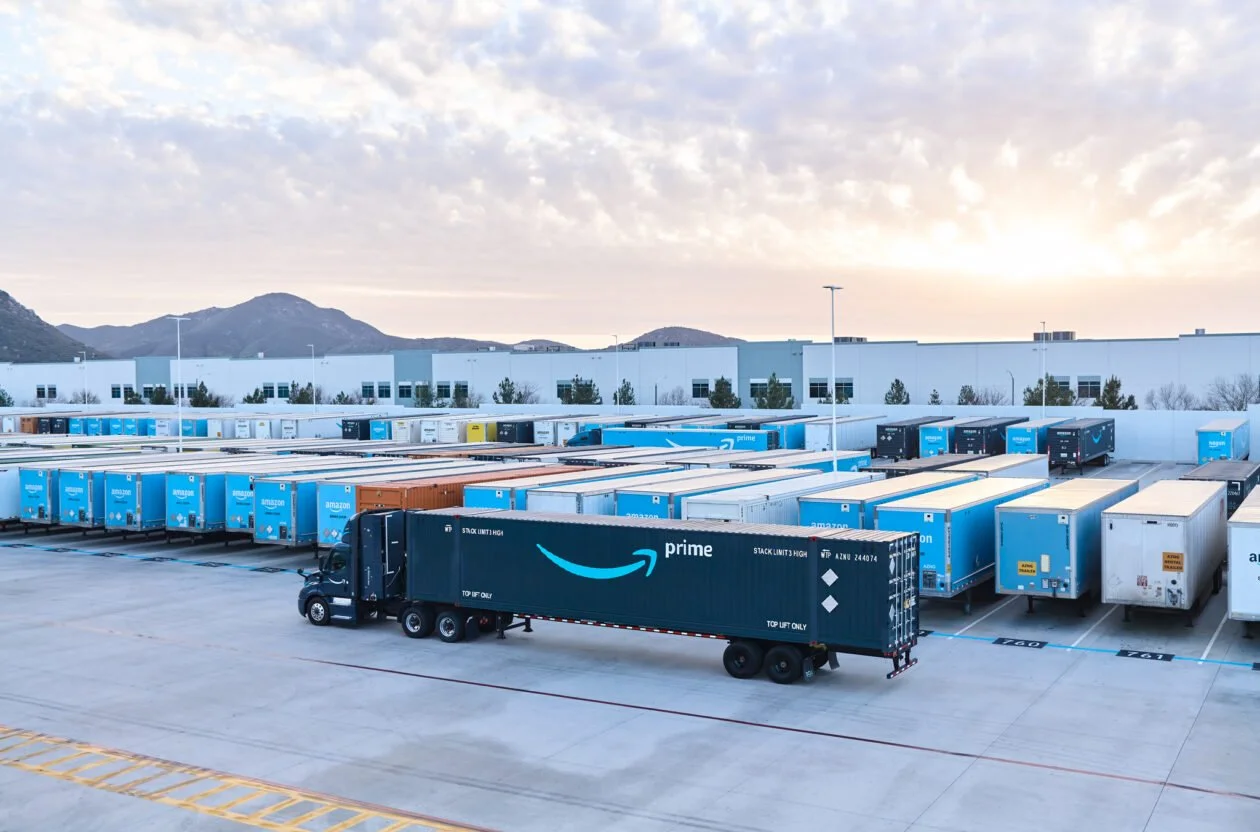
Amazon's Stealth Logistics Empire: The Massive Tailwind Coming for Tesla
How opening its entire supply chain to the world is about to create explosive demand for electric semis, autonomous vans, and humanoid robots.
Amazon has turned its vast internal logistics machine into a full-service platform available to any business. The new offering combines freight across ocean, air, ground, and rail; warehousing and distribution; same-style parcel delivery seven days a week; and AI-driven forecasting built on the largest commercial logistics dataset in existence. This isn't a minor expansion—it's the physical-world equivalent of AWS, launched into a $9 trillion market that's already projected to hit $13 trillion by 2035. For Tesla, the implications are generational: a single customer with global scale suddenly needs far more trucks, vans, robots, and autonomy software than it can source today.
Key Takeaways
Amazon Supply Chain Services bundles freight, fulfillment, parcel delivery, and predictive AI optimization into one plug-and-play system that any company can use—exactly how AWS turned internal infrastructure into a profit engine.
The move immediately pressures traditional carriers; UPS, FedEx, and logistics stocks dropped sharply on the announcement because Amazon already operates at a scale that rivals their combined fleets.
Tesla stands to benefit across four hardware categories: electric semis for long-haul freight, autonomous delivery vans to solve driver shortages, Optimus humanoids for warehouse labor, and the unified Full Self-Driving software stack that powers everything.
Amazon's existing assets—1.56 million employees, 1,200 logistics facilities, 40,000+ owned semis, 390,000+ delivery drivers, 30,000 Rivian vans, over one million robots, and its own air fleet—provide the perfect launchpad for rapid scaling.
At scale, a single humanoid robot could deliver labor at roughly $1.50–$2 per hour versus $25–$35 for a human worker, creating economics that make widespread adoption almost inevitable.
Watch for Amazon to break out Supply Chain Services revenue separately in coming quarters; that moment will trigger the same valuation rerating AWS enjoyed.
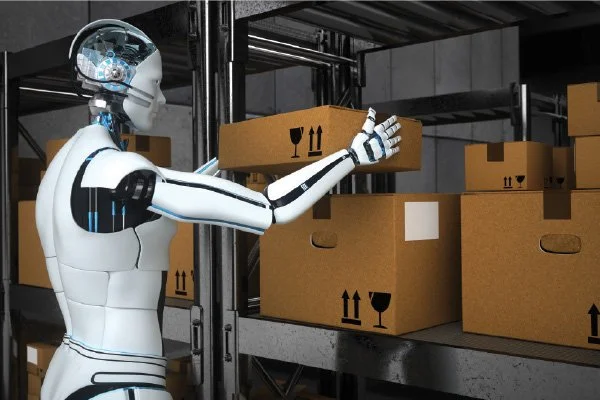
Robotaxis, Humanoids, and the New Logistics Empire: How Automation Will Make Goods and Labor Nearly Free
Inside the convergence of AI robots, autonomous fleets, and centralized supply chains reshaping the global economy.
Recent breakthroughs in humanoid robots and logistics infrastructure point to a future where physical goods move as easily as data in the cloud, while autonomous labor handles repetitive work around the clock. These shifts could drive costs toward zero for transportation, storage, and manufacturing—opening massive opportunities for businesses of any size while concentrating power in the hands of a few tech giants. The pieces are falling into place faster than most realize.
Key Takeaways
Humanoid robots are scaling production quickly, with at least one company now building a unit per day and using innovative wireless foot-charging pads that let them operate continuously without leaving their workstation.
Amazon has launched an end-to-end logistics platform that lets any business plug directly into its warehousing, shipping, and delivery network—essentially turning physical supply chains into a cloud service.
When combined with self-driving vehicles and humanoids, this infrastructure could make point-to-point movement and storage of goods extremely cheap and accessible, even for small operators with limited capital.
The result is accelerating centralization: a handful of companies could dominate labor, logistics, and data, echoing historical monopolies like railroads or oil but at global scale.
Tesla’s Robotaxi rollout faces a practical production bottleneck; early Cybercab output may include steering wheels and pedals to keep factory lines running at full capacity until unsupervised fleets can absorb volume.
Unsupervised autonomy, once achieved, unlocks enormous profit-per-mile margins—potentially $0.60–$1.00—driving rapid fleet expansion and dramatic company re-ratings.
Broader forces include corporations acting as the real power centers in geopolitics, with examples like China functioning as a single massive enterprise, alongside America’s commanding lead in AI, space launch, and defense technology.

How Self-Driving Cars Will Redesign Our Entire World
The Urban Revolution Hiding in Autonomous Tech
Self-driving vehicles stand ready to overhaul daily life by freeing up vast swaths of urban land, slashing noise and risks on roads, and handing back hours of wasted time to people everywhere. This shift promises quieter, greener cities and a surge in productivity that could redefine how societies function.
Key Takeaways
Urban areas could reclaim 30-50% of land currently tied up in parking, turning asphalt into parks, housing, and community spaces for better living.
Roads will narrow and become more efficient as vehicles communicate seamlessly, reducing the need for wide lanes and buffer zones.
Noise pollution drops dramatically with quiet electric autonomous fleets, making neighborhoods more peaceful and enjoyable.
Safety improves vastly, cutting annual deaths from 40,000 in the US alone, allowing for designs that mix pedestrian and vehicle spaces more freely.
Commuting time—about an hour daily per person—turns productive, unlocking mental energy for work, reading, or rest across billions of hours yearly.
Delivery costs plummet, enabling faster, cheaper logistics that reshape retail, inventory, and how people access goods.
This multi-decade transition will create new cities built from scratch around autonomy, but it brings challenges like job losses and privacy issues.

Humanoid Robots: The Warehouse Revolution That's About to Explode
Unlocking 20% Productivity Boosts and Infinite Scalability in Logistics
Humanoid robots are poised to transform warehouse operations by automating tedious tasks, adapting to dynamic inventory needs, and eliminating human limitations like fatigue and emotion-driven decisions. This shift could deliver immediate efficiency gains, reshape company cultures, and create barriers for laggards in the industry—insights that every tech-savvy operator needs to grasp now.
Key Takeaways
Humanoid robots enable dynamic inventory slotting, moving high-demand items closer to picking areas automatically, reducing travel time and boosting daily output by up to 20%.
By handling repetitive, physically demanding jobs without complaint, these robots free human workers for higher-value roles, improving morale and reducing turnover.
Implementation requires rethinking packaging and processes to suit robotic capabilities, such as pre-opening boxes, which minimizes errors and waste.
Early adopters will accelerate ahead, creating a competitive edge through emotion-free decision-making and 24/7 operation.
Barriers like initial setup costs and cultural resistance exist, but the potential for infinite demand makes humanoid robots a game-changer for small and large warehouses alike.