
Musk Warns Optimus Production Will Start Extremely Slow at Fremont
Tesla is building a modular Optimus line in Fremont designed for iteration before scale, and the deliberately slow start is the strongest signal yet that the humanoid robot is a twenty-year manufacturing story rather than a near-term revenue event.
Musk's Picks and Shovels: How Autonomy and AI Will Power the Next Civilization
Tesla's FSD leaps, Model Y dominance, US-China manufacturing deals, and robotic logistics are laying the groundwork for a transformed economy.
The pace of real-world autonomy is already delivering tangible gains today, with even older versions of advanced driver-assistance systems proving reliable enough for daily commutes and family use. At the same time, high-level diplomatic meetings signal a potential trillion-dollar wave of manufacturing investment flowing back to the United States, powered by Chinese production expertise. Layer in humanoid robots, autonomous heavy trucks, and drone-enabled delivery networks, and the Musk ecosystem emerges as the foundational infrastructure—the literal picks and shovels—for the next era of economic growth.
Key Takeaways
The Tesla Model Y ranks as the best-selling vehicle on the planet for three straight years, leading sales in California and even the top three major cities in China despite aggressive local competition.
Current supervised Full Self-Driving software remains highly capable a full year after its last major update, setting the stage for unsupervised operation that eliminates the need for constant human oversight and enables entirely new use cases like sleeping during long trips.
Upcoming US-China engagements involving key technology and business leaders point toward massive onshoring deals, with Chinese manufacturers potentially bringing high-scale production know-how to American factories in exchange for market access.
Legacy US automakers face structural decline, concentrated in SUVs, trucks, and a handful of models, opening pathways for pivots into defense manufacturing amid rising national security budgets.
Add-on robotic kits already automate heavy equipment like excavators for solar-farm construction, slashing labor hours and unlocking 24/7 operation in energy infrastructure projects.
Musk companies collectively supply the core layers future civilization will run on: autonomous passenger transport, humanoid labor, long-haul freight, satellite connectivity, and energy storage.
Logistics economics shift dramatically once highway autonomy arrives—even partial adoption on interstates cuts driver costs and fuel volatility, while drone-equipped vans and warehouse robots reshape last-mile delivery speed and density.
Tesla Just Built the Google of Atoms
The complete physical AI platform no competitor can replicate—and why it will define the next 20 years of technology
The physical world now has its dominant platform. One company has quietly assembled every critical layer—custom silicon, world-class AI models, battery chemistry, factories that scale like nothing else, vast real-estate holdings, and a global logistics network—and wired them together into a single, accelerating flywheel. The result is faster innovation, lower costs, and a data advantage that grows exponentially every day. This is not a car company with side projects. It is the infrastructure layer for the atom economy, and the implications stretch far beyond stock prices.
Key Takeaways
Tesla operates a full physical AI stack: computation, AI models, chemistry, manufacturing, land/real estate, and logistics—all internally controlled and mutually reinforcing.
Manufacturing functions as the CPU, real estate as storage, and logistics as the network in an atoms-based computer model that mirrors digital computing.
Billions of real-world driving miles feed a single neural architecture used for both autonomous vehicles and humanoid robots, creating a data flywheel no rival can match.
In-house battery chemistry, repurposed legacy factories, and continent-spanning energy assets deliver cost and infrastructure advantages that compound across every layer.
Vertical integration turns individual businesses into a cascading advantage: cheaper chips power better AI, better AI improves manufacturing, improved manufacturing lowers battery prices, and so on.
Single-layer competitors face structural economic disadvantages that widen over time, regardless of early leads in narrow domains.
Historical platform cycles suggest massive regulatory scrutiny is coming once dominance becomes obvious.
The Operating System Behind World-Changing Innovation
How intensity, technical depth, and strategic boldness create results that redefine what's possible in tech and beyond.
The principles shaping one of tech’s most effective operators deliver a rare edge for any builder or entrepreneur aiming for outsized impact. They reveal how purpose, mindset, and execution combine to solve problems at planetary scale while building durable companies that last for decades.
Key Takeaways
A singular profile fuses extreme energy and discipline with unconventional technical genius and Napoleonic strategic vision with bias to action.
Purpose acts as the core engine, driving decisions that ignore short-term financial or reputational optimization in favor of meaningful missions.
Upbringing and biology create dual fuel: running toward ambitious goals while escaping personal demons of inadequacy.
Effective leadership holds impossibly high standards, convincing teams they can achieve what they initially deem unfeasible.
Hardware success requires full vertical integration, domestic manufacturing mastery, and direct customer relationships rather than outsourcing everything.
AI and robotics convergence with ambitious entrepreneurship accelerates deflation and abundance across energy, transport, food, and space.
Wealth accumulates as a natural outcome of scaling solutions to civilization-level problems.
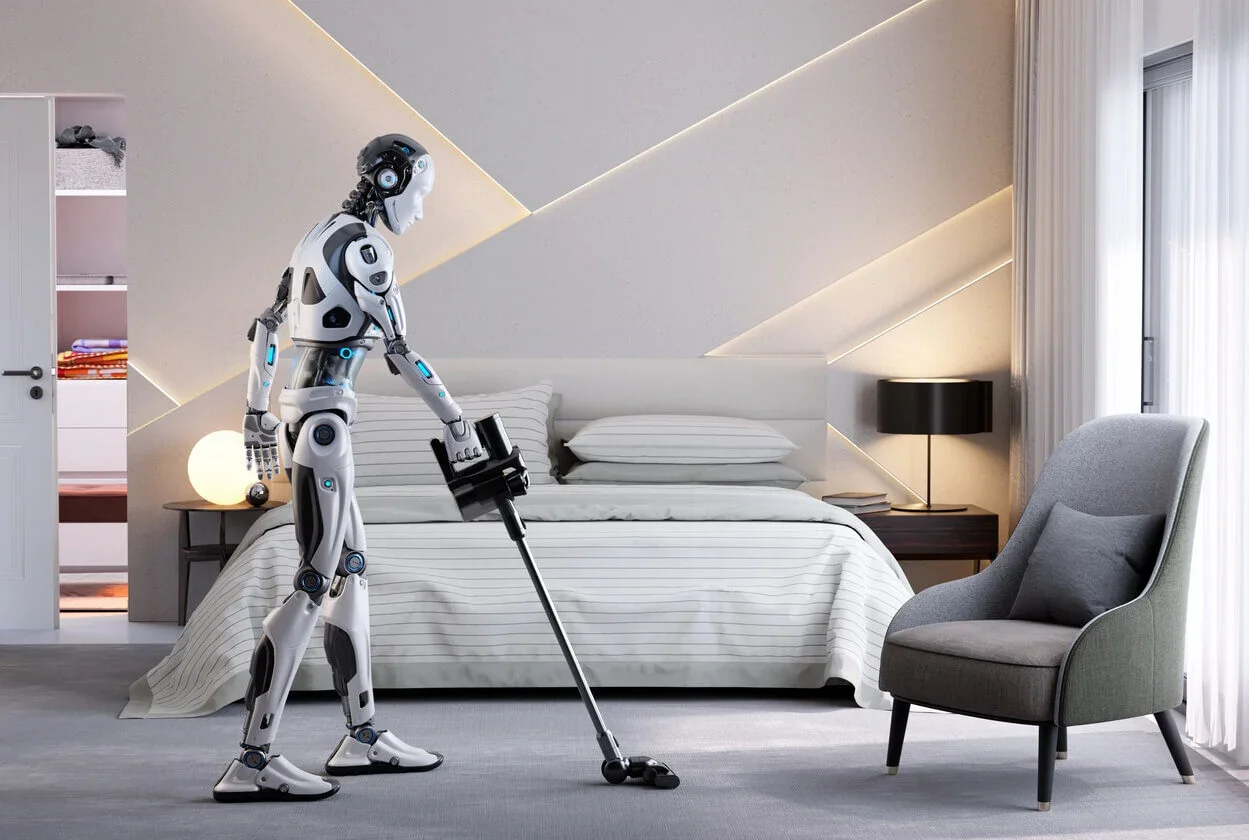
Revolutionizing Hands: Why Tesla's Optimus Robot Could Redefine Physical Labor
Unlocking AI-Driven Efficiency in Everyday Tasks
Tesla's push into humanoid robots signals a shift toward seamless integration of AI with hardware, potentially transforming industries from manufacturing to household chores. By focusing on advanced hand designs and AI-native systems, the company aims to create tools that adapt quickly and scale massively, offering insights into how automation could eliminate scarcity and boost productivity across sectors.
Key Takeaways
Tesla's internal systems, built on AI from the ground up, allow for flexible integration across operations, reducing complexity and enabling rapid adaptations without overhauling foundations.
The Optimus robot's hand, with 22 degrees of freedom and five fingers, closely mimics human capabilities, making it suitable for 80% of physical jobs while optimizing for efficiency in high-value tasks like surgery or intricate assembly.
Vertical integration across companies sharing common platforms could lead to unified data ecosystems, amplifying AI's role in coordinating supply chains and operations.
Regulatory hurdles in certain regions may delay robotaxi and robot adoption, but economic pressures from increased productivity in adopter areas will likely force widespread acceptance.
Emerging battery technologies, such as sodium-ion and solid-state options, promise cheaper, more resilient energy storage, crucial for scaling autonomous vehicles and stationary power systems.
Future manufacturing may evolve toward replicator-like systems where raw materials at the atomic level feed into AI-orchestrated production, bypassing traditional suppliers and enabling abundance.
Humanoid robots could modularize into specialized forms, like multi-arm setups for agriculture or detachable limbs for tools, expanding their utility beyond bipedal designs.
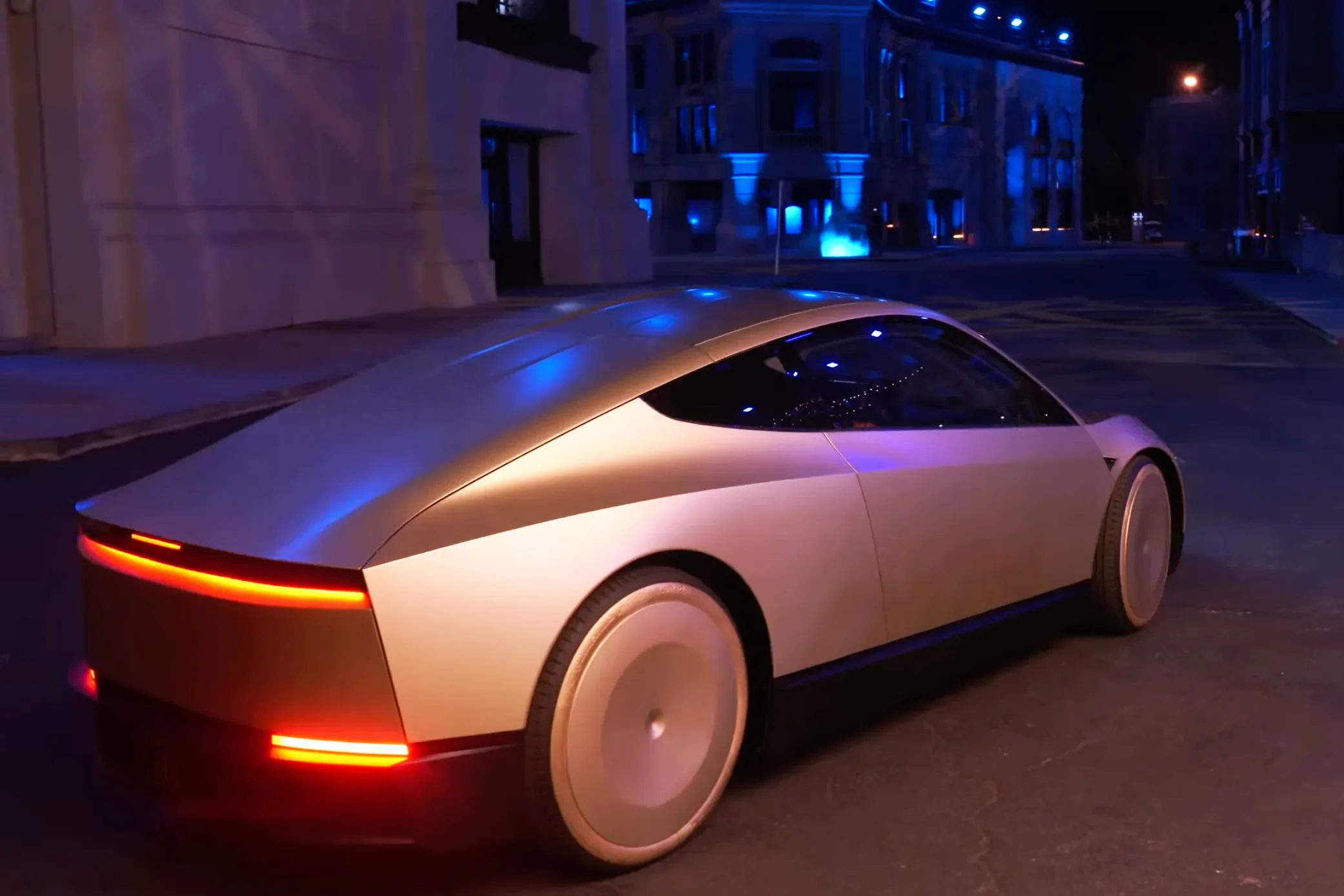
Cybercab Onslaught: Tesla's Driverless Future Accelerates
Tesla's Cybercab is ramping up toward mass production, promising cheaper rides and massive scale—but regulatory caps could force a pivot to manual controls.
The Cybercab is emerging as a game-changer in autonomous vehicles, with prototypes spotted across major cities and a production timeline set for April 2026. This two-seater, built without steering wheels or pedals, leverages a new manufacturing method to cut costs and boost output, potentially slashing per-mile expenses to half that of traditional cars. Yet, hurdles like U.S. limits on driverless vehicle production threaten to slow the rollout, possibly leading to versions with added controls for broader sales.
Key Takeaways
Cybercab prototypes are testing in cities like Chicago, Buffalo, Austin, and California, signaling readiness for an April 2026 launch.
The unboxed manufacturing process enables parallel assembly, reducing factory space and allowing for higher production volumes to meet expected demand.
Priced around $20,000 to build, the Cybercab could offer rides at 20-40 cents per mile, far below the 80 cents typical for personal vehicles.
Regulatory caps limit driverless cars to 2,500 units annually in the U.S., with efforts underway to raise it to 95,000—critical for Tesla's scale.
Steer-by-wire and brake-by-wire tech makes adding removable controls straightforward, providing a fallback if regulations lag.
Tesla's existing fleet of millions could integrate advanced autonomy, giving it an edge over rivals like Waymo in robotaxi deployment.
Full unsupervised autonomy requires billions more miles of data, likely delaying widespread driverless operations until late 2026 or beyond.

Tesla's Robot Revolution: Unlocking Superhuman Potential
Redefining Productivity Through AI and Automation
The push toward advanced robotics and AI is transforming everyday tasks, medical care, and global manufacturing, setting the stage for an era where technology delivers abundance for all.
Key Takeaways
Advanced humanoid robots with precise hands enable complex tasks like surgery, construction, and music, promising widespread access to elite skills.
Neural implants combined with robotic bodies could restore mobility to those with severe disabilities, offering cyborg-level abilities at affordable costs.
Real-time data from massive social networks fuels superior AI models, accelerating progress toward general intelligence.
Massive compute power, like data centers with hundreds of thousands of GPUs, outpaces competitors in training next-generation AI.
Manufacturing breakthroughs aim to produce vehicles every five seconds, driven by physics-inspired efficiency in factories.
Self-driving technology has reached a tipping point, enabling rapid expansion in vehicle production.
The Musk Economy: Billions Injected, Myths Busted
Why Elon Musk's Empire Powers Everyday Lives and National Growth
Elon Musk's companies aren't just pushing technological boundaries—they're injecting massive value into the economy, creating high-paying jobs, funding public services through taxes, and revitalizing American manufacturing. At a time when debates rage over wealth and innovation, these facts reveal how one person's drive translates into widespread prosperity, from factory floors to national infrastructure.
Key Takeaways
Over the past five years, Musk's companies have paid out $110 billion in salaries globally, with about 83% directed to U.S. workers earning an average of $170,000 annually—far above the national average of $38,000.
These operations have generated $45 billion in taxes for the U.S., including $31 billion from employee income taxes, $5 billion in corporate taxes, and $9 billion in payroll taxes, averaging $9 billion annually.
Supplier spending in the U.S. totals $182 billion over the same period, supporting over 1,000 companies and their extended networks, amplifying economic ripple effects.
Musk's ventures employ around 150,000 people, many of whom have gained significant wealth through stock options, enabling retirements and financial security.
This ecosystem rivals the GDP of states like Colorado, driving reindustrialization through advanced production in autos, space, energy, and AI, while inspiring broader industrial revival.
Common criticisms, like layoffs or government subsidies, pale in comparison: layoffs represent less than 1% of total employment, and subsidies to his companies are a fraction of those received by competitors.

Tesla's Stealth Play: From Cybercab to Global AI Supremacy
Why the Future of Driving, Manufacturing, and Intelligence Hinges on Bold Bets and Brutal Realities
Tesla stands on the brink of transforming transportation with vehicles that could eliminate the need for human drivers entirely. Yet, hurdles like regulation and market demand might force adaptations, such as adding steering wheels to robotaxis. Meanwhile, AI's explosive growth promises superhuman capabilities in every field, but it also sparks geopolitical tensions and societal shifts that could redefine economies worldwide.
Key Takeaways
Tesla's Cybercab production line will likely produce vehicles with optional steering wheels and pedals to meet regulatory demands and boost output, potentially creating a sub-$30,000 autonomous car.
Manufacturing innovations like the unboxed process double efficiency, allowing Tesla to flood markets with low-cost vehicles while preparing for full robotaxi fleets.
Regulatory approval for unsupervised self-driving remains the biggest barrier, with initial Cybercab deployments limited to a few thousand units starting mid-2026.
AI advancements could enable superhuman performance in any domain by 2027, accelerating breakthroughs in medicine, manufacturing, and beyond.
Geopolitical risks, including tariffs on Chinese EVs and chip sales, point to a decoupled world where the U.S. relies on domestic players like Tesla to maintain tech leadership.
The path to singularity involves painful transitions, with job displacements offset by potential universal basic income and unprecedented productivity gains.

Humanoid Robots: The Warehouse Revolution That's About to Explode
Unlocking 20% Productivity Boosts and Infinite Scalability in Logistics
Humanoid robots are poised to transform warehouse operations by automating tedious tasks, adapting to dynamic inventory needs, and eliminating human limitations like fatigue and emotion-driven decisions. This shift could deliver immediate efficiency gains, reshape company cultures, and create barriers for laggards in the industry—insights that every tech-savvy operator needs to grasp now.
Key Takeaways
Humanoid robots enable dynamic inventory slotting, moving high-demand items closer to picking areas automatically, reducing travel time and boosting daily output by up to 20%.
By handling repetitive, physically demanding jobs without complaint, these robots free human workers for higher-value roles, improving morale and reducing turnover.
Implementation requires rethinking packaging and processes to suit robotic capabilities, such as pre-opening boxes, which minimizes errors and waste.
Early adopters will accelerate ahead, creating a competitive edge through emotion-free decision-making and 24/7 operation.
Barriers like initial setup costs and cultural resistance exist, but the potential for infinite demand makes humanoid robots a game-changer for small and large warehouses alike.
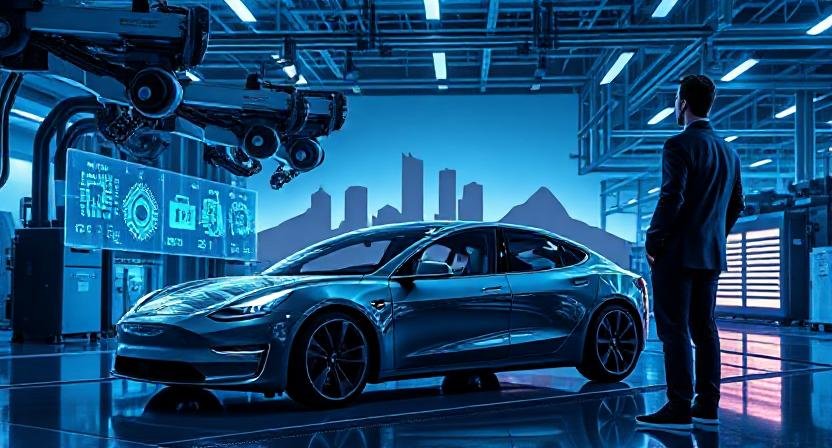
Tesla’s Supply Chain Power Play: Securing the Future of AI and Robotics
Why Tesla’s $16.5B Samsung deal and strategic partnerships signal a new era for AI-driven manufacturing
Tesla’s recent moves in the supply chain arena are nothing short of seismic. A $16.5 billion deal with Samsung for advanced AI chips and a $4 billion partnership with LG Chem for battery production are not just business transactions—they’re bold steps toward dominating the future of AI, robotics, and electric vehicles. These deals highlight Tesla’s unmatched ability to secure critical resources, localize manufacturing, and create a supply chain that’s fast, efficient, and resilient. For tech enthusiasts, this is a masterclass in how to build a technological empire in a world of geopolitical tension and supply chain uncertainty.
Key Takeaways
Strategic Partnerships Secure AI Leadership: Tesla’s $16.5B deal with Samsung prioritizes access to a dedicated chip fabrication facility, ensuring a steady supply of AI chips for vehicles, robotaxis, and humanoid robots.
Battery Supply Scaled for Growth: The $4B LG Chem deal bolsters Tesla’s battery production capacity, critical for meeting the soaring demand for electric vehicles, Megapacks, and future robotics.
Localized Manufacturing Reduces Risk: By prioritizing U.S.-based production, Tesla mitigates geopolitical risks tied to global supply chains, particularly in regions like Taiwan.
Supply Chain Flywheel Drives Efficiency: Tesla’s ability to turn inventory quickly and provide demand certainty creates a win-win for suppliers, fostering stronger partnerships and better terms.
AI and Robotics Poised for Dominance: Tesla’s integrated approach to hardware and software, combined with its supply chain prowess, positions it to lead in emerging fields like robotaxis, humanoid robots, and potentially drones.