

Five Misread Bets Across Musk’s Empire Point to Software Margins, Humanoids, and Multiplanetary Infrastructure
From $99-a-month FSD on cars people already own to Gen 3 Optimus on the old Model S/X floor, the stack that matters is recurring intelligence - not the flashiest hardware headline.
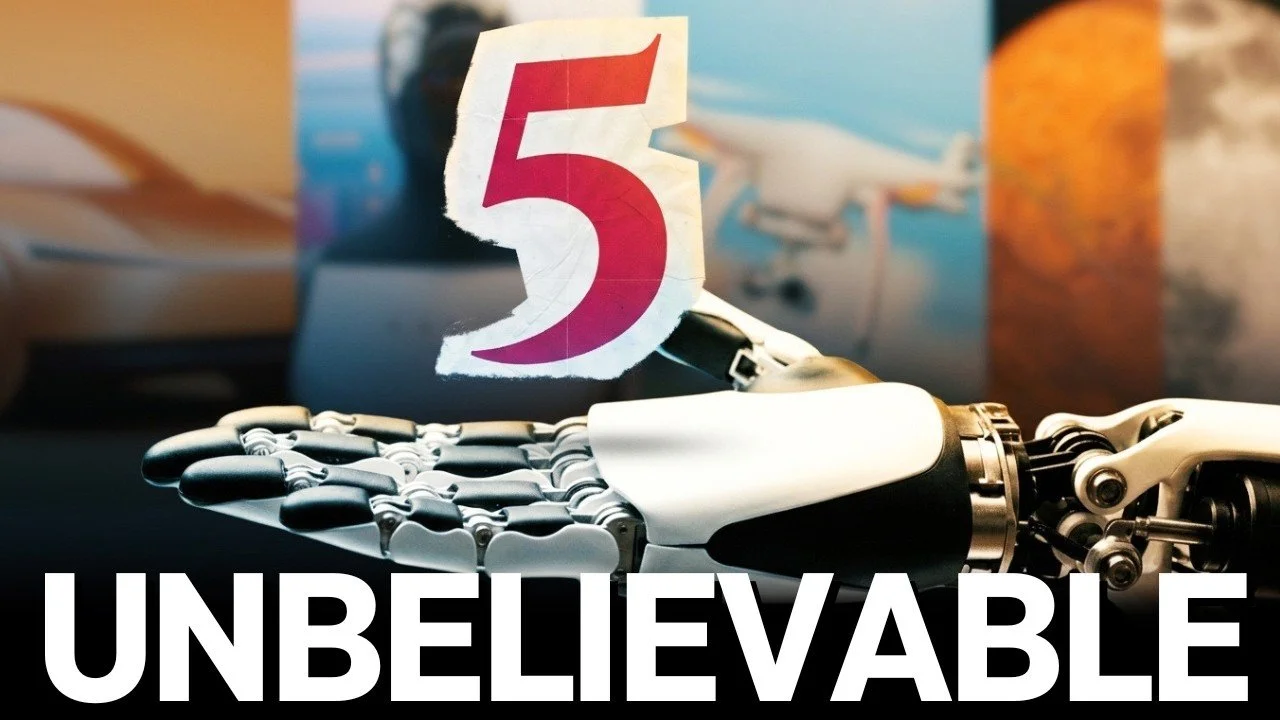
Five Ideas That Misread the Entire Musk Empire
FSD subscriptions, Optimus, drones, one intelligence stack, and a Moon-and-Mars endgame reframe how Tesla, SpaceX, and the rest of the complex actually fit together.
SpaceX's Record IPO: The Warehouse Vision That Could Make Mars Routine
Turning slim odds and sci-fi dreams into a practical path for anyone who wants to leave Earth
SpaceX reaching the largest IPO in history after starting in a single warehouse reveals how a clear, long-term objective can survive early doubts and technical setbacks. The real value lies in what comes next: engineering that treats multi-planetary settlement as a solvable problem rather than a distant fantasy, while giving ordinary people a concrete reason to believe the future will feel more expansive than the present.
Key Takeaways
A company founded in a modest El Segundo warehouse achieved the largest IPO ever, showing that sustained focus on ambitious technical goals can overcome initial assessments of very low success probability.
The central objective is to build systems that let anyone travel to the Moon, Mars, or other solar system destinations, moving spaceflight beyond professional crews to broader participation.
Established aerospace players produce reliable rockets yet have not directed equivalent effort toward the specific technologies required for permanent multi-planetary presence.
Earth-bound problems still require attention and resources, but large-scale projects that generate excitement about what happens next supply essential motivation that pure problem-solving alone cannot provide.
Current team capabilities support confidence that vehicles and infrastructure capable of carrying people to Mars and beyond can be delivered on a practical timeline.
The Master Plan You Can't Unsee: Wiring Civilization's Next Foundation
How energy systems, self-driving fleets, humanoid robots, satellite networks, and orbital infrastructure are stacking into one coherent architecture for abundance—and why Mars ambitions are already reshaping what is possible on Earth.
A single Tesla completing a 13,000-mile coast-to-coast journey on full self-driving in January 2026 without any human intervention on the controls was more than an autonomy milestone. It marked the visible activation of something larger: a stacked foundation of technologies now advancing in parallel across energy, transport, labor, intelligence, connectivity, and space. The most valuable pattern is not any single product but the way these layers reinforce one another, with physics-first requirements for multi-planetary settlement acting as the forcing function that accelerates practical progress everywhere else. Cost curves in AI, robotics, and solar are collapsing at the same moment, pointing toward a period where intelligence, physical work, and energy become abundant enough to reorder how economies measure value.
Key Takeaways
Eight interlocking layers—energy generation and storage, physical transport, humanoid robotics for labor, AI agents for knowledge work, frontier model intelligence, global satellite networks, off-world transport, and direct brain-computer interfaces—are being built together rather than as isolated bets.
Reusable orbital-class rockets and mass-market electric vehicles both moved from expert consensus of impossibility to routine operation, showing that compressed timelines often precede large-scale delivery once the underlying engineering locks in.
Hardware and data integrations across projects, such as satellite antennas embedded in vehicle roofs, energy storage powering training clusters, and vehicle fleets supplying training data for robots, create closed loops that multiply progress beyond what any single company could achieve alone.
The requirement to settle Mars drives demand for electric propulsion, robotic construction crews, subsurface habitats, and reliable interplanetary links—technologies that simultaneously relieve energy, labor, infrastructure, and connectivity constraints on Earth.
Observed cost trajectories show AI inference dropping by roughly 36 times in two years, robotic labor approaching a couple of dollars per hour at scale, and solar generation costs having already fallen 99 percent over recent decades, with further declines continuing.
Physical infrastructure at new orders of magnitude, including chip fabrication targeting 100–200 billion specialized AI units per year and launch costs falling toward $10–100 per kilogram to orbit, is enabling both terrestrial AI expansion and space industrialization at the same time.
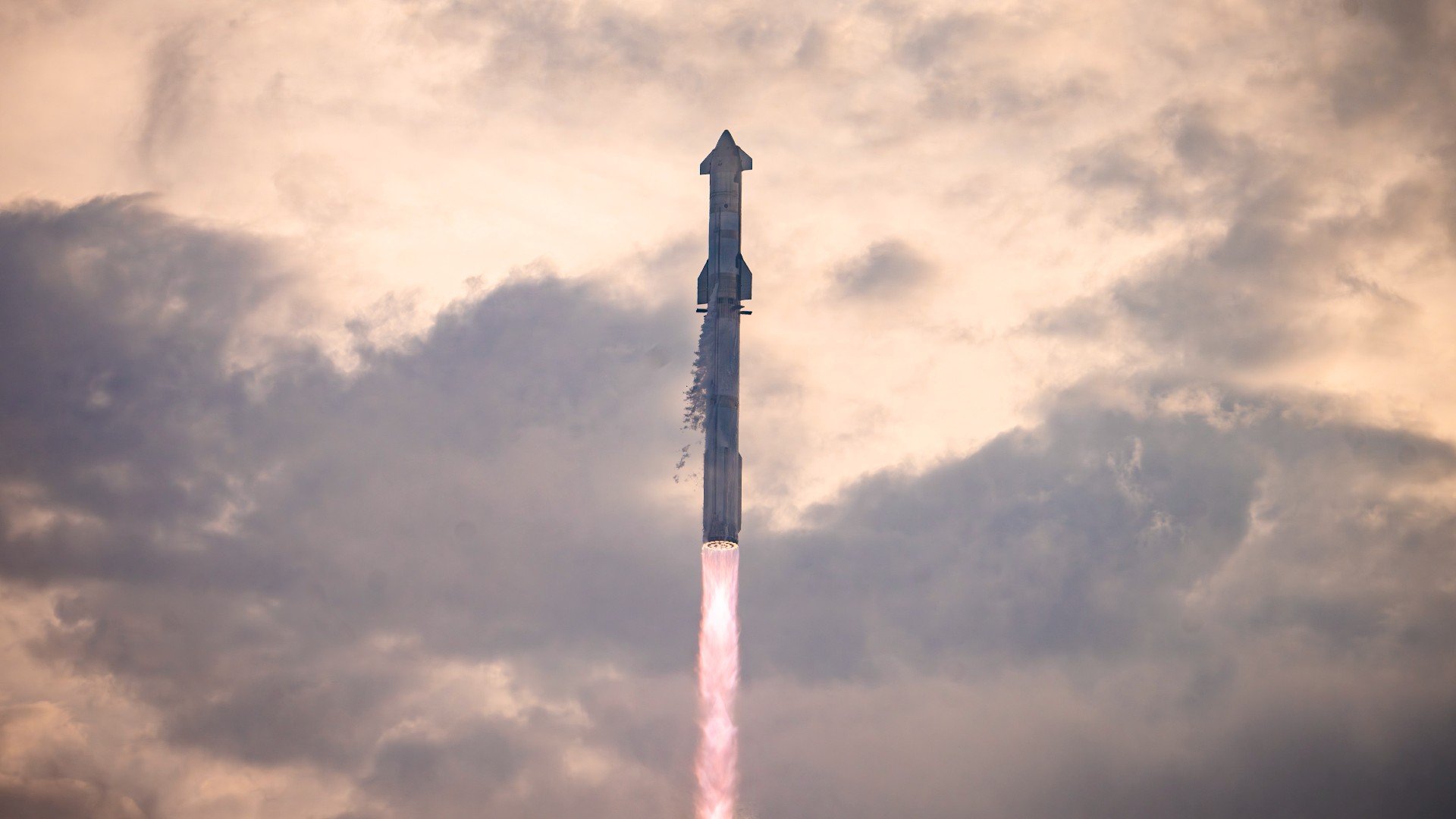
Starship’s Epic Flight 11: Pushing the Limits of Space Exploration
Unveiling the Future of Reusable Rockets and Global Connectivity
The latest Starship test flight has once again redefined what’s possible in space exploration. From a flawless launch to daring reentry experiments, this mission showcased the resilience of SpaceX’s ambitious rocket and its role in shaping the future of interplanetary travel and global internet access. Tech enthusiasts, buckle up—this flight delivered groundbreaking insights into reusable rocket technology, thermal protection systems, and the power of Starlink’s connectivity.
Key Takeaways
Successful Hot Staging and Separation: Starship executed a precise hot staging maneuver, with the Super Heavy booster and Starship separating cleanly, marking a significant step toward reliable reusability.
Raptor Engine Reliability: All 33 Raptor engines on the Super Heavy booster and six on Starship performed nominally, with a successful in-space Raptor relight demonstrating critical deorbit capabilities.
Payload Deployment Milestone: Eight Starlink simulators were deployed, paving the way for future missions to carry up to 60 advanced V3 Starlink satellites, boosting network capacity by 60 terabits per second per launch.
Thermal Protection Testing: Intentional removal of heat shield tiles tested Starship’s resilience under extreme reentry conditions, providing valuable data for future iterations.
Starlink’s Real-Time Data Power: Starlink’s connectivity enabled uninterrupted HD video and telemetry during reentry, overcoming plasma interference to deliver critical engineering data.
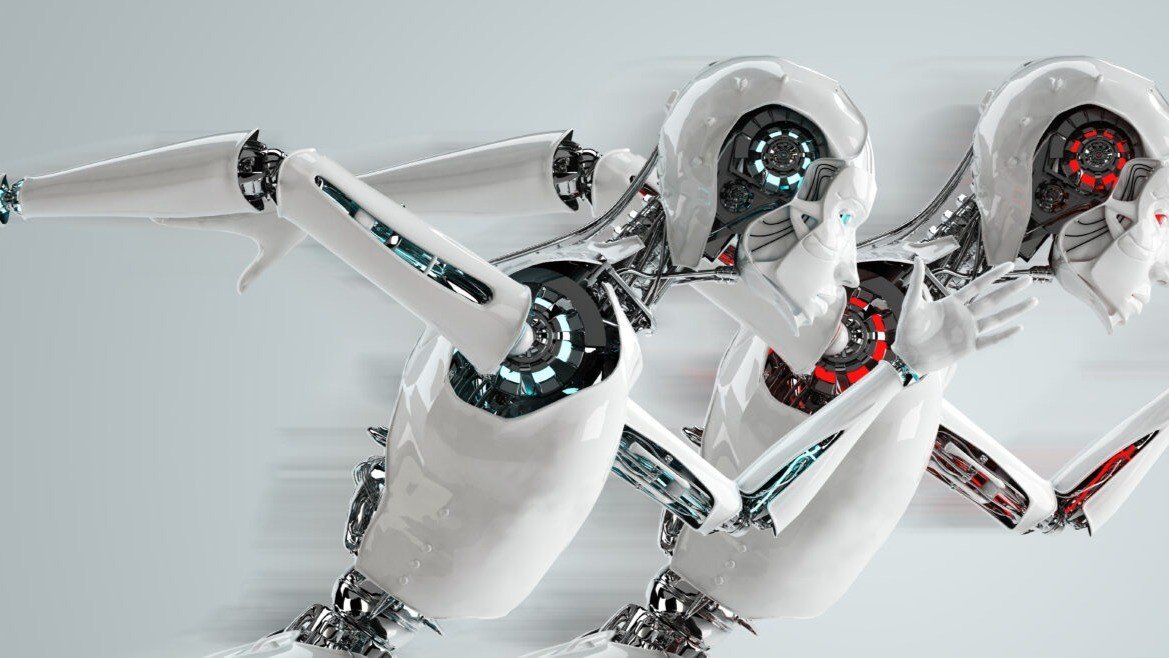
The AI-Driven Future: Robots, Rockets, and Radical Economic Shifts
Unlocking abundance through automation—why humanoid bots and self-driving tech could reshape everything from factories to Mars colonies.
Automation technologies are advancing at a breakneck pace, promising to slash costs for labor and transportation while opening up entirely new frontiers. From factories running 24/7 to cities deploying robot fleets for public services, these developments could drive unprecedented economic growth. Yet they also raise pressing questions about job displacement and societal stability. Here's what tech enthusiasts need to know about the emerging landscape.
Key Takeaways
Humanoid robots are poised to handle tasks like assembly, delivery, and chores at a fraction of human labor costs, potentially dropping to $3-5 per hour equivalent over time.
Self-driving vehicles could reduce transportation expenses to under 40 cents per mile, enabling innovative business models like mobile salons or on-demand services that come directly to consumers.
High-volume production of robots, spurred by early adopters like space exploration programs, will lower unit costs to $20,000-30,000, making them accessible for widespread use in warehouses, manufacturing, and urban revitalization.
Mars colonization efforts will rely heavily on robot labor to build infrastructure in harsh environments, funded by satellite internet revenues and creating a feedback loop for tech scaling.
While new sectors emerge in AI maintenance, space tech, and customized services, significant job losses in driving and manual labor are likely, overlapping with existing economic frustrations and potentially fueling social tensions.
Governments and companies could deploy robot fleets to aid underserved communities, repairing infrastructure and boosting local economies without ongoing wage expenses.
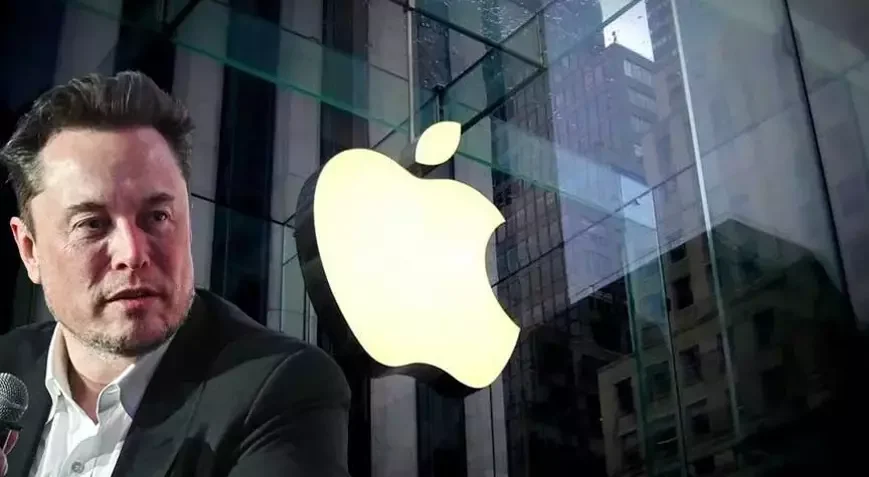
Elon Musk's Next Big Move: Acquiring Apple to Ignite the AI Revolution
Revolutionizing Personal Tech with Secure Data, Robotics, and Space Ambitions
Imagine transforming a trillion-dollar tech giant from a comfortable cash machine into a powerhouse of AI innovation. Acquiring Apple could give Elon Musk access to billions of users' private data to build personalized digital twins, automate global manufacturing, and generate massive cash flows to fuel projects like autonomous vehicles and Mars exploration—all while doubling the company's value through bold reinvention.
Key Takeaways
Apple's innovation has stalled, with products like Vision Pro underperforming and reliance on incremental iPhone updates leading to stagnant growth.
The company's true asset is its ecosystem of over a billion users' private data, which could enable secure AI-powered digital twins for personalized experiences across devices.
Musk could gain control with a 10% stake, valued around $350 billion, by leveraging his companies' combined worth, investor alliances, and banking relationships.
Shifting manufacturing from China through automation would reduce dependencies, while integrating Musk's AI like Grok could supercharge Apple's hardware.
Redirecting Apple's $110 billion annual cash flow from buybacks and dividends to R&D could double revenues, fund ambitious ventures, and attract growth-oriented investors.
The Supersonic Tsunami: Tech's Relentless March Toward Abundance
Why AI and automation will redefine work, wealth, and human potential—and the bumpy road ahead
Technological progress accelerates at a pace that outstrips societal adaptation, creating both massive opportunities and risks of inequality. In the coming decades, AI-driven automation promises a world where tedious labor vanishes, costs plummet, and abundance becomes the norm. Yet the transition could widen wealth gaps and disrupt jobs, demanding new economic models like universal basic income to maintain stability.
Key Takeaways
Robots and AI will handle all repetitive and dangerous tasks, from mining to creative arts, leading to a society focused on meaningful pursuits like science and culture.
Manufacturing costs could drop to about a dollar per pound for everything, making goods as affordable as basic agriculture products today.
Winner-take-all dynamics in AI-dominated industries will polarize wealth at national, corporate, and individual levels, necessitating policies like universal basic income to bridge gaps.
Starlink and similar technologies will connect 3 billion underserved people to the global economy, sparking innovation and entrepreneurship in remote areas.
Established companies rarely reinvent their core businesses; new entrants leveraging AI will disrupt legacy industries like automotive and aerospace.
Cities remain efficient hubs for innovation and resource use, countering trends toward remote work despite advances in connectivity.
Declining birth rates reduce societal investment in the future; technology must foster optimism to encourage family growth and long-term progress.
Mars colonization drives Earth-bound innovations in sustainable tech, from electric vehicles to alternative proteins, emphasizing in-situ resource use.
Humanoid robots will start in industrial settings for safety, evolving into shared urban resources that transform labor and daily life.