
SpaceX Bets Its IPO Future on AI-1, a 70-Meter Orbital Supercomputer
A 747-wide, chip-agnostic compute satellite targeting 150 kilowatts in orbit sits at the center of the roughly $85 billion float, and the economics only close if Starship drives launch costs toward $200 per kilogram.
Tesla Files Megapod Trademark for Modular AI Compute Hardware
A June 2026 USPTO filing for modular data-center systems, paired with AI5, energy storage, and a five-layer stack, points Tesla toward selling inference compute instead of only buying it.
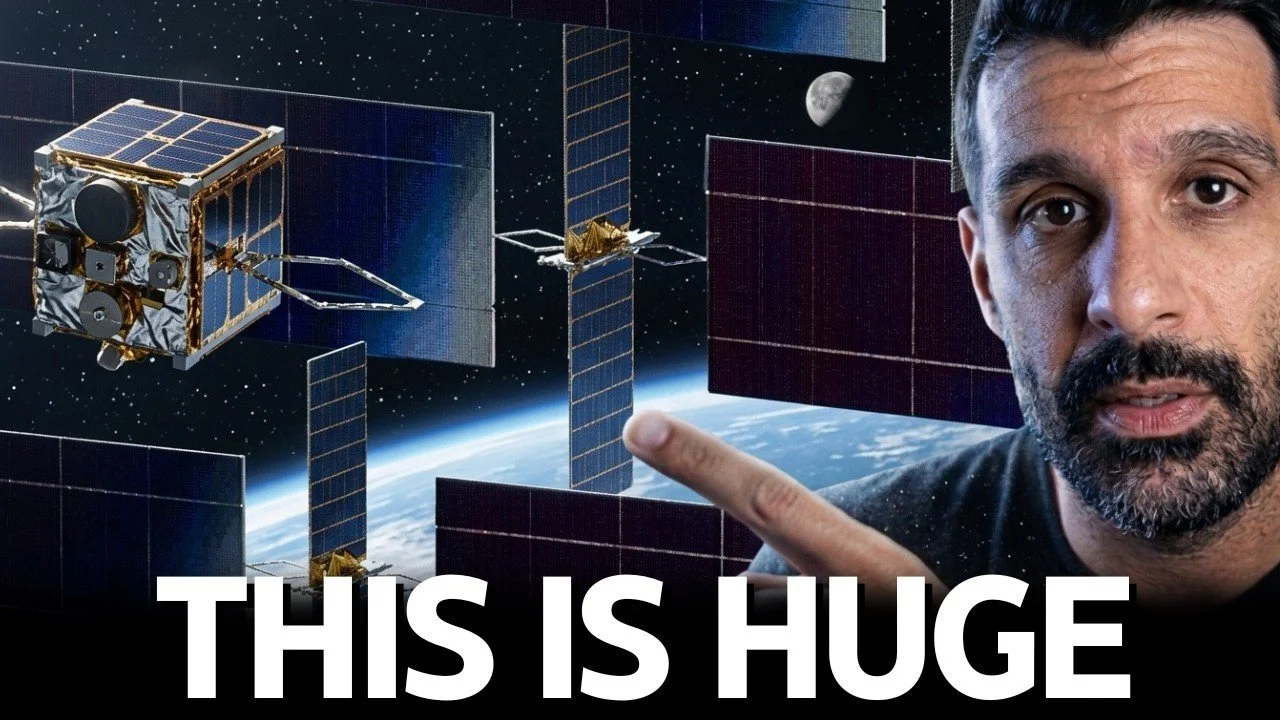
SpaceX Bets Public Markets on AI-1 Orbital Compute
A 70-meter AI satellite, an $85 billion IPO, and a thermal math problem that decides whether space compute ever undercuts Earth.
Tesla Files 'Megapod' Trademark, Setting the Stage for an AI Box That Pays Homeowners
A June 18th filing for modular AI data center hardware reveals how Tesla’s five-layer stack — chip, power, cooling, fab, and model — points toward a home unit that computes, heats, powers, and earns.
Tesla Files "Megapod" Trademark, Setting Up a Five-Layer AI Stack No Rival Owns
A June 18, 2026 USPTO filing for modular AI data center hardware reveals how Tesla plans to flip from compute buyer to compute seller—and eventually shrink the whole box down to a Powerwall bolted to your house that heats, powers, and pays you.
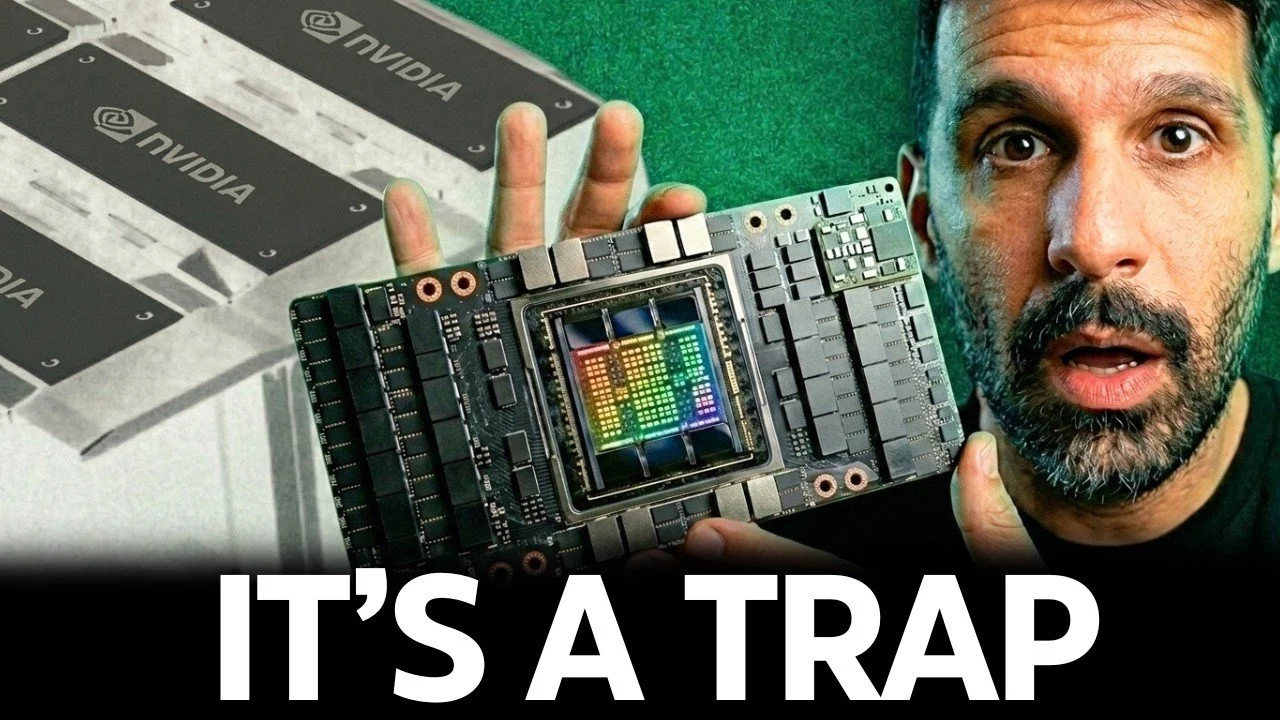
NVIDIA Absorbs Groq in a $20 Billion Move as the Chip War Shifts From Training to Inference
With inference already running two-thirds of the world’s AI compute, NVIDIA’s Christmas Eve licensing deal for Groq’s patents, software, and top engineers quietly removed its fastest challenger while AMD, Cerebras, and Tesla scatter across entirely different mountains.
Nvidia Pays $20 Billion for Groq's Team as the AI Chip War Shifts to Inference
By licensing Groq’s entire patent portfolio and hiring founder Jonathan Ross plus roughly 80% of its staff on Christmas Eve, the $5 trillion chip king is fortifying the one battlefield - inference - where in-house silicon from Google, Amazon, and Microsoft most threatens its 75% margins.

Nvidia's 800-Volt Pivot and the ASIC Land Grab Redraw the Data Center Map
As hyperscale equipment prices quadruple in eight months, the industry is racing toward 800-volt racks, model-specific silicon, and a co-designed home inference box that fuses compute, power, and connectivity into one appliance.
Tesla Job Listing Signals In-House Push Into Distributed AI Training and Inference
Two Palo Alto software engineering roles built around PyTorch and low-level GPU tooling point to Tesla owning the AI compute layer that sets how fast it can scale FSD, Optimus, and the CyberCab, even as viral crash narratives and safety scrutiny escalate alongside.
Starlink Crosses 10 Million Users as SpaceX Builds Toward Orbital AI Compute
SpaceX’s connectivity arm doubled its subscriber base to 10.3 million in a year while standing up a gigawatt-scale supercomputer and mapping a path to solar-powered AI data centers in space.
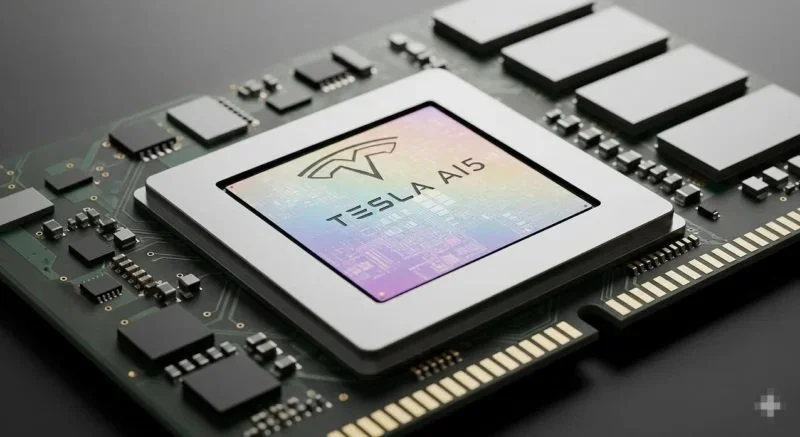
Tesla’s Custom AI Chip Quietly Builds the Foundation for Independence From Nvidia
How a radically simplified inference engine, a $119 billion domestic fab, and orbital data centers powered by constant sunlight could reshape who controls the future of AI infrastructure.
Tesla’s AI5 chip, taped out in April 2026, delivers inference performance in the same range as Nvidia’s H100 for the specific workloads that matter most to large-scale robotics and autonomy systems. Two of the chips together reach territory previously occupied by Nvidia’s Blackwell B200. The difference lies in what the design deliberately left out and where it will actually run first.
Key Takeaways
The AI5 chip matches high-end Nvidia inference throughput for Tesla’s targeted tasks while consuming dramatically less power and costing a fraction as much, because it is built as a narrow-purpose ASIC rather than a general-purpose GPU.
Radical simplification — removing the image processor and other unused blocks — allows the chip to focus exclusively on the low-precision math that runs real-time perception and control in vehicles and humanoid robots.
First deployments target Optimus humanoid robots and internal AI supercomputers rather than next-generation vehicles, since existing hardware already exceeds typical human driving performance in most scenarios.
Tesla continues purchasing hundreds of thousands of Nvidia GPUs for training its largest models, treating custom inference silicon and general-purpose training hardware as complementary tools rather than substitutes.
A rapid internal roadmap calls for AI6 production in 2027 on Samsung’s process with roughly double the performance, followed by AI6.5 on TSMC’s Arizona fab, targeting a new generation every nine to twelve months.
The dedicated Terafab facility carries phase-one costs of $55 billion and total project costs approaching $119 billion — larger than the entire US CHIPS Act — and will be split across Tesla and SpaceX balance sheets ahead of SpaceX’s planned public listing.
SpaceX regulatory filings seek approval for up to one million satellites configured as orbital data centers that run on uninterrupted solar power, with internal projections placing the total addressable market for space-based AI infrastructure at $26 trillion.
The long-term objective is vertical ownership of every critical layer — chip design, domestic fabrication, low-cost launch, and space-based power — so that AI deployment at planetary scale does not depend on any single external supplier for the foundational compute element.
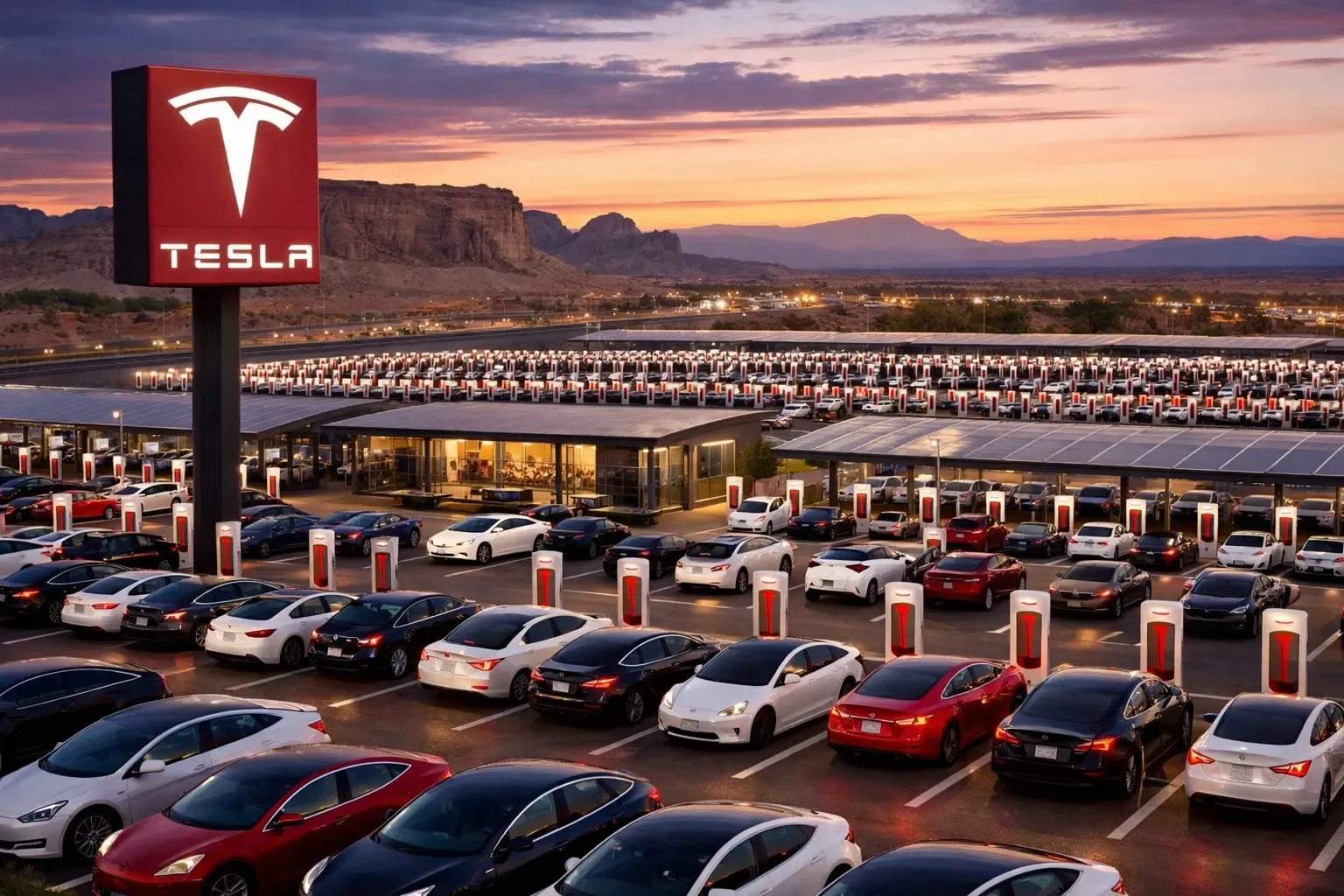
Tesla's Quiet Infrastructure Revolution: Off-Grid Chargers, Business Charging, and the AI Chip Moonshot
How Tesla is quietly building the backbone for massive energy + compute scale while the world debates geopolitics and AI backlash.
The most valuable signals right now aren't in the headlines. They're in the unglamorous but hyper-scalable infrastructure moves: massive off-grid Supercharger sites that double as potential compute nodes, a new program letting businesses host and price their own chargers, and the imminent kickoff of a gigantic in-house AI chip fabrication project. These pieces form the foundation for Tesla's energy storage dominance, fleet-wide inference, and independence from fragile global supply chains.
Key Takeaways
Tesla launched Supercharger for Business in mid-March 2026, allowing property owners to install and set pricing on Superchargers while Tesla handles hardware, software, maintenance, and network integration.
The massive Lost Hills "Project Oasis" station in California—164 stalls, 11 MW solar farm, 39 MWh battery storage—operates primarily off-grid and demonstrates a replicable model for high-utilization solar + battery sites that could host AI inference during low-EV demand periods.
Tesla's Terafab project launches March 21, 2026: a multi-billion-dollar effort to build a 2nm-class semiconductor fab targeting 100–200 billion custom AI chips annually for Dojo, vehicles, and distributed compute.
Geopolitical risks around Taiwan and advanced chip supply remain acute, but Tesla's vertical integration push reduces long-term exposure.
AI graphics breakthroughs like NVIDIA's DLSS 5 show photoreal neural rendering becoming mainstream, yet face cultural resistance that may be amplified by competing interests slowing U.S. AI progress.
Agentic AI tools (Claude Code, OpenRouter, local models) are already automating paperwork, development, and operations—shifting from scarcity to abundance mindsets in creative and professional fields.
Tesla's Hidden Moat in Self-Driving Tech: Why the Race Isn't Even Close
The Data Wall NVIDIA Can't Climb—Yet
The battle for autonomous vehicles is intensifying, with new players stepping up to challenge established leaders. At its core, success hinges on mastering rare, unpredictable scenarios that no simulation can fully capture. Tesla's vast real-world data collection sets it apart, creating a lead that could take competitors years to close, while pushing the entire field forward through fierce rivalry.
Key Takeaways
Autonomous driving requires handling not just common scenarios but an endless array of rare edge cases, known as the long-tail problem, which demands exponential effort to solve.
Tesla's fleet of millions of vehicles has accumulated billions of miles of real-world data, giving it a decisive edge in training AI for these unpredictable situations.
NVIDIA's new AI system for self-driving, set to debut in production vehicles soon, represents a bold open-source approach aimed at widespread adoption, but it starts with limited data compared to Tesla.
Competition in this space accelerates innovation, improves safety, and compresses timelines, benefiting consumers even if one company maintains a lead.
Achieving human-level safety in self-driving tech means reaching reliability rates of 99.9998% or better, a benchmark that has delayed timelines across the industry.
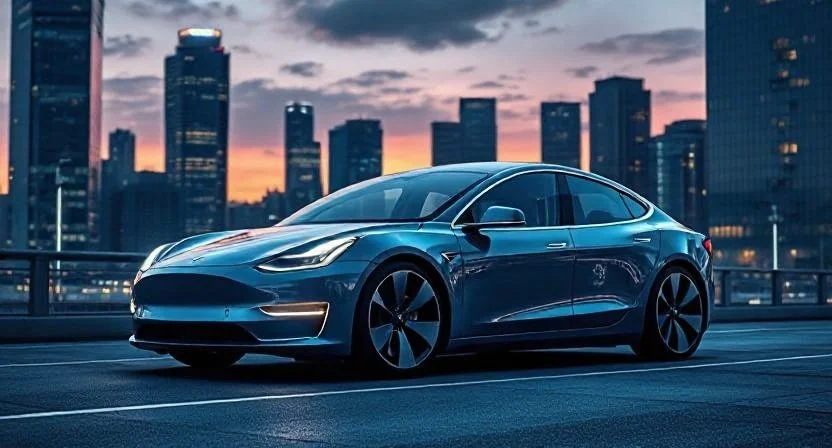
The AI Revolution: Tesla, Nvidia, and the Future of Compute
Why Tesla and Nvidia Are Poised to Redefine the Global Economy
The AI revolution is reshaping industries, and at its core are two juggernauts: Tesla and Nvidia. Their advancements in artificial intelligence, robotics, and compute infrastructure signal a future where energy, data, and intelligence converge to create unprecedented economic value. From autonomous robotaxis to distributed inference networks, the synergy of these technologies could disrupt entire markets, leaving traditional players like Uber struggling to adapt. Here’s why the stakes are higher than ever and what it means for the future.
Key Takeaways
Tesla’s Robotaxi Dominance: Tesla’s robotaxi network, with dynamic pricing and unmatched cost efficiency, is set to capture significant market share from Uber and Waymo, potentially rendering traditional ride-hailing models obsolete.
Nvidia’s Compute Supremacy: Nvidia’s platform strategy fuels the AI boom, but its long-term margins may face pressure as compute becomes commoditized, creating opportunities for specialized players like Tesla.
Energy and Compute Synergy: Pairing energy storage (like Tesla’s Megapacks) with AI chips enables distributed inference, turning idle energy into valuable computational output.
Video Data as the Ultimate Resource: Video data’s infinite scalability makes it the backbone of AI training, giving Tesla a unique edge with its vast fleet of camera-equipped vehicles.
Retail Investing’s AI Edge: Advanced AI tools are empowering retail investors to uncover opportunities in stocks like Tesla, potentially increasing market liquidity and driving more IPOs.
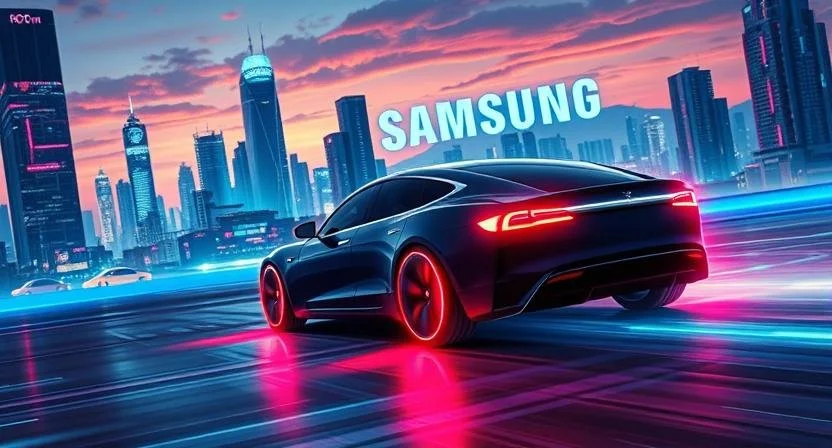
Tesla’s AI Revolution: Samsung Chip Deal Signals a Bold Future
How Tesla’s $16.5 Billion Partnership with Samsung for the AI6 Chip Could Redefine AI, Robotics, and Supply Chains
Tesla’s $16.5 billion deal with Samsung to produce the AI6 chip, set to power autonomous vehicles, humanoid robots, and AI data centers starting in 2027, marks a pivotal moment for the company. This strategic move, coupled with Tesla’s advancements in Full Self-Driving (FSD), robotaxis, and the Optimus humanoid robot, underscores its transformation from an electric vehicle (EV) manufacturer to a leader in AI and robotics. Despite challenges in its core EV business, Tesla’s stock has shown resilience, reflecting investor optimism about its AI-driven future. Here’s what this means for Tesla, its supply chain, and the broader AI landscape.
Key Takeaways
Strategic Partnership: Tesla’s $16.5 billion deal with Samsung to produce the AI6 chip at its Texas foundry aims to secure a robust supply chain for AI-driven products, including self-driving cars and Optimus robots, starting in 2027.
Stock Performance: Despite weak EV sales and negative sentiment around Tesla’s political controversies, its stock has risen approximately 45% over the past year, driven by progress in FSD, robotaxis, and robotics.
AI6 Chip Versatility: The AI6 chip is designed for both AI training and inference, potentially reducing costs and improving efficiency across Tesla’s ecosystem of vehicles, robots, and data centers.
Supply Chain Diversification: Partnering with Samsung reduces Tesla’s reliance on TSMC and Nvidia, mitigating geopolitical risks tied to Taiwan and ensuring long-term chip supply for ambitious AI goals.
Humanoid Robot Ambitions: Tesla’s Optimus robot, with production targets of 5,000 units in 2025 and millions by 2030, could tap into a $38 billion market by 2035, with applications in logistics, manufacturing, and urban services.
Market Implications: The deal challenges Nvidia’s dominance in AI hardware and pressures TSMC to innovate, while positioning Samsung as a stronger player in the foundry market.