
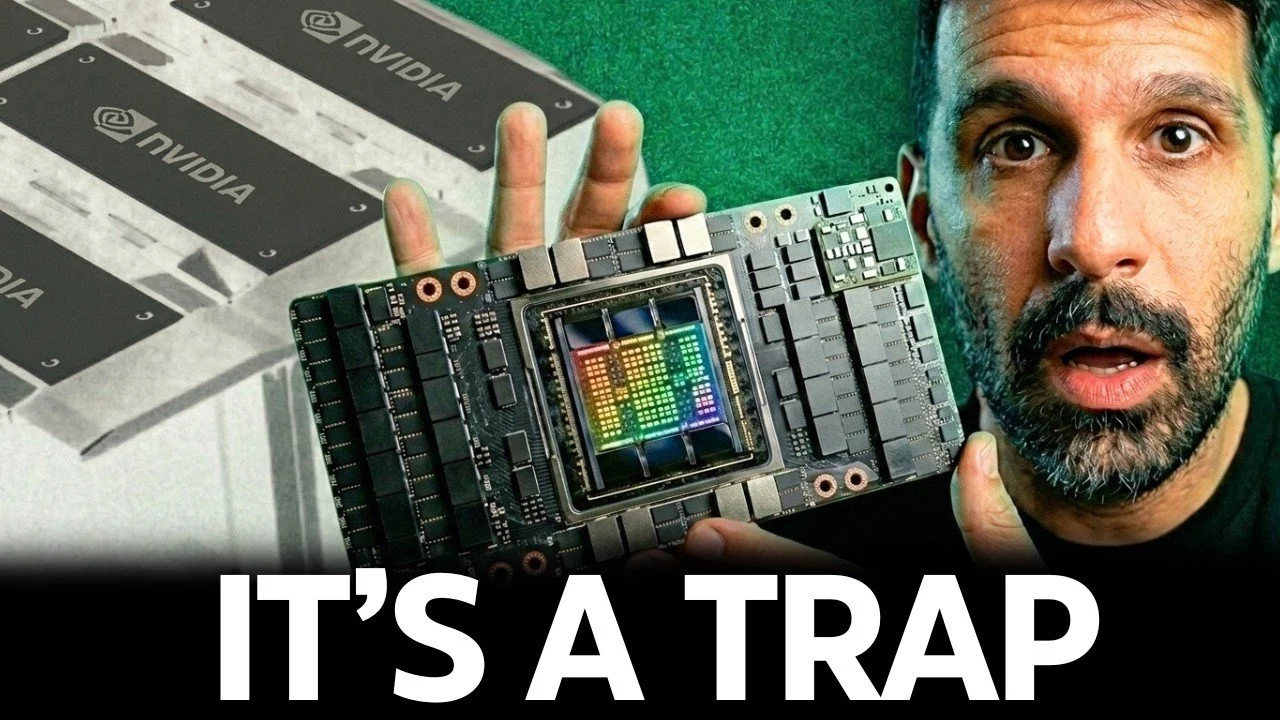
NVIDIA Absorbs Groq in a $20 Billion Move as the Chip War Shifts From Training to Inference
With inference already running two-thirds of the world’s AI compute, NVIDIA’s Christmas Eve licensing deal for Groq’s patents, software, and top engineers quietly removed its fastest challenger while AMD, Cerebras, and Tesla scatter across entirely different mountains.

SpaceX’s $2 Trillion IPO: The AI Infrastructure Empire Hiding in Plain Sight
A single $15 billion annual compute contract is about to flip the entire narrative on the company’s reported losses—and reveal why this might be the most important public offering of the decade.
SpaceX has filed its S-1 for what is set to become the largest IPO in history, targeting a valuation near $2 trillion. While headlines fixate on last year’s nearly $5 billion loss, the filing exposes a far more strategic picture: a company that has evolved into three distinct businesses, with Starlink generating massive cash flow to bankroll an aggressive push into AI compute infrastructure—including orbital data centers that could solve Earth’s crippling power and cooling constraints.
Key Takeaways
SpaceX is on track for the biggest IPO ever, raising potentially three times more capital than Saudi Aramco’s 2019 record at a $2 trillion-plus valuation.
Anthropic has committed to paying SpaceX $1.25 billion every month—$15 billion per year—through May 2029 for exclusive access to its AI compute capacity.
The company now reports in three segments: Space (rockets), Connectivity (Starlink), and AI (data centers and related operations acquired via xAI).
Starlink delivered $11 billion in 2025 revenue—61 percent of total company sales—with $4 billion in operating income and roughly 63 percent adjusted EBITDA margins on a hardware business.
Starlink grew nearly 50 percent year-over-year, now serves 10 million subscribers in 164 countries, and powers direct-to-cell service for millions of devices monthly.
The AI segment, currently showing operating losses, is positioned to swing sharply profitable once the Anthropic revenue begins flowing, potentially making the entire company profitable as early as 2026.
SpaceX plans to launch orbital AI compute satellites as early as 2028, leveraging constant solar power and infinite heat dissipation in space.
Elon Musk will retain overwhelming voting control post-IPO through a dual-class share structure, ensuring long-term focus on Mars colonization.
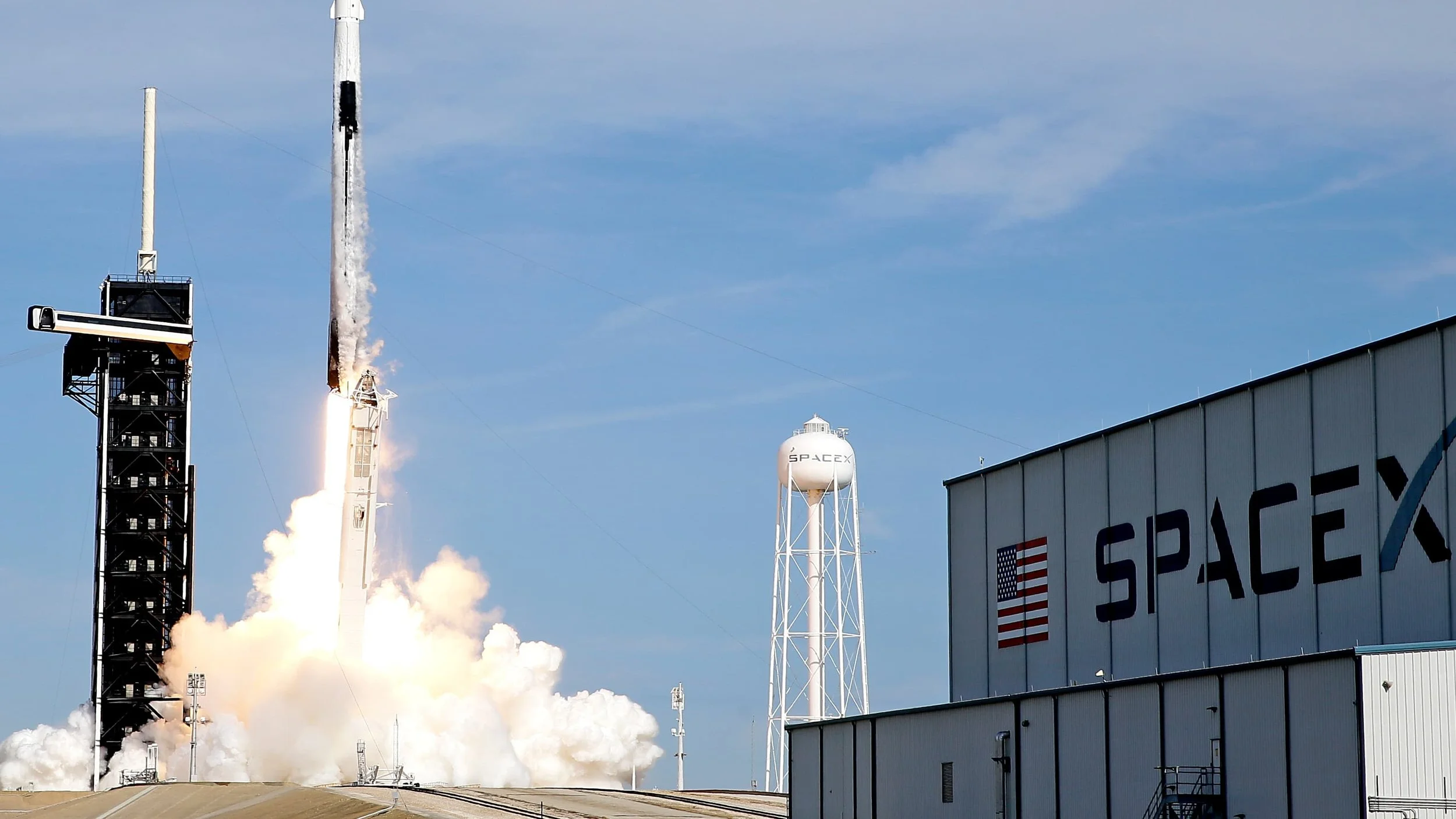
SpaceX’s IPO Isn’t About Rockets Anymore
The $15 Billion Anthropic Deal That Turns a $5 Billion Loss Into the Blueprint for AI Infrastructure Dominance
SpaceX just filed the paperwork for what could be the largest IPO the world has ever seen, and the numbers look wild at first glance: nearly $5 billion in losses last year. But buried inside the filing is a single customer agreement that rewrites the entire narrative. One of the top AI labs on the planet has committed to paying SpaceX roughly $15 billion a year for computing power through 2029. That deal alone flips the story from “expensive rocket company bleeding cash” to “picks-and-shovels supplier for the AI gold rush with a high-margin cash engine already in orbit.”
Key Takeaways
SpaceX now operates as three distinct businesses: traditional space launches, Starlink satellite internet, and a fast-growing AI compute division powered by massive data centers.
• Starlink delivered $11 billion in revenue in 2025 (61% of total company revenue) and generated more than $7 billion in adjusted cash flow at roughly 63% margins.
• A single AI customer, Anthropic, signed on for $1.25 billion per month in compute revenue through May 2029, instantly turning the AI segment into a potential profit center.
• The rocket business is still investing heavily in Starship (nearly $3 billion in R&D last year), but Falcon 9 operations remain solidly profitable and will soon be joined by paying Starship missions in the second half of 2026.
• Orbital data centers are on the roadmap for 2028, solving Earth’s power-grid and cooling bottlenecks with unlimited solar energy and infinite radiator space in vacuum.
• The company ended March 2026 with $15 billion in cash after a heavy burn quarter, but incoming AI revenue streams are expected to slow or reverse that trend rapidly.

The AI War Is Over: Only Two Factions Will Dominate by 2030
Compute compounds like nothing in history—turning a handful of leaders into an unassailable advantage while the rest get acquired, commoditized, or left behind.
In the age of AI, the most valuable resource isn’t land, oil, or even raw processing power. It’s the self-reinforcing cycle where superior models draw more users, those users generate higher-quality data, and that data trains even stronger models. This flywheel accelerates with every iteration, widening the gap between frontrunners and everyone else. Eight major factions are battling for control of this cycle. Most coverage calls it competition. The math reveals something far more decisive: by 2030, only two will hold the keys to the intelligence layer that underpins the global economy.
Key Takeaways
AI’s compounding loop—models, users, data, and compute feeding each other—creates exponential separation that no physical resource war has ever matched.
Training costs have already jumped roughly tenfold in three years and could exceed a billion dollars per frontier model by 2027, pricing out all but the deepest-pocketed players.
The real bottleneck isn’t just GPU counts; high-bandwidth memory (HBM) determines how effectively massive clusters work together.
Labs now train on 100 times more data than classic scaling laws recommend, shifting the goal from efficiency to massive user retention and cheap inference at scale.
OpenAI leads in users but bleeds cash on inference and talent; Microsoft locks in enterprises; Meta uses open-source to neutralize monopoly pricing; China pursues cheap, efficient models despite chip limits; Google owns unmatched data, custom chips, and infrastructure; Anthropic bets on safety for enterprise and government; the Musk stack integrates compute, real-world data, and connectivity under one roof; regulators slow Western progress while China accelerates.
Google wins through substrate dominance—proprietary data, power-efficient TPUs, and quiet efficiency gains. The Musk integrated stack wins through vertical control of compute scale, fleet data, and end-to-end ownership.
The other six will likely be absorbed, reduced to distribution layers, or confined to regional/price-sensitive markets.
For individuals: focus on skills AI cannot synthesize on demand; invest in the infrastructure winners; prepare children for an economy where intelligence is abundant and cheap.
SpaceX Just Locked In the AI Infrastructure Crown
The vertical stack that turns rockets, chips, power, and satellites into permanent AI rent.
A single partnership has quietly redrawn the AI landscape. SpaceX is no longer just the leader in reusable rockets — it has assembled the only fully integrated physical stack for frontier AI, from silicon fabs to orbital data centers. By opening its massive Colossus compute cluster to Anthropic’s Claude models, the company proved it can act as the landlord for the entire industry while keeping its own options wide open.
Key Takeaways
SpaceX is supplying Anthropic with over 300 megawatts and 220,000+ NVIDIA GPUs from the Memphis Colossus-1 facility, instantly doubling rate limits and removing throttling for Claude Pro, Max, Code, and API users.
The deal follows SpaceX’s all-stock absorption of xAI, giving the combined entity ownership of the world’s largest concentrated GPU clusters and positioning it as a hyperscaler with launch, chip, power, and network capabilities no one else matches.
Vertical integration now spans Falcon 9/Starship launches, Terafab’s multi-hundred-billion-dollar 2nm chip production, Starlink’s 10,000+ satellite constellation, and gigawatt-scale data centers — six critical layers versus four for even the strongest competitors.
Anthropic gains immediate capacity to deploy its next-generation Mythos model at scale; SpaceX secures high-margin recurring revenue that strengthens its path to a $1.5–2 trillion+ IPO.
The broader shift: models are commoditizing fast. Sustainable advantage now lives in the physical stack below the model — the new oil, pipelines, refineries, and shipping lanes of the AI economy.
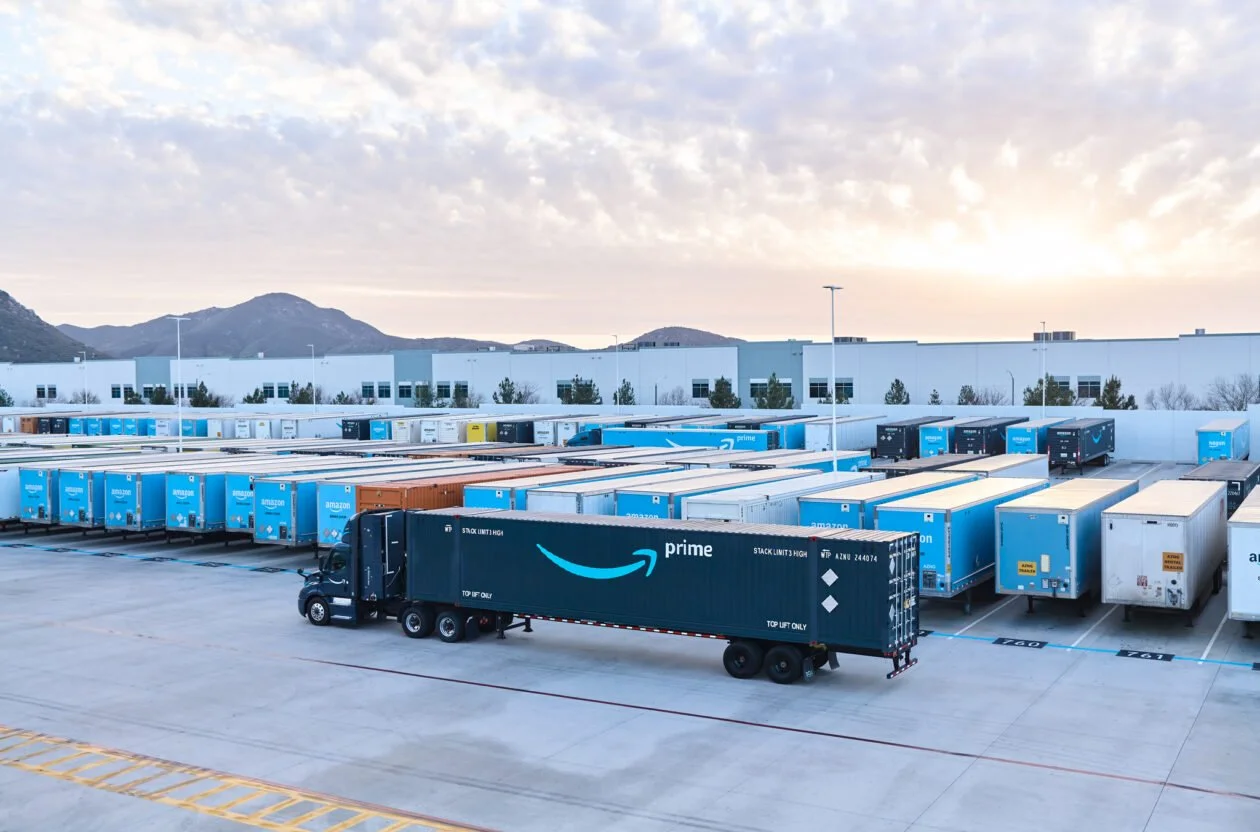
Amazon's Stealth Logistics Empire: The Massive Tailwind Coming for Tesla
How opening its entire supply chain to the world is about to create explosive demand for electric semis, autonomous vans, and humanoid robots.
Amazon has turned its vast internal logistics machine into a full-service platform available to any business. The new offering combines freight across ocean, air, ground, and rail; warehousing and distribution; same-style parcel delivery seven days a week; and AI-driven forecasting built on the largest commercial logistics dataset in existence. This isn't a minor expansion—it's the physical-world equivalent of AWS, launched into a $9 trillion market that's already projected to hit $13 trillion by 2035. For Tesla, the implications are generational: a single customer with global scale suddenly needs far more trucks, vans, robots, and autonomy software than it can source today.
Key Takeaways
Amazon Supply Chain Services bundles freight, fulfillment, parcel delivery, and predictive AI optimization into one plug-and-play system that any company can use—exactly how AWS turned internal infrastructure into a profit engine.
The move immediately pressures traditional carriers; UPS, FedEx, and logistics stocks dropped sharply on the announcement because Amazon already operates at a scale that rivals their combined fleets.
Tesla stands to benefit across four hardware categories: electric semis for long-haul freight, autonomous delivery vans to solve driver shortages, Optimus humanoids for warehouse labor, and the unified Full Self-Driving software stack that powers everything.
Amazon's existing assets—1.56 million employees, 1,200 logistics facilities, 40,000+ owned semis, 390,000+ delivery drivers, 30,000 Rivian vans, over one million robots, and its own air fleet—provide the perfect launchpad for rapid scaling.
At scale, a single humanoid robot could deliver labor at roughly $1.50–$2 per hour versus $25–$35 for a human worker, creating economics that make widespread adoption almost inevitable.
Watch for Amazon to break out Supply Chain Services revenue separately in coming quarters; that moment will trigger the same valuation rerating AWS enjoyed.
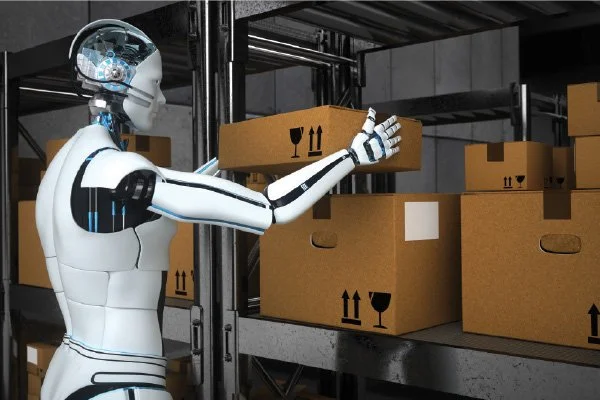
Robotaxis, Humanoids, and the New Logistics Empire: How Automation Will Make Goods and Labor Nearly Free
Inside the convergence of AI robots, autonomous fleets, and centralized supply chains reshaping the global economy.
Recent breakthroughs in humanoid robots and logistics infrastructure point to a future where physical goods move as easily as data in the cloud, while autonomous labor handles repetitive work around the clock. These shifts could drive costs toward zero for transportation, storage, and manufacturing—opening massive opportunities for businesses of any size while concentrating power in the hands of a few tech giants. The pieces are falling into place faster than most realize.
Key Takeaways
Humanoid robots are scaling production quickly, with at least one company now building a unit per day and using innovative wireless foot-charging pads that let them operate continuously without leaving their workstation.
Amazon has launched an end-to-end logistics platform that lets any business plug directly into its warehousing, shipping, and delivery network—essentially turning physical supply chains into a cloud service.
When combined with self-driving vehicles and humanoids, this infrastructure could make point-to-point movement and storage of goods extremely cheap and accessible, even for small operators with limited capital.
The result is accelerating centralization: a handful of companies could dominate labor, logistics, and data, echoing historical monopolies like railroads or oil but at global scale.
Tesla’s Robotaxi rollout faces a practical production bottleneck; early Cybercab output may include steering wheels and pedals to keep factory lines running at full capacity until unsupervised fleets can absorb volume.
Unsupervised autonomy, once achieved, unlocks enormous profit-per-mile margins—potentially $0.60–$1.00—driving rapid fleet expansion and dramatic company re-ratings.
Broader forces include corporations acting as the real power centers in geopolitics, with examples like China functioning as a single massive enterprise, alongside America’s commanding lead in AI, space launch, and defense technology.
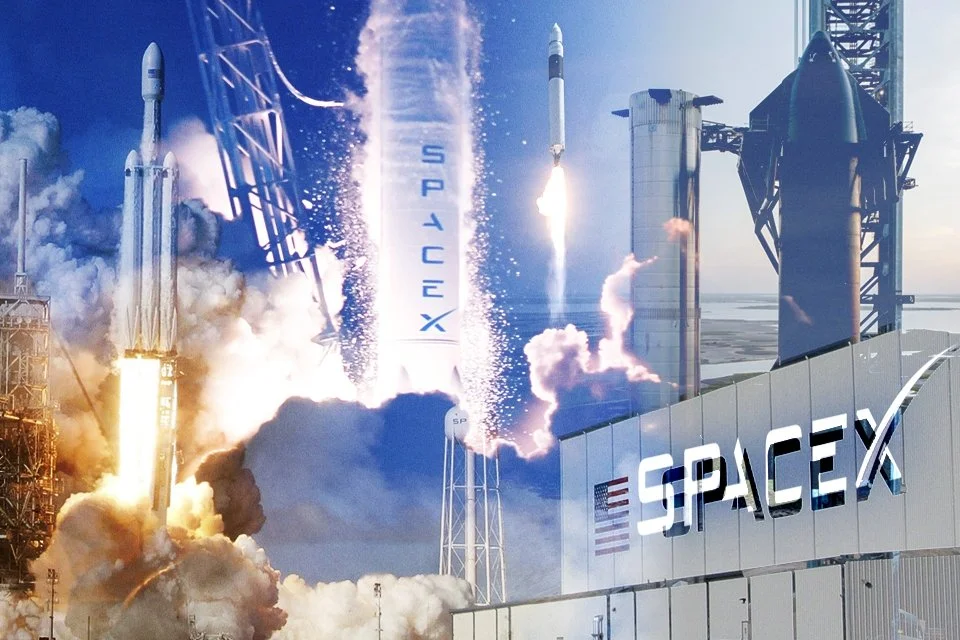
SpaceX at $2 Trillion: The Rocket Company That's About to Reshape Everything
Starship's cost revolution, Starlink dominance, and the potential Tesla merger signal the dawn of a multi-trillion-dollar space and AI empire.
SpaceX's confidential filing for a roughly $2 trillion valuation isn't just big news for investors. It marks the moment a private rocket company becomes one of the most valuable businesses on Earth, potentially raising $50–75 billion in the largest IPO in history. The numbers tell only part of the story. This is a company that already controls the majority of commercial launches, runs the world's largest satellite internet network, and is preparing to open entirely new frontiers in orbital computing, manufacturing, and global logistics through Starship.
Key Takeaways
SpaceX now handles 82% of the global commercial launch market and completed 165 Falcon 9 missions in 2025 alone.
Starlink has grown into the company's main business, with more than 10,000 satellites serving over 9 million paying subscribers and generating roughly $10–12 billion of the company's $15–16 billion total revenue last year.
Starship targets launch costs of $10–100 per kilogram to orbit—30 to 300 times cheaper than today's Falcon 9—through full reusability of both stages.
The economics unlock orbital AI data centers, space-based pharmaceutical and materials manufacturing, point-to-point Earth transport in under 45 minutes, and space solar power systems.
A $25 billion joint chip fabrication plant with Tesla and xAI already under construction in Texas will devote 80% of its output to space and orbital applications.
Merger speculation with Tesla could combine EVs, humanoid robots, AI training infrastructure, global satellite communications, and reusable rockets into a single vertically integrated entity.
The IPO would create thousands of new millionaires among employees while opening ownership to everyday retail investors for the first time.
The move strengthens U.S. strategic positioning in the renewed space race against rapidly advancing international competitors.
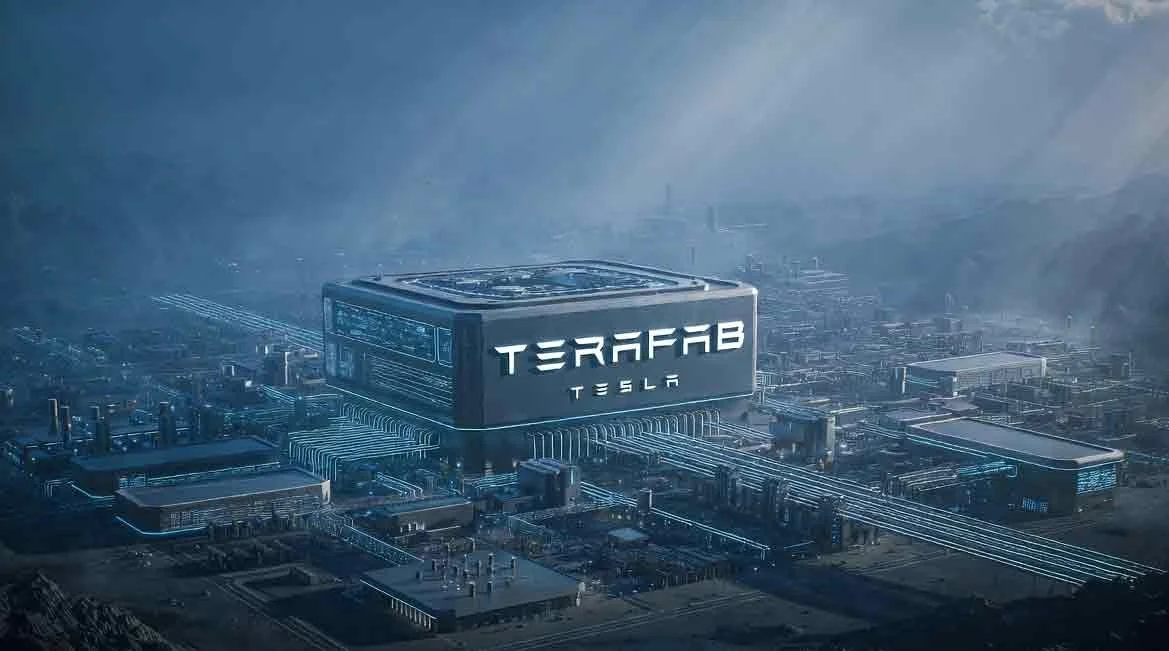
Elon Musk’s $25 Billion Chip Factory Is the Biggest Industrial Bet Ever Made
One Texas plant could crank out enough custom AI silicon to power a terawatt of compute—most of it headed to space—while rewriting the rules on design speed and efficiency.
A single factory under construction in Texas is preparing to manufacture custom AI chips at a scale that would consume more advanced semiconductor capacity than most nations currently possess. The project aims for 200 billion chips per year and one terawatt of annual compute power, with roughly 80 percent destined for orbital AI satellites launched by SpaceX. The real game-changer lies in how the factory compresses chip design cycles from months to weeks and uses advanced packaging techniques to stretch limited high-end lithography resources far beyond what traditional foundries achieve. This approach turns a seemingly impossible supply-chain bottleneck into a structural advantage for autonomous vehicles, humanoid robots, and space-based AI systems.
Key Takeaways
The factory starts at 100,000 wafer starts per month and scales to 1 million—roughly 70 percent of TSMC’s current worldwide output from all its plants combined.
Every two-nanometer chip relies on extreme ultraviolet lithography machines produced by a single company in a Dutch town of 45,000 people; global production sits at only 50 to 60 units per year, with every machine already spoken for years ahead.
In-house mask-making and rapid wafer runs shrink chip iteration cycles from three-to-four months down to one-to-two weeks, delivering five-to-ten times faster design progress than standard foundry loops.
Chiplet architecture limits expensive EUV usage to only the compute cores while sourcing memory and input/output dies on older, readily available nodes—boosting yields from 30-40 percent on monolithic dies to around 80 percent.
Custom inference silicon optimized specifically for Tesla workloads removes idle transistors, delivering major gains in power efficiency, latency, and cost—critical for extending robot runtime and lowering per-unit economics to $2 per hour of labor.
The strategy outsources heavy EUV volume work to existing foundries while owning the design-to-packaging loop, creating a compounding moat that widens each year as competitors remain locked into general-purpose chips.
Geopolitical risks around Taiwan and China’s slower EUV progress make localized, rapid-iteration capacity a strategic hedge for Western AI leadership.
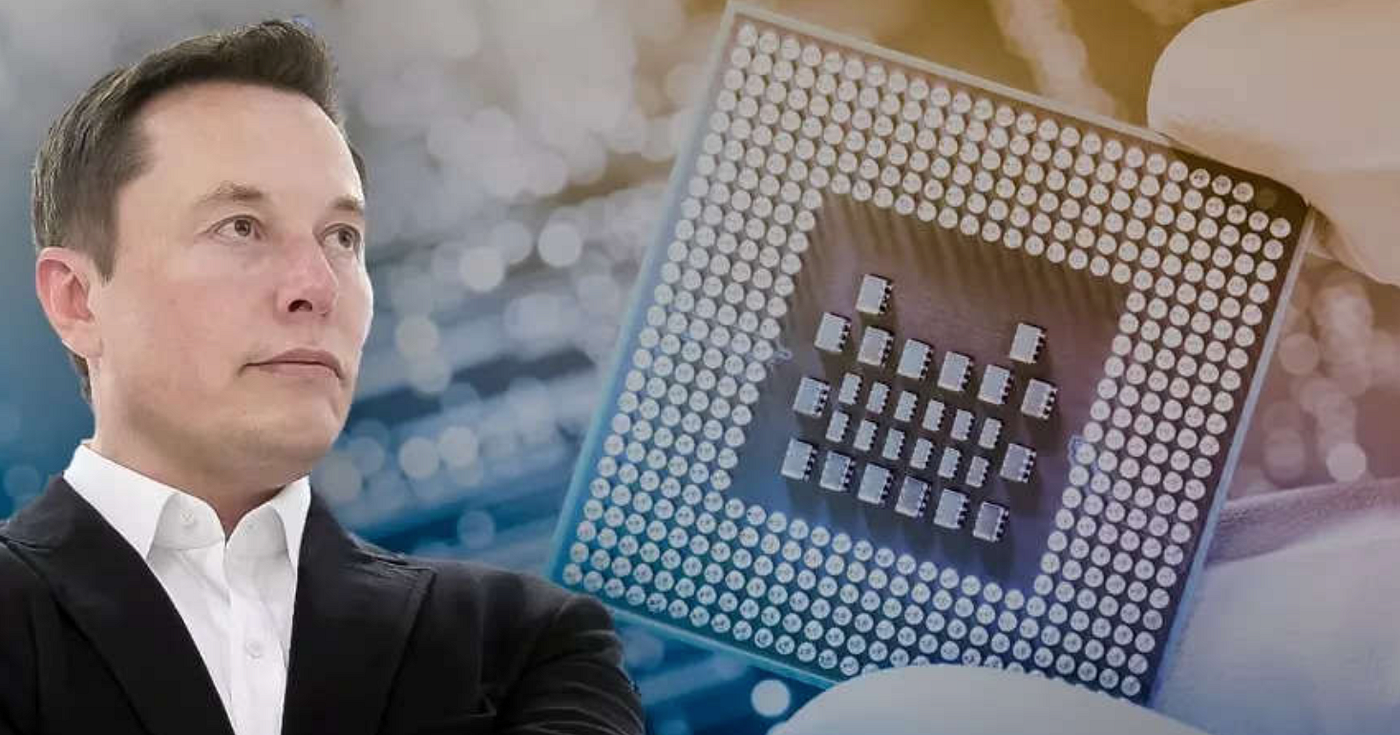
Taiwan's $10 Trillion Chip Crisis: Why Elon Musk Is Racing to Build His Own Semiconductor Empire
Global AI depends on one vulnerable island. Musk's Terra Fab could be the ultimate hedge—and a game-changer for Tesla and beyond.
The world's most advanced chips all come from one place: Taiwan. With China positioning forces for a potential takeover by 2027, the global economy faces a catastrophic risk estimated at $10 trillion in GDP losses in the first year alone. Yet amid this fragility, one leader is taking decisive action by investing tens of billions into domestic chip manufacturing independence. This move isn't just about one company—it's a signal of how tech giants are rethinking supply chains in an era of rising geopolitical tensions.
Key Takeaways
TSMC in Taiwan produces around 90% of the world's most advanced sub-7 nanometer chips, powering everything from AI systems to smartphones and defense tech.
China has directed its military to prepare for an invasion or blockade of Taiwan by 2027, with ongoing drills, incursions, and naval expansions increasing the pressure.
A disruption could wipe out $10 trillion from global GDP in year one—far exceeding the combined impacts of COVID-19 and the 2008 financial crisis—due to chip shortages crippling industries worldwide.
Tesla's new Terra Fab project aims for 2-nanometer process technology at massive scale, targeting production of hundreds of billions of custom AI and memory chips annually to support Tesla's autonomous vehicles, robots, and AI training.
This vertical integration strategy builds resilience against Taiwan risks while creating optimized, efficient silicon tailored to specific workloads in driving, robotics, and AI.
A broader "Sovereign AI" movement is underway, with countries and companies investing heavily in domestic chip and data center capacity to secure technological independence.

The Chip Fab Bottleneck No One Wants to Talk About—And Why It’s Creating Huge Opportunities
From EUV lithography physics to memory demand explosions, here’s how hardware realities are shaping AI’s path to abundance—and where undervalued plays are hiding.
The semiconductor supply chain sits at the center of every major AI advance, yet it remains constrained by physics, specialized equipment, and concentrated suppliers. New fabs are being planned at massive scale, but progress hinges on extreme ultraviolet machines that only one company can build, vibration-proof foundations dozens of stories deep, and materials pushed to atomic limits. At the same time, AI models are growing denser in intelligence, personal fabrication tools are democratizing manufacturing, and markets continue to price “safe” assets at premiums while overlooking secular growth in memory and AI-native infrastructure. These dynamics point to a future where abundance feels closer than the headlines suggest, provided the bottlenecks are addressed.
Key Takeaways
Extreme ultraviolet lithography machines from a single European supplier control the production of chips below 7 nanometers, creating a hard limit on new fab capacity even as demand from AI training and inference surges.
Chip manufacturing demands near-perfect stillness, with foundations built 20 stories deep to cancel out micron-level earth vibrations—highlighting why scaling remains extraordinarily difficult.
Rising intelligence density in AI models means future systems could deliver major capability gains on older semiconductor nodes rather than always needing the latest process technology.
Memory suppliers are seeing explosive growth, with one major player recently posting roughly 40 percent earnings beats and nearly 190 percent year-over-year revenue increases, yet the market still treats the sector as cyclical.
Global wealth stands at approximately 471 trillion dollars; divided evenly, that equates to roughly 62,000 dollars per person, showing abundance already exists but is unevenly distributed.
Education systems built on a 19th-century factory model are mismatched for an AI world; shorter structured learning paired with hands-on experimentation and personalized paths is proving more effective.
Geopolitical patience around Taiwan suggests risks to the chip supply chain are real but may unfold gradually through soft-power channels rather than sudden conflict.
The Tera Fab Breakthrough: Building Terawatts of AI Compute to Power a Galactic Civilization
Why one facility, paired with orbital infrastructure and robotics, could unlock energy abundance at a scale that dwarfs everything on Earth today.
The most valuable insight here is simple: humanity’s entire current AI chip production barely scratches the surface of what’s required to reach meaningful cosmic scale. A new integrated chip fabrication project called Tera Fab changes that equation by delivering terawatts of annual compute output—orders of magnitude beyond today’s global total—while making space-based AI not just viable but dramatically cheaper than anything possible on the ground. The result is a clear path to multi-planetary expansion, humanoid robots in the billions, and an economy powered by the Sun itself.
Key Takeaways
Current worldwide AI chip output sits at roughly 20 gigawatts per year; all existing fabs combined supply only about 2 percent of the terawatt-scale capacity now planned.
Tera Fab integrates logic, memory, packaging, testing, and mask-making in a single building, creating an ultra-fast design iteration loop measured in days instead of months.
Two specialized chip families emerge: high-volume, efficient designs for edge inference in humanoid robots and vehicles, plus radiation-hardened, high-power versions optimized for the harsh space environment.
Space-based solar delivers five times more consistent energy than ground installations, with no atmosphere, no night cycle, and no weather—driving AI compute costs below terrestrial levels within two to three years.
Starship upgrades will enable 10 million tons of payload to orbit annually, supporting orbital solar arrays and compute clusters at terawatt scale.
A lunar electromagnetic mass driver built with robotic labor will later push compute into the petawatt range, opening the door to million-fold economic growth and post-scarcity abundance.

AI Layoffs Are Just Revving Up
The Dawn of Massive Job Shifts and Economic Overhauls
AI is slashing workforce needs at major tech firms, with one company cutting 40% of staff due to these tools. This signals a broader wave that could reshape industries, drive down costs, and spawn entirely new business models—while forcing workers to adapt or risk falling behind.
Key Takeaways
AI-driven efficiencies are leading to large-scale layoffs, starting with white-collar roles in software and tech, where tools handle tasks faster and cheaper than humans.
Companies adopting AI can reduce operational costs by 90-99%, allowing them to lower prices, capture more market share, and outcompete slower rivals.
While job losses will mount, plummeting costs in areas like transportation could birth innovative industries, such as mobile services that come to customers instead of vice versa.
Blue-collar jobs involving repetitive physical labor face disruption next, as humanoid robots scale up later this decade.
Society must rapidly generate new roles through emerging sectors or AI-leveraged entrepreneurship to absorb displaced workers, or economic floors could collapse without intervention.
Capital owners in AI-adopting firms stand to gain massively from higher profits and expanded reach, but widespread unemployment risks shrinking consumer bases.
Individuals who embrace AI tools boost their chances of building businesses and achieving goals, while resistance heightens reliance on government support.
Elon Musk's Bombshell: Mass and Energy as the New Global Currency
The Shift That Redefines Wealth in an AI-Driven World
Rapid advances in AI, robotics, and solar power are converging to make intelligence, labor, and energy nearly free, positioning mass and energy as the core drivers of future economies. This transformation echoes historical currency shifts and points to a deflationary era where energy production becomes the ultimate measure of value.
Key Takeaways
AI training and inference costs have plummeted, with benchmarks dropping from thousands of dollars to pennies, making cognitive tasks approach zero cost.
Robotic labor could reach 20 cents per hour by 2032, disrupting a $40 trillion global market in physical work.
Solar energy costs have fallen 99.6% since 1976, outpacing other sources and enabling exponential growth in power generation.
Historical currency systems—from gold to petrodollars—evolved with dominant economic inputs; energy now emerges as the next anchor.
Orbital solar data centers could multiply Earth's energy output by millions, turning space into the ultimate power source.
In this framework, companies controlling energy, AI, and robotics stacks stand to dominate, while traditional fiat currencies face unprecedented pressure.
The Hidden Convergence: How Elon's Empire is Building a $3 Trillion Future
Unlocking Abundance Through Integrated Tech Ecosystems
A massive shift is underway in technology, where separate companies are merging their strengths to create something far larger than any single entity. At the core is a vision of robots handling all human tasks, AI anticipating needs before they're voiced, and unlimited energy powering it all. This isn't distant sci-fi—key pieces are already connecting in ways that could reshape industries and economies.
Key Takeaways
Four major companies—Tesla, SpaceX, xAI, and Neuralink—are pooling resources to form an interconnected system worth over $3 trillion in combined value.
AI from xAI is designed to power Tesla's humanoid robots, creating self-sufficient machines that outperform humans in physical and cognitive tasks.
Satellite integration from SpaceX into Tesla vehicles ensures constant global connectivity, enabling real-time data sharing for autonomous driving.
Underground tunnels from The Boring Company serve as ideal testing grounds for self-driving tech, generating valuable data to refine AI models.
Neuralink's brain interfaces aim to blend human and machine intelligence, opening doors to telepathic control of robots and devices.
Despite missed timelines, rapid progress in robot deployment, energy storage, and AI supercomputing shows convergence happening now.
This ecosystem creates unbeatable advantages, like network effects in data and hardware, that competitors can't easily match.
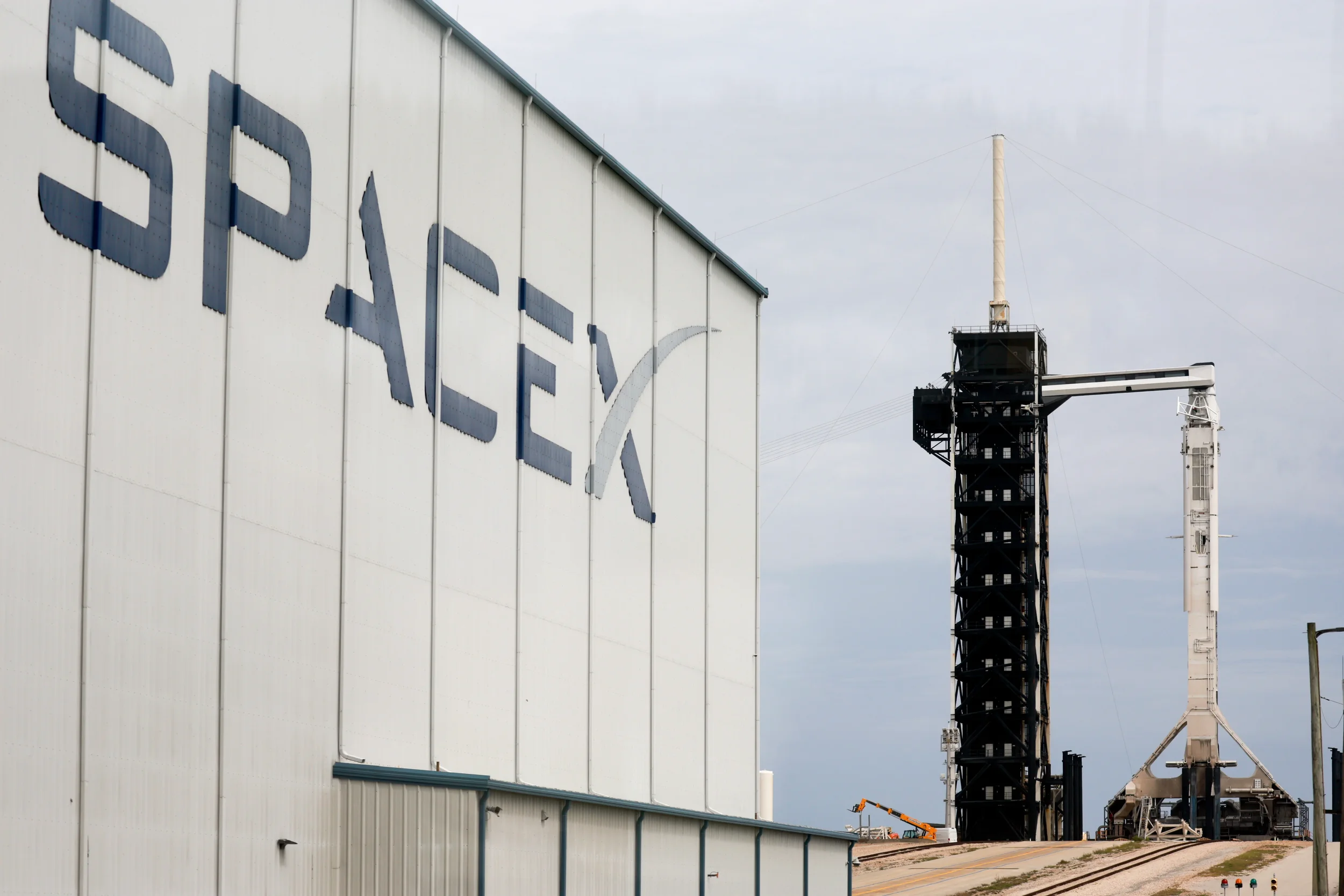
SpaceX Swallows xAI: The Dawn of Orbital AI Powerhouses
Revolutionizing Compute from the Stars – Why This Merger Changes Everything
The fusion of SpaceX and xAI unlocks a new era where AI training escapes Earth's limits, powered by endless solar energy in orbit. This deal catapults innovation by sidestepping power shortages and regulatory hurdles, paving the way for breakthroughs in physics, tech, and human expansion beyond our planet.
Key Takeaways
SpaceX's acquisition of xAI creates a $1.25 trillion entity, the world's most valuable private company, focused on integrating AI with space tech.
AI compute moves to space-based satellites, harnessing constant solar power and natural cooling to scale far beyond Earth's energy constraints.
This solves immediate bottlenecks like electricity demand and environmental concerns, enabling 10-100 times more AI capacity annually.
Starship rockets will launch millions of tons into orbit yearly, funding moon bases, Mars cities, and vast AI constellations.
The merger opens AI training services to other companies, accelerating global tech advances while fueling multi-planetary goals.

Elon Musk's Davos Vision: Abundance Through AI, Robots, and Space Power
The path to a future where robots outnumber humans, energy becomes limitless, and consciousness survives beyond Earth.
Key Takeaways
Electrical power has emerged as the primary bottleneck for scaling AI, with chip production outpacing grid additions in most regions except China.
Humanoid robots will drive unprecedented economic abundance, eventually outnumbering people and saturating needs like elder care, childcare, and household tasks.
Tesla plans to deploy Optimus robots for complex factory tasks by the end of 2026 and sell them to the public by the end of 2027, once safety and functionality reach high reliability.
Full rocket reusability with Starship could slash space access costs by 100x, enabling cheap satellite deployment and space-based solar for AI data centers.
Space-based solar offers 5x more effective power collection than ground-based systems, with no weather, night cycles, or atmospheric losses—making orbit the lowest-cost location for AI compute within a few years.
AI could surpass individual human intelligence by the end of 2026 or early 2027, and exceed all of humanity combined by around 2030-2031.
Large-scale solar arrays (roughly 100x100 miles) could power entire nations like the US or Europe, but deployment faces barriers like high tariffs on imported panels.
Consciousness is viewed as rare and fragile, making multiplanetary life essential to protect it from Earth-bound disasters.
Optimism about technological progress outweighs risks, as abundance from AI and robotics can broadly benefit society if energy constraints are solved.
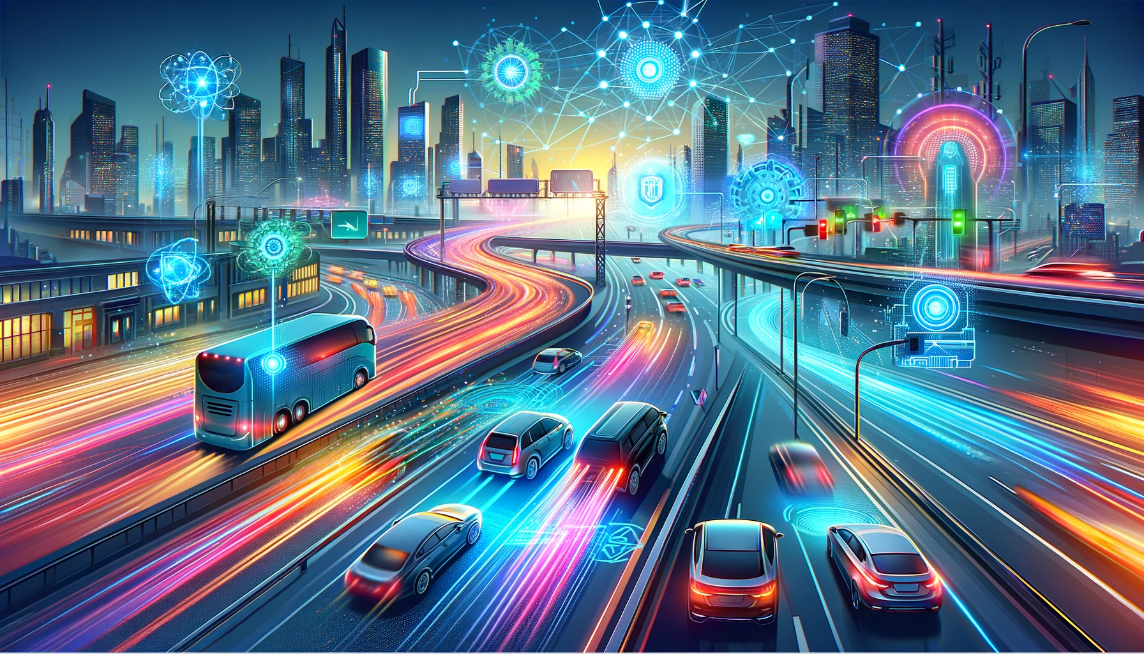
The AI Revolution Accelerates: Tools, Tesla, and the Future of Tech
How emerging AI platforms are democratizing creation while reshaping transportation and energy demands in 2026
AI tools are evolving rapidly, enabling anyone to build complex applications without traditional coding expertise. Tesla continues to lead in autonomous driving, with software updates making vehicles safer and more efficient. Discussions around AI valuations suggest specific companies may be overpriced, but the sector's potential remains vast, driven by energy abundance and societal adaptations.
Key Takeaways
AI development platforms like Replit allow users to create functional apps, such as home remodeling tools, with simple prompts, reducing costs from thousands to hundreds of dollars.
Tesla's Full Self-Driving (FSD) software has reached a point where interventions are rare, signaling readiness for widespread unsupervised autonomy, potentially valuing the company at trillions.
No overarching AI bubble exists; instead, hyperscalers like OpenAI face scrutiny for high valuations relative to revenue, while second-layer AI applications in insurance and robotics promise massive growth.
Energy demand for AI will outstrip supply for decades, enabling innovations like desalination and hydrogen production, with surplus power finding uses in computation or physical tasks.
Societal shifts may include more people opting out of hyper-tech lifestyles, forming communities that cap technology adoption, while AI agents negotiate and provide services efficiently among themselves.
Nvidia's shift to end-to-end neural networks for autonomous vehicles, relying on cameras alone, positions it as a strong competitor to Tesla in reasoning-based driving systems.
NVIDIA's Alpha Mayo: Ushering in the Era of Reasoning Autonomous Vehicles
Revolutionizing Mobility with AI That Thinks and Adapts
The rapid evolution of AI is transforming how vehicles operate, making self-driving cars not just possible but intelligent enough to handle unpredictable scenarios through reasoning. This shift promises safer roads, widespread adoption of autonomous tech, and a foundation for broader robotics applications that could reshape industries from transportation to manufacturing.
Key Takeaways
Advanced AI models like Alpha Mayo enable end-to-end training for autonomous vehicles, processing camera inputs directly to control steering, brakes, and acceleration while explaining decisions in real-time.
Synthetic data generation tools create trillions of simulated driving miles, overcoming the limitations of real-world data collection for rare scenarios.
Dual software stacks in vehicles provide redundancy: one for advanced AI driving and another for traceable, safety-certified fallback operations.
Open-sourcing AI models accelerates ecosystem growth, allowing partners to build on full stacks for everything from personal cars to robo-taxis.
The same AI techniques apply beyond vehicles to various robots, from humanoid forms to industrial manipulators, trained in virtual simulators.
Integration of AI physics into design tools revolutionizes industries like electronics and systems design, speeding up simulations and innovations.
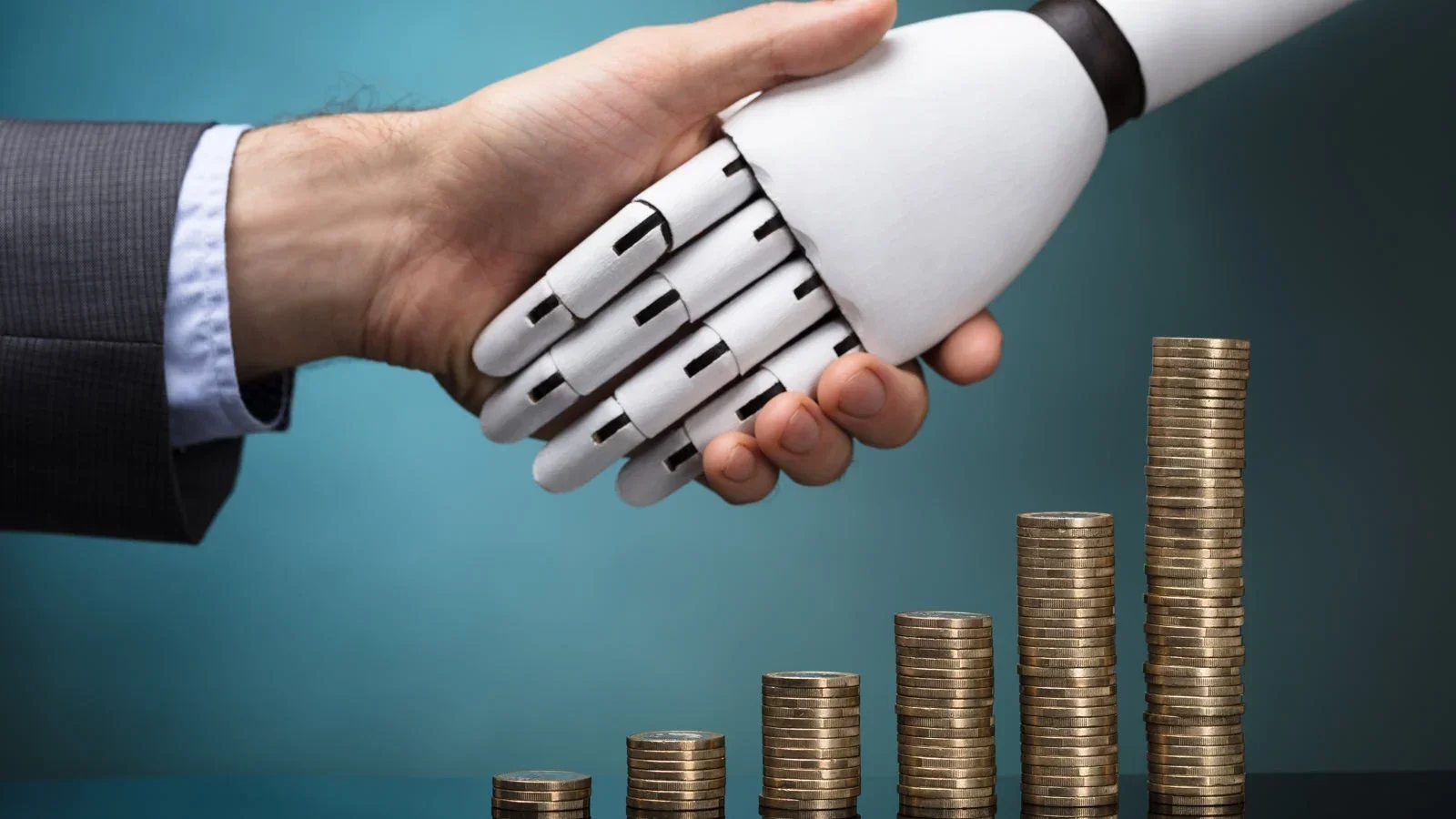
The Malibu Paradox: Why Abundance Won't Erase Scarcity
Rethinking Wealth in an AI-Driven Future
Imagine a world where robots and AI eliminate poverty entirely, making high-income access universal. Yet, even in this era of limitless resources, battles over prime locations like beachfront property could redefine competition and ownership.
Key Takeaways
Universal high income emerges when labor, energy, and materials cost nothing, thanks to AI, robots, solar power, and asteroid mining.
Physical goods become infinite, but locations tied to geography, history, and authenticity remain scarce.
Instant transportation via tunnels, electric aircraft, and high-speed transit could decentralize value, making remote living as convenient as urban hubs.
Without money, allocation of rare assets might shift to reputation, contributions, or even robot armies, potentially locking in current inequalities.
The transition risks unemployment, asset bubbles, and political fights over land rights and robot control.
Human nature's drive for status and exclusivity may persist, turning competition toward new forms like bot legions or social credits.