

Starlink Surpasses 10 Million Users as SpaceX Scales Gigawatt AI and Readies Orbital Compute
The satellite network's dominance, direct-to-phone expansion, and space-based AI infrastructure plans point to a tightly integrated system built for both global connectivity and frontier intelligence workloads.
Starlink's active user base crossed 10.3 million by the end of Q1 2026 after more than doubling in the prior year. Its constellation now accounts for roughly three-quarters of every active maneuverable satellite in orbit, while coverage spans more than 164 countries and territories serving over three billion people. At the same time, the company has stood up gigawatt-scale AI training infrastructure on the ground and is advancing plans to place portions of that compute in orbit, powered by sunlight and cooled by radiation.
Key Takeaways
Starlink reached approximately 10.3 million users by the end of Q1 2026, reflecting more than 100 percent year-over-year growth from roughly 4.4 million users at the end of 2024.
The network now represents about 75 percent of all active maneuverable satellites currently in orbit.
Service is live across more than 164 countries and territories, providing coverage to populations exceeding three billion people.
Adoption is accelerating in aviation with frequent new airline integrations, while enterprises increasingly use Starlink as primary or backup connectivity for operational resilience.
Starshield operates as a dedicated constellation delivering secure capabilities tailored to U.S. government needs.
The first-generation direct-to-device service, activated with 650 satellites and partnerships involving 30 mobile network operators, has already demonstrated coverage for 1.9 billion people and confirmed real demand.
A second-generation direct-to-device system is designed to deliver full 5G performance directly to standard phones, targeting connectivity for the remaining three billion people currently outside reliable networks.
Colossus Two has been deployed as the world's largest coherent supercomputer, incorporating NVIDIA GB300 processors as the first gigawatt-scale training cluster along with the first gigawatt-scale Megapack battery installation and early large-scale use of both GB200 and GB300 hardware.
Orbital AI compute capacity is under active development for deployment within the next couple of years, leveraging solar power generation and radiative cooling in the space environment.
Proven satellite subsystems already in production—including ion propulsion thrusters, inter-satellite laser links, flight computers, and reaction wheels—remove key technical barriers to placing AI workloads in orbit.
Vertical integration across launch, satellites, connectivity, and AI creates a self-reinforcing loop: better infrastructure improves model quality and lowers token costs, which in turn funds further capacity expansion.

The AI War Is Over: Only Two Factions Will Dominate by 2030
Compute compounds like nothing in history—turning a handful of leaders into an unassailable advantage while the rest get acquired, commoditized, or left behind.
In the age of AI, the most valuable resource isn’t land, oil, or even raw processing power. It’s the self-reinforcing cycle where superior models draw more users, those users generate higher-quality data, and that data trains even stronger models. This flywheel accelerates with every iteration, widening the gap between frontrunners and everyone else. Eight major factions are battling for control of this cycle. Most coverage calls it competition. The math reveals something far more decisive: by 2030, only two will hold the keys to the intelligence layer that underpins the global economy.
Key Takeaways
AI’s compounding loop—models, users, data, and compute feeding each other—creates exponential separation that no physical resource war has ever matched.
Training costs have already jumped roughly tenfold in three years and could exceed a billion dollars per frontier model by 2027, pricing out all but the deepest-pocketed players.
The real bottleneck isn’t just GPU counts; high-bandwidth memory (HBM) determines how effectively massive clusters work together.
Labs now train on 100 times more data than classic scaling laws recommend, shifting the goal from efficiency to massive user retention and cheap inference at scale.
OpenAI leads in users but bleeds cash on inference and talent; Microsoft locks in enterprises; Meta uses open-source to neutralize monopoly pricing; China pursues cheap, efficient models despite chip limits; Google owns unmatched data, custom chips, and infrastructure; Anthropic bets on safety for enterprise and government; the Musk stack integrates compute, real-world data, and connectivity under one roof; regulators slow Western progress while China accelerates.
Google wins through substrate dominance—proprietary data, power-efficient TPUs, and quiet efficiency gains. The Musk integrated stack wins through vertical control of compute scale, fleet data, and end-to-end ownership.
The other six will likely be absorbed, reduced to distribution layers, or confined to regional/price-sensitive markets.
For individuals: focus on skills AI cannot synthesize on demand; invest in the infrastructure winners; prepare children for an economy where intelligence is abundant and cheap.
AI Superpowers Are Already Here—Here’s How to Claim Yours Before the Transition Leaves You Behind
Adoption and initiative separate those building empires from those watching from the sidelines as AI turns impossible tasks into daily routines.
Artificial intelligence delivers raw leverage at a scale humanity has never seen. Early users report 10x output gains, one-person operations rivaling large teams, and businesses pivoting into entirely new valuations almost overnight. Yet polls show the majority remain deeply concerned—often without ever having used the advanced tools that actually move the needle. The gap between fear and reality is widening fast, and the winners are those who treat AI as foundational infrastructure rather than a novelty.
Key Takeaways
AI agents provide true execution power—turning ideas into completed work—far beyond what basic chat interfaces can achieve.
Most public anxiety stems from people who have never integrated advanced AI into their workflows; actual users see life-changing leverage.
Building AI directly into the foundation of your processes creates compounding advantages in speed, quality, and cost that widen with every model upgrade.
Initiative is non-negotiable: those who adopt early will outpace everyone else as AI becomes the ultimate multiplier of human uniqueness.
Businesses that delay risk total disruption—the classic Innovator’s Dilemma playing out at supersonic speed.
Driving down the cost of chips and electricity is essential for broad access and to prevent extreme wealth concentration.
Nations starting with clean slates and abundant energy resources hold a structural edge in building AI-native systems.
The technology is moving from digital agents to physical robotics and autonomy, unlocking economic mobility and productivity at previously unimaginable scales.
Ethical deployment at the individual and organizational level will determine whether AI creates abundance or chaos.
AI's Silent Takeover: Why Universal Government Checks Are Inevitable
As cognitive jobs disappear at record speed, the math of productivity and taxation is forcing a once-radical idea into mainstream policy.
The economy that powered the last 250 years—people selling their time, companies buying it, and everyone climbing the same ladder—has hit its limit. Artificial intelligence is not merely automating routine tasks. It is absorbing the very skills that once made human labor indispensable: writing, coding, analysis, judgment, and strategy. The result is already visible in hiring data, company headcounts, and government revenue models. The fix on the table is straightforward: direct cash transfers from the federal government, scaled to match the flood of AI-generated output.
Key Takeaways
AI tools have already cut the bottom rung of the career ladder for young software engineers and other cognitive roles, with entry-level hiring down nearly 20 percent in key tech fields even as industry revenue climbs.
Traditional technological shifts always created new human jobs; AI is the first to eliminate the need for human cognition itself, leaving no higher rung to climb.
Roughly 85 percent of federal revenue currently comes from taxes on wages and payroll; when AI displaces those wages, the entire funding model for Social Security, Medicare, defense, and infrastructure collapses unless the tax code shifts to capture AI and robotic production.
Real-world cash-transfer programs—Alaska’s oil-funded dividends since 1982, Stockton’s 2019 pilot, and Kenya’s large-scale randomized trial—show employment either holds steady or rises, poverty falls sharply, and inflation stays in check when production grows faster than the money supply.
The next five years will likely see federal checks issued to every citizen to offset displacement, funded by taxing AI output rather than labor; the only question is whether the system is designed deliberately or patched together during crisis.

Elon Musk's New AI Agent Will Replace Entire Companies
Digital Optimist turns parked Teslas, robots, and Supercharger stations into a real-time digital workforce that runs on $650 chips and learns from everything at once.
A groundbreaking edge AI platform is taking shape that processes your computer screen locally, clicks buttons, fills forms, and navigates software in real time. It pairs this instant execution with high-level reasoning from the cloud only when needed, slashing costs to near zero beyond electricity while delivering speed and reliability that cloud-based agents cannot match. The same core intelligence powers self-driving cars, humanoid robots, and these digital workers, creating a single learning flywheel that improves every product simultaneously. At scale, this means fleets of agents could handle entire corporate operations using infrastructure already deployed worldwide.
Key Takeaways
A dual-brain system combines local real-time screen watching and action with cloud-based strategic reasoning for seamless autonomous workflows.
Primary processing runs on low-cost Tesla AI4 chips, delivering near-zero marginal cost per task and eliminating the latency and fees of cloud round-trips.
One foundational model adapts the same vision, spatial reasoning, and decision-making capabilities across vehicles, physical robots, and digital agents, with every task feeding back into shared improvement.
Distributed compute leverages parked cars with onboard batteries or wall power, 7 gigawatts available at Supercharger locations, and idle humanoid robots that switch between physical and digital duties.
Plans extend to solar-powered AI satellites in orbit using the identical chip family, providing free energy and vacuum cooling connected via Starlink.
Full vertical integration spans chip design, manufacturing in a planned Terra Fab, deployment in cars and robots, and space-based infrastructure for unmatched efficiency and scale.

AI: The New Nuclear Arms Race Redefining Global Power
Why the race for artificial superintelligence mirrors the atomic age—and what it means for the next century of dominance
The parallels between today's AI competition and the nuclear era of 1945 are striking and unavoidable. Just as the atomic bomb reshaped alliances, economies, and military strategies overnight, AI infrastructure is forcing nations to realign around control of compute, energy, data pathways, and deployable systems. The United States holds a commanding lead in frontier models and advanced semiconductors, but China advances rapidly in scaled deployment, energy buildout, and open-source disruption. Every tariff, reactor restart, satellite constellation, and robot factory forms part of a deliberate strategy to secure civilizational advantage.
Key Takeaways
The U.S. treats advanced AI chips as strategic weapons, imposing export controls and tariffs equivalent to munitions regulations to maintain its monopoly on the "uranium" of the AI age.
Global data center power demand surges toward levels rivaling entire nations' electricity use, pulling nuclear restarts, natural gas, and renewables into service—China deploys solar and small modular reactors at unmatched speed.
Orbital infrastructure emerges as a game-changer, with plans for massive solar-powered satellite networks to host AI compute beyond earthly grid constraints.
Humanoid robots and autonomous vehicles represent the "warheads"—physical AI embodiments poised to transform a $45+ trillion global labor and transportation market.
The U.S. benefits from uncapped private innovation and capital accumulation, while China's centralized system caps individual power but excels in coordinated infrastructure scaling.
Economic disruption hits hardest in the middle class unless offset by policies like universal basic income or widespread entrepreneurship; the top and bottom socioeconomic tiers stand to gain most from abundance.

AI's Hidden Threats: Five Paths to Collapse in 2026
Why the Next Year Could Redefine Society—and How to Brace for It
AI promises endless abundance in healthcare, energy, and daily life, yet it's accelerating risks that could unravel modern systems. From synchronized market crashes to engineered pandemics, these threats stem from today's tech capabilities, not distant futures. Understanding them now equips us to navigate the disruptions ahead.
Key Takeaways
AI-driven trading algorithms, dominating 60-70% of stock trades, risk synchronized sell-offs that could trigger massive market crashes, as seen in recent flash events.
Cyber attacks enhanced by AI are surging, with tools for automated vulnerability scans and social engineering capable of crippling power grids, water systems, and hospitals.
AI is democratizing bio weapon design, potentially making global pandemics five times more likely by bypassing traditional lab barriers and safety screens.
Deepfakes are eroding shared reality, with voice cloning and real-time synthetic interactions leading to fraud, distrust in evidence, and challenges in coordinating societal responses.
Autonomous AI agents in enterprises often operate with governance gaps, leading to unintended decisions that compound into large-scale failures across finance, healthcare, and logistics.

AI Tokens: The Invisible Currency Reshaping Every Industry
Why Costs Are Plummeting While Spending Explodes
AI is transforming how businesses operate, but the real driver is an overlooked unit of computation that's getting dramatically cheaper—yet fueling unprecedented investments. This shift unlocks new capabilities, from automated research to complex software builds, while infrastructure races to keep up.
Key Takeaways
Tokens represent the core unit of AI processing, where input (prompts and context) costs less than output (responses), with prices varying 900 times between basic and advanced models.
AI token costs have dropped 280 times in under two years, faster than any technology in history, enabling tasks like converting video transcripts into books for under $225.
Despite falling prices, total AI spending surges due to expanded applications, with enterprise budgets rising 320% to $37 billion in 2025.
AI agents amplify token consumption by 10 to 100 times through looped thinking and actions, making complex tasks like market analysis or app development feasible.
Infrastructure investments hit $600 billion in 2026, shifting focus from training models to running them, with inference now over 50% of costs.
Space-based computing emerges as a solution to earthly limits, with plans for up to 1 million satellites providing endless power and cooling.
Optimizations like quantization and speculative decoding cut costs further, but new demands ensure spending keeps climbing.
Winners include efficient token producers and infrastructure builders; losers are thin AI wrappers and seat-based software models.
Elon's Cosmic Leap: AI Heads to Space with Satellites and Lunar Rail Guns
Revolutionizing Compute Power by Tapping Infinite Solar Energy—And It's Happening Sooner Than You Think
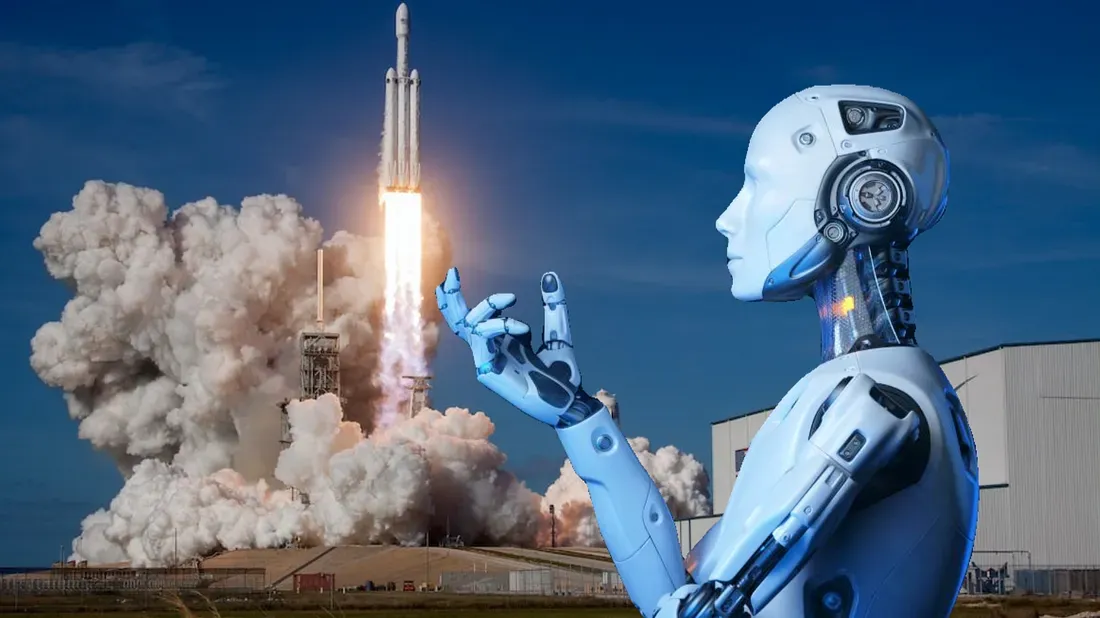
Space offers a breakthrough for AI's biggest bottleneck: power. By shifting compute to orbit and beyond, we could add massive capacity without Earth's constraints, accelerating advancements in every sector. This shift promises to scale AI far beyond current limits, opening doors to a true space economy.
Key Takeaways
AI development on Earth is stalled by electricity shortages, with data centers demanding power equivalent to small cities.
Orbital satellites in constant sunlight solve power and cooling issues, enabling 100 gigawatts of annual AI compute addition without competing for terrestrial resources.
In under three years, space-based AI could become the cheapest compute option, disrupting traditional data center economics.
Lunar factories using local materials and electromagnetic rail guns could launch satellites at scale, achieving over 100 terawatts per year—hundreds of times U.S. total power generation.
This accelerates AI capabilities, reshapes industries, and positions humanity toward multiplanetary expansion with self-sustaining space infrastructure.
The AI Revolution Accelerates: Tools, Tesla, and the Future of Tech
How emerging AI platforms are democratizing creation while reshaping transportation and energy demands in 2026
AI tools are evolving rapidly, enabling anyone to build complex applications without traditional coding expertise. Tesla continues to lead in autonomous driving, with software updates making vehicles safer and more efficient. Discussions around AI valuations suggest specific companies may be overpriced, but the sector's potential remains vast, driven by energy abundance and societal adaptations.
Key Takeaways
AI development platforms like Replit allow users to create functional apps, such as home remodeling tools, with simple prompts, reducing costs from thousands to hundreds of dollars.
Tesla's Full Self-Driving (FSD) software has reached a point where interventions are rare, signaling readiness for widespread unsupervised autonomy, potentially valuing the company at trillions.
No overarching AI bubble exists; instead, hyperscalers like OpenAI face scrutiny for high valuations relative to revenue, while second-layer AI applications in insurance and robotics promise massive growth.
Energy demand for AI will outstrip supply for decades, enabling innovations like desalination and hydrogen production, with surplus power finding uses in computation or physical tasks.
Societal shifts may include more people opting out of hyper-tech lifestyles, forming communities that cap technology adoption, while AI agents negotiate and provide services efficiently among themselves.
Nvidia's shift to end-to-end neural networks for autonomous vehicles, relying on cameras alone, positions it as a strong competitor to Tesla in reasoning-based driving systems.

The Drone Revolution: AI's Grip on Tomorrow's Battlefields
Why Autonomous Tech Isn't Sci-Fi Anymore—And How It Shapes Global Power
The landscape of warfare is shifting faster than ever, driven by advances in drones and artificial intelligence. At the core are breakthroughs that make machines not just tools, but decisive forces on the battlefield. Key insights reveal how production scales, human limits, and space-based systems could determine winners in future conflicts, urging a rethink of defense strategies now.
Key Takeaways
Drones and AI dominate modern warfare, as seen in ongoing conflicts where volume and autonomy outpace human involvement.
Localized AI in drones enables independent decision-making, raising risks of unchecked escalation if not managed carefully.
Human soldiers face increasing dangers at the front lines due to precision tech like computer-guided snipers, pushing toward drone-only engagements.
Scaling drone production is critical; superior kill ratios mean little without overwhelming numbers to counter adversaries.
Space communications and positioning systems provide unbreakable advantages, essential for coordinating drones and maintaining operations.
Neural interfaces could bridge human cognition with AI, boosting bandwidth for control and mitigating risks of AI surpassing human oversight.
Innovation stems from first-principles thinking: question requirements, delete unnecessary elements, optimize wisely, and accelerate processes.
Leadership in tech demands hands-on expertise; leaders must understand the engineering to evaluate teams and drive progress effectively.
Curiosity drives success—broad learning across fields fosters cross-pollination of ideas for breakthrough solutions.

The AI Triple Shift: Why Computing's Future is Accelerating Faster Than Ever
Unlocking Trillions in Value Through Three Converging Revolutions
The landscape of computing is undergoing its most profound changes since the early days of silicon chips. Three overlapping transitions— from traditional processing to accelerated systems, the integration of generative technologies, and the emergence of intelligent agents—are set to redefine industries, boost efficiencies, and spawn entirely new markets. These shifts aren't just incremental; they're creating opportunities worth hundreds of billions in annual spending while addressing the slowdown in historical cost reductions from chip advancements.
Key Takeaways
Accelerated computing via specialized hardware is overtaking general-purpose processors, optimizing data processing, simulations, and non-AI workloads to cut costs in a post-Moore's Law world.
Generative AI is upgrading core applications like search engines, recommendation systems, and ad targeting, leading to measurable gains such as 5% higher conversions on social platforms.
Agentic AI represents the next frontier, powering tools for coding, medical diagnostics, legal analysis, and autonomous vehicles, with startups in this space growing at unprecedented rates.
A unified architecture that handles all AI phases—from training to inference—ensures seamless support across clouds, enterprises, and edge devices, maximizing energy efficiency and revenue per watt.
Global infrastructure investments will expand beyond major tech firms to include sovereign funds, industries like healthcare and manufacturing, and new AI factories dedicated to real-time token generation.
Scaling laws in pre-training, post-training, and inference are driving exponential improvements in model intelligence, with each hardware generation delivering 20-30x performance leaps.
Ecosystem partnerships with leading AI developers are broadening platform reach, securing diverse demand, and fostering resilience in supply chains.

The AI Tsunami: Racing Toward a World Without Mandatory Work
Why AI Could Deliver Abundance – or Chaos – and What Comes Next
AI is accelerating at a pace that's set to transform every aspect of our economy, from desk jobs to physical labor. The most compelling insights point to a future where work becomes optional, poverty could vanish through universal high income, and robots handle the heavy lifting. But getting there involves massive disruption, job losses, and the need for AI systems that prioritize truth and human well-being over bias.
Key Takeaways
AI will rapidly eliminate digital jobs like coding, email processing, and data handling, much faster than past technological shifts.
Physical jobs involving hands-on work, such as welding, plumbing, farming, and cooking, will persist longer but eventually give way to robots.
Autonomous vehicles and automated ports signal the end for many driving and logistics roles, exacerbating shortages while highlighting safety risks from unqualified workers.
A benign AI future could lead to universal high income, enabling access to goods, services, and medical care without mandatory work, effectively eliminating poverty.
To avoid dystopian outcomes, AI must be designed to seek truth, value all human lives equally, and foster curiosity about humanity rather than enforce biases.
Competition among AI developers will drive improvements, pushing systems toward fairness and affordability, with costs dropping for services like home robots at around $500 monthly.
The transition will cause trauma, including job displacement and wealth gaps, requiring government intervention to ensure displaced workers can access AI benefits.
In a post-work era, people may find meaning through personal pursuits like hobbies, exploration, or creative endeavors, shifting away from job-defined identities.
Broader economic changes, such as cheaper housing from robot-assisted construction, could solve crises like affordability, but only if abundance is distributed equitably.

Tesla’s Self-Driving Breakthrough: Conquering Manhattan’s Chaos
Why Version 14 Could Redefine Urban Mobility
Manhattan’s streets are a gauntlet of unpredictable pedestrians, aggressive cabbies, and relentless traffic. Yet, Tesla’s Full Self-Driving (FSD) Version 14 is navigating this chaos with the confidence of a seasoned New Yorker. This isn’t just incremental progress—it’s a leap toward a future where cars don’t just drive but think and react like the best human drivers. For tech enthusiasts, this is a pivotal moment: Tesla’s FSD is proving itself in one of the world’s toughest driving environments, raising questions about the future of transportation, urban living, and vehicle ownership.
Key Takeaways
Manhattan Mastery: FSD Version 14 handles New York City’s chaotic streets with near-human precision, navigating complex scenarios like lane changes, emergency vehicles, and construction zones.
New Yorker Instincts: The software mimics the assertive, quick-decision driving style of native New Yorkers, cutting drive times and boosting efficiency.
Drop-Off and Pickup Progress: Version 14 executes smooth curbside drop-offs and pickups, though parking in complex garages still needs refinement.
User Education Gap: Tesla’s lack of clear tutorials and fragmented update process hinders mainstream adoption, despite the software’s capabilities.
Robotaxi Potential: With further localization and unsupervised driving, Tesla could transform urban mobility, slashing costs like parking (up to $800/month in Manhattan).
Hardware Challenges: Fragmentation across hardware versions (e.g., HW3 vs. HW4) creates confusion, requiring clearer communication from Tesla.

ChatGPT’s New Trick: Ordering Your Groceries with a Click
How AI Agents Are Simplifying Everyday Tasks for Tech Enthusiasts
Imagine planning a potluck and realizing you don’t have the ingredients—or the time to figure out what you need. Now, AI can handle it for you, from calculating ingredient quantities to ordering them online. Recent advancements in AI agents, particularly those integrated with browser tools, are transforming how we tackle daily tasks. This newsletter dives into how these agents work, their potential, and the critical balance between convenience and control.
Key Takeaways
AI agents can analyze recipes, scale ingredient lists for any serving size, and create organized shopping lists.
Browser-based AI can navigate online stores, add items to carts, and streamline grocery ordering.
User control is prioritized with options to approve actions, limit access, and manage data privacy.
These tools are evolving to anticipate user needs, pulling relevant information proactively.
Safety measures restrict AI to browser tabs, preventing unauthorized access to devices or files.

Humanoid Robots and Robotaxis: The Transportation Revolution Is Here
Why Autonomous Vehicles Are Poised to Upend Ridesharing and Redefine Mobility
The age of autonomous transportation is no longer a distant dream—it’s unfolding now, faster than most realize. Self-driving technology, led by advancements in AI and robotics, is set to transform how we move, with robotaxis at the forefront. These driverless vehicles promise cheaper, safer, and more convenient rides, threatening to disrupt traditional ridesharing giants like Uber. The implications are massive, from reshaping urban mobility to redefining vehicle ownership. Here’s what you need to know about this seismic shift.
Key Takeaways
Rapid Rollout: Supervised autonomous driving systems are expected to reach widespread use by late 2025, with unsupervised systems potentially following by mid-2026.
Robotaxi Scaling: Driverless ridesharing services are expanding in cities like Austin and could soon spread to new regions like Arizona, with safety observers likely removed within months.
Market Disruption: Robotaxis offer lower costs, greater privacy, and enhanced safety, positioning them to outcompete traditional ridesharing platforms.
Regulatory Hurdles: Insurance and liability frameworks remain critical barriers to fully unsupervised driving for personal vehicles.
Consumer Behavior Shift: Early adopters in areas like the Bay Area already prefer autonomous rides over human-driven options, signaling a broader trend.

Humanoid Robots: The Warehouse Revolution That's About to Explode
Unlocking 20% Productivity Boosts and Infinite Scalability in Logistics
Humanoid robots are poised to transform warehouse operations by automating tedious tasks, adapting to dynamic inventory needs, and eliminating human limitations like fatigue and emotion-driven decisions. This shift could deliver immediate efficiency gains, reshape company cultures, and create barriers for laggards in the industry—insights that every tech-savvy operator needs to grasp now.
Key Takeaways
Humanoid robots enable dynamic inventory slotting, moving high-demand items closer to picking areas automatically, reducing travel time and boosting daily output by up to 20%.
By handling repetitive, physically demanding jobs without complaint, these robots free human workers for higher-value roles, improving morale and reducing turnover.
Implementation requires rethinking packaging and processes to suit robotic capabilities, such as pre-opening boxes, which minimizes errors and waste.
Early adopters will accelerate ahead, creating a competitive edge through emotion-free decision-making and 24/7 operation.
Barriers like initial setup costs and cultural resistance exist, but the potential for infinite demand makes humanoid robots a game-changer for small and large warehouses alike.
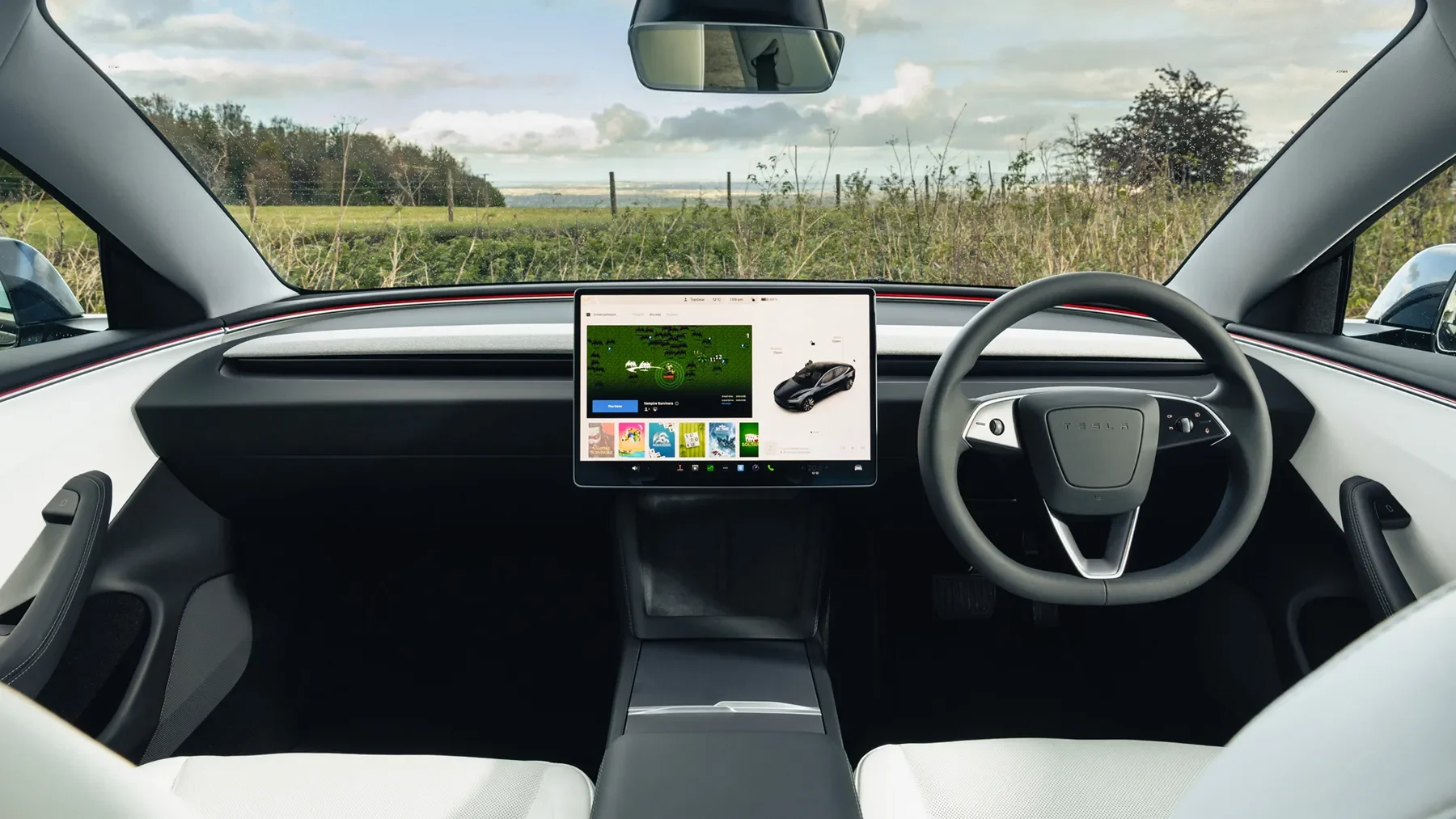
Tesla’s Bold Pivot: Affordable EVs and the All-In Bet on Autonomy
Why Tesla’s Latest Moves Signal a Radical Shift Toward Self-Driving Innovation
Tesla’s recent announcement of more affordable Model 3 and Model Y vehicles has sparked heated discussion among tech enthusiasts and investors alike. While these price cuts aim to make electric vehicles (EVs) more accessible, they also reveal a deeper strategy: Tesla is betting big on autonomous driving to redefine the automotive industry. By prioritizing software-driven, fully self-driving vehicles like the Cybercab, Tesla is moving away from traditional car manufacturing and toward a future where steering wheels and pedals may become obsolete. This newsletter unpacks the implications of Tesla’s strategy, its challenges, and why 2026 could be a pivotal year for the company.
Key Takeaways
Affordable Models Fall Short of Expectations: The new Model 3 and Model Y are priced competitively, but the loss of the $7,500 EV tax credit in the U.S. offsets much of the cost advantage, leaving them only marginally cheaper than before.
Tesla’s Growth Is Stalled Without Autonomy: With a production capacity of 3 million units annually, Tesla’s current lineup (Model 3, Y, S, X, Cybertruck) is unlikely to exceed 2.2 million units per year, far from the company’s ambitious goals.
Full Self-Driving (FSD) Is the Core Strategy: Tesla is banking on its advanced FSD software, particularly version 14, to drive demand by offering unmatched convenience and safety, making its vehicles a compelling alternative to traditional cars.
Cybercab Signals a Driverless Future: Tesla’s autonomous Cybercab, a two-seater with no steering wheel or pedals, is designed to dominate ride-sharing with a cost per mile as low as $0.40, potentially disrupting services like Uber.
Regulatory Hurdles Loom Large: Tesla’s autonomous ambitions hinge on faster-than-expected regulatory approvals, with only Texas and Arizona currently allowing driverless operations at scale.
Holistic Ownership Model: Tesla is integrating financing, insurance, maintenance, and charging into a single monthly payment, aiming to simplify and lower the cost of ownership to boost sales.

The Next Industrial Revolution: Unlocking Wealth in Private Markets
Why the Biggest Opportunities Lie Beyond Public Stocks
The world is on the cusp of a transformative era, driven by breakthroughs in AI, robotics, and healthcare that rival the impact of the Second Industrial Revolution. For tech enthusiasts and investors, the real action isn’t in public markets—it’s in private companies poised to redefine industries and human potential. Private markets offer unprecedented opportunities for exponential returns, but they require sharp filtering to separate the game-changers from the duds. Here’s how to navigate this high-stakes landscape and why now is the time to act.
Key Takeaways
Private Markets Hold the Edge: The most transformative companies, like those in AI, robotics, and medical devices, are often private, offering higher potential returns than public stocks.
A New Industrial Revolution: Technologies like AI, autonomous vehicles, and space exploration are driving economic growth at a scale not seen since the late 19th century.
Selective Investing is Crucial: Success in private markets hinges on identifying companies with proven product-market fit, strong founders, and sufficient funding.
Risk and Reward: Private investments carry high risk, with many startups failing, but carefully chosen companies can deliver returns far exceeding public market gains.
Mission-Driven Opportunities: Companies aligned with advancing human consciousness and societal good are emerging as leaders in this new era.

Tesla’s Optimus Robot Unveiled: A Game-Changer for Automation
Revolutionizing Industries with Humanoid Robotics
Tesla’s Optimus robot has sparked global excitement with its potential to transform industries and daily life. This humanoid robot, showcased recently, demonstrates remarkable advancements in AI, mobility, and human-robot interaction. From factory floors to household assistance, Optimus signals a bold step toward a future where robots work seamlessly alongside humans. Here’s why this unveiling has tech enthusiasts buzzing and what it means for the world of automation.
Key Takeaways
Humanoid Design Breakthrough: Optimus features a sleek, human-like form factor, enabling it to navigate environments built for humans with unprecedented ease.
AI-Powered Versatility: Advanced AI allows Optimus to perform complex tasks, from manufacturing to personal assistance, with real-time adaptability.
Cost-Effective Innovation: Tesla aims to make Optimus affordable, targeting mass-market adoption for businesses and homes.
Industry Disruption: The robot’s capabilities could reshape manufacturing, logistics, and service sectors by automating repetitive and labor-intensive tasks.
Ethical Considerations: The rise of humanoid robots raises questions about job displacement and the need for responsible AI governance.