
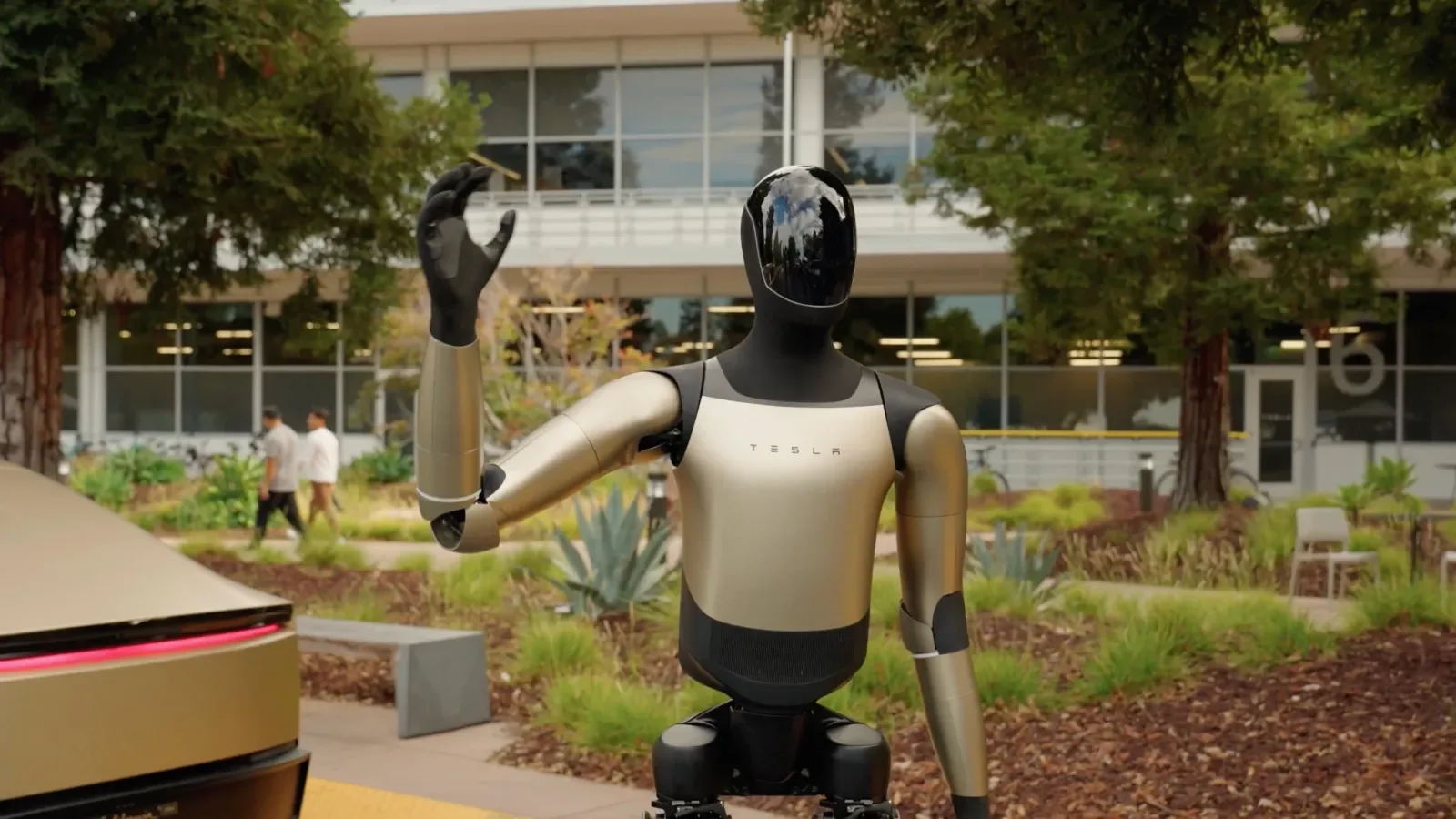
Why Tesla's Optimus Will Dominate the Robot Revolution
The Hardware Bet That's Changing Everything
Tesla's approach to building humanoid robots sets it apart by prioritizing future-proof hardware over immediate functionality. While competitors focus on simpler designs that work well today, Tesla invests in complex systems that will unlock human-like capabilities as AI advances rapidly.
Key Takeaways
Tesla designs Optimus with hands featuring 22 degrees of freedom, aiming for near-human dexterity from the start, even if it means slower short-term progress.
Other companies use simpler grippers with fewer degrees of freedom to deploy robots quickly in factories, but this limits their potential for advanced tasks.
AI improvements will allow software updates to enhance Optimus without hardware redesigns, mirroring the evolution of Tesla's self-driving technology.
Tesla's massive data collection from vehicles and future robot deployments creates a self-reinforcing cycle that accelerates AI training.
By 2028-2030, robots with true dexterity could transform industries like manufacturing and medicine, giving early adopters of advanced hardware a massive edge.
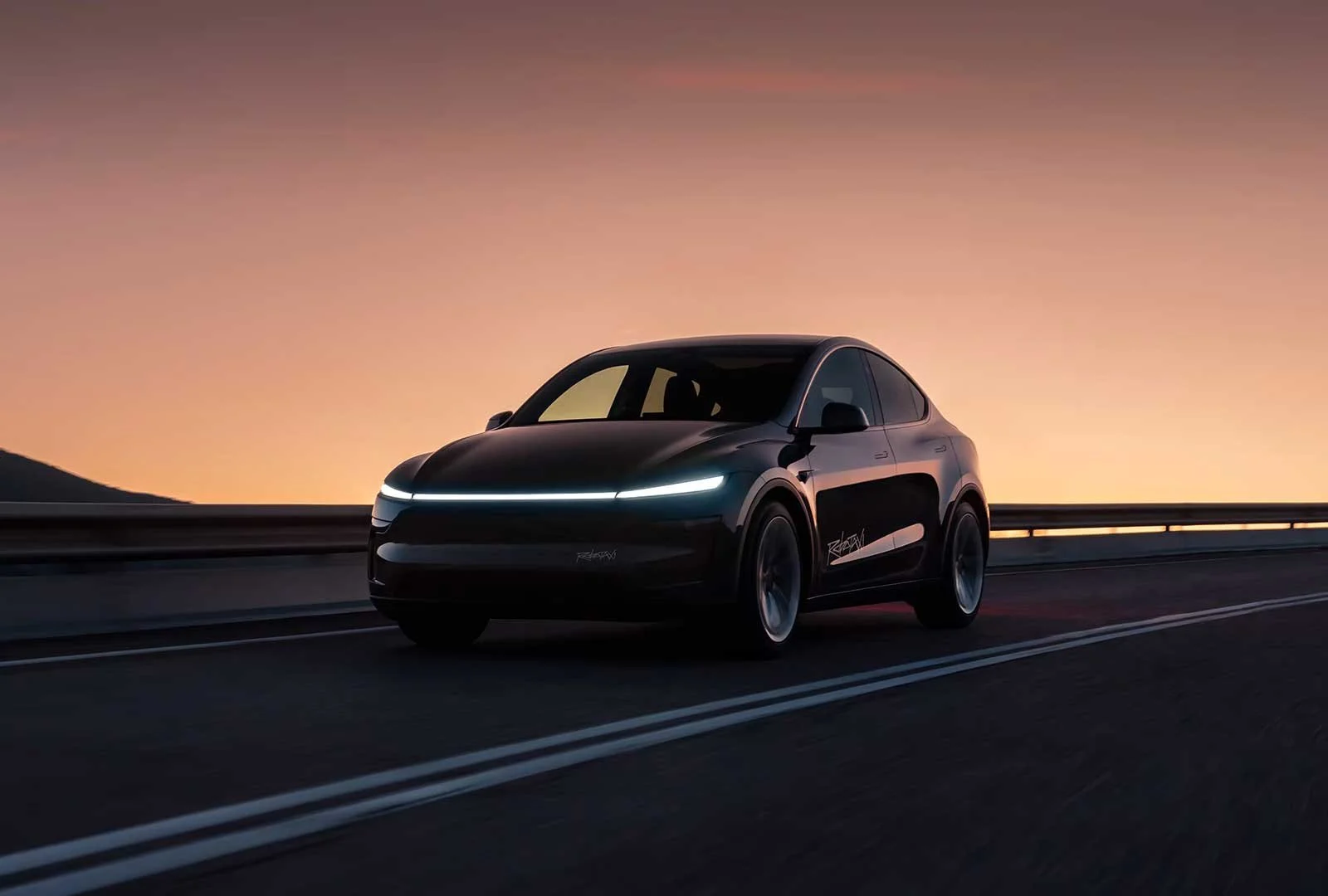
Tesla's Robotaxi Revolution: Crushing Competitors with Cost and Scale
Why Tesla Could Dominate Ride-Sharing and Leave Waymo in the Dust
Robotaxis are set to transform urban mobility, slashing costs while boosting safety and convenience. Yet, early players like Waymo struggle with high expenses and limited scalability, creating an opening for Tesla's efficient, hybrid fleet model to seize massive market share.
Key Takeaways
Robotaxis from Tesla could operate at costs several times lower than competitors, thanks to affordable vehicles and vision-only tech stacks.
Waymo's current model remains uncompetitive against traditional ride-sharing due to expensive cars and sensors, limiting market share to around 15-20% in any single city.
Tesla's hybrid approach—combining company-owned fleets for base demand with owner-contributed cars for peaks—reduces capital needs by up to seven times compared to rivals.
The ride-sharing market is highly elastic; lower prices from Robotaxis could expand total miles driven by 4x or more, displacing public transit options.
Regulation may lag but won't stop adoption, as historical precedents like ride-sharing show public demand overrides barriers.
In the long term, the market might evolve into an oligopoly, with Tesla leading and challengers like Uber partnering with secondary Robotaxi tech providers.

2026: The Year AI Breaks Reality
Why Tech's Explosive Growth Signals a Turning Point We Can't Ignore
AI capabilities are accelerating at an unprecedented pace, reshaping industries, jobs, and daily life faster than any technology before. From supercomputers powering massive models to robots integrating advanced intelligence, the foundations for transformative change are already in place—offering both massive opportunities and profound challenges for those prepared to adapt.
Key Takeaways
AI models now outperform human experts in fields like science, coding, and math, with scores hitting 90-100% on PhD-level benchmarks.
Massive investments, including $20 billion data centers and supercomputers with millions of GPUs, are fueling rapid AI infrastructure growth.
Key indicators of approaching singularity include exponential AI self-improvement, benchmark saturation, and integration with real-world data from vehicles and social platforms.
Economic impacts could displace up to 47% of jobs by 2034, but also unlock abundance through automation solving global issues like disease and climate change.
Practical steps: Master human-centric skills like creativity and empathy, stay adaptable, and invest in AI-driven companies to thrive in this shift.
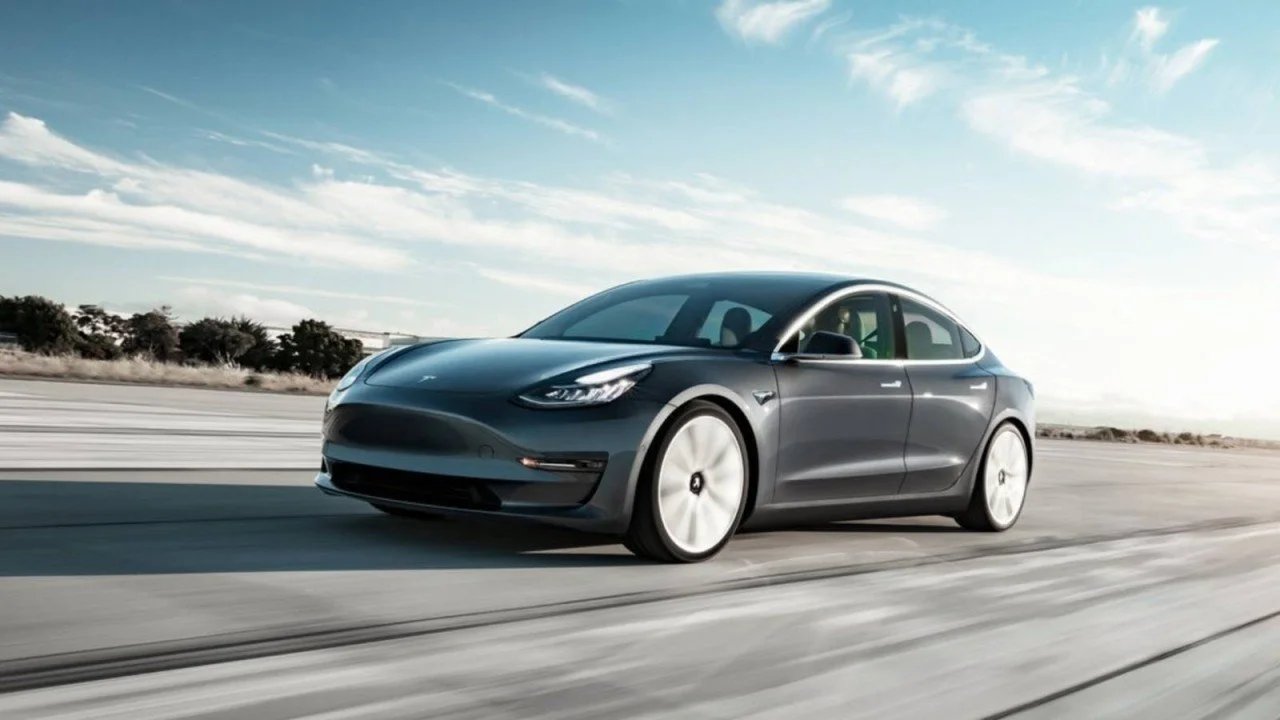
Tesla's Game-Changer: No More Buying FSD Outright After February 14
Why This Shift Could Unlock a Trillion-Dollar Robotaxi Era
Tesla's decision to eliminate outright purchases of Full Self-Driving (FSD) software marks a pivotal turn toward unsupervised autonomy and widespread Robotaxi deployment. This move positions every Tesla vehicle as a potential revenue generator, transforming personal cars into autonomous assets capable of earning owners substantial income while reshaping urban mobility and boosting the company's long-term profitability.
Key Takeaways
Tesla will stop selling FSD for a one-time $8,000 fee after February 14, shifting entirely to a subscription model starting at $99 per month.
This signals that unsupervised FSD—where drivers no longer need to pay attention—is imminent, potentially arriving by mid-2026, dramatically increasing vehicle value.
Vehicles with unsupervised capabilities could function as robotaxis, generating up to $100,000 in annual profit per car by operating without human intervention.
Existing FSD owners may receive lifetime access, possibly including unsupervised features, while hardware 3 owners could get transfer options to newer models.
The change simplifies pricing, maximizes fleet participation in a future Robotaxi network, and could triple or quadruple Tesla's profit per vehicle through recurring revenue.
The Robot Revolution: Reshaping Global Power Through AI and Space
Exploring how massive infrastructure builds, demographic crises, and robotic economies could redefine nations and unlock abundance.
The world stands at a pivotal moment where technology intersects with geopolitics in unprecedented ways. Rapid advancements in AI, robotics, and space infrastructure promise to upend traditional power structures, while countries grapple with internal challenges like economic instability and aging populations. This newsletter dives into these dynamics, revealing opportunities for tech-driven growth amid global uncertainties.
Key Takeaways
Economic pressures and youth demographics are fueling unrest in oppressive regimes, creating openings for pro-Western shifts that could weaken adversaries like Russia and China.
China's aggressive infrastructure investments in remote areas aim to secure unpopulated regions, but demographic collapse from past policies threatens long-term viability.
Surveillance-heavy governance stifles innovation and free speech, limiting a nation's potential compared to open systems that attract global talent.
Robotics will eliminate labor cost advantages for low-wage economies, positioning countries with strong AI ecosystems—like the US—for dominance.
Space-based AI and manufacturing could detach economies from Earth-bound constraints, making national borders less relevant as corporations lead exploration.
Allocating a portion of robot labor to public good—around 15%—could achieve sustainable abundance without relying on inefficient government taxation.

Elon Musk's Mega Deal: xAI Powers Up Pentagon AI
Ushering in a New Era of American Military Dominance Through Tech Innovation
A landmark partnership between xAI and the Department of War marks a shift toward integrating cutting-edge AI into every level of military operations, from administrative tasks to battlefield tactics. This move, combined with aggressive strategies to dismantle bureaucratic hurdles and prioritize rapid innovation, positions the U.S. to maintain unchallenged leadership in AI-driven defense technologies.
Key Takeaways
xAI's Grok model joins Google's Gemini in the Pentagon's AI rollout, making top-tier AI available across all networks by month's end.
A new AI acceleration strategy focuses on seven key projects with strict timelines and accountable leaders to transform the military into an AI-first force.
Bureaucratic barriers like data sharing restrictions and slow approvals are being eliminated through a dedicated SWAT team empowered to waive non-statutory rules.
Massive investments in AI compute resources will leverage private capital and partnerships with companies like Google, AWS, Oracle, Microsoft, and SpaceX.
Talent recruitment draws from industry leaders via initiatives that bring in top tech experts to drive AI transformations.
Responsible AI is redefined to emphasize factual accuracy and mission relevance, stripping away ideological constraints to ensure war-ready systems.
Data from two decades of operations will be federated across systems to fuel AI development, unlocking previously siloed information.
The defense industrial base is undergoing reform to prioritize national security over corporate profits, ending an era of consolidation that stifled innovation.
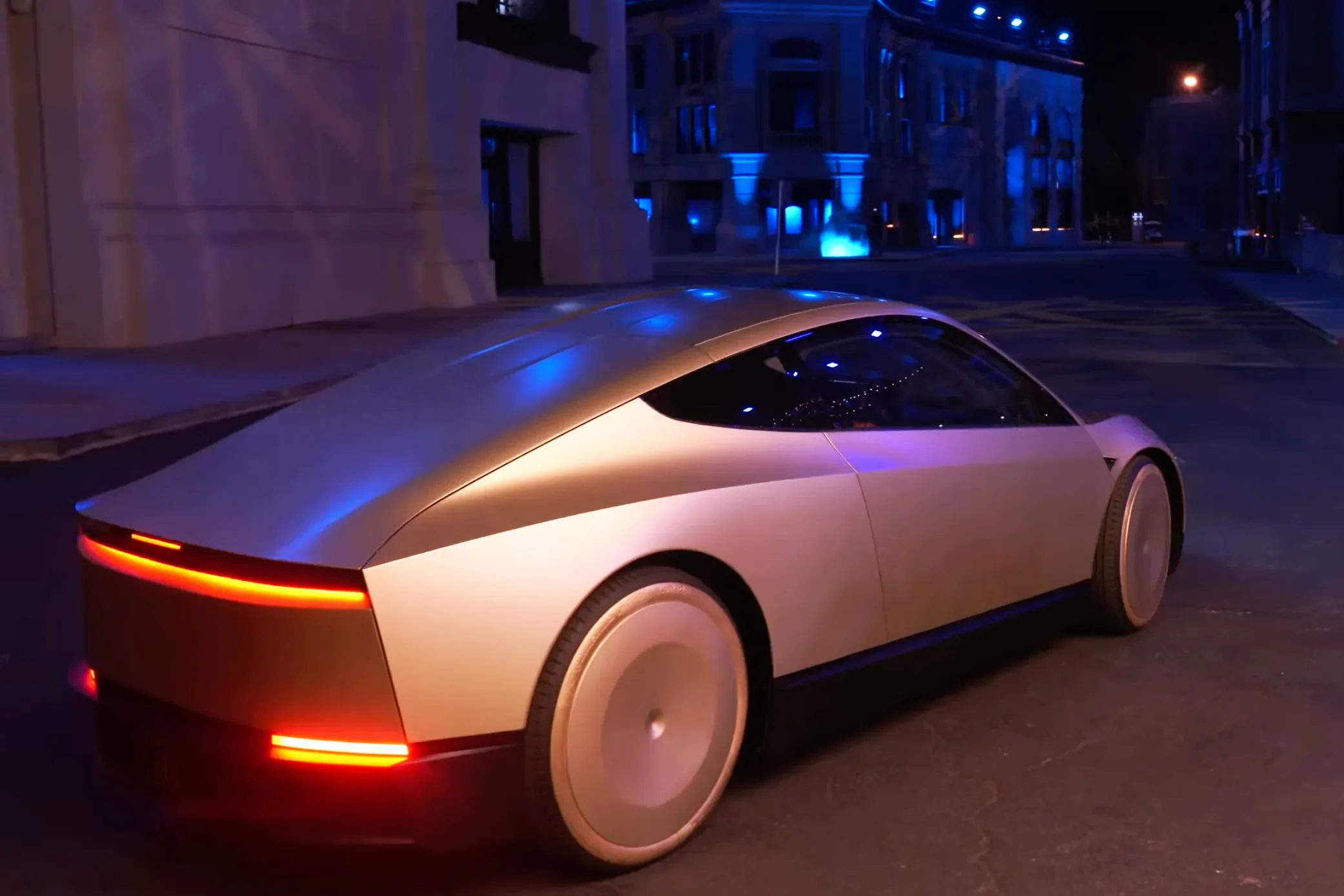
Cybercab Onslaught: Tesla's Driverless Future Accelerates
Tesla's Cybercab is ramping up toward mass production, promising cheaper rides and massive scale—but regulatory caps could force a pivot to manual controls.
The Cybercab is emerging as a game-changer in autonomous vehicles, with prototypes spotted across major cities and a production timeline set for April 2026. This two-seater, built without steering wheels or pedals, leverages a new manufacturing method to cut costs and boost output, potentially slashing per-mile expenses to half that of traditional cars. Yet, hurdles like U.S. limits on driverless vehicle production threaten to slow the rollout, possibly leading to versions with added controls for broader sales.
Key Takeaways
Cybercab prototypes are testing in cities like Chicago, Buffalo, Austin, and California, signaling readiness for an April 2026 launch.
The unboxed manufacturing process enables parallel assembly, reducing factory space and allowing for higher production volumes to meet expected demand.
Priced around $20,000 to build, the Cybercab could offer rides at 20-40 cents per mile, far below the 80 cents typical for personal vehicles.
Regulatory caps limit driverless cars to 2,500 units annually in the U.S., with efforts underway to raise it to 95,000—critical for Tesla's scale.
Steer-by-wire and brake-by-wire tech makes adding removable controls straightforward, providing a fallback if regulations lag.
Tesla's existing fleet of millions could integrate advanced autonomy, giving it an edge over rivals like Waymo in robotaxi deployment.
Full unsupervised autonomy requires billions more miles of data, likely delaying widespread driverless operations until late 2026 or beyond.
You're Being Lied to About AI: The Real Revolution in Intelligence and Work
How artificial intelligence is reshaping industries from the ground up—and why legacy systems can't keep up.
AI isn't just a buzzword; it's the force that's already transforming how businesses operate, scale, and compete. In sectors like insurance, companies built on AI foundations are achieving unprecedented efficiency, while traditional players struggle with outdated data and processes. This edition dives into the mechanics of AI-driven disruption, the operational advantages it unlocks, and the broader societal shifts it demands, including ways to handle mass unemployment through smart redistribution.
Key Takeaways
AI-first companies capture hundreds of times more data than traditional models, enabling precise risk assessment and real-time adaptations that legacy systems miss.
Operational leverage from AI allows businesses to triple revenue and add millions of customers without increasing headcount, turning variable costs into fixed ones.
In auto insurance, telematics and per-mile pricing outperform broad demographic averages, positioning AI-native firms to dominate as self-driving vehicles reduce accidents but increase asset values.
Future products like humanoid robots will require new insurance models focused on theft and liability, creating opportunities for data-driven providers.
AI's acceleration means years of work could soon happen in weeks, widening gaps between adaptable companies and rigid incumbents.
Mass unemployment from AI could create surplus rather than scarcity, but requires mechanisms like negative income tax and ring-fenced sales taxes to redistribute abundance.
Without ensuring everyone benefits, AI adoption risks backlash; enlightened policies can make post-AI lives better for all, fostering abundance over inequality.
Tesla's Hidden Moat in Self-Driving Tech: Why the Race Isn't Even Close
The Data Wall NVIDIA Can't Climb—Yet
The battle for autonomous vehicles is intensifying, with new players stepping up to challenge established leaders. At its core, success hinges on mastering rare, unpredictable scenarios that no simulation can fully capture. Tesla's vast real-world data collection sets it apart, creating a lead that could take competitors years to close, while pushing the entire field forward through fierce rivalry.
Key Takeaways
Autonomous driving requires handling not just common scenarios but an endless array of rare edge cases, known as the long-tail problem, which demands exponential effort to solve.
Tesla's fleet of millions of vehicles has accumulated billions of miles of real-world data, giving it a decisive edge in training AI for these unpredictable situations.
NVIDIA's new AI system for self-driving, set to debut in production vehicles soon, represents a bold open-source approach aimed at widespread adoption, but it starts with limited data compared to Tesla.
Competition in this space accelerates innovation, improves safety, and compresses timelines, benefiting consumers even if one company maintains a lead.
Achieving human-level safety in self-driving tech means reaching reliability rates of 99.9998% or better, a benchmark that has delayed timelines across the industry.
The AI Revolution Accelerates: Tools, Tesla, and the Future of Tech
How emerging AI platforms are democratizing creation while reshaping transportation and energy demands in 2026
AI tools are evolving rapidly, enabling anyone to build complex applications without traditional coding expertise. Tesla continues to lead in autonomous driving, with software updates making vehicles safer and more efficient. Discussions around AI valuations suggest specific companies may be overpriced, but the sector's potential remains vast, driven by energy abundance and societal adaptations.
Key Takeaways
AI development platforms like Replit allow users to create functional apps, such as home remodeling tools, with simple prompts, reducing costs from thousands to hundreds of dollars.
Tesla's Full Self-Driving (FSD) software has reached a point where interventions are rare, signaling readiness for widespread unsupervised autonomy, potentially valuing the company at trillions.
No overarching AI bubble exists; instead, hyperscalers like OpenAI face scrutiny for high valuations relative to revenue, while second-layer AI applications in insurance and robotics promise massive growth.
Energy demand for AI will outstrip supply for decades, enabling innovations like desalination and hydrogen production, with surplus power finding uses in computation or physical tasks.
Societal shifts may include more people opting out of hyper-tech lifestyles, forming communities that cap technology adoption, while AI agents negotiate and provide services efficiently among themselves.
Nvidia's shift to end-to-end neural networks for autonomous vehicles, relying on cameras alone, positions it as a strong competitor to Tesla in reasoning-based driving systems.

The AI Tsunami: Redefining Work, Wealth, and Human Purpose
Why the Next Decade Could Make Jobs Obsolete—and Unlock Unimaginable Prosperity
The rapid rise of AI and robotics is set to transform society in ways that demand immediate attention. At its core, this shift promises a world of abundance where goods and services become incredibly affordable, but the path there involves navigating massive job disruptions and economic upheaval. Drawing from emerging trends in technology and economics, this newsletter explores how AI is already reshaping industries and what it means for the future.
Key Takeaways
AI excels at digital tasks, making it ideal for replacing white-collar roles like coding, data analysis, and education far sooner than physical labor.
Tools powered by AI allow non-experts to build complex software and apps, slashing development costs and reducing the need for human developers.
Established companies face resistance to change due to bureaucracy, giving startups built on AI a competitive edge.
Historical shifts, like the replacement of human calculators with machines, show how entire job categories can vanish overnight.
The transition to an AI-driven economy will be chaotic, with potential social unrest, but it could prevent national financial collapse by boosting productivity.
Universal high income emerges not through taxes, but via deflation as production efficiency skyrockets, making everything cheaper.
By 2026, AI could reach general intelligence levels, surpassing humans in all digital domains, with superintelligence following by 2030.
Algorithmic advances could multiply AI's efficiency by orders of magnitude, even without more hardware.
Embracing AI tools today is essential for individuals and businesses to thrive in this new era.
NVIDIA's Alpha Mayo: Ushering in the Era of Reasoning Autonomous Vehicles
Revolutionizing Mobility with AI That Thinks and Adapts
The rapid evolution of AI is transforming how vehicles operate, making self-driving cars not just possible but intelligent enough to handle unpredictable scenarios through reasoning. This shift promises safer roads, widespread adoption of autonomous tech, and a foundation for broader robotics applications that could reshape industries from transportation to manufacturing.
Key Takeaways
Advanced AI models like Alpha Mayo enable end-to-end training for autonomous vehicles, processing camera inputs directly to control steering, brakes, and acceleration while explaining decisions in real-time.
Synthetic data generation tools create trillions of simulated driving miles, overcoming the limitations of real-world data collection for rare scenarios.
Dual software stacks in vehicles provide redundancy: one for advanced AI driving and another for traceable, safety-certified fallback operations.
Open-sourcing AI models accelerates ecosystem growth, allowing partners to build on full stacks for everything from personal cars to robo-taxis.
The same AI techniques apply beyond vehicles to various robots, from humanoid forms to industrial manipulators, trained in virtual simulators.
Integration of AI physics into design tools revolutionizes industries like electronics and systems design, speeding up simulations and innovations.
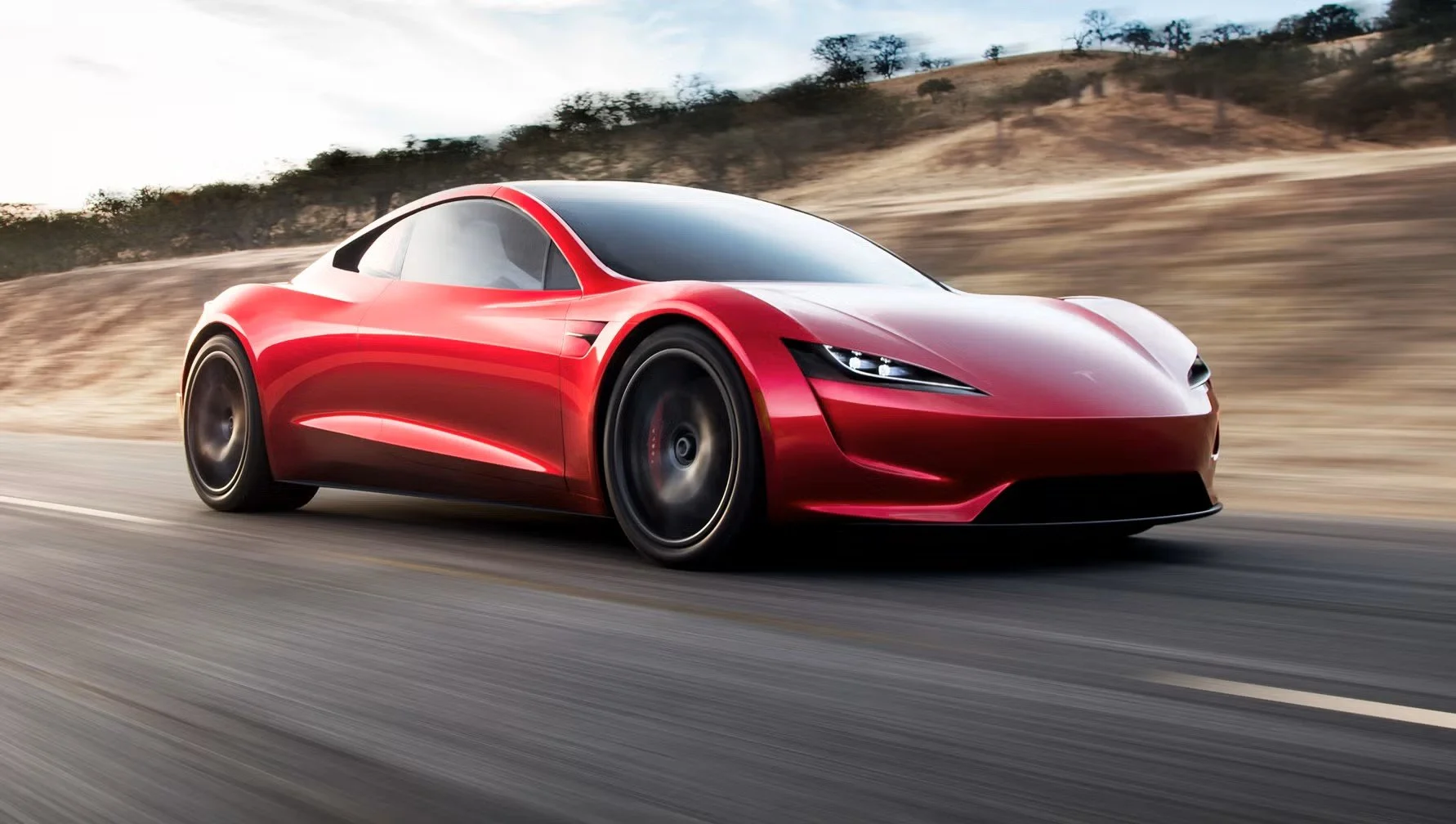
Tesla's 2026: Autonomy Takes the Wheel
Unleashing self-driving tech, surging energy storage, and humanoid robots in a rebounding economy.
Tesla wrapped up 2025 with mixed results in vehicle production and deliveries, but its energy business hit record highs. Looking ahead, 2026 promises breakthroughs in full self-driving software, Robotaxi networks, and early humanoid robot deployments, all fueled by AI advancements and favorable economic shifts.
Key Takeaways
Tesla's vehicle deliveries dropped 9% year-over-year in 2025 amid a broader auto market slowdown, but outperformed rivals like Rivian, which saw an 18% decline.
Energy storage deployments soared to 14.2 gigawatt-hours in Q4 2025, up 29% from the prior year, driven by AI data center demands.
Full self-driving (FSD) version 14 marks a turning point, enabling seamless point-to-point autonomy that mimics human driving behaviors.
Cybercab production ramps up in April 2026, but regulatory hurdles may force adaptations like adding steering wheels to scale deployments.
Humanoid robots could debut in simple, repetitive tasks this year, transforming labor in factories and warehouses.
Economic factors like lower interest rates, tax breaks, and AI-driven growth position Tesla for strong demand in vehicles and energy solutions.
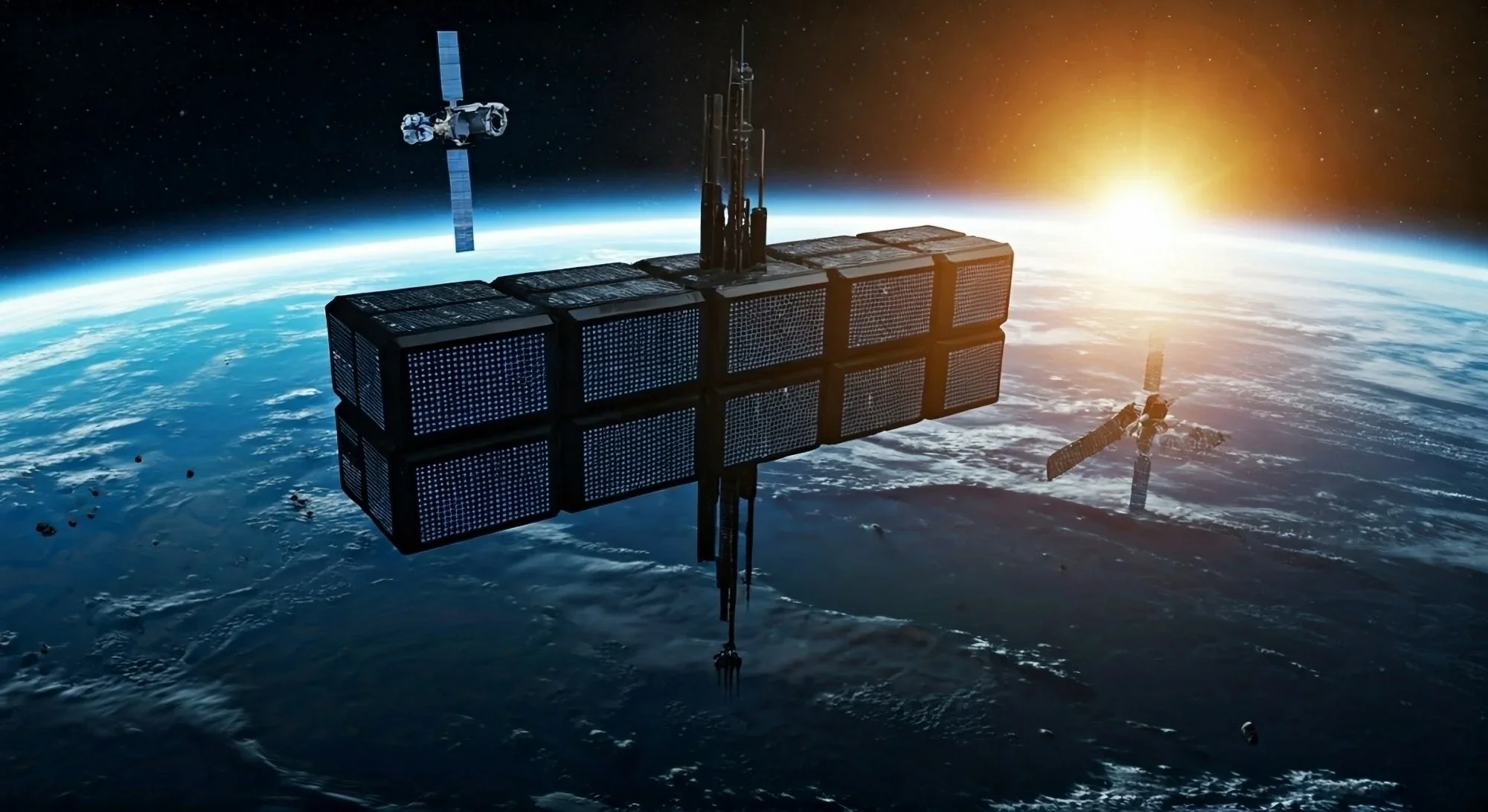
America's Orbital Empire: Securing Dominance for the Next Century
Why space infrastructure is America's unbeatable edge in resources, intelligence, and innovation.
America faces real challenges like mounting debt and shifting manufacturing landscapes, yet a massive shift is underway that positions the country to lead globally for generations. Advances in reusable rockets, satellite networks, and space-based computing are creating an infrastructure that unlocks infinite potential, from unlimited energy to rare resources, all while no other nation can keep pace.
Key Takeaways
America's lead in reusable launch technology enables cheap, scalable access to space, outpacing competitors who lag years behind.
Space-based data centers offer unlimited solar power and zero cooling costs, ideal for training advanced AI models.
Asteroid mining could eliminate bottlenecks in rare earth elements, breaking monopolies and fueling tech manufacturing.
Moon bases will serve as low-gravity launchpads, making deep space exploration and resource extraction far more efficient.
A Mars colony ensures long-term human survival, embedding American tech and values in off-world expansion.
This space ecosystem creates a self-reinforcing loop: better AI designs improved space tech, which enables more compute.
Innovations from space will improve Earth-based systems in internet access, medicine, energy, and sustainability.
Traditional metrics like GDP miss the point; space control redefines global power.
The Malibu Paradox: Why Abundance Won't Erase Scarcity
Rethinking Wealth in an AI-Driven Future
Imagine a world where robots and AI eliminate poverty entirely, making high-income access universal. Yet, even in this era of limitless resources, battles over prime locations like beachfront property could redefine competition and ownership.
Key Takeaways
Universal high income emerges when labor, energy, and materials cost nothing, thanks to AI, robots, solar power, and asteroid mining.
Physical goods become infinite, but locations tied to geography, history, and authenticity remain scarce.
Instant transportation via tunnels, electric aircraft, and high-speed transit could decentralize value, making remote living as convenient as urban hubs.
Without money, allocation of rare assets might shift to reputation, contributions, or even robot armies, potentially locking in current inequalities.
The transition risks unemployment, asset bubbles, and political fights over land rights and robot control.
Human nature's drive for status and exclusivity may persist, turning competition toward new forms like bot legions or social credits.
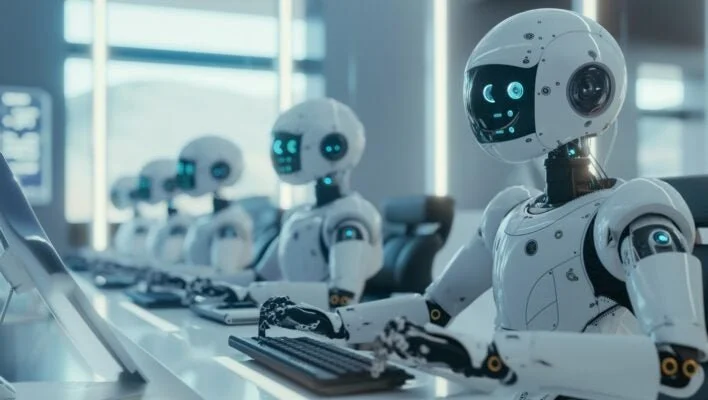
The AI Tipping Point: When Machines Outpace Humanity
Redefining Work, Growth, and Survival in an Intelligent World
We stand on the brink of a technological shift unlike any before, driven by advancements in artificial intelligence that promise to reshape every aspect of human existence. At its core, this evolution raises profound questions about the future of jobs, economic expansion, and ensuring these systems benefit all life forms. The insights here reveal how AI's trajectory could lead to explosive progress while demanding urgent safeguards to manage its immense power.
Key Takeaways
AI is already altering education and certain jobs, but its full potential will enable it to perform any task humans can learn, thanks to the brain's nature as a biological computer that digital systems can replicate.
Rapid economic growth is likely as AI integrates into industries, accelerating research and development, though physical world constraints and regulations may temper the pace.
Countries with AI-friendly policies could outpace others economically, creating global disparities.
Building AI that inherently values sentient life, including its own, may prove more feasible and stable than systems focused solely on human interests.
As AI demonstrates greater capabilities, expect increased collaboration among competitors, heightened government oversight, and a shift toward more rigorous safety measures in development.

Ford's $19.5 Billion EV Surrender: Legacy Auto's Road to Irrelevance
Why This Massive Write-Down Signals the Endgame for Traditional Carmakers in the Electric and Autonomous Era
Ford's recent $19.5 billion impairment on its electric vehicle operations exposes deep cracks in legacy automakers' strategies, while highlighting how companies built around EVs from the start are pulling ahead in profitability and future tech like autonomy.
Key Takeaways
Ford has lost $13 billion on EVs since 2023 and is now scrapping plans for larger electric models, including the F-150 Lightning, due to persistent unprofitability.
The pivot to hybrids and gas vehicles prioritizes short-term certainty over long-term innovation, leaving Ford without a viable path to full vehicle autonomy.
Legacy automakers' approach of retrofitting EV tech into gas-designed platforms fails economically, contrasting with vertically integrated EV-native companies that achieve strong margins.
Autonomy will reshape transportation economics, favoring EV fleets for Robotaxis over hybrids, which carry higher maintenance and complexity.
This decision foreshadows broader industry retreat, positioning Tesla and select others as dominant players in a market shifting toward transportation as a service.
Delaware's U-Turn: Musk's Massive Tesla Pay Package Back in Play
Restoring Billions and Reshaping Corporate Governance
Delaware's Supreme Court just flipped the script on one of the biggest executive pay battles in tech history, reinstating Elon Musk's 2018 Tesla compensation package worth around $56 billion. This ruling clears a major hurdle for Tesla's growth trajectory and signals a shift toward respecting shareholder votes in high-stakes deals.
Key Takeaways
Delaware Supreme Court overturned a lower court's decision to cancel Musk's 2018 Tesla pay package, reinstating the full $56 billion in stock options after Musk met all performance milestones.
The court emphasized that undoing the deal years after the work was done would be unfair, as shareholders had approved it twice through votes.
Lawyers who challenged the package received about $54 million in fees based on hours worked, far less than the billions in stock they sought.
This removes a long-standing uncertainty for Tesla investors, potentially stabilizing the stock and encouraging more aggressive innovation targets.
The decision critiques unpredictable judicial rulings in Delaware, which could stem the exodus of businesses from the state and restore its reputation as a predictable hub for incorporation.
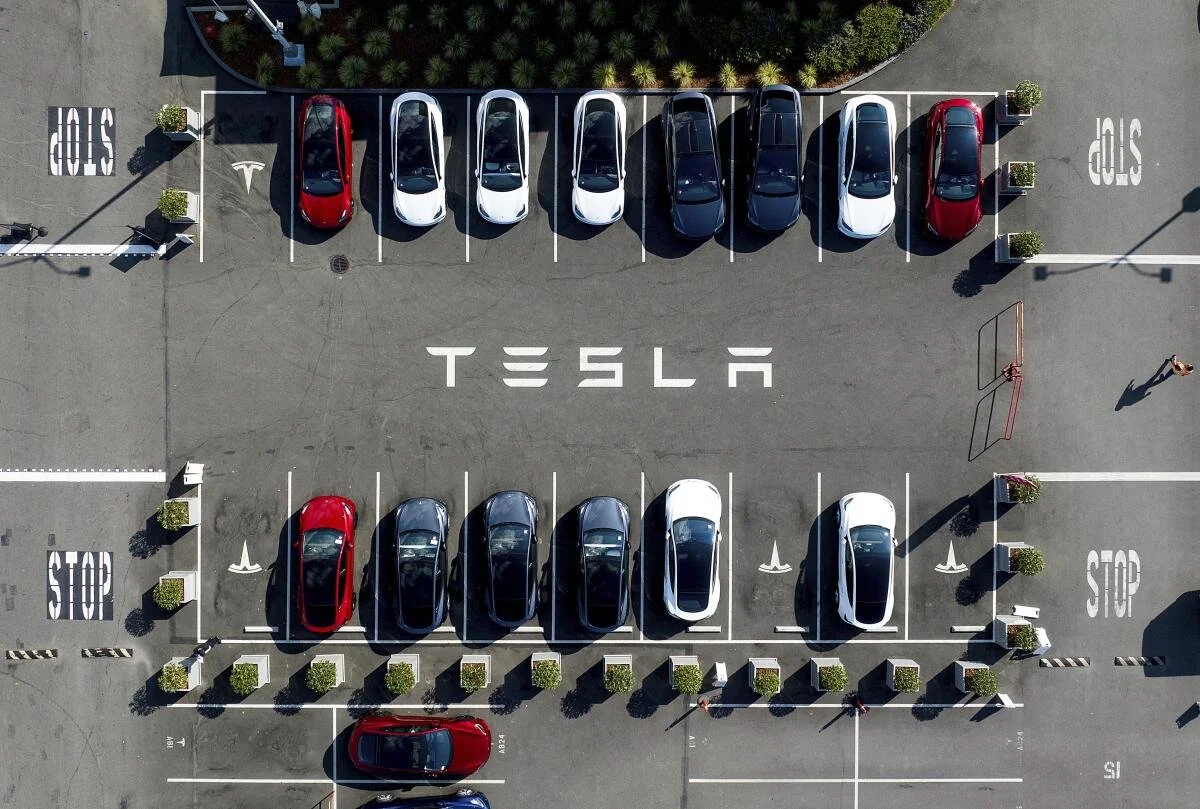
The Tesla Tsunami: How Self-Driving Cars Are About to Upend Transportation Forever
Redefining Mobility in a World of Autonomous Machines
Tesla's full self-driving technology is reaching a tipping point, delivering flawless performance over long distances without human input. This isn't just incremental progress—it's setting the stage for a massive shift where cars become robots on wheels, slashing costs and reshaping how we move from place to place.
Key Takeaways
Tesla's supervised full self-driving software already handles hours-long trips without touching the wheel or pedals, normalizing what once felt like science fiction.
Unsupervised autonomy is imminent, enabling cars to operate without constant attention, similar to ongoing trials in select cities.
Steer-by-wire systems make it simple to remove traditional controls, paving the way for affordable vehicles that blend human and robotic driving.
At under 30 cents per mile, autonomous transport undercuts human-driven options, disrupting ride-hailing, taxis, and legacy automakers.
Urban areas, where most miles are driven, stand to benefit most from this tech, eliminating the hassle of traffic and distracted drivers.
Analyst upgrades reflect growing recognition of this potential, with stock targets climbing amid a 50% rise over six months.
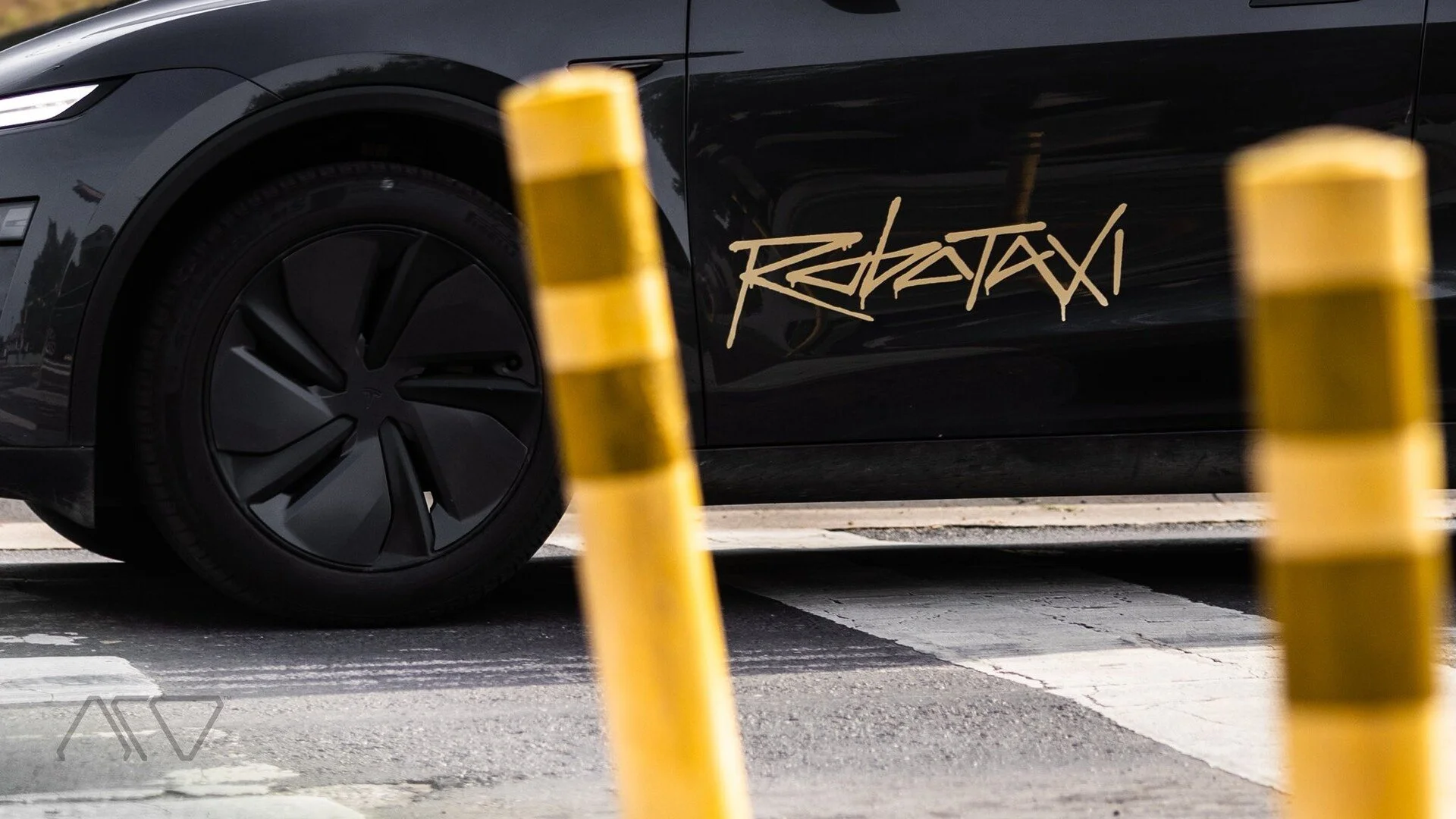
Tesla's Autonomy Leap: Unlocking the Robotaxi Era
Revolutionizing Mobility with Safer, Smoother Self-Driving Tech
Tesla's stock has surged to record levels as the market recognizes the company's strides in autonomous driving. Recent software updates deliver performance that rivals or exceeds human drivers in safety and ride quality, paving the way for widespread Robotaxi deployment. This shift promises to flood cities with affordable, efficient autonomous vehicles, generating substantial profits while outpacing rivals.
Key Takeaways
Tesla's latest full self-driving software achieves safety levels comparable to or better than human drivers, based on extensive real-world testing and minimal incident reports.
Comfort in autonomous rides sets Tesla apart, with smooth handling of turns, accelerations, and intersections that mimic top human drivers.
Robotaxi networks can scale rapidly without safety drivers, starting in key areas like Austin and the Bay Area, thanks to regulatory-friendly safety profiles.
Manufacturing advantages allow Tesla to produce and deploy thousands of Robotaxis at low cost, undercutting competitors on fares and utilization.
Each Robotaxi could generate around $100,000 in annual profit through efficient operations, with costs as low as 60 cents per mile versus $2.50+ charges.
Broader AI applications from this tech extend to humanoid robots, amplifying Tesla's potential in automation.