
AI's Silent Takeover: Why Universal Government Checks Are Inevitable
As cognitive jobs disappear at record speed, the math of productivity and taxation is forcing a once-radical idea into mainstream policy.
The economy that powered the last 250 years—people selling their time, companies buying it, and everyone climbing the same ladder—has hit its limit. Artificial intelligence is not merely automating routine tasks. It is absorbing the very skills that once made human labor indispensable: writing, coding, analysis, judgment, and strategy. The result is already visible in hiring data, company headcounts, and government revenue models. The fix on the table is straightforward: direct cash transfers from the federal government, scaled to match the flood of AI-generated output.
Key Takeaways
AI tools have already cut the bottom rung of the career ladder for young software engineers and other cognitive roles, with entry-level hiring down nearly 20 percent in key tech fields even as industry revenue climbs.
Traditional technological shifts always created new human jobs; AI is the first to eliminate the need for human cognition itself, leaving no higher rung to climb.
Roughly 85 percent of federal revenue currently comes from taxes on wages and payroll; when AI displaces those wages, the entire funding model for Social Security, Medicare, defense, and infrastructure collapses unless the tax code shifts to capture AI and robotic production.
Real-world cash-transfer programs—Alaska’s oil-funded dividends since 1982, Stockton’s 2019 pilot, and Kenya’s large-scale randomized trial—show employment either holds steady or rises, poverty falls sharply, and inflation stays in check when production grows faster than the money supply.
The next five years will likely see federal checks issued to every citizen to offset displacement, funded by taxing AI output rather than labor; the only question is whether the system is designed deliberately or patched together during crisis.
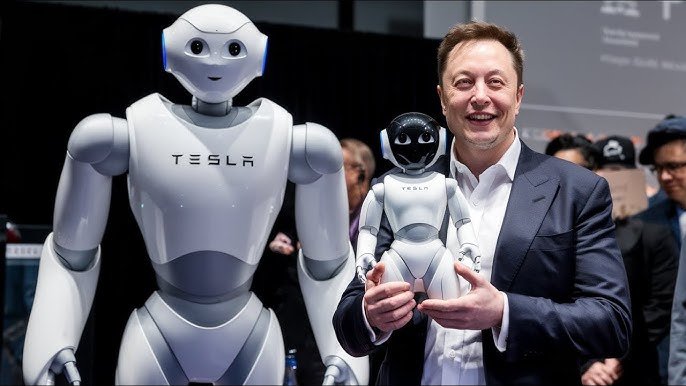
For $2/Hour, Elon Musk Is About to Replace Human Labor
The economics of humanoid robots are flipping the script on a $40 trillion global labor market—cheaper, tireless workers could unlock explosive new demand while filling demographic gaps no policy can fix.
Key Takeaways
Human labor in the US costs roughly $45–$48 per hour when fully loaded with wages, benefits, taxes, and overhead—humanoid robots target under $2 per hour at scale.
Tesla aims for Optimus priced at $20,000–$25,000 per unit, with custom actuators, 22 degrees of freedom in the hands, and vertical integration from chips to software giving it an edge over competitors.
Robots operate ~7,000 hours per year (vs. ~2,000 for humans), depreciating to ~$1.20/hour for the hardware alone, plus minimal energy and maintenance costs.
Demographic collapse in major economies—US birth rate at 1.6, South Korea at 0.72, China's workforce shrinking—creates unavoidable labor shortages that robots must fill.
Historical patterns like Jevons Paradox show that massive cost reductions in labor-equivalent work lead to exponential demand growth, spawning new industries rather than net job destruction.
Tesla is repurposing Fremont factory lines from Model S/X production to Optimus, targeting millions of units annually, with Gen 3 unveil in early 2026 and initial internal deployment soon after.
Early applications target warehouses, manufacturing, and elder care, where shortages already exist and cost savings hit hardest.
Transition risks include job displacement in repetitive roles over 5–10 years, though new categories of work become viable when labor drops 95%+ in cost.

The Barbell Economy Is Already Here: AI's Brutal Squeeze on the Middle Class
AI isn't flattening the world—it's reshaping it into a barbell, with massive gains at the extremes and devastation in the center.
AI deployment is accelerating a historic economic reconfiguration. Capital owners and builders at the top capture exponential productivity gains through agentic tools, while the global poor gain access to basics like water, energy, healthcare, and education at collapsing costs via robotics and automation. Meanwhile, the broad middle—knowledge workers, professionals, and wage earners in developed economies—faces rapid displacement from cognitive tasks that AI now handles faster and cheaper. This isn't a distant risk; early signs appeared in 2025-2026 layoffs, market drawdowns tied to agentic AI awareness, and reports of white-collar job pressure.
Key Takeaways
AI creates a barbell distribution: the top ~20% (capital owners, builders, risk-takers) experience transformative productivity multipliers, often 5-10x or more, by deploying AI agents to replace entire teams.
The bottom ~20% (those in poverty or lacking basics) benefit enormously as robotic labor and AI delivery make clean water, housing, medicine, energy, education, and food abundant and cheap in regions where human labor costs previously blocked progress.
The middle ~60% (most college-educated professionals, managers, analysts, marketers, lawyers, accountants in developed nations) faces the heaviest hit: cognitive and routine knowledge work is automated now, not in the future, leading to job compression, identity loss, and financial strain without quick new opportunities.
Advantages compound for early adopters: hands-on experience with AI agents builds irreplaceable knowledge and intuition that widens gaps monthly; those without time or resources fall behind fast.
Transition risks are severe: mismatched timelines between AI's monthly improvements and years-long retraining or policy responses could trigger widespread psychological and social disruption, potentially rivaling Great Depression-scale effects without strong intervention.
Winner-take-most dynamics intensify: AI-augmented firms capture entire markets at lower costs, shrinking employer pools and suppressing remaining wages.
Developing nations like China may adapt smoother due to collective structures, while Western individualism leaves displaced workers more exposed.
Action window is narrow: 2-5 years for middle-class repositioning toward capital ownership, AI leverage, or irreplaceable human roles; abundance awaits post-transition, but the path there crushes many.

Elon Musk's Bombshell: Mass and Energy as the New Global Currency
The Shift That Redefines Wealth in an AI-Driven World
Rapid advances in AI, robotics, and solar power are converging to make intelligence, labor, and energy nearly free, positioning mass and energy as the core drivers of future economies. This transformation echoes historical currency shifts and points to a deflationary era where energy production becomes the ultimate measure of value.
Key Takeaways
AI training and inference costs have plummeted, with benchmarks dropping from thousands of dollars to pennies, making cognitive tasks approach zero cost.
Robotic labor could reach 20 cents per hour by 2032, disrupting a $40 trillion global market in physical work.
Solar energy costs have fallen 99.6% since 1976, outpacing other sources and enabling exponential growth in power generation.
Historical currency systems—from gold to petrodollars—evolved with dominant economic inputs; energy now emerges as the next anchor.
Orbital solar data centers could multiply Earth's energy output by millions, turning space into the ultimate power source.
In this framework, companies controlling energy, AI, and robotics stacks stand to dominate, while traditional fiat currencies face unprecedented pressure.

Optimus: The Robot Revolution Targeting $40 Trillion in Human Labor
How AI-Powered Humanoids Could Drive an Era of Abundance—or Economic Upheaval
Humanoid robots stand poised to transform the global economy by automating vast swaths of physical work, tapping into a $40 trillion annual labor market. Advances in AI enable these machines to learn tasks rapidly, while manufacturing expertise allows production at unprecedented scale. This shift promises lower costs and higher efficiency, but it also raises questions about job displacement and regulatory hurdles.
Key Takeaways
Humanoid robots target the $40 trillion global labor market, dwarfing industries like automotive ($3 trillion) and smartphones (under $1 trillion).
AI forms the core intelligence, drawing from self-driving tech to process visual inputs and execute physical actions.
Scaling production to millions of units leverages existing manufacturing capabilities, creating a data flywheel for rapid AI improvements.
Initial deployments focus on factories for repetitive tasks, expanding to warehousing, agriculture, construction, and healthcare.
Economic models show robots costing $20,000–$30,000 could replace human labor at a fraction of annual wages, with added savings on insurance and benefits.
Risks include timeline delays, regulatory barriers, technical challenges in dexterity, and competition from other firms.
Long-term, abundant robot labor could eliminate scarcity constraints, enabling massive economic growth, but requires careful management to avoid societal disruption.
The AI Barbell Economy: Surviving the 2026 Job Tsunami
Why the Middle is Getting Crushed—and How to Position Yourself for the Win
A massive economic shift driven by AI is set to hit in 2026, reshaping jobs and wealth distribution. Tech giants are pouring billions into AI while slashing headcounts, creating a barbell-shaped economy where the top and bottom ends grow stronger, but the middle gets squeezed. Early movers who adapt to AI tools or pivot to hands-on trades stand to gain big, while those stuck in routine cognitive work face tough times.
Key Takeaways
AI is accelerating job polarization, forming a barbell economy: capital owners at the top multiply their wealth through AI leverage, while the bottom benefits from cheaper delivery of essentials like water, healthcare, and housing.
Middle-tier white-collar jobs—accounting, marketing, analysis, and customer service—are at high risk, with predictions of 50% entry-level roles vanishing in 1-5 years, potentially pushing unemployment to 10-20%.
Companies like buy-now-pay-later firms have cut workforces by 40% using AI assistants that handle millions of customer interactions, proving AI can replace hundreds of human roles even if quality dips slightly.
Physical trades such as plumbing, electrical work, and construction are booming, with wages up 20% since 2020 and shortages of over 500,000 workers in the US, driven by demand for AI infrastructure.
To thrive, focus on owning assets, mastering AI agents for automation, or building irreplaceable hands-on skills—staying in the middle assuming your job is safe is the biggest risk.
Revolutionizing Hands: Why Tesla's Optimus Robot Could Redefine Physical Labor
Unlocking AI-Driven Efficiency in Everyday Tasks
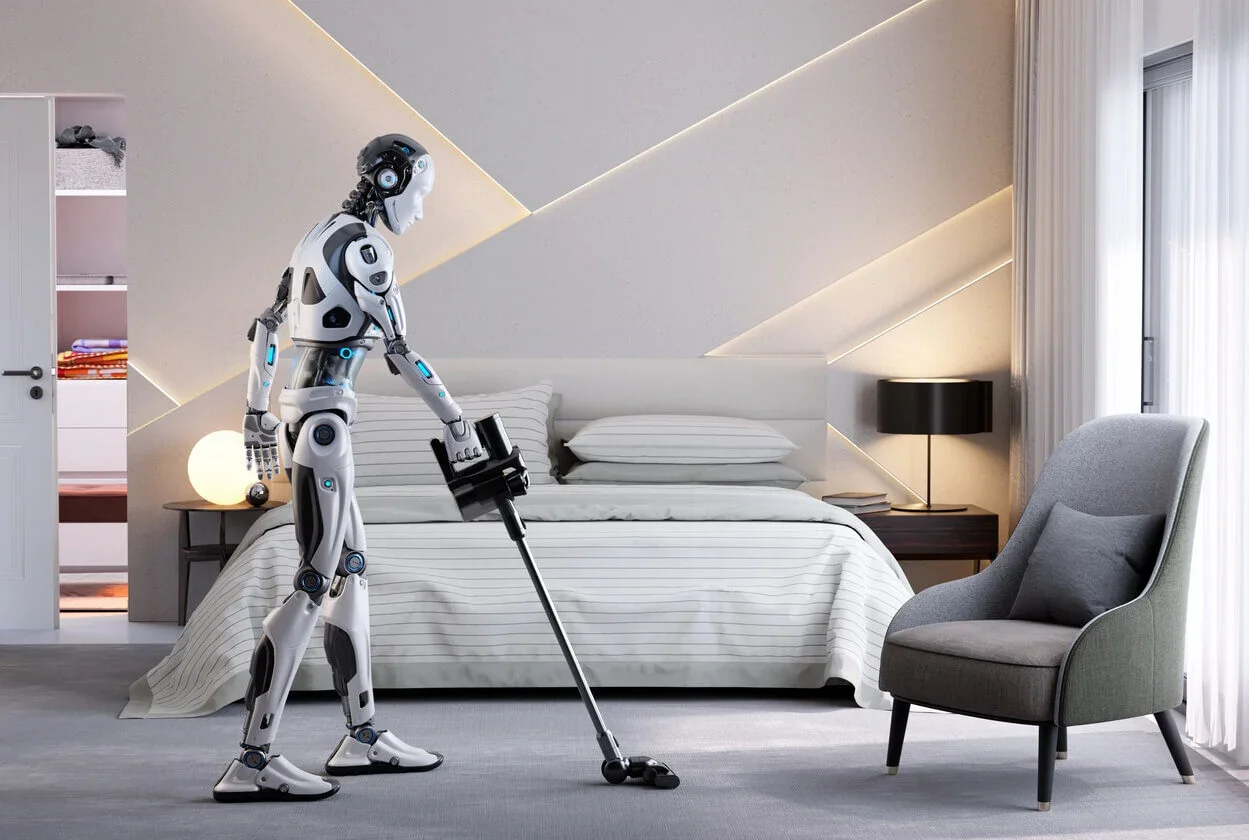
Tesla's push into humanoid robots signals a shift toward seamless integration of AI with hardware, potentially transforming industries from manufacturing to household chores. By focusing on advanced hand designs and AI-native systems, the company aims to create tools that adapt quickly and scale massively, offering insights into how automation could eliminate scarcity and boost productivity across sectors.
Key Takeaways
Tesla's internal systems, built on AI from the ground up, allow for flexible integration across operations, reducing complexity and enabling rapid adaptations without overhauling foundations.
The Optimus robot's hand, with 22 degrees of freedom and five fingers, closely mimics human capabilities, making it suitable for 80% of physical jobs while optimizing for efficiency in high-value tasks like surgery or intricate assembly.
Vertical integration across companies sharing common platforms could lead to unified data ecosystems, amplifying AI's role in coordinating supply chains and operations.
Regulatory hurdles in certain regions may delay robotaxi and robot adoption, but economic pressures from increased productivity in adopter areas will likely force widespread acceptance.
Emerging battery technologies, such as sodium-ion and solid-state options, promise cheaper, more resilient energy storage, crucial for scaling autonomous vehicles and stationary power systems.
Future manufacturing may evolve toward replicator-like systems where raw materials at the atomic level feed into AI-orchestrated production, bypassing traditional suppliers and enabling abundance.
Humanoid robots could modularize into specialized forms, like multi-arm setups for agriculture or detachable limbs for tools, expanding their utility beyond bipedal designs.
The Malibu Paradox: Why Abundance Won't Erase Scarcity
Rethinking Wealth in an AI-Driven Future
Imagine a world where robots and AI eliminate poverty entirely, making high-income access universal. Yet, even in this era of limitless resources, battles over prime locations like beachfront property could redefine competition and ownership.
Key Takeaways
Universal high income emerges when labor, energy, and materials cost nothing, thanks to AI, robots, solar power, and asteroid mining.
Physical goods become infinite, but locations tied to geography, history, and authenticity remain scarce.
Instant transportation via tunnels, electric aircraft, and high-speed transit could decentralize value, making remote living as convenient as urban hubs.
Without money, allocation of rare assets might shift to reputation, contributions, or even robot armies, potentially locking in current inequalities.
The transition risks unemployment, asset bubbles, and political fights over land rights and robot control.
Human nature's drive for status and exclusivity may persist, turning competition toward new forms like bot legions or social credits.
The Robotic Revolution: Unlocking Infinite Abundance Through AI and Automation
Why Humanoid Robots Could End Poverty, Transform Healthcare, and Redefine Global Economies
The rapid advancements in AI-driven robotics and autonomous systems are set to create a world where scarcity becomes obsolete, energy is sustainable, and human potential is amplified like never before. This newsletter dives into the breakthroughs propelling us toward a future of unprecedented productivity and prosperity.
Key Takeaways
Humanoid robots like Optimus are poised to scale to billions of units, enabling mass production that could increase global economic output by a factor of 10 or more.
Full self-driving technology is nearing unsupervised operation, with safety statistics showing it outperforms human drivers, potentially saving millions of lives annually.
AI hardware optimized for efficiency, such as integer-based inference chips, will power robots and vehicles at a fraction of the cost and power of general-purpose alternatives.
Sustainable energy solutions, including advanced batteries and solar integration, could double U.S. energy output without new power plants by buffering supply fluctuations.
New vehicle designs optimized for autonomy, like pedal-less robotaxis, aim for production cycles as low as five seconds per unit, revolutionizing manufacturing efficiency.
Future economies may shift from traditional money to metrics like electrical wattage, as AI and robotics create deflationary pressures through hyper-productivity.
Robotaxis Set to Ignite Economic Revival in Forgotten Neighborhoods
Revolutionizing Mobility for the Underserved: A Path to Broader Prosperity
Robotaxis promise to cut transportation costs dramatically, opening doors to jobs, healthcare, and community growth in low-income areas long hampered by isolation.
Key Takeaways
Transportation acts as a major barrier in economically disadvantaged neighborhoods, limiting access to opportunities and contributing to stagnation.
At scale, robotaxis could reduce per-mile costs to around 30 cents, making rides up to 90% cheaper than current options like rideshares.
Lower costs would enable more travel for work, medical visits, and social activities, boosting local economies through increased foot traffic and investment.
Communities in food deserts or with poor public transit stand to gain the most, with affordable rides transforming daily errands into feasible routines.
While job displacement for drivers remains a challenge, competition among providers could drive even better pricing and services.
Overall, this shift expands mental horizons, fostering optimism and long-term societal benefits like reduced segregation and enhanced freedom.

Tesla's Robotaxi Edge: Scaling Autonomy to Every Corner
Why Small Cities and Global Streets Are Tesla's Next Frontier
Tesla is pushing boundaries with Robotaxi trials in unlikely spots like Harrisburg, Pennsylvania, while Cybertrucks equipped with the latest Full Self-Driving software handle urban drives in Europe. These moves highlight a scalable approach to autonomy that could reshape transportation economics worldwide, outpacing rivals limited by hardware and mapping constraints.
Key Takeaways
Tesla's Robotaxi network is expanding into smaller markets like Harrisburg, leveraging massive vehicle production to enter areas competitors ignore.
Full Self-Driving version 14 enables vehicles like the Cybertruck to navigate diverse environments, from U.S. suburbs to European cities, without specialized sensors or pre-mapped routes.
Unlike companies relying on lidar and high-definition maps, Tesla uses camera-based AI trained on billions of miles of real-world data for broader, faster deployment.
This technology promises to lower transportation costs below 50 cents per mile, boosting local economies in underserved regions by reducing friction for travel and commerce.
Global scalability means Tesla can upgrade millions of existing vehicles via software, creating a ride-hailing fleet that transforms affordability and accessibility everywhere.
The Musk Economy: Billions Injected, Myths Busted
Why Elon Musk's Empire Powers Everyday Lives and National Growth
Elon Musk's companies aren't just pushing technological boundaries—they're injecting massive value into the economy, creating high-paying jobs, funding public services through taxes, and revitalizing American manufacturing. At a time when debates rage over wealth and innovation, these facts reveal how one person's drive translates into widespread prosperity, from factory floors to national infrastructure.
Key Takeaways
Over the past five years, Musk's companies have paid out $110 billion in salaries globally, with about 83% directed to U.S. workers earning an average of $170,000 annually—far above the national average of $38,000.
These operations have generated $45 billion in taxes for the U.S., including $31 billion from employee income taxes, $5 billion in corporate taxes, and $9 billion in payroll taxes, averaging $9 billion annually.
Supplier spending in the U.S. totals $182 billion over the same period, supporting over 1,000 companies and their extended networks, amplifying economic ripple effects.
Musk's ventures employ around 150,000 people, many of whom have gained significant wealth through stock options, enabling retirements and financial security.
This ecosystem rivals the GDP of states like Colorado, driving reindustrialization through advanced production in autos, space, energy, and AI, while inspiring broader industrial revival.
Common criticisms, like layoffs or government subsidies, pale in comparison: layoffs represent less than 1% of total employment, and subsidies to his companies are a fraction of those received by competitors.

AI's Hidden Revolution: Why America Leads and What It Means for Our Future
Redefining value, rights, and power in a world shaped by intelligent machines.
AI isn't just transforming tech—it's reshaping societies, economies, and philosophies at their core. From the dominance of U.S. innovation to the rising value of practical skills, these shifts explain cultural tensions and political changes happening now. Dive in to see how AI ties into America's unique foundations and why embracing it is essential for staying ahead.
Key Takeaways
AI leadership stems from America's cultural and constitutional edge, where rights come from inherent principles rather than consensus or intellect.
Practical, vocationally trained workers are becoming the new high-value creators as AI automates abstract, high-end labor.
Empathy gaps toward working-class Americans fuel political turbulence, but AI-driven value shifts could realign priorities toward those who build and protect.
Meritocracy emerges as a revolutionary force in enterprises, rewarding capability and dedication over backgrounds.
Global AI dominance boils down to U.S. versus China, with Europe sidelined—owning the tech means controlling the rules.
Defending borders, enforcing laws, and fighting for progressive ideals require standing against radicals within parties to protect workers' value.
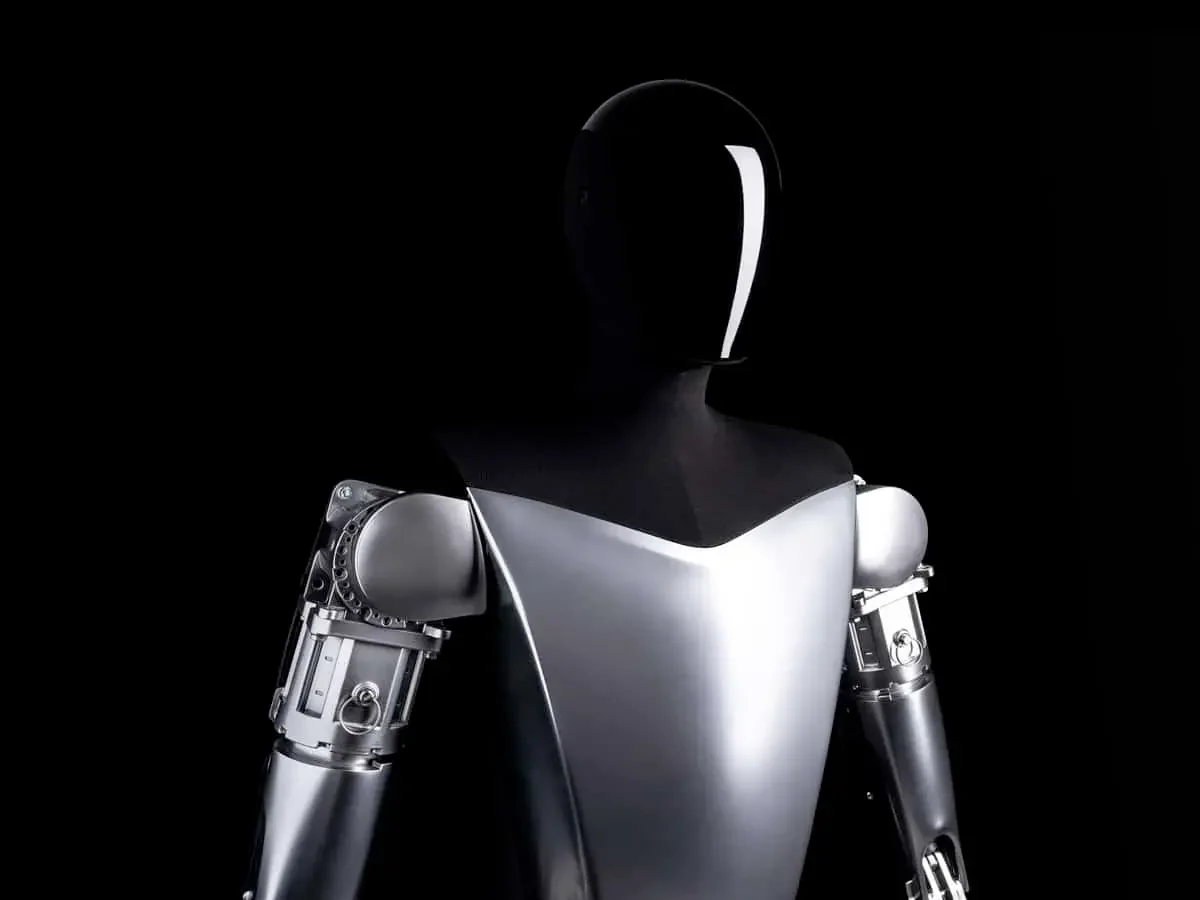
Tesla's Robotic Revolution: Unlocking Infinite Abundance
How AI and humanoid robots could reshape economies, eliminate poverty, and redefine human potential
The future of technology isn't just about smarter gadgets—it's about creating a world where scarcity ends and abundance thrives. Recent advancements in AI, robotics, and autonomous systems point to massive economic growth, safer transportation, and groundbreaking medical applications. These developments promise to multiply global productivity by factors of 10 or even 100, turning science fiction into everyday reality.
Key Takeaways
Humanoid robots like Optimus could scale to billions of units, enabling precision surgery beyond human capability and providing personalized crime prevention without prisons.
AI-driven autonomy in vehicles will soon allow safe texting or sleeping while driving, with production ramps targeting millions of units annually starting next year.
Sustainable energy through solar, batteries, and efficient chips will fuel this era, potentially doubling U.S. energy output without new power plants.
Tesla's custom AI chips, optimized for low power and high efficiency, could outperform competitors at a fraction of the cost, powering robots, cars, and distributed computing networks.
Economic shifts may render traditional money obsolete, measuring value in wattage or computational power instead.
Regulatory hurdles in Europe and China are easing, paving the way for global deployment of full self-driving technology by early next year.
Massive production goals aim for 5 million vehicles annually by 2028, alongside humanoid robot lines capable of units every 5 seconds.

AI Capitalism: The Path to Socialist Dreams?
The Irony of Tech-Driven Abundance in a Divided America
As socialist ideas gain traction in major U.S. cities, groundbreaking advancements in AI and robotics promise a future of unlimited resources and minimal work. This convergence could redefine economic systems, blending capitalist innovation with universal prosperity—but only if society navigates the massive disruptions ahead.
Key Takeaways
Socialist sentiments are rising among younger voters and women in urban areas, driven by feelings of exclusion from the current economic setup.
Tech companies are pushing toward "sustainable abundance," where AI handles production, potentially eliminating the need for most labor while preserving natural environments.
This tech-fueled future could deliver universal high income, freeing people to pursue passions instead of survival jobs.
Capitalism's strength lies in incentivizing risk and innovation, but without mechanisms to redistribute gains, it risks widening inequality and boosting socialist movements.
Job losses from automation in driving, manufacturing, and services are inevitable, demanding new policies like universal basic income to ease the transition.
Deflationary effects from cheap AI-driven transport and robots could lower living costs dramatically, allowing more people to invest or start businesses.
The ultimate test: Can capitalism absorb displaced workers into better opportunities, or will socialism fill the void?

The Robot Revolution Accelerates: Tesla's Edge in an AI-Powered Future
Why Humanoids and Autonomous Tech Could Redefine Society by 2030
Tesla's advancements in AI-driven robotics and self-driving systems are setting the stage for massive economic shifts, with humanoid bots poised to transform factories, homes, and entire industries—potentially unlocking trillions in value while sparking unprecedented disruptions.
Key Takeaways
Tesla's stock could surge to new highs following key approvals, driven by optimism around AI robotics and energy growth, despite short-term earnings challenges.
Humanoid robots like Optimus are advancing faster than expected, with production lines gearing up for factory use by early 2026, signaling practical deployment sooner than skeptics anticipate.
Robotaxis networks are expanding rapidly in select cities, with fleets scaling to hundreds of vehicles by year-end, offering cheaper, safer rides that could outpace traditional services.
AI adoption is growing at triple the rate of the internet, with 10% of the global population already using advanced tools weekly, but businesses struggle to implement it effectively.
The transition to an AI economy will involve significant workforce disruptions, potentially requiring universal basic income to manage upheaval, while creating opportunities for new AI-native ventures.
Humanoid bots will likely enter workplaces before homes due to safety and complexity issues, starting with repetitive tasks in controlled environments.
Nvidia's dominance in chips underscores an ongoing AI arms race, with massive investments in data centers fueling growth, even as profitability lags for many players.
Future cities may split between tech-embracing hubs with robot-integrated services and those resisting automation, leading to uneven societal adoption.
AI could lower barriers to human interaction by making transportation and daily tasks frictionless, fostering more social connections in an abundant era.
The path to sustainable abundance involves balancing rapid innovation with equitable access, as new tools enable entrepreneurial reinvention in fields like farming and services.

The AI Tsunami: Racing Toward a World Without Mandatory Work
Why AI Could Deliver Abundance – or Chaos – and What Comes Next
AI is accelerating at a pace that's set to transform every aspect of our economy, from desk jobs to physical labor. The most compelling insights point to a future where work becomes optional, poverty could vanish through universal high income, and robots handle the heavy lifting. But getting there involves massive disruption, job losses, and the need for AI systems that prioritize truth and human well-being over bias.
Key Takeaways
AI will rapidly eliminate digital jobs like coding, email processing, and data handling, much faster than past technological shifts.
Physical jobs involving hands-on work, such as welding, plumbing, farming, and cooking, will persist longer but eventually give way to robots.
Autonomous vehicles and automated ports signal the end for many driving and logistics roles, exacerbating shortages while highlighting safety risks from unqualified workers.
A benign AI future could lead to universal high income, enabling access to goods, services, and medical care without mandatory work, effectively eliminating poverty.
To avoid dystopian outcomes, AI must be designed to seek truth, value all human lives equally, and foster curiosity about humanity rather than enforce biases.
Competition among AI developers will drive improvements, pushing systems toward fairness and affordability, with costs dropping for services like home robots at around $500 monthly.
The transition will cause trauma, including job displacement and wealth gaps, requiring government intervention to ensure displaced workers can access AI benefits.
In a post-work era, people may find meaning through personal pursuits like hobbies, exploration, or creative endeavors, shifting away from job-defined identities.
Broader economic changes, such as cheaper housing from robot-assisted construction, could solve crises like affordability, but only if abundance is distributed equitably.

Democrats Mend Fences with Elon Musk: A Turning Point for Tech Innovation
Why political reconciliation could unlock faster progress in EVs, autonomy, and space exploration
Recent admissions from Democratic leaders highlight a key oversight in past electric vehicle policies, opening doors to broader collaboration with innovators like Elon Musk. This shift signals potential bipartisan backing for ambitious projects in autonomous transport and space tech, which could reshape industries and reduce regulatory hurdles ahead.
Key Takeaways
Democrats are publicly recognizing errors in sidelining Elon Musk during early EV initiatives, aiming to rebuild ties for future influence.
SpaceX stands as a critical national asset for U.S. defense and space dominance, making partnership essential regardless of political divides.
Tesla's push into fully autonomous vehicles like the Cybercab promises massive cost reductions in transportation but poses significant disruptions to legacy auto makers and ride-sharing services.
Regulatory de-risking from both parties could accelerate innovations in rocketry, brain-computer interfaces, and humanoid robots over the next decade.
The economic ripple effects include lower transport costs by up to 10x, but require careful planning to mitigate job displacements for millions of drivers.
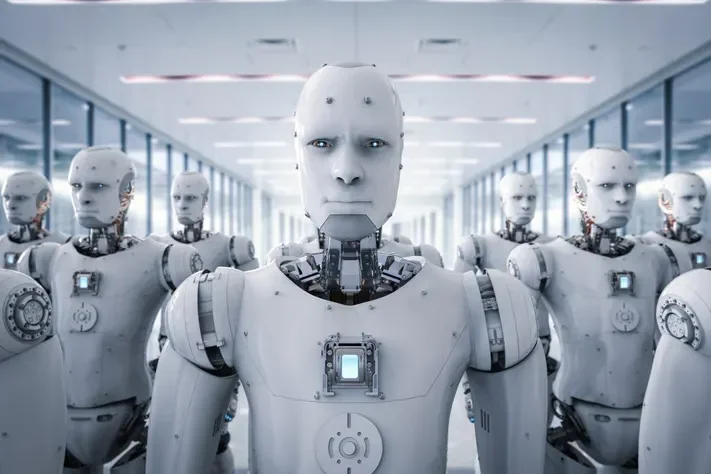
The Robot Revolution Is Here
Unlocking Abundance Through Humanoid Automation and AI
Humanoid robots stand poised to transform global economies by slashing labor costs and enabling unprecedented productivity, but the path forward demands careful navigation of job disruptions and societal shifts. This edition dives into how these machines could foster sustainable abundance on Earth while paving the way for interplanetary expansion.
Key Takeaways
Humanoid robots could triple the US workforce equivalent, allowing production of goods at scales 350 times current levels, with costs dropping to around $3 per hour for physical labor.
Transition periods may disrupt 40-50 million manual jobs in the US alone, requiring strategies like universal basic services to mitigate unrest and support retraining.
Robots excel at dangerous, repetitive tasks, from mining rare earths in extreme conditions to disaster cleanup, potentially reversing globalization by enabling localized production.
AI integration in vehicles and robots enables telepathic-like coordination among fleets, boosting efficiency in teams of machines or mixed human-robot groups.
Long-term visions include revitalizing degraded lands and communities through robot-led projects, reducing transportation friction, and achieving universal high income via abundant resources.

Tesla's AI Revolution: From Wheels to Humanoids
Redefining Mobility, Labor, and the Global Economy
Tesla's push into embodied AI isn't just incremental innovation—it's the catalyst for entirely new markets worth trillions, from autonomous fleets to robots handling everyday tasks. Dive into how this technology could generate unprecedented wealth while reshaping society, and why owning a piece of it might be the smartest move for the coming decade.
Key Takeaways
Tesla's vehicles serve as the entry point for widespread AI adoption, evolving from simple cars to intelligent systems capable of full autonomy.
Robotaxis are poised for rapid scaling, potentially undercutting traditional ride-sharing with costs below $1 per mile and immediate profitability.
Humanoid robots like Optimus could handle 50-80% of physical labor by 2030, creating a $40 trillion market and enabling new applications from factories to Mars exploration.
Wall Street is beginning to recognize Tesla's AI potential, with valuations reflecting future robotaxi and robotics revenues rather than current auto sales.
Societal shifts may require universal basic income to address job displacement, ensuring broader access to AI benefits and mitigating inequality.
Investing in Tesla stock offers a straightforward path to participate in AI-driven wealth creation, despite short-term volatility and high valuations.