

The AI War Is Over: Only Two Factions Will Dominate by 2030
Compute compounds like nothing in history—turning a handful of leaders into an unassailable advantage while the rest get acquired, commoditized, or left behind.
In the age of AI, the most valuable resource isn’t land, oil, or even raw processing power. It’s the self-reinforcing cycle where superior models draw more users, those users generate higher-quality data, and that data trains even stronger models. This flywheel accelerates with every iteration, widening the gap between frontrunners and everyone else. Eight major factions are battling for control of this cycle. Most coverage calls it competition. The math reveals something far more decisive: by 2030, only two will hold the keys to the intelligence layer that underpins the global economy.
Key Takeaways
AI’s compounding loop—models, users, data, and compute feeding each other—creates exponential separation that no physical resource war has ever matched.
Training costs have already jumped roughly tenfold in three years and could exceed a billion dollars per frontier model by 2027, pricing out all but the deepest-pocketed players.
The real bottleneck isn’t just GPU counts; high-bandwidth memory (HBM) determines how effectively massive clusters work together.
Labs now train on 100 times more data than classic scaling laws recommend, shifting the goal from efficiency to massive user retention and cheap inference at scale.
OpenAI leads in users but bleeds cash on inference and talent; Microsoft locks in enterprises; Meta uses open-source to neutralize monopoly pricing; China pursues cheap, efficient models despite chip limits; Google owns unmatched data, custom chips, and infrastructure; Anthropic bets on safety for enterprise and government; the Musk stack integrates compute, real-world data, and connectivity under one roof; regulators slow Western progress while China accelerates.
Google wins through substrate dominance—proprietary data, power-efficient TPUs, and quiet efficiency gains. The Musk integrated stack wins through vertical control of compute scale, fleet data, and end-to-end ownership.
The other six will likely be absorbed, reduced to distribution layers, or confined to regional/price-sensitive markets.
For individuals: focus on skills AI cannot synthesize on demand; invest in the infrastructure winners; prepare children for an economy where intelligence is abundant and cheap.
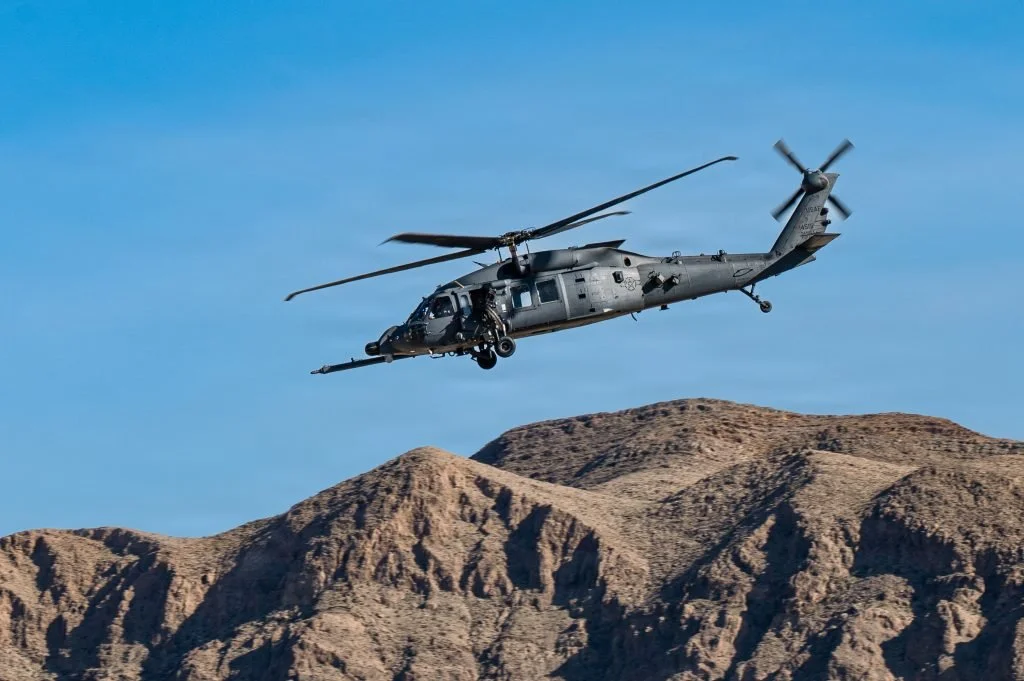
The $600 Million Rescue: One Colonel Hidden in a Mountain Crevice
How US forces ran seven simultaneous deception operations, deployed 155 aircraft, and extracted a single airman from deep inside Iran using every tool from quantum sensor claims to low-level helicopter insertions under a near-full moon.
In early April 2026, during the ongoing air campaign against Iran, an F-15E Strike Eagle was hit by a long-range surface-to-air missile over the Zagros Mountains. The two crew members ejected but landed miles apart. One pilot, seriously wounded, was pulled out in a daylight helicopter operation under small-arms fire. The second man, a colonel in the back seat with only a sprained ankle, climbed higher into the range, wedged himself into a narrow limestone crack at 7,000 feet, and stayed hidden for more than 36 hours while thousands of Iranian searchers and a state-backed bounty hunted him. The recovery that followed became the largest and most elaborate combat search-and-rescue effort the United States has mounted in decades.
Key Takeaways
A single F-15E loss on April 3 triggered two distinct recovery missions: one rushed daylight extraction for the wounded pilot and one meticulously planned nighttime operation 36 hours later for the colonel still hidden in the mountains.
The colonel followed core SERE principles by moving uphill, concealing himself in a tight crevice, and limiting radio transmissions to seconds-long bursts to defeat Iranian direction-finding and thermal assets.
Iranian forces mobilized IRGC units and local Bakhtiari tribesmen, using state media to broadcast a substantial bounty and turn civilians into active searchers across terrain they knew intimately.
US and Israeli intelligence ran a parallel deception campaign that established seven separate fake rescue sites and fed false narratives of a maritime extraction, successfully diverting Iranian attention and resources toward the coast.
The final extraction involved roughly 200 special operators from DEVGRU and supporting units, flown by 160th Special Operations Aviation Regiment crews, with an air support package of 155 aircraft that included B-1 bombers creating isolation zones and MQ-9 Reapers providing close overwatch.
Seven US aircraft were ultimately lost across the broader sequence of events, several deliberately destroyed on the ground to prevent capture, yet both airmen returned alive with zero American fatalities.
Claims of a classified quantum sensor capable of detecting a heartbeat through rock at long range were quickly challenged by physicists on basic signal-propagation grounds, suggesting the publicized technology story may have protected more conventional intelligence sources.
Elon Musk Just Made the Bet of the Century on Chips
Securing the entire AI supply chain with triple redundancy as Taiwan tensions escalate
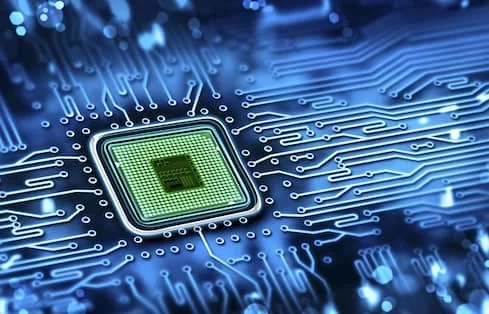
The global chip industry faces its most precarious moment in decades. Advanced semiconductor manufacturing is concentrated in the hands of just three companies, one of which sits on an island 100 miles from mainland China. At the same time, demand for AI accelerators, robot brains, autonomous vehicle processors, and space-based compute is exploding faster than factories can keep up. Against this backdrop, Tesla, SpaceX, and xAI have executed an unprecedented series of moves that lock in capacity across every major foundry while building a fully vertical, US-based mega-factory capable of producing everything from raw silicon to finished AI chips under one roof.
Key Takeaways
Only three companies on Earth can manufacture the most advanced semiconductor chips below seven nanometers: TSMC in Taiwan (roughly 90% of global leading-edge output), Samsung in South Korea, and Intel in the United States.
Tesla, SpaceX, and xAI have secured dedicated production lines with all three foundries, creating triple redundancy for AI chips powering Full Self-Driving, Optimus robots, Grok training, and next-generation satellite constellations.
Terra Fab, a $25 billion vertically integrated facility on Tesla’s Austin campus, will handle the entire chip-making process—design, logic fabrication, high-bandwidth memory, advanced packaging, and testing—at massive scale, targeting 100,000 wafer starts per month initially and eventually scaling to one million.
An eight-year, $16 billion agreement with Samsung guarantees long-term capacity for the next-generation AI6 chip on the bleeding-edge two-nanometer process at Samsung’s new Taylor, Texas fab, just miles from Tesla’s Gigafactory.
US government backing through the CHIPS Act gives Intel roughly 10% public ownership, aligning national security interests with the success of the domestic foundry now partnering on Terra Fab.
AI chip demand currently runs three times higher than available supply, while high-bandwidth memory prices are projected to surge 130% through 2027, making secured capacity a decisive competitive edge.
This strategy delivers strategic insurance against potential disruption of Taiwan’s chip output, which military analysts project could trigger a $10 trillion global economic hit—worse than the 2008 financial crisis and COVID-19 combined.
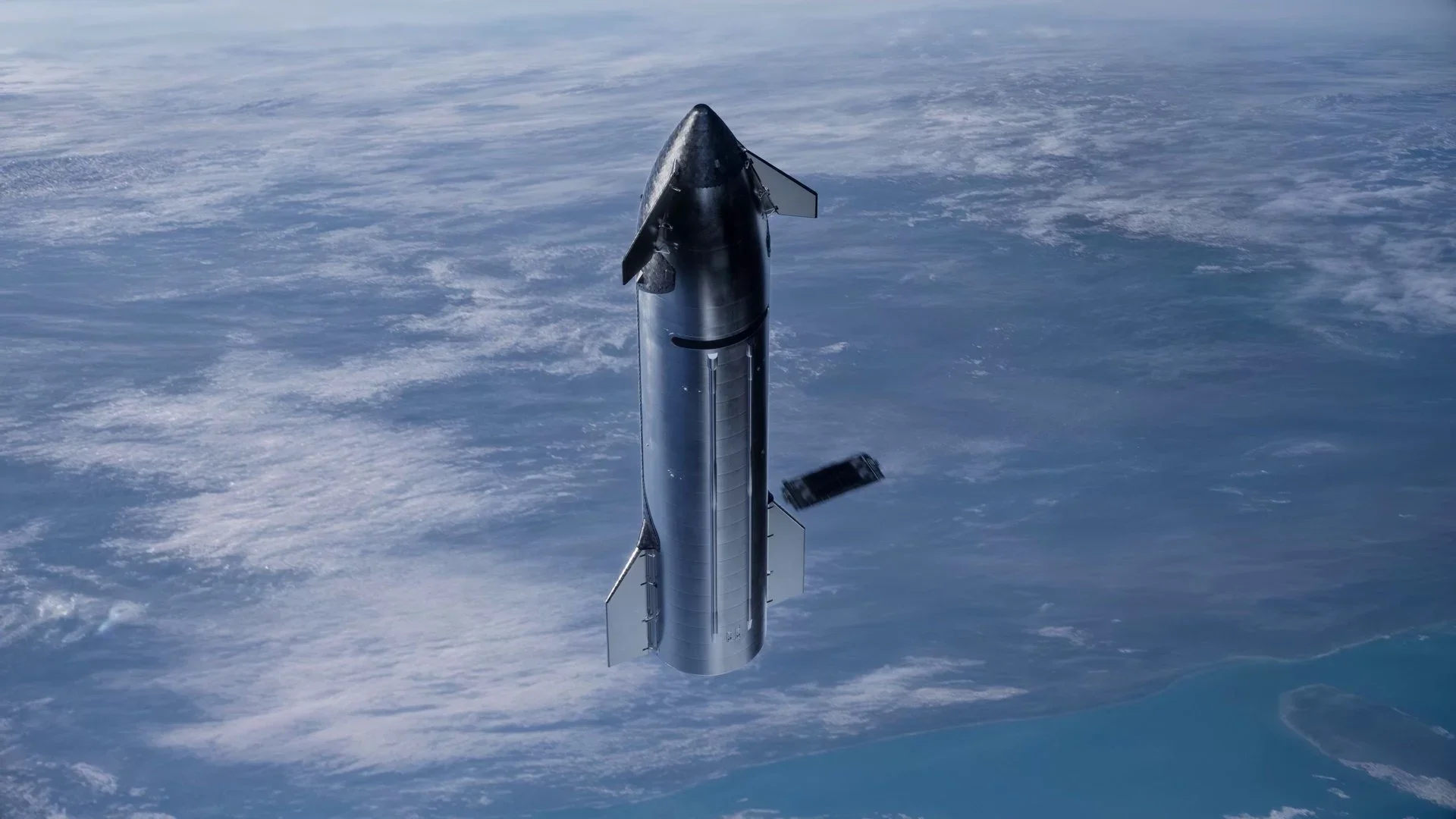
Unlocking the Stars: Starship, Orbital AI, and the Human Purpose Puzzle
Reusable rockets are set to slash space costs by orders of magnitude, opening orbital factories and AI compute clusters while automation quietly rewires human skills and identity—yet geopolitics in the Middle East and Eastern Europe supplies the friction that could accelerate it all.
SpaceX’s push toward full Starship reusability stands to repeat the shipping container breakthrough that cut ocean freight costs by 95 percent and turned global trade into an everyday reality. That single innovation let manufacturing shift to low-cost regions and built the modern supply chains powering everything from consumer electronics to pharmaceuticals. The same dynamic is now poised for orbit: cheap, frequent launches make zero-gravity factories practical for products ruined by Earth’s atmosphere or gravity, while solar-powered data centers in space could host the next leap in AI inference without terrestrial power or cooling limits.
Key Takeaways
Starship reusability could deliver a 100x to 1,000x jump in payload-to-orbit capacity, mirroring how standardized containers enabled globalization and China’s manufacturing dominance.
Orbital manufacturing becomes viable for gravity-sensitive processes such as advanced pharmaceuticals, while space-based AI inference clusters bypass Earth’s energy and heat constraints.
A successful reusable fleet at scale supports multi-trillion-dollar valuations only if it pairs with rapid earnings growth from new markets like orbital compute and global launch services.
Tesla’s near-term profit ramp may outpace SpaceX post-IPO, making the latter a longer-horizon bet dependent on two breakthroughs: full reusability and orbital AI revenue.
AI cognitive offloading already erodes routine skills—phone numbers, map reading, household chores, driving—freeing mental bandwidth for higher-order thinking but raising questions about identity and purpose.
Humans naturally invent new forms of friction through hobbies, creative arts, athletics, and philosophical structures to preserve meaning even in an age of abundance.
Geopolitical tensions, from record Russian casualties in Ukraine to Iran’s internal regime pressures, create short-term chaos that could reshape energy markets and tech supply chains while spurring innovation.
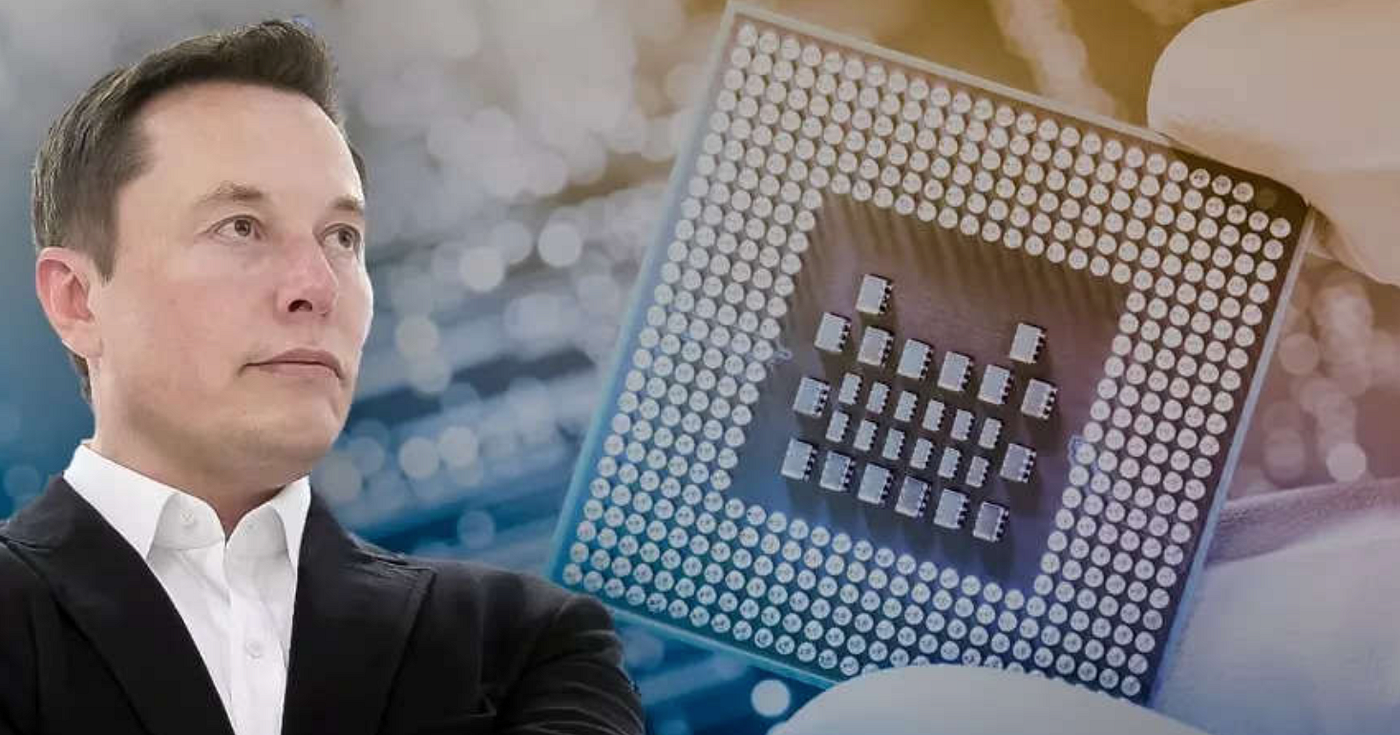
Taiwan's $10 Trillion Chip Crisis: Why Elon Musk Is Racing to Build His Own Semiconductor Empire
Global AI depends on one vulnerable island. Musk's Terra Fab could be the ultimate hedge—and a game-changer for Tesla and beyond.
The world's most advanced chips all come from one place: Taiwan. With China positioning forces for a potential takeover by 2027, the global economy faces a catastrophic risk estimated at $10 trillion in GDP losses in the first year alone. Yet amid this fragility, one leader is taking decisive action by investing tens of billions into domestic chip manufacturing independence. This move isn't just about one company—it's a signal of how tech giants are rethinking supply chains in an era of rising geopolitical tensions.
Key Takeaways
TSMC in Taiwan produces around 90% of the world's most advanced sub-7 nanometer chips, powering everything from AI systems to smartphones and defense tech.
China has directed its military to prepare for an invasion or blockade of Taiwan by 2027, with ongoing drills, incursions, and naval expansions increasing the pressure.
A disruption could wipe out $10 trillion from global GDP in year one—far exceeding the combined impacts of COVID-19 and the 2008 financial crisis—due to chip shortages crippling industries worldwide.
Tesla's new Terra Fab project aims for 2-nanometer process technology at massive scale, targeting production of hundreds of billions of custom AI and memory chips annually to support Tesla's autonomous vehicles, robots, and AI training.
This vertical integration strategy builds resilience against Taiwan risks while creating optimized, efficient silicon tailored to specific workloads in driving, robotics, and AI.
A broader "Sovereign AI" movement is underway, with countries and companies investing heavily in domestic chip and data center capacity to secure technological independence.
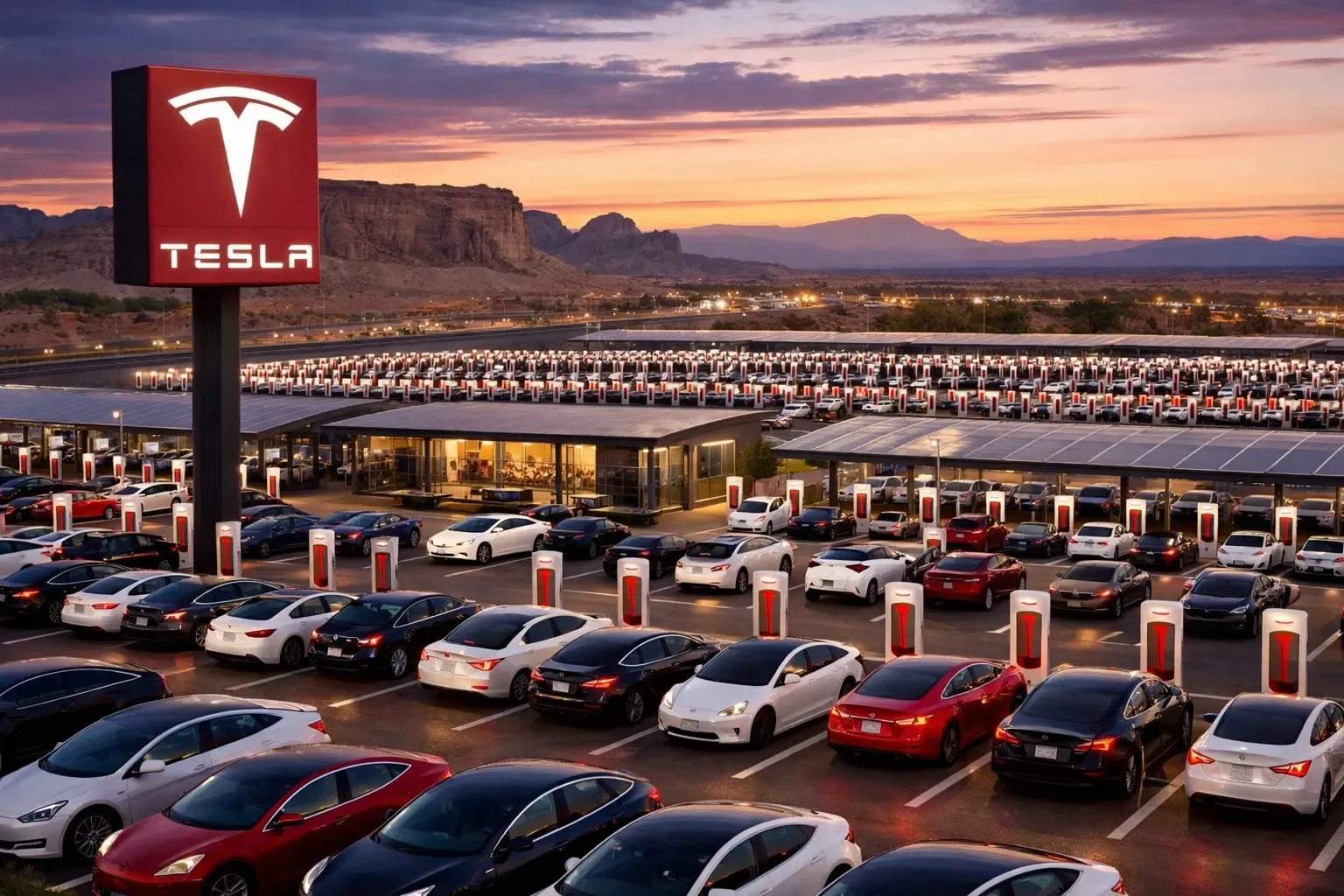
Tesla's Quiet Infrastructure Revolution: Off-Grid Chargers, Business Charging, and the AI Chip Moonshot
How Tesla is quietly building the backbone for massive energy + compute scale while the world debates geopolitics and AI backlash.
The most valuable signals right now aren't in the headlines. They're in the unglamorous but hyper-scalable infrastructure moves: massive off-grid Supercharger sites that double as potential compute nodes, a new program letting businesses host and price their own chargers, and the imminent kickoff of a gigantic in-house AI chip fabrication project. These pieces form the foundation for Tesla's energy storage dominance, fleet-wide inference, and independence from fragile global supply chains.
Key Takeaways
Tesla launched Supercharger for Business in mid-March 2026, allowing property owners to install and set pricing on Superchargers while Tesla handles hardware, software, maintenance, and network integration.
The massive Lost Hills "Project Oasis" station in California—164 stalls, 11 MW solar farm, 39 MWh battery storage—operates primarily off-grid and demonstrates a replicable model for high-utilization solar + battery sites that could host AI inference during low-EV demand periods.
Tesla's Terafab project launches March 21, 2026: a multi-billion-dollar effort to build a 2nm-class semiconductor fab targeting 100–200 billion custom AI chips annually for Dojo, vehicles, and distributed compute.
Geopolitical risks around Taiwan and advanced chip supply remain acute, but Tesla's vertical integration push reduces long-term exposure.
AI graphics breakthroughs like NVIDIA's DLSS 5 show photoreal neural rendering becoming mainstream, yet face cultural resistance that may be amplified by competing interests slowing U.S. AI progress.
Agentic AI tools (Claude Code, OpenRouter, local models) are already automating paperwork, development, and operations—shifting from scarcity to abundance mindsets in creative and professional fields.
AI: The New Nuclear Arms Race Redefining Global Power
Why the race for artificial superintelligence mirrors the atomic age—and what it means for the next century of dominance
The parallels between today's AI competition and the nuclear era of 1945 are striking and unavoidable. Just as the atomic bomb reshaped alliances, economies, and military strategies overnight, AI infrastructure is forcing nations to realign around control of compute, energy, data pathways, and deployable systems. The United States holds a commanding lead in frontier models and advanced semiconductors, but China advances rapidly in scaled deployment, energy buildout, and open-source disruption. Every tariff, reactor restart, satellite constellation, and robot factory forms part of a deliberate strategy to secure civilizational advantage.
Key Takeaways
The U.S. treats advanced AI chips as strategic weapons, imposing export controls and tariffs equivalent to munitions regulations to maintain its monopoly on the "uranium" of the AI age.
Global data center power demand surges toward levels rivaling entire nations' electricity use, pulling nuclear restarts, natural gas, and renewables into service—China deploys solar and small modular reactors at unmatched speed.
Orbital infrastructure emerges as a game-changer, with plans for massive solar-powered satellite networks to host AI compute beyond earthly grid constraints.
Humanoid robots and autonomous vehicles represent the "warheads"—physical AI embodiments poised to transform a $45+ trillion global labor and transportation market.
The U.S. benefits from uncapped private innovation and capital accumulation, while China's centralized system caps individual power but excels in coordinated infrastructure scaling.
Economic disruption hits hardest in the middle class unless offset by policies like universal basic income or widespread entrepreneurship; the top and bottom socioeconomic tiers stand to gain most from abundance.
The Robot Revolution: Reshaping Global Power Through AI and Space
Exploring how massive infrastructure builds, demographic crises, and robotic economies could redefine nations and unlock abundance.
The world stands at a pivotal moment where technology intersects with geopolitics in unprecedented ways. Rapid advancements in AI, robotics, and space infrastructure promise to upend traditional power structures, while countries grapple with internal challenges like economic instability and aging populations. This newsletter dives into these dynamics, revealing opportunities for tech-driven growth amid global uncertainties.
Key Takeaways
Economic pressures and youth demographics are fueling unrest in oppressive regimes, creating openings for pro-Western shifts that could weaken adversaries like Russia and China.
China's aggressive infrastructure investments in remote areas aim to secure unpopulated regions, but demographic collapse from past policies threatens long-term viability.
Surveillance-heavy governance stifles innovation and free speech, limiting a nation's potential compared to open systems that attract global talent.
Robotics will eliminate labor cost advantages for low-wage economies, positioning countries with strong AI ecosystems—like the US—for dominance.
Space-based AI and manufacturing could detach economies from Earth-bound constraints, making national borders less relevant as corporations lead exploration.
Allocating a portion of robot labor to public good—around 15%—could achieve sustainable abundance without relying on inefficient government taxation.

Tesla's Stealth Play: From Cybercab to Global AI Supremacy
Why the Future of Driving, Manufacturing, and Intelligence Hinges on Bold Bets and Brutal Realities
Tesla stands on the brink of transforming transportation with vehicles that could eliminate the need for human drivers entirely. Yet, hurdles like regulation and market demand might force adaptations, such as adding steering wheels to robotaxis. Meanwhile, AI's explosive growth promises superhuman capabilities in every field, but it also sparks geopolitical tensions and societal shifts that could redefine economies worldwide.
Key Takeaways
Tesla's Cybercab production line will likely produce vehicles with optional steering wheels and pedals to meet regulatory demands and boost output, potentially creating a sub-$30,000 autonomous car.
Manufacturing innovations like the unboxed process double efficiency, allowing Tesla to flood markets with low-cost vehicles while preparing for full robotaxi fleets.
Regulatory approval for unsupervised self-driving remains the biggest barrier, with initial Cybercab deployments limited to a few thousand units starting mid-2026.
AI advancements could enable superhuman performance in any domain by 2027, accelerating breakthroughs in medicine, manufacturing, and beyond.
Geopolitical risks, including tariffs on Chinese EVs and chip sales, point to a decoupled world where the U.S. relies on domestic players like Tesla to maintain tech leadership.
The path to singularity involves painful transitions, with job displacements offset by potential universal basic income and unprecedented productivity gains.