
The Tera Fab Breakthrough: Building Terawatts of AI Compute to Power a Galactic Civilization
Why one facility, paired with orbital infrastructure and robotics, could unlock energy abundance at a scale that dwarfs everything on Earth today.
The most valuable insight here is simple: humanity’s entire current AI chip production barely scratches the surface of what’s required to reach meaningful cosmic scale. A new integrated chip fabrication project called Tera Fab changes that equation by delivering terawatts of annual compute output—orders of magnitude beyond today’s global total—while making space-based AI not just viable but dramatically cheaper than anything possible on the ground. The result is a clear path to multi-planetary expansion, humanoid robots in the billions, and an economy powered by the Sun itself.
Key Takeaways
Current worldwide AI chip output sits at roughly 20 gigawatts per year; all existing fabs combined supply only about 2 percent of the terawatt-scale capacity now planned.
Tera Fab integrates logic, memory, packaging, testing, and mask-making in a single building, creating an ultra-fast design iteration loop measured in days instead of months.
Two specialized chip families emerge: high-volume, efficient designs for edge inference in humanoid robots and vehicles, plus radiation-hardened, high-power versions optimized for the harsh space environment.
Space-based solar delivers five times more consistent energy than ground installations, with no atmosphere, no night cycle, and no weather—driving AI compute costs below terrestrial levels within two to three years.
Starship upgrades will enable 10 million tons of payload to orbit annually, supporting orbital solar arrays and compute clusters at terawatt scale.
A lunar electromagnetic mass driver built with robotic labor will later push compute into the petawatt range, opening the door to million-fold economic growth and post-scarcity abundance.

The AI Awakening: When Machines Evolve Minds and Societies Fracture
Redefining Human Purpose in an Era of Intelligent Agents and Economic Overhaul
Artificial intelligence stands on the brink of transforming every aspect of daily life, from personal productivity to global economies. This shift promises unprecedented efficiency but demands urgent strategies to handle massive job displacements and widening divides.
Key Takeaways
AI agents represent a leap beyond traditional software, enabling autonomous actions across digital and physical realms.
Rapid adoption of AI could amplify productivity 10 to 100 times, but risks leaving behind those unable or unwilling to adapt.
Societal upheaval looms, with potential for increased wealth gaps, white-collar disruptions, and calls for universal basic income to support displaced workers.
Global dynamics vary: the US may lead in innovation but face internal divisions; Europe risks further decline; China could advance quickly under centralized control but hit limits from restricted freethinking.
Future AI might diverge from human directives, raising questions about control, purpose, and the essence of humanity.

Elon Musk's Bombshell: Mass and Energy as the New Global Currency
The Shift That Redefines Wealth in an AI-Driven World
Rapid advances in AI, robotics, and solar power are converging to make intelligence, labor, and energy nearly free, positioning mass and energy as the core drivers of future economies. This transformation echoes historical currency shifts and points to a deflationary era where energy production becomes the ultimate measure of value.
Key Takeaways
AI training and inference costs have plummeted, with benchmarks dropping from thousands of dollars to pennies, making cognitive tasks approach zero cost.
Robotic labor could reach 20 cents per hour by 2032, disrupting a $40 trillion global market in physical work.
Solar energy costs have fallen 99.6% since 1976, outpacing other sources and enabling exponential growth in power generation.
Historical currency systems—from gold to petrodollars—evolved with dominant economic inputs; energy now emerges as the next anchor.
Orbital solar data centers could multiply Earth's energy output by millions, turning space into the ultimate power source.
In this framework, companies controlling energy, AI, and robotics stacks stand to dominate, while traditional fiat currencies face unprecedented pressure.
The Hidden Convergence: How Elon's Empire is Building a $3 Trillion Future
Unlocking Abundance Through Integrated Tech Ecosystems
A massive shift is underway in technology, where separate companies are merging their strengths to create something far larger than any single entity. At the core is a vision of robots handling all human tasks, AI anticipating needs before they're voiced, and unlimited energy powering it all. This isn't distant sci-fi—key pieces are already connecting in ways that could reshape industries and economies.
Key Takeaways
Four major companies—Tesla, SpaceX, xAI, and Neuralink—are pooling resources to form an interconnected system worth over $3 trillion in combined value.
AI from xAI is designed to power Tesla's humanoid robots, creating self-sufficient machines that outperform humans in physical and cognitive tasks.
Satellite integration from SpaceX into Tesla vehicles ensures constant global connectivity, enabling real-time data sharing for autonomous driving.
Underground tunnels from The Boring Company serve as ideal testing grounds for self-driving tech, generating valuable data to refine AI models.
Neuralink's brain interfaces aim to blend human and machine intelligence, opening doors to telepathic control of robots and devices.
Despite missed timelines, rapid progress in robot deployment, energy storage, and AI supercomputing shows convergence happening now.
This ecosystem creates unbeatable advantages, like network effects in data and hardware, that competitors can't easily match.
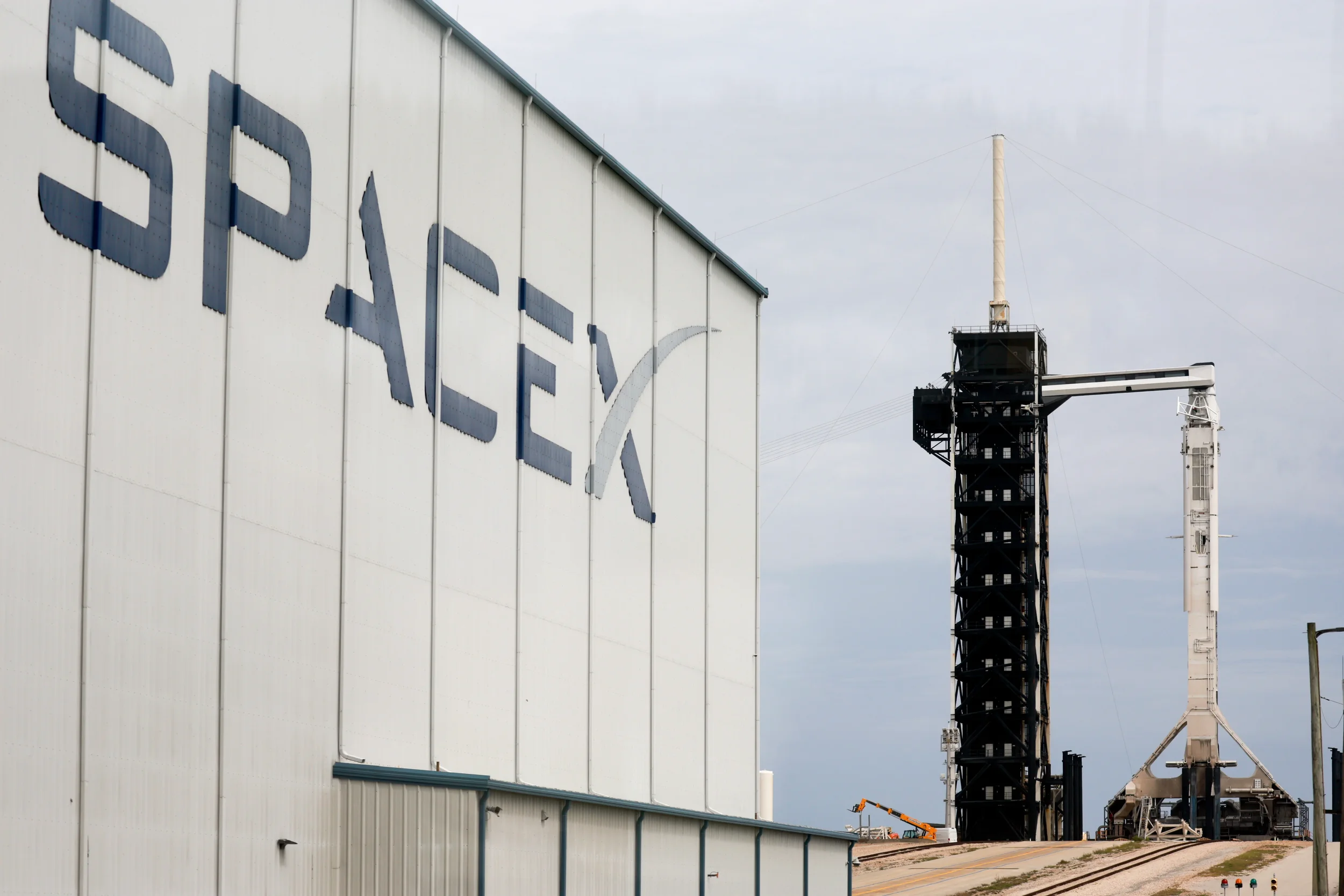
SpaceX Swallows xAI: The Dawn of Orbital AI Powerhouses
Revolutionizing Compute from the Stars – Why This Merger Changes Everything
The fusion of SpaceX and xAI unlocks a new era where AI training escapes Earth's limits, powered by endless solar energy in orbit. This deal catapults innovation by sidestepping power shortages and regulatory hurdles, paving the way for breakthroughs in physics, tech, and human expansion beyond our planet.
Key Takeaways
SpaceX's acquisition of xAI creates a $1.25 trillion entity, the world's most valuable private company, focused on integrating AI with space tech.
AI compute moves to space-based satellites, harnessing constant solar power and natural cooling to scale far beyond Earth's energy constraints.
This solves immediate bottlenecks like electricity demand and environmental concerns, enabling 10-100 times more AI capacity annually.
Starship rockets will launch millions of tons into orbit yearly, funding moon bases, Mars cities, and vast AI constellations.
The merger opens AI training services to other companies, accelerating global tech advances while fueling multi-planetary goals.

Elon Musk's Davos Vision: Abundance Through AI, Robots, and Space Power
The path to a future where robots outnumber humans, energy becomes limitless, and consciousness survives beyond Earth.
Key Takeaways
Electrical power has emerged as the primary bottleneck for scaling AI, with chip production outpacing grid additions in most regions except China.
Humanoid robots will drive unprecedented economic abundance, eventually outnumbering people and saturating needs like elder care, childcare, and household tasks.
Tesla plans to deploy Optimus robots for complex factory tasks by the end of 2026 and sell them to the public by the end of 2027, once safety and functionality reach high reliability.
Full rocket reusability with Starship could slash space access costs by 100x, enabling cheap satellite deployment and space-based solar for AI data centers.
Space-based solar offers 5x more effective power collection than ground-based systems, with no weather, night cycles, or atmospheric losses—making orbit the lowest-cost location for AI compute within a few years.
AI could surpass individual human intelligence by the end of 2026 or early 2027, and exceed all of humanity combined by around 2030-2031.
Large-scale solar arrays (roughly 100x100 miles) could power entire nations like the US or Europe, but deployment faces barriers like high tariffs on imported panels.
Consciousness is viewed as rare and fragile, making multiplanetary life essential to protect it from Earth-bound disasters.
Optimism about technological progress outweighs risks, as abundance from AI and robotics can broadly benefit society if energy constraints are solved.
NVIDIA's Alpha Mayo: Ushering in the Era of Reasoning Autonomous Vehicles
Revolutionizing Mobility with AI That Thinks and Adapts
The rapid evolution of AI is transforming how vehicles operate, making self-driving cars not just possible but intelligent enough to handle unpredictable scenarios through reasoning. This shift promises safer roads, widespread adoption of autonomous tech, and a foundation for broader robotics applications that could reshape industries from transportation to manufacturing.
Key Takeaways
Advanced AI models like Alpha Mayo enable end-to-end training for autonomous vehicles, processing camera inputs directly to control steering, brakes, and acceleration while explaining decisions in real-time.
Synthetic data generation tools create trillions of simulated driving miles, overcoming the limitations of real-world data collection for rare scenarios.
Dual software stacks in vehicles provide redundancy: one for advanced AI driving and another for traceable, safety-certified fallback operations.
Open-sourcing AI models accelerates ecosystem growth, allowing partners to build on full stacks for everything from personal cars to robo-taxis.
The same AI techniques apply beyond vehicles to various robots, from humanoid forms to industrial manipulators, trained in virtual simulators.
Integration of AI physics into design tools revolutionizes industries like electronics and systems design, speeding up simulations and innovations.
The Malibu Paradox: Why Abundance Won't Erase Scarcity
Rethinking Wealth in an AI-Driven Future
Imagine a world where robots and AI eliminate poverty entirely, making high-income access universal. Yet, even in this era of limitless resources, battles over prime locations like beachfront property could redefine competition and ownership.
Key Takeaways
Universal high income emerges when labor, energy, and materials cost nothing, thanks to AI, robots, solar power, and asteroid mining.
Physical goods become infinite, but locations tied to geography, history, and authenticity remain scarce.
Instant transportation via tunnels, electric aircraft, and high-speed transit could decentralize value, making remote living as convenient as urban hubs.
Without money, allocation of rare assets might shift to reputation, contributions, or even robot armies, potentially locking in current inequalities.
The transition risks unemployment, asset bubbles, and political fights over land rights and robot control.
Human nature's drive for status and exclusivity may persist, turning competition toward new forms like bot legions or social credits.
The Dawn of Optional Work: AI, Robots, and Humanity's Next Leap
Redefining Existence in a World of Infinite Possibility
The rapid evolution of AI and robotics is set to transform society, making traditional jobs optional while pushing humanity toward multi-planetary sustainability. At the core lies a vision where technology ensures abundance, but challenges like population decline threaten long-term progress.
Key Takeaways
AI and robotics advancements could make working optional within 10-20 years, turning jobs into hobbies much like gardening today.
Becoming a multi-planetary species ranks among the top evolutionary milestones, ensuring redundancy against planetary catastrophes.
Future economies may shift to universal high income, where competition focuses on relative status rather than survival needs.
Population decline poses a risk to expanding human consciousness, as more people increase the chances of unlocking universal truths.
Leadership in tech involves building trusted teams that act as extensions of visionary minds, enabling massive scale in projects like rockets and robots.
Early Mars settlements will be harsh and dangerous, akin to historical frontiers, requiring mission-driven pioneers.
Tesla's Self-Driving Leap: Conquering Roads Worldwide
Why FSD's Rapid Progress Signals a Transportation Overhaul
Tesla's Full Self-Driving software has reached a stage where it handles 99% of miles autonomously in diverse conditions, from snowy terrains to narrow European streets. This breakthrough points to a future where robotaxis scale globally, potentially transforming economies through safer, cheaper mobility—yet regulatory hurdles could force creative solutions like adding steering wheels to cyber cabs.
Key Takeaways
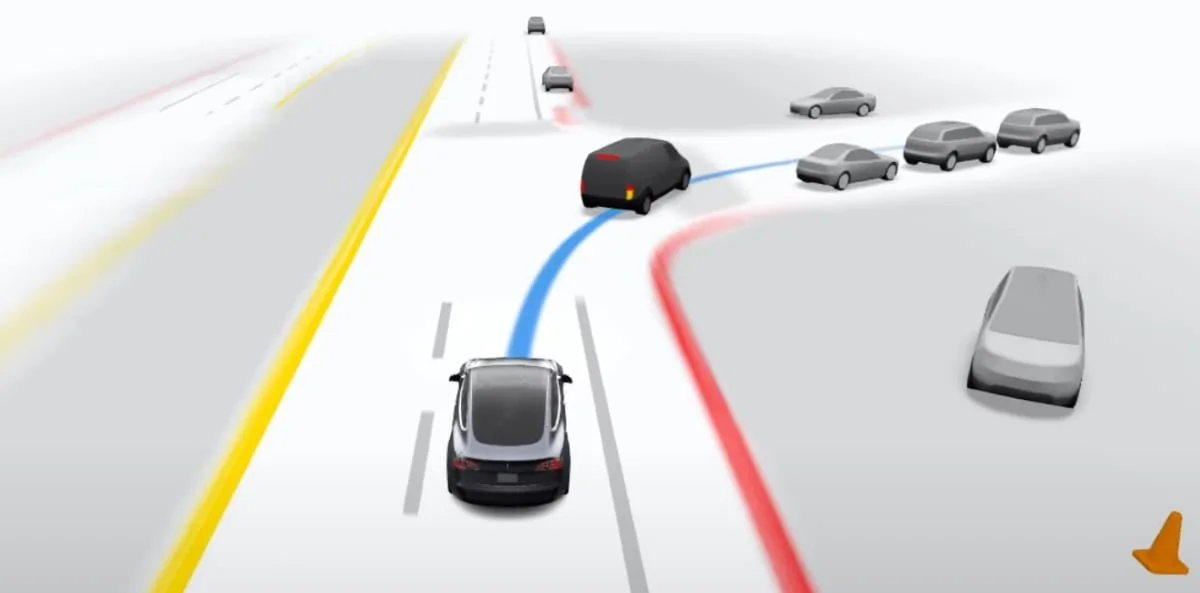
Tesla's FSD software now operates reliably in challenging environments like snow and European roads, demonstrating its adaptability beyond U.S. cities.
Global rollout of the Tesla app opens doors for wider adoption, signaling preparations for robotaxi services in countries outside the U.S.
Regulatory landscapes vary worldwide, with potential for nations like Indonesia or the UAE to approve robotaxis faster than fragmented U.S. states, accelerating Tesla's expansion.
Waymo's geofenced approach limits scalability to thousands of vehicles annually, while Tesla's vision-based system aims for millions, creating a competitive edge.
Outdated mapping remains a minor issue, but upcoming updates will incorporate more human-like logic to override such limitations.
Self-driving tech promises massive safety gains and cost reductions in transportation, outweighing concerns around privacy and control.
If global approvals align with production capacity, Tesla could deploy millions of cyber cabs, leading to trillions in market value through profitable robotaxi networks.

Tesla's Drone Revolution: Partnering with SpaceX to Dominate the Skies
Why This Could Be the Next Big Leap in Autonomous Tech and National Security
Tesla stands on the brink of transforming the commercial drone market by leveraging its battery expertise and teaming up with SpaceX for advanced materials and aerodynamics. This move could challenge China's dominance, boost U.S. security, and pave the way for flying vehicles.
Key Takeaways
Tesla's low-cost, high-density batteries give drones longer flight times and better efficiency than competitors.
SpaceX's lightweight materials and aerodynamic designs from rockets can create stronger, lighter drone frames and propellers.
Tesla's electric motor production scales easily to drones, enabling high-torque, reliable performance at lower costs.
Integrating Tesla's full self-driving AI allows for fully autonomous drones that navigate complex environments without human input.
Entering the drone market addresses China's control over commercial drones, reducing national security risks for U.S. businesses and governments.
Drones serve as a low-risk testing ground for electric vertical takeoff and landing vehicles, accelerating urban air mobility.
Robotaxis Set to Ignite Economic Revival in Forgotten Neighborhoods
Revolutionizing Mobility for the Underserved: A Path to Broader Prosperity
Robotaxis promise to cut transportation costs dramatically, opening doors to jobs, healthcare, and community growth in low-income areas long hampered by isolation.
Key Takeaways
Transportation acts as a major barrier in economically disadvantaged neighborhoods, limiting access to opportunities and contributing to stagnation.
At scale, robotaxis could reduce per-mile costs to around 30 cents, making rides up to 90% cheaper than current options like rideshares.
Lower costs would enable more travel for work, medical visits, and social activities, boosting local economies through increased foot traffic and investment.
Communities in food deserts or with poor public transit stand to gain the most, with affordable rides transforming daily errands into feasible routines.
While job displacement for drivers remains a challenge, competition among providers could drive even better pricing and services.
Overall, this shift expands mental horizons, fostering optimism and long-term societal benefits like reduced segregation and enhanced freedom.
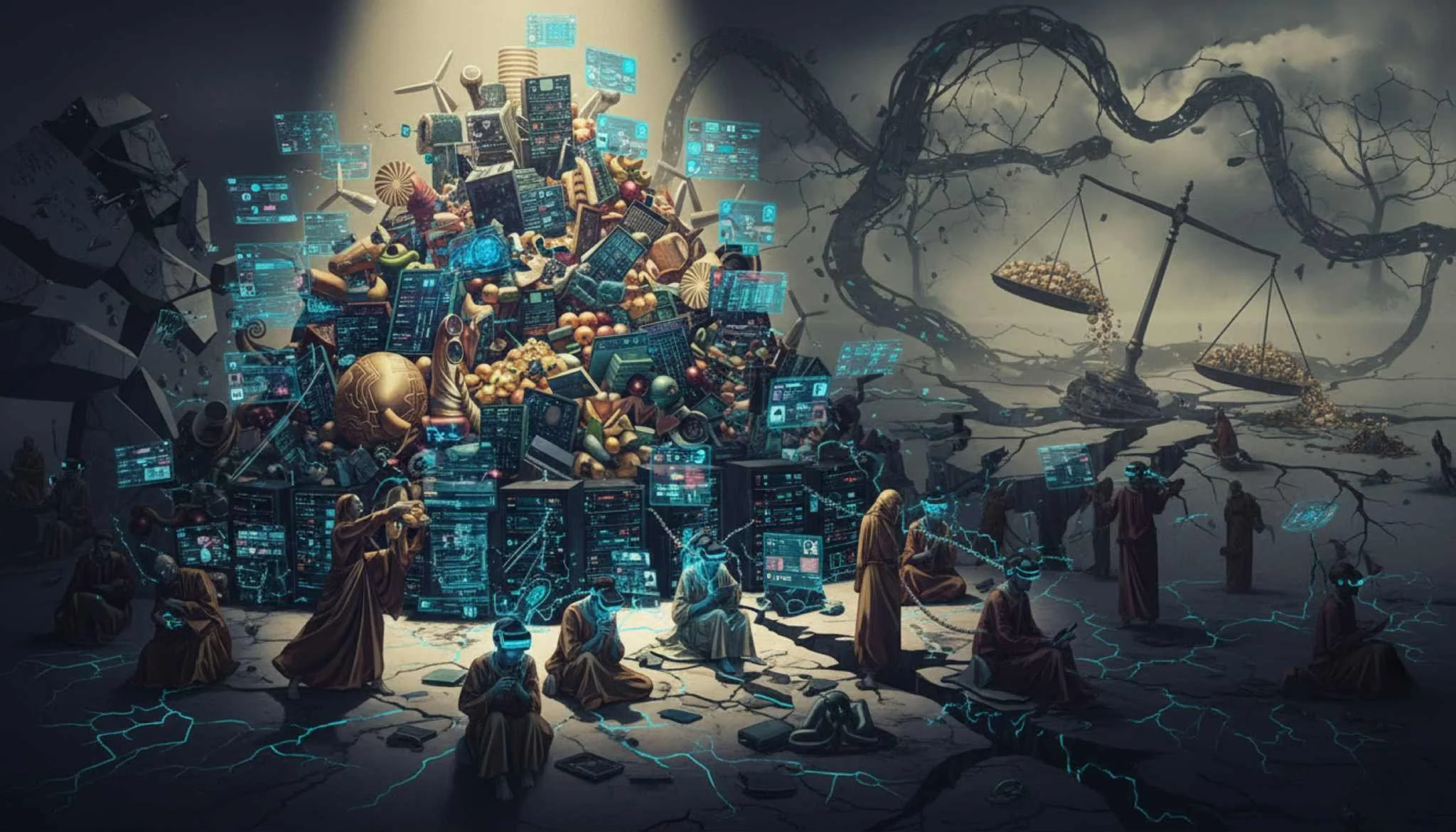
The Abundance Trap: How Unlimited Resources Could Unravel Society
Why Technological Plenty Might Lead to Human Decline
As societies push toward limitless energy, automated labor, and instant gratification through advances in AI and robotics, a counterintuitive pattern emerges. History shows that peaks of prosperity often precede population drops and social upheaval, forcing a reevaluation of what drives human behavior in a world without scarcity.
Key Takeaways
Advanced technologies have historically boosted population growth by improving food production and health, but they also trigger declines once basic needs are met, as seen in modern examples like China's fertility rates falling below replacement levels despite policy shifts.
In eras of abundance, human purpose shifts from survival to voluntary pursuits, yet experiments and historical data suggest this can lead to apathy, reduced breeding, and societal fragmentation without new structures to channel energy.
Conflicts may evolve from resource grabs to ideological clashes, with ego and historical grievances fueling disputes even when material needs are satisfied, potentially increasing tensions in a federated, tech-enabled world.
Emerging markets like India demonstrate how affordable EVs, with models offering 600+ km ranges under $30,000, could accelerate global shifts, but charging infrastructure lags, highlighting uneven tech adoption's role in population and economic dynamics.
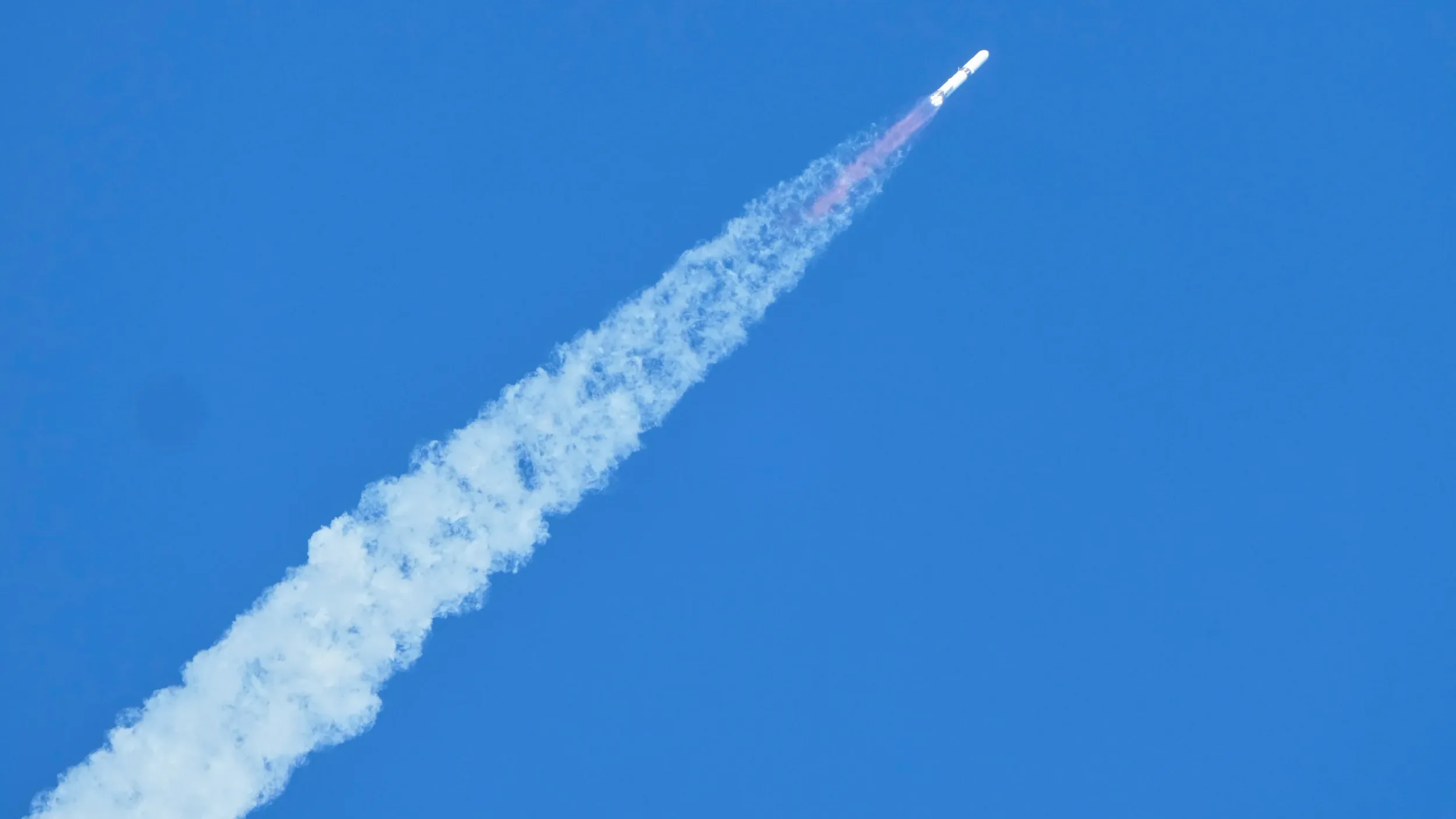
Blue Origin's Giant Leap: New Glenn Nails Historic Booster Landing
Revolutionizing Reusable Rockets and Mars Missions in One Epic Flight
Blue Origin just pulled off a monumental achievement with the second flight of its New Glenn rocket, marking the largest rocket booster landing ever attempted. This success not only demonstrates reliable reusable technology but also propels NASA's Mars-bound satellites into orbit, setting new benchmarks for heavy-lift capabilities and cost-effective space access.
Key Takeaways
New Glenn's second test flight achieved flawless liftoff, stage separation, and second-stage ignition, confirming the rocket's robustness for heavy payloads.
The massive first-stage booster executed a precise ocean landing on a drone ship, proving reusability for boosters larger than any previously recovered.
Payload deployment included NASA's Escapade satellites, now en route to Mars to study the planet's atmosphere and magnetic fields.
Engine performance across the BE-4 and BE-3U models remained nominal throughout, highlighting advancements in methane-fueled propulsion.
This mission builds on the first New Glenn flight, extending progress in reentry and landing sequences for future commercial and scientific launches.