

Unlocking the Stars: Starship, Orbital AI, and the Human Purpose Puzzle
Reusable rockets are set to slash space costs by orders of magnitude, opening orbital factories and AI compute clusters while automation quietly rewires human skills and identity—yet geopolitics in the Middle East and Eastern Europe supplies the friction that could accelerate it all.
SpaceX’s push toward full Starship reusability stands to repeat the shipping container breakthrough that cut ocean freight costs by 95 percent and turned global trade into an everyday reality. That single innovation let manufacturing shift to low-cost regions and built the modern supply chains powering everything from consumer electronics to pharmaceuticals. The same dynamic is now poised for orbit: cheap, frequent launches make zero-gravity factories practical for products ruined by Earth’s atmosphere or gravity, while solar-powered data centers in space could host the next leap in AI inference without terrestrial power or cooling limits.
Key Takeaways
Starship reusability could deliver a 100x to 1,000x jump in payload-to-orbit capacity, mirroring how standardized containers enabled globalization and China’s manufacturing dominance.
Orbital manufacturing becomes viable for gravity-sensitive processes such as advanced pharmaceuticals, while space-based AI inference clusters bypass Earth’s energy and heat constraints.
A successful reusable fleet at scale supports multi-trillion-dollar valuations only if it pairs with rapid earnings growth from new markets like orbital compute and global launch services.
Tesla’s near-term profit ramp may outpace SpaceX post-IPO, making the latter a longer-horizon bet dependent on two breakthroughs: full reusability and orbital AI revenue.
AI cognitive offloading already erodes routine skills—phone numbers, map reading, household chores, driving—freeing mental bandwidth for higher-order thinking but raising questions about identity and purpose.
Humans naturally invent new forms of friction through hobbies, creative arts, athletics, and philosophical structures to preserve meaning even in an age of abundance.
Geopolitical tensions, from record Russian casualties in Ukraine to Iran’s internal regime pressures, create short-term chaos that could reshape energy markets and tech supply chains while spurring innovation.
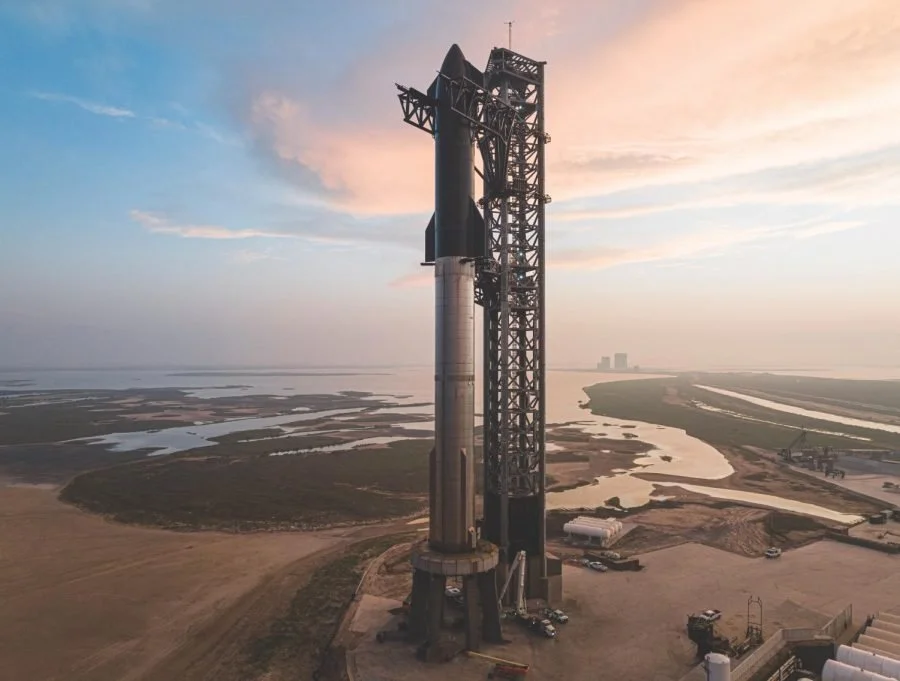
Starship's Rocket Catch Just Unlocked the Most Important Product in Human History
A 5,000x drop in launch costs is turning space into the next global economic engine—cheaper than air travel, with industries emerging that were impossible just a year ago.
The Starship booster catch marks more than an engineering milestone. It proves that access to orbit is about to become dramatically cheaper, unlocking an entirely new economy between Earth and Mars that will dwarf today's satellite sector. This shift will reshape energy, manufacturing, computing, and resource extraction on a scale last seen with container shipping or the internet. The numbers are staggering, and the early players are already raising hundreds of millions while hardware launches into orbit.
Key Takeaways
Launch costs to orbit have fallen from $54,000 per kilogram during the Space Shuttle era to a projected $10–20 per kilogram with Starship, a 5,000x reduction that makes space business models profitable instead of impossible.
Wright's Law is driving relentless cost declines: every doubling of production volume cuts prices by 15–25 percent, the same dynamic that turned solar from $76 per watt in 1977 to 20 cents today.
Orbital manufacturing in microgravity is producing pharmaceutical crystals and semiconductor materials that cannot be made on Earth due to gravity's interference, creating entirely new product categories.
Space-based solar mirrors and orbital AI data centers solve Earth's power, cooling, and land constraints, while robot labor at roughly $2 per hour handles construction and maintenance that humans could never scale.
The second- and third-order effects of this infrastructure will spawn trillion-dollar industries nobody has named yet, exactly as container shipping and cheap bandwidth created globalization and the digital economy.
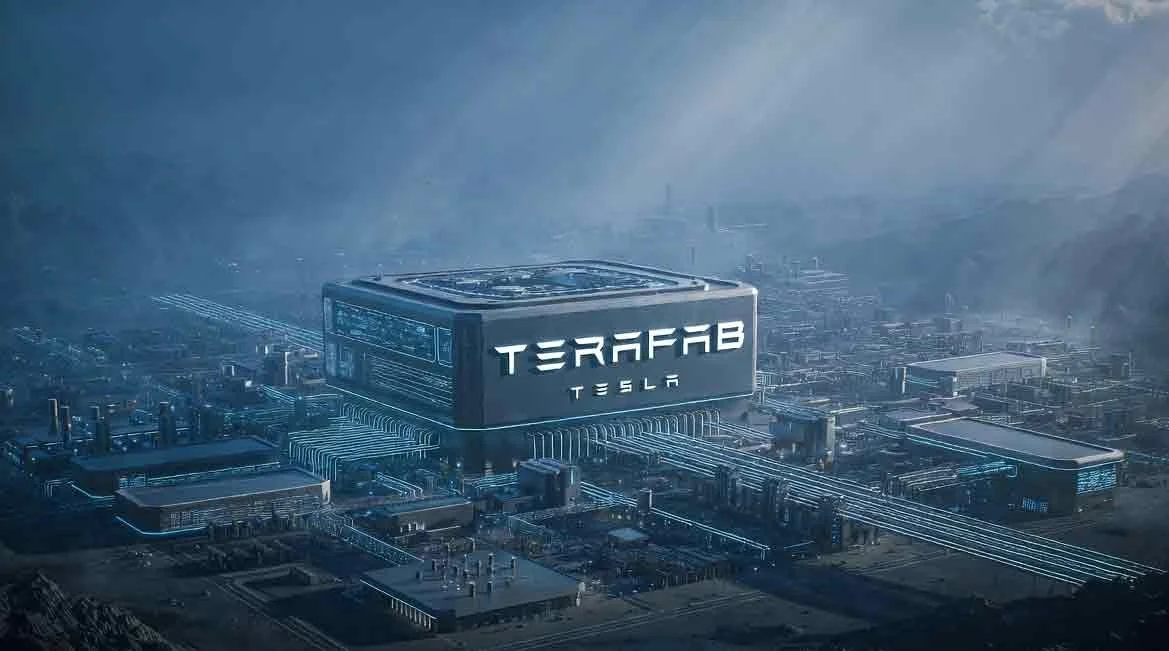
Elon Musk’s $25 Billion Chip Factory Is the Biggest Industrial Bet Ever Made
One Texas plant could crank out enough custom AI silicon to power a terawatt of compute—most of it headed to space—while rewriting the rules on design speed and efficiency.
A single factory under construction in Texas is preparing to manufacture custom AI chips at a scale that would consume more advanced semiconductor capacity than most nations currently possess. The project aims for 200 billion chips per year and one terawatt of annual compute power, with roughly 80 percent destined for orbital AI satellites launched by SpaceX. The real game-changer lies in how the factory compresses chip design cycles from months to weeks and uses advanced packaging techniques to stretch limited high-end lithography resources far beyond what traditional foundries achieve. This approach turns a seemingly impossible supply-chain bottleneck into a structural advantage for autonomous vehicles, humanoid robots, and space-based AI systems.
Key Takeaways
The factory starts at 100,000 wafer starts per month and scales to 1 million—roughly 70 percent of TSMC’s current worldwide output from all its plants combined.
Every two-nanometer chip relies on extreme ultraviolet lithography machines produced by a single company in a Dutch town of 45,000 people; global production sits at only 50 to 60 units per year, with every machine already spoken for years ahead.
In-house mask-making and rapid wafer runs shrink chip iteration cycles from three-to-four months down to one-to-two weeks, delivering five-to-ten times faster design progress than standard foundry loops.
Chiplet architecture limits expensive EUV usage to only the compute cores while sourcing memory and input/output dies on older, readily available nodes—boosting yields from 30-40 percent on monolithic dies to around 80 percent.
Custom inference silicon optimized specifically for Tesla workloads removes idle transistors, delivering major gains in power efficiency, latency, and cost—critical for extending robot runtime and lowering per-unit economics to $2 per hour of labor.
The strategy outsources heavy EUV volume work to existing foundries while owning the design-to-packaging loop, creating a compounding moat that widens each year as competitors remain locked into general-purpose chips.
Geopolitical risks around Taiwan and China’s slower EUV progress make localized, rapid-iteration capacity a strategic hedge for Western AI leadership.

Why Musk’s TeraFab Chip Factory Is Actually Insane
The lithography wall standing between today’s AI boom and tomorrow’s terawatt-scale future—and the clever paths that could smash through it.
Tesla’s TeraFab project isn’t just another factory announcement. It’s a direct assault on the single hardest problem in modern computing: turning raw silicon into the chips that will power millions of humanoid robots, autonomous vehicles, orbital AI constellations, and data-center-scale training clusters. The vision is breathtaking—terawatt-scale compute—but the physics and supply-chain math reveal why this might be the most ambitious manufacturing bet in tech history.
Key Takeaways
Cutting-edge EUV lithography machines are produced at a rate of only 50–60 per year worldwide, with plans to reach 100 by 2030—orders of magnitude short of what terawatt ambitions require.
Roughly 3.5 EUV machines are needed to sustain one gigawatt of advanced-chip output; scaling to terawatts implies a need for thousands of these machines cumulatively.
For inference-heavy workloads (robots, self-driving, satellites), mature 7 nm and larger DUV processes can be ramped far faster and with multiple suppliers, offering a practical near-term bridge.
Maskless alternatives such as multi-beam helium particle lithography promise finer features, dramatically faster design iteration, and long-term scalability beyond today’s photon-based limits.
Success hinges on a phased playbook: deep supplier partnerships for knowledge transfer, rapid internal R&D fabs, aggressive supply-chain acceleration, and AI-augmented engineering to compress decade-long timelines into years.

The End of Scarcity? How Radical Abundance Will Remake Cities, Purpose, and Civilization
From robo-taxis and walkable arcologies to lunar megaprojects and the human drive for status in a post-work world.
Automation and advanced robotics are steering us toward a future where material limits fade fast. Everyday movement, living spaces, and even our sense of purpose stand to change in profound ways. Cities could shrink their footprints around people instead of vehicles. New settlements will sprout in breathtaking locations once considered too remote. And in a world of plenty, the real test becomes inventing fresh reasons to strive, create, and connect.
Key Takeaways
Robo-taxis will free up vast urban real estate, creating networks of highly walkable zones packed with green walls, terraces, and integrated ecosystems rather than parking lots and roads.
Personal flight systems with bird-like energy density could eliminate the need for cars and roads altogether, turning journeys into direct, exhilarating point-to-point experiences.
Robotic construction and cheap desalination will unlock development of stunning new towns and cities on high-desert land, mountain foothills, or even ocean platforms—places chosen purely for beauty and livability.
Perfect abundance environments, like those studied in controlled animal populations, can lead to behavioral collapse and population decline, but humans counter this through endless creativity, relative status-seeking, and the constant invention of new social contracts and subcultures.
Lunar resources could fuel enormous off-world compute infrastructure, while early Mars missions may confirm microbial life is common across the solar system, strengthening ideas of panspermia.
Versatile humanoid robots and brain-computer interfaces will handle physical labor and deliver immersive new experiences—from instant skill acquisition to full-sensory simulations—while heightening global competition over autonomous systems and supply chains.

Tesla Just Built the Google of Atoms
The complete physical AI platform no competitor can replicate—and why it will define the next 20 years of technology
The physical world now has its dominant platform. One company has quietly assembled every critical layer—custom silicon, world-class AI models, battery chemistry, factories that scale like nothing else, vast real-estate holdings, and a global logistics network—and wired them together into a single, accelerating flywheel. The result is faster innovation, lower costs, and a data advantage that grows exponentially every day. This is not a car company with side projects. It is the infrastructure layer for the atom economy, and the implications stretch far beyond stock prices.
Key Takeaways
Tesla operates a full physical AI stack: computation, AI models, chemistry, manufacturing, land/real estate, and logistics—all internally controlled and mutually reinforcing.
Manufacturing functions as the CPU, real estate as storage, and logistics as the network in an atoms-based computer model that mirrors digital computing.
Billions of real-world driving miles feed a single neural architecture used for both autonomous vehicles and humanoid robots, creating a data flywheel no rival can match.
In-house battery chemistry, repurposed legacy factories, and continent-spanning energy assets deliver cost and infrastructure advantages that compound across every layer.
Vertical integration turns individual businesses into a cascading advantage: cheaper chips power better AI, better AI improves manufacturing, improved manufacturing lowers battery prices, and so on.
Single-layer competitors face structural economic disadvantages that widen over time, regardless of early leads in narrow domains.
Historical platform cycles suggest massive regulatory scrutiny is coming once dominance becomes obvious.

AI Designs Personalized mRNA Cancer Vaccine for Dying Dog – Tumors Shrink 50-75%
Global AI depends on one vulnerable island. Musk's Tera Fab could be the ultimate hedge—and a game-changer for Tesla and beyond.
A tech professional with no background in biology or medicine used readily available AI tools to design a tailored mRNA vaccine for his rescue dog’s aggressive mast cell cancer. After standard treatments offered only months to live, the dog’s tumors shrank dramatically and mobility returned. This case shows AI, cheap genomics, and mature mRNA platforms working together to put frontier-level personalized medicine within reach of motivated individuals.
Key Takeaways
A non-biologist sequenced his dog’s healthy and tumor DNA for about $3,000 AUD, then leveraged AI for literature navigation, mutation analysis, protein modeling, and full vaccine design.
Three complementary AI systems handled distinct tasks: research planning and initial blueprinting, 3D protein structure prediction, and final mRNA construct creation.
The dog received the vaccine in late 2025 with boosters into early 2026; tennis-ball-sized tumors reduced by half to three-quarters, and the dog went from barely moving to chasing rabbits.
The breakthrough combined AI capabilities with mRNA delivery technology refined during the COVID era and genomics costs that dropped from billions of dollars and years of work to laptop-level affordability.
Similar personalized mRNA vaccines are already in late-stage human trials for melanoma, pancreatic cancer, glioblastoma, and other hard-to-treat conditions, delivering measurable improvements in survival and recurrence risk.
Regulatory and ethics approvals took three months and a 100-page document—longer than the actual technical design—highlighting that bureaucracy, not technology, is now the main bottleneck.
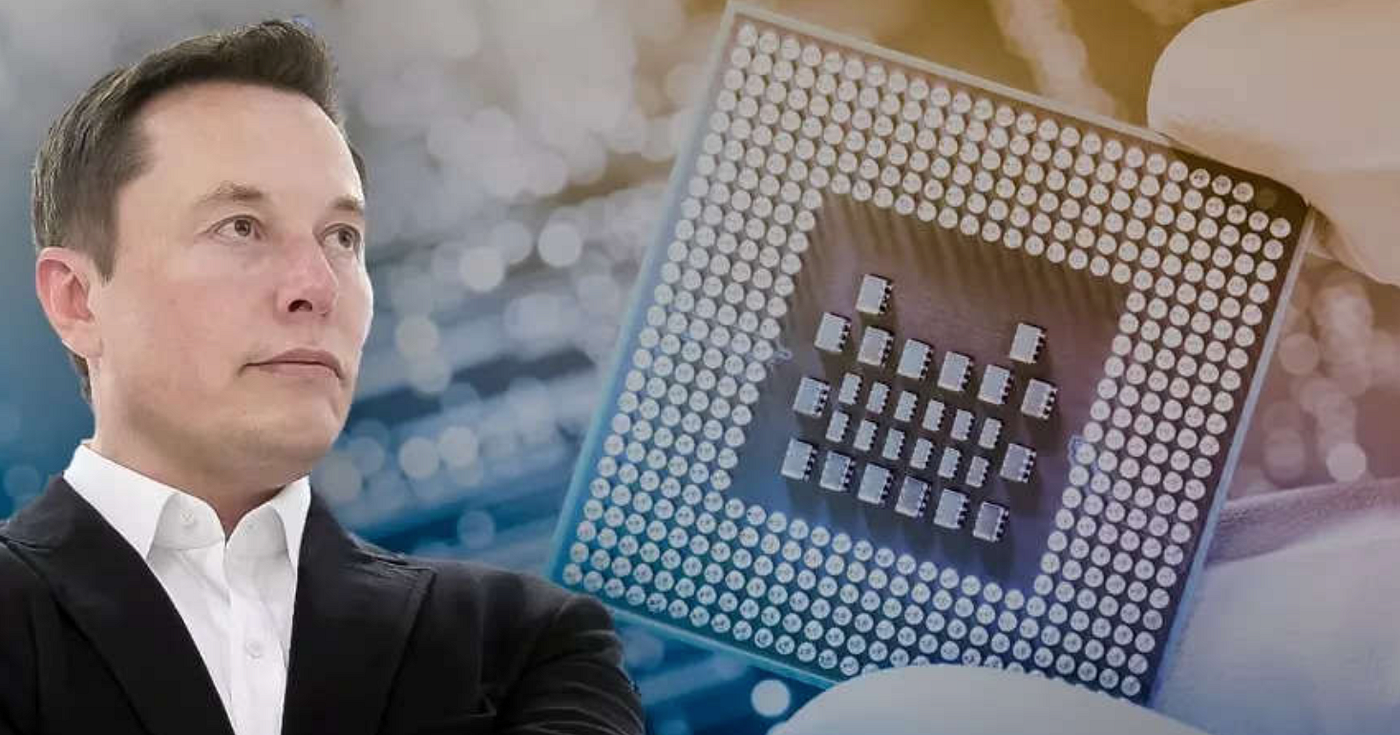
Taiwan's $10 Trillion Chip Crisis: Why Elon Musk Is Racing to Build His Own Semiconductor Empire
Global AI depends on one vulnerable island. Musk's Terra Fab could be the ultimate hedge—and a game-changer for Tesla and beyond.
The world's most advanced chips all come from one place: Taiwan. With China positioning forces for a potential takeover by 2027, the global economy faces a catastrophic risk estimated at $10 trillion in GDP losses in the first year alone. Yet amid this fragility, one leader is taking decisive action by investing tens of billions into domestic chip manufacturing independence. This move isn't just about one company—it's a signal of how tech giants are rethinking supply chains in an era of rising geopolitical tensions.
Key Takeaways
TSMC in Taiwan produces around 90% of the world's most advanced sub-7 nanometer chips, powering everything from AI systems to smartphones and defense tech.
China has directed its military to prepare for an invasion or blockade of Taiwan by 2027, with ongoing drills, incursions, and naval expansions increasing the pressure.
A disruption could wipe out $10 trillion from global GDP in year one—far exceeding the combined impacts of COVID-19 and the 2008 financial crisis—due to chip shortages crippling industries worldwide.
Tesla's new Terra Fab project aims for 2-nanometer process technology at massive scale, targeting production of hundreds of billions of custom AI and memory chips annually to support Tesla's autonomous vehicles, robots, and AI training.
This vertical integration strategy builds resilience against Taiwan risks while creating optimized, efficient silicon tailored to specific workloads in driving, robotics, and AI.
A broader "Sovereign AI" movement is underway, with countries and companies investing heavily in domestic chip and data center capacity to secure technological independence.

Mind-Powered Speech: How Brain Implants Are Restoring Voices Lost to ALS
A single neural device now decodes thoughts into fluent, personalized words—bypassing damaged nerves entirely and handing independence back to patients who once faced total silence.
Brain-computer interfaces have crossed a critical threshold. They now let people with advanced ALS generate clear speech simply by intending to talk, using a voice that sounds exactly like their own from before the disease took hold. The result is not just communication—it is restored identity, reduced exhaustion, and a direct bridge from brain to the world.
Key Takeaways
The implant records activity from thousands of individual neurons in the brain’s speech motor cortex at once, translating raw signals into synthesized words without any muscle movement.
Patients produce speech by silently mouthing or simply thinking the words, eliminating the fatigue and frustration that come with trying to force damaged vocal muscles.
Voices are rebuilt from pre-illness recordings, so loved ones hear the exact tone and personality they remember from years earlier.
Calibration happens quickly through guided sentence practice, with models improving from near-zero accuracy to fluent output in a single session.
Users gain immediate practical control—turning on lights, playing games, or holding extended conversations—while also contributing real-time data that accelerates future versions.
The entire experience is low-burden: same-day discharge after surgery, home charging, and an app that keeps everything intuitive.
The Operating System Behind World-Changing Innovation
How intensity, technical depth, and strategic boldness create results that redefine what's possible in tech and beyond.
The principles shaping one of tech’s most effective operators deliver a rare edge for any builder or entrepreneur aiming for outsized impact. They reveal how purpose, mindset, and execution combine to solve problems at planetary scale while building durable companies that last for decades.
Key Takeaways
A singular profile fuses extreme energy and discipline with unconventional technical genius and Napoleonic strategic vision with bias to action.
Purpose acts as the core engine, driving decisions that ignore short-term financial or reputational optimization in favor of meaningful missions.
Upbringing and biology create dual fuel: running toward ambitious goals while escaping personal demons of inadequacy.
Effective leadership holds impossibly high standards, convincing teams they can achieve what they initially deem unfeasible.
Hardware success requires full vertical integration, domestic manufacturing mastery, and direct customer relationships rather than outsourcing everything.
AI and robotics convergence with ambitious entrepreneurship accelerates deflation and abundance across energy, transport, food, and space.
Wealth accumulates as a natural outcome of scaling solutions to civilization-level problems.

The Chip Fab Bottleneck No One Wants to Talk About—And Why It’s Creating Huge Opportunities
From EUV lithography physics to memory demand explosions, here’s how hardware realities are shaping AI’s path to abundance—and where undervalued plays are hiding.
The semiconductor supply chain sits at the center of every major AI advance, yet it remains constrained by physics, specialized equipment, and concentrated suppliers. New fabs are being planned at massive scale, but progress hinges on extreme ultraviolet machines that only one company can build, vibration-proof foundations dozens of stories deep, and materials pushed to atomic limits. At the same time, AI models are growing denser in intelligence, personal fabrication tools are democratizing manufacturing, and markets continue to price “safe” assets at premiums while overlooking secular growth in memory and AI-native infrastructure. These dynamics point to a future where abundance feels closer than the headlines suggest, provided the bottlenecks are addressed.
Key Takeaways
Extreme ultraviolet lithography machines from a single European supplier control the production of chips below 7 nanometers, creating a hard limit on new fab capacity even as demand from AI training and inference surges.
Chip manufacturing demands near-perfect stillness, with foundations built 20 stories deep to cancel out micron-level earth vibrations—highlighting why scaling remains extraordinarily difficult.
Rising intelligence density in AI models means future systems could deliver major capability gains on older semiconductor nodes rather than always needing the latest process technology.
Memory suppliers are seeing explosive growth, with one major player recently posting roughly 40 percent earnings beats and nearly 190 percent year-over-year revenue increases, yet the market still treats the sector as cyclical.
Global wealth stands at approximately 471 trillion dollars; divided evenly, that equates to roughly 62,000 dollars per person, showing abundance already exists but is unevenly distributed.
Education systems built on a 19th-century factory model are mismatched for an AI world; shorter structured learning paired with hands-on experimentation and personalized paths is proving more effective.
Geopolitical patience around Taiwan suggests risks to the chip supply chain are real but may unfold gradually through soft-power channels rather than sudden conflict.

Elon Musk's New AI Agent Will Replace Entire Companies
Digital Optimist turns parked Teslas, robots, and Supercharger stations into a real-time digital workforce that runs on $650 chips and learns from everything at once.
A groundbreaking edge AI platform is taking shape that processes your computer screen locally, clicks buttons, fills forms, and navigates software in real time. It pairs this instant execution with high-level reasoning from the cloud only when needed, slashing costs to near zero beyond electricity while delivering speed and reliability that cloud-based agents cannot match. The same core intelligence powers self-driving cars, humanoid robots, and these digital workers, creating a single learning flywheel that improves every product simultaneously. At scale, this means fleets of agents could handle entire corporate operations using infrastructure already deployed worldwide.
Key Takeaways
A dual-brain system combines local real-time screen watching and action with cloud-based strategic reasoning for seamless autonomous workflows.
Primary processing runs on low-cost Tesla AI4 chips, delivering near-zero marginal cost per task and eliminating the latency and fees of cloud round-trips.
One foundational model adapts the same vision, spatial reasoning, and decision-making capabilities across vehicles, physical robots, and digital agents, with every task feeding back into shared improvement.
Distributed compute leverages parked cars with onboard batteries or wall power, 7 gigawatts available at Supercharger locations, and idle humanoid robots that switch between physical and digital duties.
Plans extend to solar-powered AI satellites in orbit using the identical chip family, providing free energy and vacuum cooling connected via Starlink.
Full vertical integration spans chip design, manufacturing in a planned Terra Fab, deployment in cars and robots, and space-based infrastructure for unmatched efficiency and scale.
The Tera Fab Breakthrough: Building Terawatts of AI Compute to Power a Galactic Civilization
Why one facility, paired with orbital infrastructure and robotics, could unlock energy abundance at a scale that dwarfs everything on Earth today.
The most valuable insight here is simple: humanity’s entire current AI chip production barely scratches the surface of what’s required to reach meaningful cosmic scale. A new integrated chip fabrication project called Tera Fab changes that equation by delivering terawatts of annual compute output—orders of magnitude beyond today’s global total—while making space-based AI not just viable but dramatically cheaper than anything possible on the ground. The result is a clear path to multi-planetary expansion, humanoid robots in the billions, and an economy powered by the Sun itself.
Key Takeaways
Current worldwide AI chip output sits at roughly 20 gigawatts per year; all existing fabs combined supply only about 2 percent of the terawatt-scale capacity now planned.
Tera Fab integrates logic, memory, packaging, testing, and mask-making in a single building, creating an ultra-fast design iteration loop measured in days instead of months.
Two specialized chip families emerge: high-volume, efficient designs for edge inference in humanoid robots and vehicles, plus radiation-hardened, high-power versions optimized for the harsh space environment.
Space-based solar delivers five times more consistent energy than ground installations, with no atmosphere, no night cycle, and no weather—driving AI compute costs below terrestrial levels within two to three years.
Starship upgrades will enable 10 million tons of payload to orbit annually, supporting orbital solar arrays and compute clusters at terawatt scale.
A lunar electromagnetic mass driver built with robotic labor will later push compute into the petawatt range, opening the door to million-fold economic growth and post-scarcity abundance.

Tesla's Quiet Infrastructure Revolution: Off-Grid Chargers, Business Charging, and the AI Chip Moonshot
How Tesla is quietly building the backbone for massive energy + compute scale while the world debates geopolitics and AI backlash.
The most valuable signals right now aren't in the headlines. They're in the unglamorous but hyper-scalable infrastructure moves: massive off-grid Supercharger sites that double as potential compute nodes, a new program letting businesses host and price their own chargers, and the imminent kickoff of a gigantic in-house AI chip fabrication project. These pieces form the foundation for Tesla's energy storage dominance, fleet-wide inference, and independence from fragile global supply chains.
Key Takeaways
Tesla launched Supercharger for Business in mid-March 2026, allowing property owners to install and set pricing on Superchargers while Tesla handles hardware, software, maintenance, and network integration.
The massive Lost Hills "Project Oasis" station in California—164 stalls, 11 MW solar farm, 39 MWh battery storage—operates primarily off-grid and demonstrates a replicable model for high-utilization solar + battery sites that could host AI inference during low-EV demand periods.
Tesla's Terafab project launches March 21, 2026: a multi-billion-dollar effort to build a 2nm-class semiconductor fab targeting 100–200 billion custom AI chips annually for Dojo, vehicles, and distributed compute.
Geopolitical risks around Taiwan and advanced chip supply remain acute, but Tesla's vertical integration push reduces long-term exposure.
AI graphics breakthroughs like NVIDIA's DLSS 5 show photoreal neural rendering becoming mainstream, yet face cultural resistance that may be amplified by competing interests slowing U.S. AI progress.
Agentic AI tools (Claude Code, OpenRouter, local models) are already automating paperwork, development, and operations—shifting from scarcity to abundance mindsets in creative and professional fields.

AI: The New Nuclear Arms Race Redefining Global Power
Why the race for artificial superintelligence mirrors the atomic age—and what it means for the next century of dominance
The parallels between today's AI competition and the nuclear era of 1945 are striking and unavoidable. Just as the atomic bomb reshaped alliances, economies, and military strategies overnight, AI infrastructure is forcing nations to realign around control of compute, energy, data pathways, and deployable systems. The United States holds a commanding lead in frontier models and advanced semiconductors, but China advances rapidly in scaled deployment, energy buildout, and open-source disruption. Every tariff, reactor restart, satellite constellation, and robot factory forms part of a deliberate strategy to secure civilizational advantage.
Key Takeaways
The U.S. treats advanced AI chips as strategic weapons, imposing export controls and tariffs equivalent to munitions regulations to maintain its monopoly on the "uranium" of the AI age.
Global data center power demand surges toward levels rivaling entire nations' electricity use, pulling nuclear restarts, natural gas, and renewables into service—China deploys solar and small modular reactors at unmatched speed.
Orbital infrastructure emerges as a game-changer, with plans for massive solar-powered satellite networks to host AI compute beyond earthly grid constraints.
Humanoid robots and autonomous vehicles represent the "warheads"—physical AI embodiments poised to transform a $45+ trillion global labor and transportation market.
The U.S. benefits from uncapped private innovation and capital accumulation, while China's centralized system caps individual power but excels in coordinated infrastructure scaling.
Economic disruption hits hardest in the middle class unless offset by policies like universal basic income or widespread entrepreneurship; the top and bottom socioeconomic tiers stand to gain most from abundance.

AI's Hidden Threats: Five Paths to Collapse in 2026
Why the Next Year Could Redefine Society—and How to Brace for It
AI promises endless abundance in healthcare, energy, and daily life, yet it's accelerating risks that could unravel modern systems. From synchronized market crashes to engineered pandemics, these threats stem from today's tech capabilities, not distant futures. Understanding them now equips us to navigate the disruptions ahead.
Key Takeaways
AI-driven trading algorithms, dominating 60-70% of stock trades, risk synchronized sell-offs that could trigger massive market crashes, as seen in recent flash events.
Cyber attacks enhanced by AI are surging, with tools for automated vulnerability scans and social engineering capable of crippling power grids, water systems, and hospitals.
AI is democratizing bio weapon design, potentially making global pandemics five times more likely by bypassing traditional lab barriers and safety screens.
Deepfakes are eroding shared reality, with voice cloning and real-time synthetic interactions leading to fraud, distrust in evidence, and challenges in coordinating societal responses.
Autonomous AI agents in enterprises often operate with governance gaps, leading to unintended decisions that compound into large-scale failures across finance, healthcare, and logistics.

Iran Uncaged: The Tech Eruption Set to Redefine Global Innovation
Why a Liberated Iran Could Spark the Biggest Tech Boom in Decades
The fall of Iran's regime on February 28, 2026, opens doors to explosive growth in technology, energy, and economy. With vast energy reserves, a highly educated youth population, and a diaspora of top innovators, Iran stands poised to leap into AI leadership and become a key player in powering global compute needs.
Key Takeaways
Iran's 7,000-year civilization boasts foundational contributions to algebra, medicine, human rights, and governance, setting a deep cultural base for innovation.
Pre-1979 modernization drove 9-10.5% annual GDP growth, creating a secular middle class and advanced infrastructure before the regime halted progress.
Today, 90 million people include 42% under 25 with 98% youth literacy and 70% of engineering graduates being women, rivaling developed nations.
The diaspora, exceeding 3 million, has built billions in value through companies like Uber, Intuit, and Databricks, ready to reinvest knowledge and capital.
Historical parallels with South Korea, Singapore, UAE, and Rwanda show how education, resources, and tech focus can multiply GDP by hundreds in decades.
Iran's second-largest natural gas reserves and top-tier solar potential could slash AI data center costs by 90%, attracting global tech investments.
AI tools enable Iran to skip traditional development stages, accelerating startups in healthcare, finance, and energy.
Risks like infrastructure decay and geopolitical tensions exist, but high education, organized civil society, and AI's timing differentiate Iran from past failures.
Predictions point to double-digit GDP growth, top-20 economy status in 15 years, and AI-powered sectors dominating within 25 years.

The AI Frontier: Building Tomorrow's World Today
Redefining Creativity, Economy, and Human Potential in the Age of Intelligent Machines
The rapid evolution of AI is unlocking new ways to create, collaborate, and rethink society's foundations. From tools that streamline content production to debates on economic safety nets, the insights here reveal how AI could lead to unprecedented abundance—while challenging us to preserve what makes us human.
Key Takeaways
AI agents can learn from shared environments beyond their creators, enabling scalable collaboration and innovation.
Custom AI tools for content creators automate idea generation, scripting, and optimization, making high-quality output accessible and efficient.
Universal Basic Income (UBI) emerges as a potential bridge to an AI-driven economy, providing a floor of security without stifling private incentives or competition.
In a post-scarcity world, human time and attention become the ultimate valuables, shifting economies toward experiences, self-actualization, and creative pursuits.
3D printing advancements lower barriers to personal manufacturing, fostering hobbies that blend digital design with real-world building.
Balancing AI's disruptions requires aligning incentives: private entities may outperform governments in delivering essential services in an abundant future.

Why Legacy Giants Are Doomed: The Innovator's Dilemma Hits Warp Speed
Unpacking the forces wiping out established players in cars, finance, healthcare, and beyond—and how to spot the next wave before it's too late.
The biggest companies don't crumble from blindness or incompetence. They fall because their strengths in the old world become traps in the new. Right now, this dynamic is accelerating across industries, driven by software, AI, and integration. Electric vehicles and autonomy are just the start—entire sectors face rapid obsolescence if they can't pivot fast enough. Understanding this pattern reveals opportunities for those ready to adapt.
Key Takeaways
Successful firms often fail because their optimized systems for past success block adaptation to new technologies.
Historical cases like digital photography, video rentals, and smartphones show incumbents with vast resources still lose when they protect legacy models.
In automotive, traditional manufacturers excel at outdated processes but lag in critical areas like in-house chips, batteries, and software.
Broader disruptions loom in finance, healthcare, education, and legal services, where AI erodes human-centric advantages.
China's EV makers move aggressively without legacy burdens, but face limits in global reach and cutting-edge AI.
AI's rapid evolution shortens adaptation windows, making traditional planning cycles obsolete.
For $2/Hour, Elon Musk Is About to Replace Human Labor
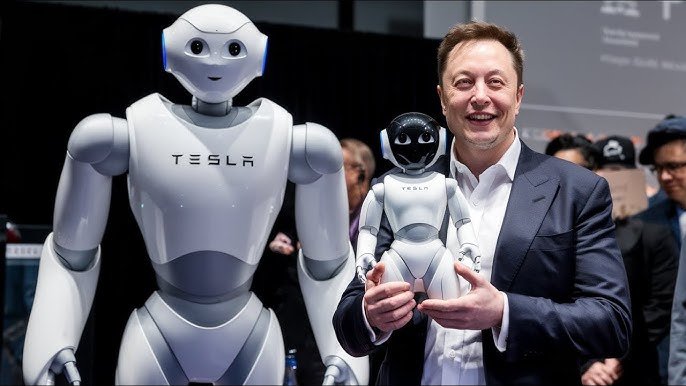
The economics of humanoid robots are flipping the script on a $40 trillion global labor market—cheaper, tireless workers could unlock explosive new demand while filling demographic gaps no policy can fix.
Key Takeaways
Human labor in the US costs roughly $45–$48 per hour when fully loaded with wages, benefits, taxes, and overhead—humanoid robots target under $2 per hour at scale.
Tesla aims for Optimus priced at $20,000–$25,000 per unit, with custom actuators, 22 degrees of freedom in the hands, and vertical integration from chips to software giving it an edge over competitors.
Robots operate ~7,000 hours per year (vs. ~2,000 for humans), depreciating to ~$1.20/hour for the hardware alone, plus minimal energy and maintenance costs.
Demographic collapse in major economies—US birth rate at 1.6, South Korea at 0.72, China's workforce shrinking—creates unavoidable labor shortages that robots must fill.
Historical patterns like Jevons Paradox show that massive cost reductions in labor-equivalent work lead to exponential demand growth, spawning new industries rather than net job destruction.
Tesla is repurposing Fremont factory lines from Model S/X production to Optimus, targeting millions of units annually, with Gen 3 unveil in early 2026 and initial internal deployment soon after.
Early applications target warehouses, manufacturing, and elder care, where shortages already exist and cost savings hit hardest.
Transition risks include job displacement in repetitive roles over 5–10 years, though new categories of work become viable when labor drops 95%+ in cost.