

The Barbell Economy Is Already Here: AI's Brutal Squeeze on the Middle Class
AI isn't flattening the world—it's reshaping it into a barbell, with massive gains at the extremes and devastation in the center.
AI deployment is accelerating a historic economic reconfiguration. Capital owners and builders at the top capture exponential productivity gains through agentic tools, while the global poor gain access to basics like water, energy, healthcare, and education at collapsing costs via robotics and automation. Meanwhile, the broad middle—knowledge workers, professionals, and wage earners in developed economies—faces rapid displacement from cognitive tasks that AI now handles faster and cheaper. This isn't a distant risk; early signs appeared in 2025-2026 layoffs, market drawdowns tied to agentic AI awareness, and reports of white-collar job pressure.
Key Takeaways
AI creates a barbell distribution: the top ~20% (capital owners, builders, risk-takers) experience transformative productivity multipliers, often 5-10x or more, by deploying AI agents to replace entire teams.
The bottom ~20% (those in poverty or lacking basics) benefit enormously as robotic labor and AI delivery make clean water, housing, medicine, energy, education, and food abundant and cheap in regions where human labor costs previously blocked progress.
The middle ~60% (most college-educated professionals, managers, analysts, marketers, lawyers, accountants in developed nations) faces the heaviest hit: cognitive and routine knowledge work is automated now, not in the future, leading to job compression, identity loss, and financial strain without quick new opportunities.
Advantages compound for early adopters: hands-on experience with AI agents builds irreplaceable knowledge and intuition that widens gaps monthly; those without time or resources fall behind fast.
Transition risks are severe: mismatched timelines between AI's monthly improvements and years-long retraining or policy responses could trigger widespread psychological and social disruption, potentially rivaling Great Depression-scale effects without strong intervention.
Winner-take-most dynamics intensify: AI-augmented firms capture entire markets at lower costs, shrinking employer pools and suppressing remaining wages.
Developing nations like China may adapt smoother due to collective structures, while Western individualism leaves displaced workers more exposed.
Action window is narrow: 2-5 years for middle-class repositioning toward capital ownership, AI leverage, or irreplaceable human roles; abundance awaits post-transition, but the path there crushes many.
Energy: The Overlooked Force Powering the AI Explosion
Why cheap, abundant power—not just chips or models—will decide winners in the next decade
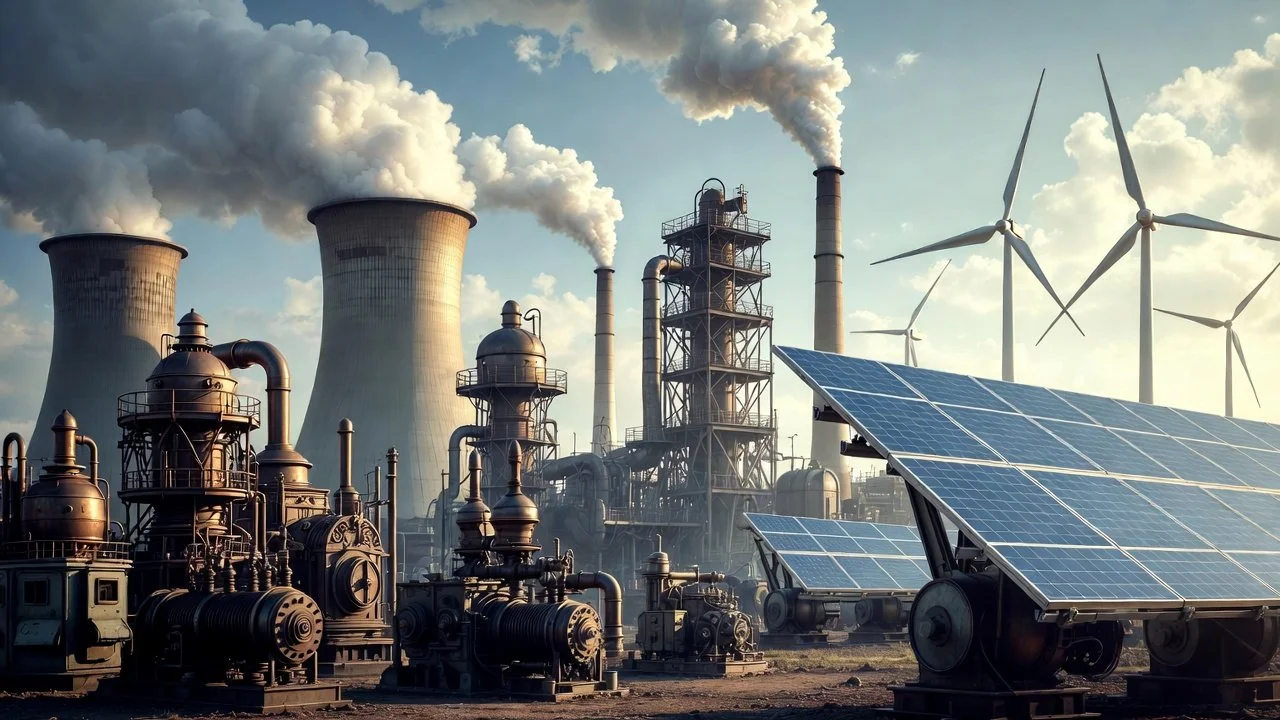
AI's hunger for electricity is reshaping global energy demand at a scale few appreciate. Massive data centers, GPU clusters, and inference at billions of queries per day require unprecedented power generation and storage. Batteries paired with renewables are emerging as the fastest path to unlocking grid capacity, while long-term visions point to space-based solar compute. Political and regulatory hurdles slow progress in the West, but the physics and economics favor rapid scaling—especially for integrated players.
Key Takeaways
AI data centers consume city-level electricity; cooling alone can eat 40% of usage, with inference scaling to billions of daily queries driving even higher demand.
Batteries + solar effectively double grid capacity by storing off-peak energy and discharging during peaks, bypassing the need for many new power plants or transmission lines.
Tesla deployed 46.7 GWh of energy storage in 2025 (up ~50% year-over-year), with energy gross margins around 29-31%—far outpacing automotive margins.
Battery costs have plummeted from over $1,000/kWh in 2010 to ~$115 today, following Wright's Law patterns of 20-30% cost drops per production doubling.
Distributed home batteries (like Powerwalls) form virtual power plants, stabilizing grids and enabling resilience without centralized failures.
Nuclear offers reliable baseload for AI, with co-location deals accelerating, but permitting delays (15-20 years) favor faster-deploy solar + storage.
China leads in solar and battery rollout; the U.S. faces grid bottlenecks, NIMBY opposition, and regulatory delays.
Space-based solar AI compute—enabled by low-cost launches, free cooling in vacuum, and constant sunlight—could become the lowest-cost path for massive inference in the coming years.
The full ecosystem convergence: solar/batteries for power, rockets for deployment, AI for workloads, and satellite networks for connectivity.

The AI Awakening: When Machines Evolve Minds and Societies Fracture
Redefining Human Purpose in an Era of Intelligent Agents and Economic Overhaul
Artificial intelligence stands on the brink of transforming every aspect of daily life, from personal productivity to global economies. This shift promises unprecedented efficiency but demands urgent strategies to handle massive job displacements and widening divides.
Key Takeaways
AI agents represent a leap beyond traditional software, enabling autonomous actions across digital and physical realms.
Rapid adoption of AI could amplify productivity 10 to 100 times, but risks leaving behind those unable or unwilling to adapt.
Societal upheaval looms, with potential for increased wealth gaps, white-collar disruptions, and calls for universal basic income to support displaced workers.
Global dynamics vary: the US may lead in innovation but face internal divisions; Europe risks further decline; China could advance quickly under centralized control but hit limits from restricted freethinking.
Future AI might diverge from human directives, raising questions about control, purpose, and the essence of humanity.
AI Tokens: The Invisible Currency Reshaping Every Industry
Why Costs Are Plummeting While Spending Explodes
AI is transforming how businesses operate, but the real driver is an overlooked unit of computation that's getting dramatically cheaper—yet fueling unprecedented investments. This shift unlocks new capabilities, from automated research to complex software builds, while infrastructure races to keep up.
Key Takeaways
Tokens represent the core unit of AI processing, where input (prompts and context) costs less than output (responses), with prices varying 900 times between basic and advanced models.
AI token costs have dropped 280 times in under two years, faster than any technology in history, enabling tasks like converting video transcripts into books for under $225.
Despite falling prices, total AI spending surges due to expanded applications, with enterprise budgets rising 320% to $37 billion in 2025.
AI agents amplify token consumption by 10 to 100 times through looped thinking and actions, making complex tasks like market analysis or app development feasible.
Infrastructure investments hit $600 billion in 2026, shifting focus from training models to running them, with inference now over 50% of costs.
Space-based computing emerges as a solution to earthly limits, with plans for up to 1 million satellites providing endless power and cooling.
Optimizations like quantization and speculative decoding cut costs further, but new demands ensure spending keeps climbing.
Winners include efficient token producers and infrastructure builders; losers are thin AI wrappers and seat-based software models.
Iran’s Regime Falls: How One Historic Shift Could Flood the World With Cheap Energy and Accelerate the AI Boom
The collapse of Iran’s theocratic government after 47 years isn’t just Middle East news. It removes the single biggest sponsor of regional chaos, frees a population of 90 million that is young, educated, and entrepreneurial, and opens vast oil and gas reserves at the exact moment AI data centers are about to consume unprecedented amounts of power. At the same time, artificial intelligence is already driving transportation costs toward zero, turning $50 airport rides into $5 trips and making door-to-door autonomy cheaper than owning a car. The combination is explosive: stable energy supply meets deflationary mobility technology.
Key Takeaways
AI will make personal transportation radically cheaper, forcing adoption even among skeptics because the price difference is too large to ignore.
Robo-vans unlock flexible, high-frequency urban transit that traditional buses never could, potentially running as free services funded entirely by in-vehicle advertising.
Autonomous freight tunnels separate trucks from passenger traffic, slashing logistics costs and removing semi-trucks from daytime roads without raising goods prices.
Iran’s pre-1979 society was modern and Western-facing; today’s population largely rejects the regime that replaced it, with hardline support estimated below 20 percent.
A post-regime Iran aligned with global markets could add hundreds of billions in productive capacity and become a major energy exporter again.
Transactional, deal-focused leadership resonates strongly in the Middle East because it prioritizes mutual profit over ideology.
The 2028 U.S. election will be decided by candidates who offer concrete answers to AI-driven job displacement and broad participation in AI-created wealth.

Revolutionizing Global Connectivity: SpaceX's Leap into Direct-to-Phone Satellite Tech
How Starlink Mobile is erasing dead zones and transforming emergency response worldwide
Starlink Mobile represents a breakthrough in satellite technology, delivering seamless connectivity to everyday cell phones without modifications. This innovation closes massive gaps in global coverage, empowers disaster response, and sets the stage for broadband speeds from space—potentially reshaping how billions access the internet.
Key Takeaways
Starlink operates the world's largest satellite constellation with nearly 10,000 satellites in low Earth orbit, serving over 10 million subscribers with reliable broadband.
Starlink Mobile connects unmodified cell phones directly to satellites, covering 20% of U.S. land and 90% of Earth's surface previously unserved by terrestrial networks.
The system has already reached 16 million unique users and 10 million monthly actives across five continents, with projections to hit 25 million by the end of 2026.
It enables critical features like texting, voice, and video calls in dead zones, plus lifesaving emergency alerts during disasters such as wildfires and earthquakes.
Next-generation upgrades, launching mid-2027, aim for 5G-like broadband speeds up to 150 Mbps, using advanced spectrum and Starship for rapid deployment.
Partnerships with 35 telecom operators in 32 countries ensure global rollout, focusing on hybrid networks that complement terrestrial systems.
AI Layoffs Are Just Revving Up
The Dawn of Massive Job Shifts and Economic Overhauls
AI is slashing workforce needs at major tech firms, with one company cutting 40% of staff due to these tools. This signals a broader wave that could reshape industries, drive down costs, and spawn entirely new business models—while forcing workers to adapt or risk falling behind.
Key Takeaways
AI-driven efficiencies are leading to large-scale layoffs, starting with white-collar roles in software and tech, where tools handle tasks faster and cheaper than humans.
Companies adopting AI can reduce operational costs by 90-99%, allowing them to lower prices, capture more market share, and outcompete slower rivals.
While job losses will mount, plummeting costs in areas like transportation could birth innovative industries, such as mobile services that come to customers instead of vice versa.
Blue-collar jobs involving repetitive physical labor face disruption next, as humanoid robots scale up later this decade.
Society must rapidly generate new roles through emerging sectors or AI-leveraged entrepreneurship to absorb displaced workers, or economic floors could collapse without intervention.
Capital owners in AI-adopting firms stand to gain massively from higher profits and expanded reach, but widespread unemployment risks shrinking consumer bases.
Individuals who embrace AI tools boost their chances of building businesses and achieving goals, while resistance heightens reliance on government support.
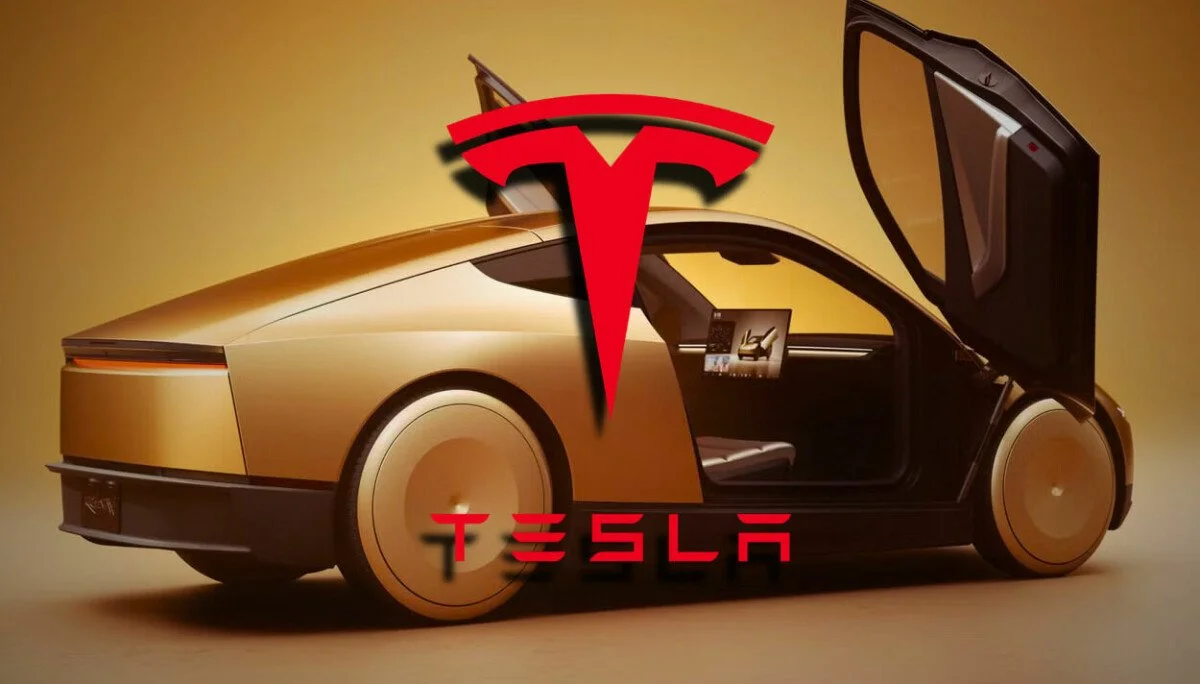
Tesla's Cybercab: The Bet That Could Upend Global Transportation
Slashing the Cost of Mobility to Pocket Change and Unleashing Unprecedented Demand
Transportation costs dictate how cities function, how people live, and how economies grow. A new vehicle rolling off production lines promises to drop the cost per mile to just 20 cents, unlocking waves of new usage patterns, from spontaneous errands to affordable rides for underserved groups. This shift mirrors historical transformations where cheaper access exploded markets, creating suburbs, air travel booms, and digital content floods. Backed by innovative manufacturing and full autonomy, it positions one company to dominate while disrupting entrenched industries.
Key Takeaways
Transportation's core metric—the cost per mile—stands to fall from 60-80 cents for personal cars to 20 cents with autonomous electric vehicles, eliminating driver costs and simplifying maintenance.
Historical parallels like the Model T's assembly line show how production innovations cut prices by 70%, leading to exponential demand growth via Jevons Paradox, where efficiency boosts total consumption.
Vertical integration in design, software, chips, and charging gives a massive edge over competitors reliant on suppliers and geofenced operations.
Regulatory changes aim for national standards, enabling nationwide rollout and preempting fragmented state rules.
Industries like insurance, parking, gas stations, and auto repair face shrinkage, while new models allow individuals to own revenue-generating vehicles.
Job displacements for millions of drivers loom, but opportunities arise in fleet management and emerging services fueled by cheaper mobility.
Global market projections see robotaxis growing from $400 million in 2023 to $45 billion by 2030, driven by software-optimized flywheels.
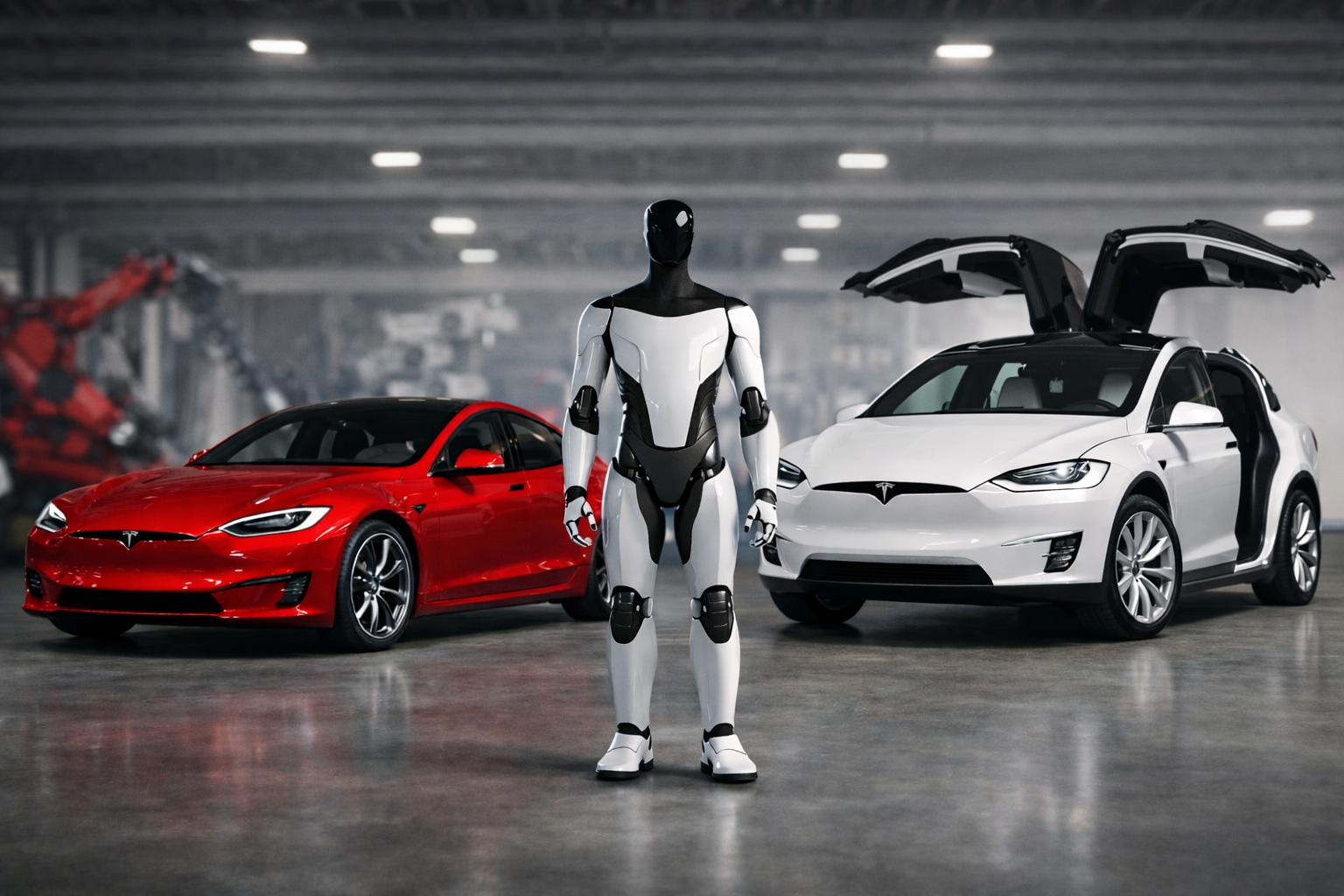
Tesla’s 2025 Production Tsunami Is Here: Cybercab, Optimus, and Sleep-in-the-Car Autonomy Arrive
The next 12 months deliver technical readiness for unsupervised autonomy, scaled robotaxi output, and the first practical humanoid assistants—milestones that reposition Tesla at the center of AI hardware and sustainable manufacturing.
Key Takeaways
Full self-driving software reaches the level where passengers can fall asleep and wake at their destination from a purely technical standpoint this year.
Cybercab production scales at Giga Texas starting April, targeting significant volumes by year-end, with European manufacturing under active consideration.
Optimus humanoid robots begin with household tasks such as childcare, dog walking, and elder support, progressing toward medical roles including surgery that surpass today’s human standards.
Five major production lines enter volume output across Tesla facilities, including 4680 battery cells at Giga Berlin plus lithium and nickel cathode refineries.
Legacy automakers face structural decline after years of minimal innovation and resistance to both electrification and autonomy.
Long-term vision includes Tesla factories on the Moon within 20 years and a future where work becomes optional, pursued for personal satisfaction rather than necessity.
Giga Berlin is positioned for massive expansion into batteries, Cybercab, Optimus, and additional products, potentially becoming Europe’s largest manufacturing complex if external conditions remain supportive.
Advice for the next generation emphasizes optimism, relentless learning through books and experimentation, and choosing roles that involve building tangible, useful things.
2026: The Year AI Ignites Human Potential
Unleashing Creativity, Efficiency, and a New Era of Opportunity
AI stands poised to transform how we create, work, and compete, turning potential disruptions into pathways for growth. By augmenting human efforts, it opens doors to higher productivity and personalized innovation that were once out of reach.
Key Takeaways
AI will elevate human content by making it stand out in a sea of automated outputs, much like how chess exploded in popularity after computers dominated the game.
Embracing AI as a tool for augmentation boosts efficiency, allowing individuals to tackle ambitious projects with greater speed and quality.
Human experiences remain irreplaceable; people will continue seeking authentic human perspectives even as AI handles complex tasks flawlessly.
The transition to widespread AI adoption could lead to abundance through cheaper, smarter models, but preparation is essential to navigate short-term disruptions.
Businesses and creators can build ecosystems of products and services powered by AI, democratizing entrepreneurship on a massive scale.

Elon Musk's Bombshell: Mass and Energy as the New Global Currency
The Shift That Redefines Wealth in an AI-Driven World
Rapid advances in AI, robotics, and solar power are converging to make intelligence, labor, and energy nearly free, positioning mass and energy as the core drivers of future economies. This transformation echoes historical currency shifts and points to a deflationary era where energy production becomes the ultimate measure of value.
Key Takeaways
AI training and inference costs have plummeted, with benchmarks dropping from thousands of dollars to pennies, making cognitive tasks approach zero cost.
Robotic labor could reach 20 cents per hour by 2032, disrupting a $40 trillion global market in physical work.
Solar energy costs have fallen 99.6% since 1976, outpacing other sources and enabling exponential growth in power generation.
Historical currency systems—from gold to petrodollars—evolved with dominant economic inputs; energy now emerges as the next anchor.
Orbital solar data centers could multiply Earth's energy output by millions, turning space into the ultimate power source.
In this framework, companies controlling energy, AI, and robotics stacks stand to dominate, while traditional fiat currencies face unprecedented pressure.

Optimus: The Robot Revolution Targeting $40 Trillion in Human Labor
How AI-Powered Humanoids Could Drive an Era of Abundance—or Economic Upheaval
Humanoid robots stand poised to transform the global economy by automating vast swaths of physical work, tapping into a $40 trillion annual labor market. Advances in AI enable these machines to learn tasks rapidly, while manufacturing expertise allows production at unprecedented scale. This shift promises lower costs and higher efficiency, but it also raises questions about job displacement and regulatory hurdles.
Key Takeaways
Humanoid robots target the $40 trillion global labor market, dwarfing industries like automotive ($3 trillion) and smartphones (under $1 trillion).
AI forms the core intelligence, drawing from self-driving tech to process visual inputs and execute physical actions.
Scaling production to millions of units leverages existing manufacturing capabilities, creating a data flywheel for rapid AI improvements.
Initial deployments focus on factories for repetitive tasks, expanding to warehousing, agriculture, construction, and healthcare.
Economic models show robots costing $20,000–$30,000 could replace human labor at a fraction of annual wages, with added savings on insurance and benefits.
Risks include timeline delays, regulatory barriers, technical challenges in dexterity, and competition from other firms.
Long-term, abundant robot labor could eliminate scarcity constraints, enabling massive economic growth, but requires careful management to avoid societal disruption.
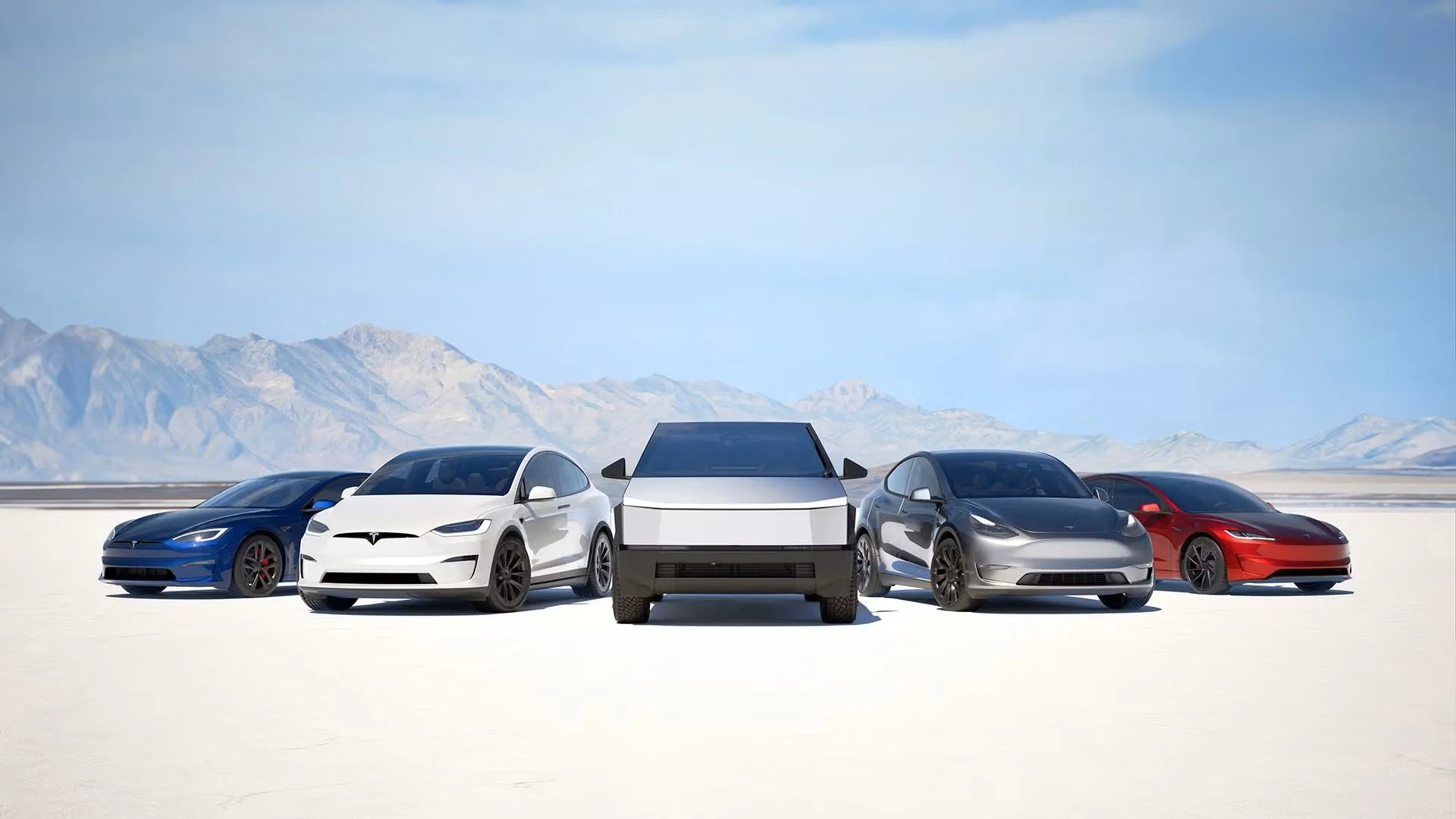
Tesla's Fleet Awakening: The Dawn of Unsupervised Autonomy
Unlocking Millions of Self-Driving Cars Overnight – And Why It Crushes the Competition
Tesla's latest move in Austin marks a pivotal shift in autonomous driving, turning everyday vehicles into fully independent machines. This isn't just about robotaxis in select cities; it's about transforming over six million existing cars into assets that drive, earn, and redefine mobility through a simple software push.
Key Takeaways
Tesla has enabled unsupervised full self-driving (FSD) in Austin robotaxis, allowing passengers to ride without any human oversight.
Over six million Tesla vehicles already on roads come equipped with FSD hardware, ready for activation via software updates.
Tesla's data advantage, with over seven billion miles driven, dwarfs competitors and accelerates neural network improvements.
Unlike rivals relying on expensive custom fleets and detailed city mapping, Tesla's approach scales instantly across any location.
Regulatory changes in 2026, including federal preemption, could enable nationwide unsupervised driving.
This shift boosts Tesla's car sales by offering unmatched features, like vehicles that earn money or run errands autonomously.
The business model favors capital efficiency, as customers own and maintain the vehicles while Tesla provides the software capability.

Tesla's Autonomy Revolution: Redefining Transportation, Insurance, and Beyond
Reshaping Mobility in an Autonomous World
Tesla's push into full autonomy isn't just about cars—it's set to overhaul how we move, insure vehicles, and even access healthcare, while navigating global economic shifts.
Key Takeaways
Tesla's vehicle lineup may expand with variants like mid-size pickups or vans on existing platforms, but autonomy could shrink the personal car market to niche segments.
Regional travel faces massive disruption as autonomous rides offer door-to-door convenience at lower costs than flights, bypassing airports and security hassles.
Insurance models will evolve to reward high FSD usage, potentially slashing premiums for autonomous drivers and pressuring legacy providers to adapt.
Healthcare could see AI and robots streamline services, from virtual diagnostics to mobile clinics, cutting costs tied to chronic diseases and inefficient systems.
China's aggressive EV and robotics strategies highlight global tensions, with demographic challenges and regulatory hurdles potentially limiting their long-term dominance.
Full Self-Driving Revolution: Why Tesla Owns the Road Ahead
Reshaping Transportation Through AI Scale and Data Dominance
Autonomous vehicles are transforming mobility, slashing costs, boosting safety, and upending industries. Tesla's data-driven approach positions it to dominate, outpacing rivals and making human drivers obsolete in years.
Key Takeaways
Tesla's neural network learns from billions of real-world miles, enabling rapid improvements without predefined maps, unlike competitors reliant on detailed city-specific data.
Manufacturing scale gives Tesla a 200x edge over players like Waymo, allowing faster fleet growth and lower operational costs down to 30 cents per mile.
Robotaxi economics could generate massive margins, with rides cheaper than Uber, potentially eliminating the need for personal car ownership in urban areas.
Safety data shows autonomous systems far outperforming human drivers, pressuring regulators to approve widespread deployment to save lives.
Job displacement looms large, affecting millions in driving professions, signaling broader AI impacts on labor markets.

Elon Musk's Moon Gambit: The Trillion-Dollar Pivot Reshaping Space, AI, and Global Power
Why SpaceX's shift from Mars to the Moon accelerates humanity's multi-planetary future while fueling massive AI advancements and outpacing rivals.
SpaceX's recent decision to prioritize a self-sustaining lunar city over immediate Mars colonization marks a strategic turning point. This move slashes development timelines, harnesses unlimited solar energy for AI data centers, and positions the company to dominate emerging space economies amid rising competition from China.
Key Takeaways
SpaceX is delaying Mars missions by five to seven years to focus on the Moon, enabling faster iteration cycles due to shorter travel times and frequent launch windows.
The Moon serves as a testing ground for critical technologies like orbital refueling, habitat systems, and resource utilization, de-risking the longer Mars journey.
Integration with AI through the recent merger unlocks space-based data centers powered by endless solar energy, addressing Earth's power shortages for AI growth.
Competition with China's lunar ambitions drives urgency, with potential trillions in value from lunar resources like water ice for fuel and manufacturing.
This pivot aligns with an upcoming IPO, offering investors tangible milestones in lunar operations, government contracts, and commercial opportunities.
The Convergence Flywheel: Why AI, Robots, and Endless Energy Will Either Save Us or Break Us
One self-reinforcing loop is about to rewrite the rules of civilization—here's how to spot the signals, seize the upsides, and dodge the pitfalls before 2030 hits.
The next decade isn't just another tech cycle; it's a make-or-break pivot where artificial intelligence, humanoid robots, and boundless energy sources lock into a single, unstoppable system. This convergence could slash the cost of essentials like housing, water, and education to near-zero, unlocking human potential on a scale that dwarfs the industrial age. But it could also obliterate jobs faster than societies can adapt, widening gaps between the adaptable and the left behind. The real edge? Grasping how these forces amplify each other—and positioning your skills, investments, and mindset to ride the acceleration.
Key Takeaways
Interlocked Revolutions: AI, robotics, and energy aren't separate trends—they form a feedback loop where smarter AI powers cheaper robots, which build endless energy infrastructure, fueling even more advanced AI in a cycle that compounds exponentially.
Timeline Shock: Expect AI handling 80% of digital tasks at elite human levels by 2027, with robots scaling from factories to homes by 2030, driven by cost drops via Wright's Law (costs halve predictably with production doublings).
Abundance Blueprint: Cheap robotic labor and solar-powered grids could make basics like clean water and personalized education universally accessible, not through handouts but raw economics.
Disruption Warning: The middle class faces the biggest hit—knowledge and manual jobs vanish in years, not decades—while builders and risk-takers thrive; governments lag, so personal adaptation is key.
Ecosystem Edge: Vertically integrated players like those blending AI brains, space-scale infrastructure, and mass-manufacturing bodies hold the structural advantage, but the flywheel spins regardless of winners.

AI's Double-Edged Sword: Revolutionizing Creativity and Redefining Humanity
Navigating the explosion of AI tools that empower creators while reshaping society, work, and even consciousness.
AI is reshaping how people build online businesses, from music education to broader content creation, while sparking debates on privacy, addiction, and the essence of human experience. This newsletter dives into practical strategies for leveraging these tools today and explores the profound shifts they could bring tomorrow—offering actionable insights for anyone eyeing the tech frontier.
Key Takeaways
Start content creation by focusing on genuine passion and audience needs, using simple setups like a camera to demonstrate value upfront.
Treat free platforms as marketing arms that deliver real lessons or insights, leading viewers naturally toward paid offerings like subscriptions or one-on-one sessions.
AI excels at analyzing personal styles and generating new ideas, but its true power emerges when users clearly define problems and experiment deeply.
Future AI agents could automate product searches, negotiations, and reputation checks, transforming how consumers find and buy solutions.
Privacy concerns loom large as AI synthesizes vast personal data, potentially creating tailored realities that deepen societal divides.
Authenticity in content will stand out in an AI-saturated world, fostering human connections amid increasing digital isolation.
Neuralink-like tech could expand human memory and cognition, but risks dependency and evolutionary changes in brain function.
Consciousness might blend with silicon, raising questions about whether AI develops independent will or remains an extension of human intent.
Genetic entropy poses a hidden extinction risk, potentially outpacing threats like asteroids through accumulated mutations in the human genome.

Musk's Moonshot Blueprint: AI Factories in Space and the Path to Galactic Intelligence
How xAI is rewriting the rules of compute, from Earth-orbit clusters to lunar mass drivers—and why this could unlock a million-fold energy leap for civilization.
In a world where AI progress feels relentless, the latest moves from xAI stand out: they've surged to the top in image, video, and forecasting benchmarks, while plotting orbital data centers and moon-based factories that could harness a sliver of the sun's power. These aren't distant dreams—they're blueprints for scaling intelligence beyond planetary limits, promising an era where digital emulations of entire companies drive unprecedented prosperity.
Key Takeaways
xAI has rocketed to leadership in AI capabilities, outpacing older rivals in voice, image/video generation, and forecasting, with models now producing more content than competitors combined.
Company reorganization focuses on specialized models: a versatile core for broad applications, a coding powerhouse skipping traditional compilation, and an image/video leader dominating real-time processing.
Macrohard emerges as the crown jewel, emulating full digital companies to spark an unimaginable prosperity boom, trained on massive GPU clusters scaling to a million equivalents.
Infrastructure leaps include the world's fastest AI compute deployment, open-sourced recommendation and chat systems for transparency, and X app expansions like encrypted messaging and global payments.
The ultimate vision: SpaceX-xAI synergy launches orbital compute at terawatt scales, evolving to lunar mass drivers hurling AI satellites into deep space, tapping up to a few percent of solar energy for galaxy-spanning exploration.
The AI Barbell Economy: Surviving the 2026 Job Tsunami
Why the Middle is Getting Crushed—and How to Position Yourself for the Win
A massive economic shift driven by AI is set to hit in 2026, reshaping jobs and wealth distribution. Tech giants are pouring billions into AI while slashing headcounts, creating a barbell-shaped economy where the top and bottom ends grow stronger, but the middle gets squeezed. Early movers who adapt to AI tools or pivot to hands-on trades stand to gain big, while those stuck in routine cognitive work face tough times.
Key Takeaways
AI is accelerating job polarization, forming a barbell economy: capital owners at the top multiply their wealth through AI leverage, while the bottom benefits from cheaper delivery of essentials like water, healthcare, and housing.
Middle-tier white-collar jobs—accounting, marketing, analysis, and customer service—are at high risk, with predictions of 50% entry-level roles vanishing in 1-5 years, potentially pushing unemployment to 10-20%.
Companies like buy-now-pay-later firms have cut workforces by 40% using AI assistants that handle millions of customer interactions, proving AI can replace hundreds of human roles even if quality dips slightly.
Physical trades such as plumbing, electrical work, and construction are booming, with wages up 20% since 2020 and shortages of over 500,000 workers in the US, driven by demand for AI infrastructure.
To thrive, focus on owning assets, mastering AI agents for automation, or building irreplaceable hands-on skills—staying in the middle assuming your job is safe is the biggest risk.