
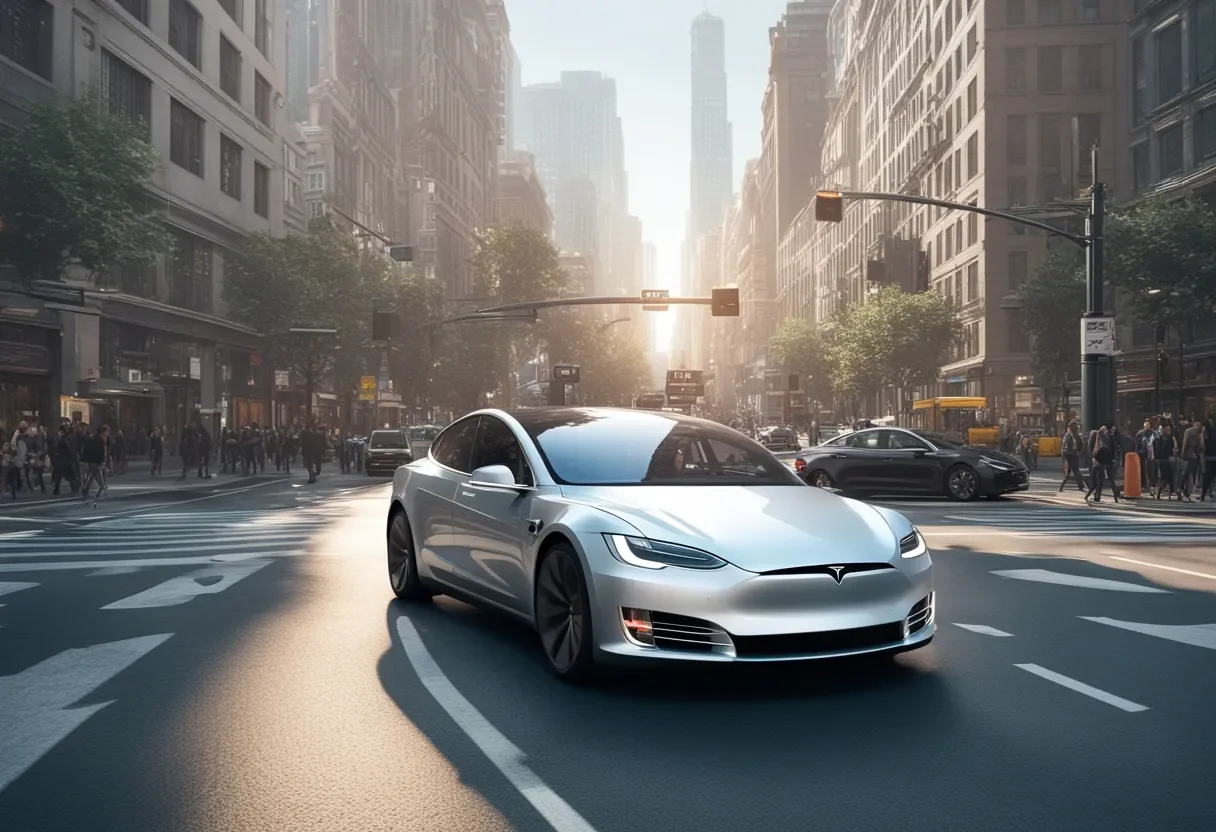
Tesla's Robotaxi Surge: Public Rollout Set to Transform Mobility
Unlocking Autonomy: Why Tesla's Next Move Could Redefine Urban Transport
Tesla's robotaxi service stands at a pivotal moment, with plans to open access to the general public starting next month. This shift promises lower-cost rides, massive efficiency gains, and a leap in vehicle utilization, potentially turning every Tesla into a revenue-generating asset while slashing personal car ownership expenses.
Key Takeaways
Tesla's robotaxi fleet in Austin uses Model Y vehicles with advanced Full Self-Driving software, currently operating with safety monitors but advancing toward unsupervised autonomy.
Expansion to public access is slated for September, beginning in Austin and potentially extending to California, with job postings indicating growth into cities like New York, Las Vegas, and Miami.
Operating costs could drop to around 60 cents per mile once safety drivers are removed, enabling profits of up to $2 per mile in high-demand areas like the Bay Area.
The service validates Tesla's hardware-first approach, embedding sensors and computers in mass-produced cars to gather billions of miles of real-world data for AI training.
Broader adoption may displace millions of ride-hailing jobs but could save thousands of lives annually by reducing accidents from human error, while increasing mobility access for underserved populations.
Regulatory hurdles remain, especially in California, where permits for driverless operations are pending, but Texas approvals pave the way for statewide scaling.

AI's Next Frontier: Navigating the Choppy Waters of Disruption
Why the AI Revolution Feels Like a Locked Door—and What’s on the Other Side
The AI landscape is buzzing with promise, but it’s also teetering on the edge of massive disruption. From self-driving taxis to the future of work, the tech world is grappling with a reality that’s both exhilarating and unsettling. Here’s what you need to know about where AI is headed, why it’s harder than it looks, and how it might reshape society in ways we’re only beginning to understand.
Key Takeaways
AI’s Progress Is Slower Than Hyped: Current advancements are incremental, focusing on refining existing capabilities rather than delivering transformative breakthroughs.
Physical World Disruption Outweighs Digital: The potential market for AI in physical applications (e.g., self-driving cars, robotics) dwarfs digital applications like coding or content creation.
Economic Upheaval Is Coming: AI-driven automation, like robotaxis, could displace workers (e.g., Uber drivers), raising questions about job transitions and societal impacts.
Deflation Could Redefine Wealth: Lower wages might coexist with cheaper goods and services, potentially improving quality of life despite smaller paychecks.
Human Connection and Exploration Will Thrive: Future economies may prioritize scarce resources like human attention, leading to growth in sports, entertainment, and space exploration.
A Choppy Transition Awaits: The path to an AI-driven future will be turbulent, with regulatory, economic, and societal hurdles complicating the journey.
Tesla Accelerates: CEO Rewards and Robo-Taxi Expansion Signal a New Era in Autonomy
Unlocking Leadership and Low-Cost Rides in the AI-Driven Future
Tesla has taken decisive steps to secure its leadership in electric vehicles, AI, and robotics by approving an interim compensation package for its CEO while rapidly expanding its robo-taxi network in Austin, Texas. These moves address ongoing legal battles over past awards and position the company to capitalize on surging demand for autonomous services, potentially transforming urban mobility and shareholder value.
Key Takeaways
Tesla's board approved 96 million restricted stock shares as an interim award, increasing CEO ownership to about 14.6% and aligning incentives amid AI talent competition.
The award includes a two-year vesting period, a $23 per share purchase price, and restrictions on sales to minimize market impact.
If the 2018 performance award is reinstated by courts, this interim package will be adjusted to avoid overlap.
Robo-taxi rides in Austin are priced at roughly half of Uber's rates, with a 50-minute trip costing around $18 compared to $31–$34 on Uber.
The Austin geo-fence for robo-taxi operations has doubled in size twice in the past six weeks, now covering expanded areas without major incidents reported.
New Texas regulations effective September 1, 2025, could enable unsupervised robo-taxi operations, paving the way for profitability through low operational costs.
An upcoming shareholder meeting on November 6, 2025, will vote on a long-term CEO compensation strategy and potential investment in xAI, enhancing synergies in AI development.
Retaining top talent, including leadership, is critical as Tesla shifts toward AI, robotics, and services, with the award designed to boost focus and voting control.
The AI Revolution: Tesla, Nvidia, and the Future of Compute
Why Tesla and Nvidia Are Poised to Redefine the Global Economy
The AI revolution is reshaping industries, and at its core are two juggernauts: Tesla and Nvidia. Their advancements in artificial intelligence, robotics, and compute infrastructure signal a future where energy, data, and intelligence converge to create unprecedented economic value. From autonomous robotaxis to distributed inference networks, the synergy of these technologies could disrupt entire markets, leaving traditional players like Uber struggling to adapt. Here’s why the stakes are higher than ever and what it means for the future.
Key Takeaways
Tesla’s Robotaxi Dominance: Tesla’s robotaxi network, with dynamic pricing and unmatched cost efficiency, is set to capture significant market share from Uber and Waymo, potentially rendering traditional ride-hailing models obsolete.
Nvidia’s Compute Supremacy: Nvidia’s platform strategy fuels the AI boom, but its long-term margins may face pressure as compute becomes commoditized, creating opportunities for specialized players like Tesla.
Energy and Compute Synergy: Pairing energy storage (like Tesla’s Megapacks) with AI chips enables distributed inference, turning idle energy into valuable computational output.
Video Data as the Ultimate Resource: Video data’s infinite scalability makes it the backbone of AI training, giving Tesla a unique edge with its vast fleet of camera-equipped vehicles.
Retail Investing’s AI Edge: Advanced AI tools are empowering retail investors to uncover opportunities in stocks like Tesla, potentially increasing market liquidity and driving more IPOs.

Tesla's Robo-Taxi Edge: Slashing Prices and Paving the Path to Profit
Decoding how autonomous rides are undercutting traditional services and what it means for the future of mobility
Tesla's robo-taxi service is transforming urban travel with fares that undercut Uber by up to 50%, based on early deployments in key U.S. cities. This pricing power stems from low-cost hardware baked into millions of existing vehicles, pointing toward profitability at scale while delivering safer, more private rides. Yet, as adoption grows, it raises urgent questions about workforce displacement in a driving-dependent economy.
Key Takeaways
Tesla's robo-taxi rides average around $1 per mile, compared to Uber's $2 or more, making it a cost-effective alternative even in early stages with safety oversight.
Operating costs for autonomous vehicles could fall to $0.20-$0.40 per mile once fleets optimize, enabling profits of 40-80 cents per mile at current pricing levels.
Deployments vary by region: Austin operates with a safety rider in the passenger seat and remote monitoring, while the Bay Area requires an active driver due to stricter regulations.
Riders gain privacy, full control over in-car features like climate and entertainment, and superior safety from always-attentive systems that reduce accident risks tied to distraction or impairment.
The technology promises economic unlocks like affordable transport for underserved groups, but it risks displacing millions of drivers, necessitating proactive policy responses to manage labor shifts.
The AI Chip Revolution: Tesla's Path to Unified Compute Dominance
Unlocking massive efficiencies in training and inference through innovative hardware partnerships and designs.
AI hardware is evolving at breakneck speed, outpacing traditional computing trends. Recent developments point to chips that handle both training massive models and running real-time inferences efficiently. This shift promises lower costs, faster scaling, and tighter integration with energy systems, paving the way for widespread embodied AI in vehicles, robots, and beyond.
Key Takeaways
Unified AI chips can perform both training and inference tasks, reducing costs by enabling mass production of identical hardware for diverse applications.
Panel-level integration allows for combining hundreds of chips into massive training substrates, improving communication speed and thermal management compared to wafer-based designs.
Hardware convergence integrates processing, memory, and networking on single boards, mirroring biological neurons for better efficiency.
Distributed compute in vehicles and robots could turn idle hardware into cloud resources, solving power and latency challenges.
AI demand accelerates sustainable energy adoption, with solar and batteries emerging as the most scalable solutions for powering data centers.
Future AI systems may enable real-time learning loops, blending training and inference for rapid adaptation without massive batch updates.
Partnerships with foundries like Samsung enable supply chain resilience, proximity to manufacturing hubs, and potential for custom optimizations.
Tesla’s Supply Chain Power Play: Securing the Future of AI and Robotics
Why Tesla’s $16.5B Samsung deal and strategic partnerships signal a new era for AI-driven manufacturing
Tesla’s recent moves in the supply chain arena are nothing short of seismic. A $16.5 billion deal with Samsung for advanced AI chips and a $4 billion partnership with LG Chem for battery production are not just business transactions—they’re bold steps toward dominating the future of AI, robotics, and electric vehicles. These deals highlight Tesla’s unmatched ability to secure critical resources, localize manufacturing, and create a supply chain that’s fast, efficient, and resilient. For tech enthusiasts, this is a masterclass in how to build a technological empire in a world of geopolitical tension and supply chain uncertainty.
Key Takeaways
Strategic Partnerships Secure AI Leadership: Tesla’s $16.5B deal with Samsung prioritizes access to a dedicated chip fabrication facility, ensuring a steady supply of AI chips for vehicles, robotaxis, and humanoid robots.
Battery Supply Scaled for Growth: The $4B LG Chem deal bolsters Tesla’s battery production capacity, critical for meeting the soaring demand for electric vehicles, Megapacks, and future robotics.
Localized Manufacturing Reduces Risk: By prioritizing U.S.-based production, Tesla mitigates geopolitical risks tied to global supply chains, particularly in regions like Taiwan.
Supply Chain Flywheel Drives Efficiency: Tesla’s ability to turn inventory quickly and provide demand certainty creates a win-win for suppliers, fostering stronger partnerships and better terms.
AI and Robotics Poised for Dominance: Tesla’s integrated approach to hardware and software, combined with its supply chain prowess, positions it to lead in emerging fields like robotaxis, humanoid robots, and potentially drones.

Tesla's AI Frontier: Robots, Rides, and the Race to Superintelligence
Exploring the rapid advancements in humanoid robotics, autonomous transport, and AI that could multiply global economic output tenfold while navigating production hurdles and societal shifts
Humanoid robots are advancing faster than expected, with prototypes demonstrating precision in tasks like caregiving and factory work, while autonomous vehicles are hitting roads in select cities. These developments point to a future where machines handle dangerous jobs, boost productivity dramatically, and free humans to pursue meaning beyond labor—but scaling production and overcoming regulatory barriers remain key obstacles.
Key Takeaways
Humanoid robots could target a market of 20-50 billion units, generating trillions in revenue at scale, with initial focus on high-value roles like 24-hour medical assistance and hazardous industrial tasks.
Autonomous robotaxis, designed without steering wheels or pedals, have launched in Austin and are expanding to other U.S. cities, promising safer roads and efficiency gains, though regulatory approvals and public trust are slowing broader rollout.
AI progress is accelerating toward superintelligence, potentially curing diseases and eliminating poverty, but safety relies on rigorous truth-seeking and iterative improvements to align systems with human values.
Engineering humanoid robots demands replicating the human body's intricate mechanics, such as hand dexterity, drawing from automotive expertise to achieve lifelike precision and responsiveness.
A compelling long-term mission drives innovation, aligning teams on goals like sustainable energy and multi-planetary life, while rapid experimentation determines success over static products.
Societal challenges include job displacement for 19% of global workers in driving roles, fear of losing control in autonomous systems, and the need for policies like universal basic income to ensure equitable abundance.
By late 2025, robot production faces delays, with Tesla aiming for thousands of units despite setbacks, while AI models like Grok 4 integrate video generation and real-time search for enhanced usefulness.
Tesla’s AI Revolution: Samsung Chip Deal Signals a Bold Future
How Tesla’s $16.5 Billion Partnership with Samsung for the AI6 Chip Could Redefine AI, Robotics, and Supply Chains
Tesla’s $16.5 billion deal with Samsung to produce the AI6 chip, set to power autonomous vehicles, humanoid robots, and AI data centers starting in 2027, marks a pivotal moment for the company. This strategic move, coupled with Tesla’s advancements in Full Self-Driving (FSD), robotaxis, and the Optimus humanoid robot, underscores its transformation from an electric vehicle (EV) manufacturer to a leader in AI and robotics. Despite challenges in its core EV business, Tesla’s stock has shown resilience, reflecting investor optimism about its AI-driven future. Here’s what this means for Tesla, its supply chain, and the broader AI landscape.
Key Takeaways
Strategic Partnership: Tesla’s $16.5 billion deal with Samsung to produce the AI6 chip at its Texas foundry aims to secure a robust supply chain for AI-driven products, including self-driving cars and Optimus robots, starting in 2027.
Stock Performance: Despite weak EV sales and negative sentiment around Tesla’s political controversies, its stock has risen approximately 45% over the past year, driven by progress in FSD, robotaxis, and robotics.
AI6 Chip Versatility: The AI6 chip is designed for both AI training and inference, potentially reducing costs and improving efficiency across Tesla’s ecosystem of vehicles, robots, and data centers.
Supply Chain Diversification: Partnering with Samsung reduces Tesla’s reliance on TSMC and Nvidia, mitigating geopolitical risks tied to Taiwan and ensuring long-term chip supply for ambitious AI goals.
Humanoid Robot Ambitions: Tesla’s Optimus robot, with production targets of 5,000 units in 2025 and millions by 2030, could tap into a $38 billion market by 2035, with applications in logistics, manufacturing, and urban services.
Market Implications: The deal challenges Nvidia’s dominance in AI hardware and pressures TSMC to innovate, while positioning Samsung as a stronger player in the foundry market.
Tesla's Bold Leap into Custom AI Silicon
Unlocking the future of autonomous vehicles, humanoid robots, and massive-scale AI training through a game-changing partnership.
Tesla has just sealed a massive partnership that could reshape the AI hardware landscape, positioning the company to control its destiny in chip production while boosting U.S. manufacturing. This move addresses supply chain vulnerabilities, cuts costs, and accelerates innovation in everything from self-driving tech to robotics.
Key Takeaways
Tesla's new AI6 chip aims to handle both AI training and inference on a single architecture, optimizing for vehicles, robots, and data centers.
A $16.5 billion deal with Samsung taps into a Texas-based fab for production, enhancing efficiency and reducing reliance on overseas suppliers.
This strategy mirrors past vertical integration successes, like battery production, to secure supply for ambitious AI goals.
Broader implications include strengthening U.S. chip manufacturing amid global tensions and fostering competition that drives industry-wide advancements.
The partnership leverages expertise from key engineers to create specialized hardware tailored to real-world AI demands.

Key Takeaways from Tesla's Q2 2025 Earnings Call: AI Dominance and the Road Ahead
Tesla's latest earnings reveal a bold pivot to AI-driven growth, with humanoid robots and autonomous tech set to unlock trillion-dollar markets amid short-term financial hurdles.
Tesla's Q2 2025 results underscore a strategic shift toward artificial intelligence and autonomy, positioning the company to lead in transformative sectors like robotics and self-driving vehicles. While near-term earnings face pressure, the focus on scalable AI solutions promises massive long-term value, drawing from expertise in manufacturing, energy, and real-world data.
Key Takeaways
Earnings are expected to stay below prior peaks for at least the next year, potentially leading to flat or declining stock performance unless market multiples rise.
The company is fully committed to AI and autonomy, with all initiatives aligned around advancing robotaxis, humanoid robots, and energy storage.
Leadership expresses strong confidence in dominating future markets through these technologies, backed by plans to use debt if needed to fund capital expenditures.
Market valuation treats Tesla as an AI powerhouse, far exceeding projections from vehicle sales or energy growth alone, with investors eyeing robotaxi rollout speed and profitability.
Humanoid robots could prove viable through cost reductions in factories or sales for urban services, tapping into high-labor-cost industries.
Unsupervised full self-driving capabilities represent the critical threshold for mass adoption, far outpacing current supervised systems in appeal.
Batteries remain essential for balancing energy supply and demand fluctuations, ensuring ongoing demand as global consumption grows.
Progress in AI aspirations can sustain high valuations, enabling self-funding, but any setbacks in robotaxis or bots could trigger sharp declines.
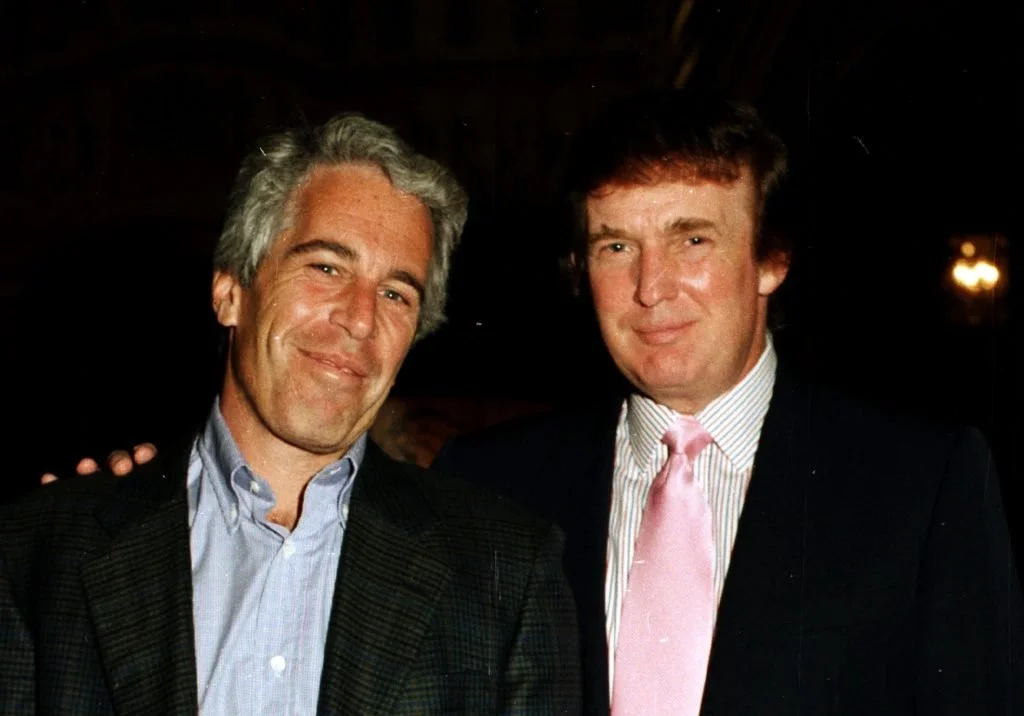
The Epstein Black Hole: Intelligence, Tech, and America's Uncertain Path
Why Scandals Like Epstein Could Reshape Foreign Policy and Spark a Tech-Driven Revival
The Epstein case isn't just a media storm—it's a window into how intelligence networks influence global decisions, while technology offers a lifeline for rebuilding trust and prosperity. In the midst of political gridlock and escalating conflicts, emerging tools like AI and independent platforms are challenging old systems, pointing toward a future where transparency and innovation could finally align.
Key Takeaways
Epstein's connections highlight potential intelligence ties that affect U.S. foreign policy, particularly with allies like Israel, raising questions about leverage in ongoing conflicts.
Public frustration with government handling of scandals stems from a perceived lack of transparency, but issues like the economy and immigration often take priority in voter decisions.
Nuclear policy and historical secrecy frameworks continue to justify withholding information, complicating modern accountability in a post-Cold War era.
Independent media and long-form discussions are filling gaps left by traditional outlets, enabling deeper explorations of complex issues and fostering public engagement.
Technological advancements, from AI disrupting jobs to renewable energy promising abundance, represent a hopeful counter to cultural and political decline, though they risk widening divides if not managed carefully.
Political reforms, such as targeted funding for deficit-focused candidates, could create influential voting blocks in Congress, amplifying voices for fiscal responsibility.
COVID-era policies have left lasting psychic impacts, contributing to voter apathy and shifts in party support, especially among younger demographics.
A pro-human approach to tech innovation—balancing benefits like self-driving cars and clean energy with risks like social media isolation—could unify efforts toward a more optimistic national vision.
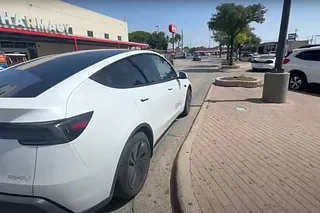
Tesla's Robotaxi Revolution: Unlocking Trillions in Autonomous Mobility
Why Self-Driving Fleets Could Reshape Transportation and Deliver Massive Profits
Tesla's push into robotaxis represents a pivotal shift in mobility, blending advanced AI with massive manufacturing scale to potentially generate enormous profits. At the core are insights into cost efficiencies that could yield up to $150,000 in annual profit per vehicle at scale, paving the way for a business valued in the trillions. This isn't just about cars driving themselves—it's about an ecosystem where data, compute, and smart economics converge to outpace competitors and transform urban travel.
Key Takeaways
Tesla's AI-driven approach to autonomy relies on cameras and massive compute clusters, enabling low-cost vehicles ($35,000 or less) compared to competitors' sensor-heavy setups costing $150,000–$200,000 per unit.
Profitability hinges on the ratio of robotaxis to human supervisors: at 3:1, fleets break even; at higher ratios like 100:1, annual profits per vehicle could hit $136,000 with Uber-like pricing.
A fleet of 1 million robotaxis could generate $136 billion in yearly net profit, leading to a 5-year ROI of $650 billion, assuming conservative costs and average ride data.
The upcoming Cybercab vehicle slashes costs further—to around $20,000 per unit—with enhanced AI hardware, potentially boosting per-vehicle profits to $155,000 annually at extreme scales.
Challenges include regulatory hurdles, safety improvements via more data and compute, and competition, but Tesla's existing factories (producing 1.2 million similar vehicles yearly) provide unmatched scaling potential.
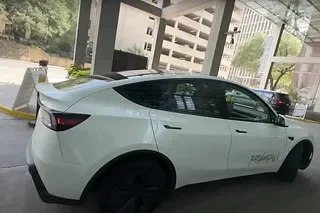
The Robotaxi Revolution: Unlocking Austin's Future of Autonomous Mobility
Redefining Commutes, Costs, and the AI-Driven World Ahead
Robotaxis are transforming urban life in Austin, slashing commuting costs while boosting productivity. Expansions signal rapid scalability, outpacing competitors and paving the way for highway integration. Beyond transport, AI ecosystems are emerging, blending seamless memory across devices and sparking innovations in delivery and societal structures.
Key Takeaways
Robotaxis in Austin now enable cost-effective commutes from suburbs, reducing parking fees from $50+ to near zero and adding productive time during rides.
Geofence expansions doubled in three weeks, with meme-shaped boundaries hinting at flexible, viral marketing and imminent broader coverage including highways.
Tesla's approach outperforms Waymo in scalability, potentially covering entire metro areas soon and offering perks like free employee transport at Gigafactories.
Highways are key to connecting rural and urban zones, enabling long-distance trips with smart fleet allocation and charging stops.
Grok integration in vehicles creates persistent AI memory, extending to ecosystems that could unify transport, devices, and even interplanetary travel.
AI competition is fierce, with xAI focusing on rapid innovation to challenge OpenAI's consumer lead through superior models and viral features.
Apple faces risks of stagnation in AI, potentially leading to hostile takeovers by cash-rich innovators valuing its supply chain under a trillion-dollar cap.
New primitives like drone deliveries (Zipline) and underground robots (Pipe Dream) promise cheaper, faster physical e-commerce, disrupting last-mile logistics.
Batteries drive all advancements; better, faster, cheaper energy storage is essential for drones, vans, and semis.
Societal shifts from AI job disruptions demand temporary redistribution mechanisms to foster entrepreneurship over permanent government dependency.
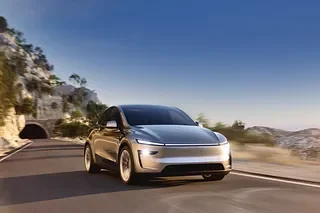
Tesla's Model Y L Ushers in a New Era of Affordable Family EVs and Autonomous Rides
Expanding Tesla's lineup with a stretched, six-seater crossover that bridges gaps in the market while amplifying robo-taxi potential.
Tesla just dropped details on its latest vehicle, the Model Y L, a longer-wheelbase version designed for families needing more space without breaking the bank. This move not only plugs a hole in the affordable three-row EV segment but also ties into broader shifts like robo-taxi fleets and AI integrations that could redefine personal transport. For tech fans eyeing sustainable mobility, this signals Tesla ramping up production efficiency and versatility in a competitive landscape.
Key Takeaways
The Model Y L extends the standard model by 7 inches, adding a usable third row for six passengers, starting around $60,000 in China with potential U.S. pricing between the Model Y and Model X.
It positions Tesla stronger against rivals like the Kia EV9 and Rivian R1S by offering a more affordable three-row EV option.
Robo-taxi services in Austin are expanding, with seamless autonomous rides becoming practical for daily use, costing under $15 round-trip for urban commutes.
This vehicle enhances Tesla's robo-taxi strategy, enabling higher-capacity rides beyond the upcoming two-seater Cybercab, potentially scaling to millions of units annually.
Speculation points to phasing out older models like the S and X to free up factory space for high-volume production or new ventures like drones or AI devices.
Grok AI is rolling out as a car assistant, paving the way for voice-activated features and cross-device integration, potentially challenging smartphone ecosystems.
Overall, these developments aim at sustainable abundance, prioritizing mass-market EVs and AI-driven autonomy over luxury niches.
Tesla's India Gambit: High Prices Today, Autonomous Dominance Tomorrow
Revolutionizing Mobility in the World's Largest Market Through Data and AI
Tesla's recent entry into India marks a pivotal moment for electric vehicles and self-driving technology. By starting with the Model Y at premium pricing, the company positions itself to collect vast amounts of real-world data from one of the planet's most challenging driving environments. This could accelerate advancements in autonomy, enabling cheaper models and widespread adoption that bypasses traditional car ownership patterns.
Key Takeaways
Tesla launched the Model Y in India on July 15, 2025, with prices starting at around $71,500 due to high import tariffs, limiting initial appeal to a tiny fraction of the population.
The strategy focuses on long-term data gathering in India's dense, unpredictable roads to refine self-driving software, potentially leading to tariff reductions and more affordable vehicles.
Developing nations like India may skip mass personal car ownership, jumping directly to shared autonomous fleets, similar to how cell phones bypassed landline infrastructure.
Tesla's pure AI-driven approach to autonomy allows rapid scaling, as seen in recent expansions of its supervised robo-taxi service in Austin, outpacing competitors reliant on heavy mapping and sensors.
Future developments could include cheaper models, local manufacturing, and highway-capable self-driving, expanding robo-taxi networks across urban and suburban areas.
Grok 4 Ushers in a New Era of AI Dominance
Why Scale is Redefining the Race to Superintelligent Machines
The latest advancements in AI are reshaping industries at breakneck speed, with breakthroughs that promise to accelerate progress toward human-level intelligence. At the forefront is Grok 4, a model that's not only topping benchmarks but also introducing innovative approaches to reasoning and data handling. Dive in to explore how massive computing power and clever data strategies are giving one player a commanding lead, and what this means for the future of technology.
Key Takeaways
Grok 4 has achieved the highest scores on leading benchmarks, surpassing models from established players and establishing itself as the most capable AI available today.
Built on the principle that raw scale in compute and data outperforms complex shortcuts, this model leverages a colossal supercomputer setup with over 200,000 high-end GPUs, set to expand dramatically.
Innovative use of synthetic data and multimedia training, including video and audio, enables superior reasoning and positions future models to learn more like humans.
Despite its strengths, challenges like high costs—up to $300 per month for advanced access—and ethical concerns highlight ongoing debates about AI accessibility and safety.
The rapid rise of this technology underscores how resource advantages can create insurmountable leads, potentially accelerating the path to artificial general intelligence (AGI).
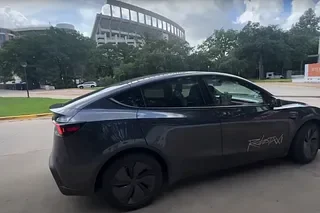
Tesla's Robotaxi Takes Austin by Storm: Rapid Expansion and Real-World Mastery
Pushing Boundaries in Autonomous Mobility: Why This Expansion Signals a Game Changer for Urban Transport
Tesla's Robotaxi service is accelerating its footprint in Austin, demonstrating how AI-driven autonomy can scale quickly and handle complex urban environments with ease. From navigating construction zones to making smart maneuvers in tight spots, the latest tests reveal a system that's not only reliable but also poised to outpace competitors in flexibility and efficiency. For tech enthusiasts tracking the evolution of self-driving tech, this update highlights key advancements in mapping, decision-making, and user experience that could reshape ride-hailing worldwide.
Key Takeaways
Tesla expanded its RoboTaxi network in Austin in just three weeks, covering new areas like North Austin and suburban spots, shaped humorously like a meme-inspired cowboy hat.
The service excels in challenging scenarios, including K-turns in dead-end parking lots, reversing out of tight spaces, and yielding to emergency vehicles.
Compared to rivals like Waymo, Tesla's approach relies less on detailed mapping and more on AI, enabling faster, non-strategic expansions into low-density areas.
Performance remains smooth and confident, avoiding highways for now but handling construction, pedestrians, and traffic with minimal hesitation.
Future potential includes highway access, fleet growth, and undercutting traditional ride-hailing prices once teleoperator ratios improve.
The America Party Paradox: When Your Biggest Supporter Becomes Your Greatest Threat
Elon Musk's political movement could reshape America—but what happens when the trillionaire who automated your job also controls the party promising to fix it?
Five to ten years from now, America could face an unprecedented political reality: a third party founded by the world's first trillionaire, whose companies eliminated millions of jobs through AI and robotics. This isn't science fiction—it's the logical endpoint of current trajectories in politics, technology, and wealth concentration. The implications are both thrilling and terrifying.
Key Takeaways
America Party targets the mismatch between voter registration (50% independent) and Congressional representation (99% Democrat/Republican).
Success would make Musk both the richest person ever and founder of the nation's most powerful political party—an unprecedented concentration of influence.
The AI/robotics revolution will eliminate drivers, cut management roles by 80%, and transform physical labor, creating massive displacement.
Political opponents will weaponize job losses against the party led by the person whose companies automated those jobs away.
Universal Basic Income becomes inevitable, but which party champions it could determine America's political future for generations.
The venture might serve as a "beta test" for governing Mars, where SpaceX would need to establish political structures.
Elon's America Party Gambit: The Biggest Risk Tesla Investors Have Ever Faced
As Musk launches a third political party targeting the national debt, Tesla shareholders confront unprecedented uncertainty in the company's most critical moment
The Fourth of July weekend brought fireworks of a different kind as Elon Musk officially announced the formation of the America Party, positioning himself to disrupt the two-party system that has dominated American politics for centuries. For Tesla investors, this move represents potentially the riskiest decision in the company's tumultuous history—arriving just as robotaxis promise to transform the business forever.
Key Takeaways
Musk's America Party aims to address national debt concerns he claims both major parties ignore, directly challenging GOP power after supporting Trump
Tesla faces unprecedented political risk as disrupting the two-party system could trigger bipartisan retaliation affecting autonomous vehicle regulations
The timing creates a dangerous convergence: political chaos meets Tesla's critical robotaxi scaling phase where cash flow remains unproven
Tesla currently manufactures 1.2 million potential robotaxis annually (Model Y), capable of replacing Uber's entire U.S. fleet each year
Political backlash already manifested in vandalized Tesla stores and customer vehicles following Musk's Trump support
Success depends on robotaxi economics becoming "undeniable" before political headwinds can materialize into regulatory roadblocks