
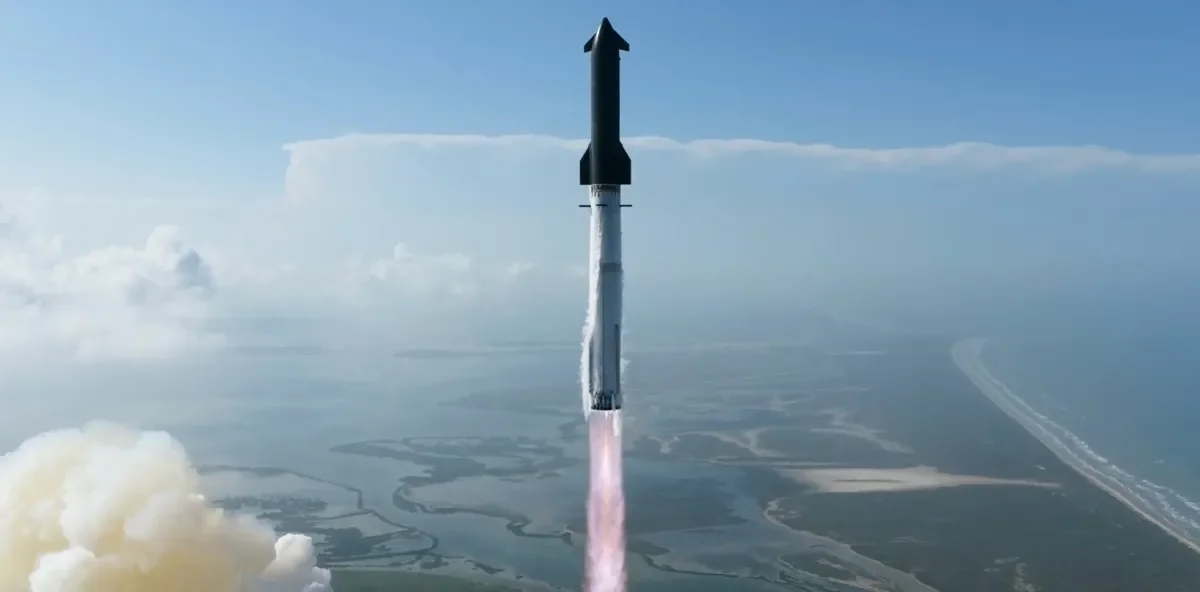
Starship V3 Takes Flight: The Dawn of a New Era in Reusable Spaceflight
Hot staging success, in-space heat shield imaging, and flap stress tests mark major milestones in the push for rapid reusability and massive Starlink deployment.
Starship Version 3 just completed its first flight test, delivering a masterclass in engineering progress. The redesigned vehicle lifted off flawlessly, executed a textbook hot staging separation, deployed a full payload of next-generation satellites while in orbit, and survived an intentionally aggressive reentry that tested its heat shield and structural limits—all while streaming live views back to Earth. These results accelerate the timeline for fully reusable heavy-lift operations and the kind of Starlink constellation scale that changes global connectivity economics.
Key Takeaways
All 33 Raptor 3 engines ignited cleanly on the Super Heavy booster at liftoff, carrying the stack through maximum dynamic pressure without issue.
Hot staging worked on the first attempt for Version 3: the ship’s six engines lit while still attached to the booster, clamps retracted safely, and separation occurred cleanly.
The ship demonstrated strong engine-out capability after losing one Raptor Vacuum engine mid-ascent, gimbaling the remaining engines to maintain trajectory and completing a suborbital mission on five engines.
An upgraded PEZ dispenser deployed 22 satellites—20 Starlink mass simulators plus two specialized “Dodger Dog” units—in record time, previewing the system’s ability to handle up to 60 full V3 Starlink satellites per flight.
Two free-flying satellites equipped with cameras and high-powered flashlights successfully imaged Starship’s heat shield from orbit in real time, a critical data point for future tower catches.
The ship intentionally stressed its aft flaps with a high-Mach “flap slap” maneuver, passed peak heating and peak dynamic pressure, executed a return-to-launch-site-style banking turn, and performed a two-engine landing burn before a soft splashdown in the Indian Ocean.
Experimental heat-shield tiles bonded with new methods on the leeward side held firm through ascent and reentry, delivering actionable data for future flights.

The Infrastructure Play That Could Decide AI's Next Decade
How record deployment speeds, orbital power constraints, and runaway token demand are forcing a complete rethink of who can actually deliver abundant intelligence at scale.
The real bottlenecks in advanced AI have shifted from model architecture to physical execution. Legal maneuvers around major labs have exposed governance friction without resolving underlying questions about long-term stewardship. At the same time, the ability to stand up massive compute clusters in months rather than years, combined with the hard physics of powering AI workloads off-planet, is creating asymmetric advantages for players who control both the chips and the energy layer. Most overlooked: even steep gains in efficiency will not flatten demand. New applications in video synthesis, persistent agents, and physical robotics multiply token consumption faster than optimization curves can contain it. The organizations that solve the manufacturing, power, and orbital constraints first will set the cost floor for intelligence for years to come.
Key Takeaways
Legal resolutions on procedural grounds in AI governance cases can inflict lasting reputational damage while leaving core structural issues unaddressed, increasing the likelihood of internal leadership changes at scaled labs rather than wholesale unwinds of their corporate form.
Model performance has split along task lines, with some systems delivering superior cost-performance on coding workloads and others advancing faster on general capabilities, accelerated by targeted talent inflows and selective early access programs.
First-principles manufacturing discipline and direct production-line leverage have compressed large-scale GPU cluster deployment to roughly four months, enabling potential cost leadership when paired with integrated renewable generation.
AI satellites operating in higher orbits face rapid solar panel degradation from elevated radiation, requiring specialized space-grade photovoltaics whose global production remains limited to a few megawatts per year and concentrated supply chains.
Token demand follows Jevons paradox dynamics: efficiency improvements from distillation and specialized models unlock entirely new use cases in generative media, autonomous agents, and robotics that drive net consumption sharply higher.
Electricity prices in key technology corridors have risen 200 percent or more in recent years, underscoring the need for co-located generation, deregulation of new capacity, and expanded domestic solar manufacturing to prevent cost curves from throttling AI deployment.
National leadership selection patterns that favor engineering execution correlate with faster delivery of complex infrastructure projects, creating competitive edges in the physical layer of intelligence.

The $600 Million Rescue: One Colonel Hidden in a Mountain Crevice
How US forces ran seven simultaneous deception operations, deployed 155 aircraft, and extracted a single airman from deep inside Iran using every tool from quantum sensor claims to low-level helicopter insertions under a near-full moon.
In early April 2026, during the ongoing air campaign against Iran, an F-15E Strike Eagle was hit by a long-range surface-to-air missile over the Zagros Mountains. The two crew members ejected but landed miles apart. One pilot, seriously wounded, was pulled out in a daylight helicopter operation under small-arms fire. The second man, a colonel in the back seat with only a sprained ankle, climbed higher into the range, wedged himself into a narrow limestone crack at 7,000 feet, and stayed hidden for more than 36 hours while thousands of Iranian searchers and a state-backed bounty hunted him. The recovery that followed became the largest and most elaborate combat search-and-rescue effort the United States has mounted in decades.
Key Takeaways
A single F-15E loss on April 3 triggered two distinct recovery missions: one rushed daylight extraction for the wounded pilot and one meticulously planned nighttime operation 36 hours later for the colonel still hidden in the mountains.
The colonel followed core SERE principles by moving uphill, concealing himself in a tight crevice, and limiting radio transmissions to seconds-long bursts to defeat Iranian direction-finding and thermal assets.
Iranian forces mobilized IRGC units and local Bakhtiari tribesmen, using state media to broadcast a substantial bounty and turn civilians into active searchers across terrain they knew intimately.
US and Israeli intelligence ran a parallel deception campaign that established seven separate fake rescue sites and fed false narratives of a maritime extraction, successfully diverting Iranian attention and resources toward the coast.
The final extraction involved roughly 200 special operators from DEVGRU and supporting units, flown by 160th Special Operations Aviation Regiment crews, with an air support package of 155 aircraft that included B-1 bombers creating isolation zones and MQ-9 Reapers providing close overwatch.
Seven US aircraft were ultimately lost across the broader sequence of events, several deliberately destroyed on the ground to prevent capture, yet both airmen returned alive with zero American fatalities.
Claims of a classified quantum sensor capable of detecting a heartbeat through rock at long range were quickly challenged by physicists on basic signal-propagation grounds, suggesting the publicized technology story may have protected more conventional intelligence sources.

Sentient Cars, Robot Armies, and Restored Senses: The AI Stack That Could Deliver Abundance at Planetary Scale
How vision-native neural networks, fully reusable heavy lift, and direct brain interfaces are moving from prototypes to infrastructure that multiplies human capability.
The most consequential progress right now is not in any single headline demo but in three tightly linked layers of AI: vehicles that see and reason like humans, general-purpose humanoid machines that can multiply labor, and neural interfaces that read and write directly to the nervous system. These layers are advancing on parallel tracks that reinforce each other. Camera-only autonomy is already running unsupervised in real cities. Humanoid platforms are shifting from research videos to factory deployment. Brain implants have moved from restoring basic communication to targeting limb control and artificial vision. Together they sketch a path where the majority of road distance becomes AI-driven within a decade, robot populations exceed human ones, and previously irreversible losses of mobility or sight become addressable. The common thread is a deliberate focus on scalable, biology-mimetic systems that improve through software and fleet data rather than exotic new hardware at every step.
Key Takeaways
Camera-and-neural-net autonomy, built to match human visual processing, is already operating without safety drivers or remote monitors in multiple Texas cities and is projected for broad U.S. availability before the end of the year.
The same vision-first architecture is expected to reach at least ten times human-level safety, turning self-driving from a narrow feature into the default mode for most distance traveled within roughly ten years.
Humanoid robots are forecast to outnumber people and expand total economic output by a factor of ten to one hundred, shifting the baseline from universal basic income to universal high income supported by extreme productivity gains.
Full rapid reusability on the latest heavy-lift rocket architecture, targeted for this year, removes the core economic barrier to routine transport of large payloads and is viewed as the decisive step toward self-sustaining settlements beyond Earth.
Brain-computer interfaces have already restored speech and digital control for people with complete motor disconnection; next milestones include bridging spinal injuries to reanimate limbs and delivering artificial vision, including to individuals blind from birth, with potential for superhuman precision over time.
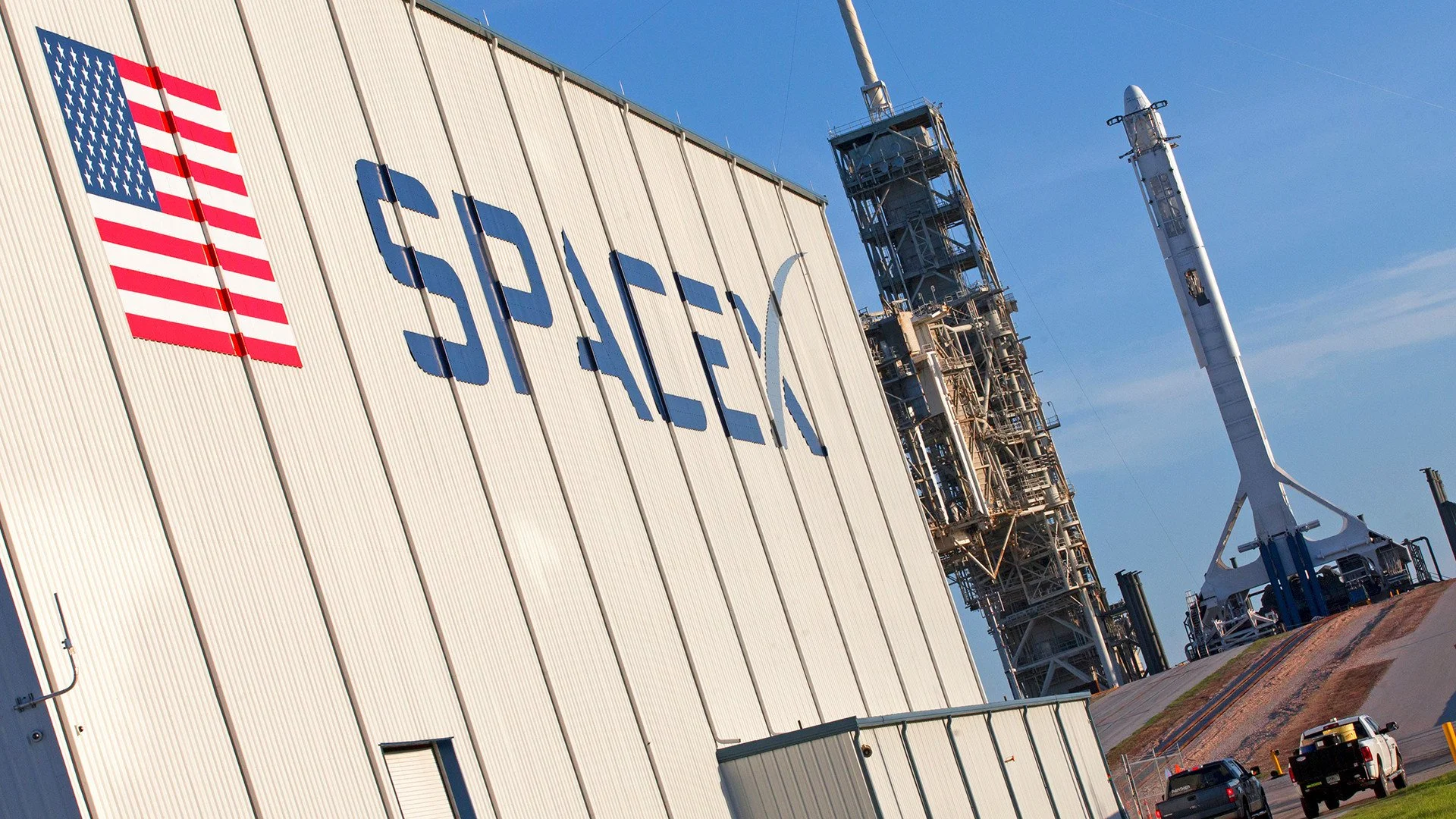
SpaceX Just Locked In the AI Infrastructure Crown
The vertical stack that turns rockets, chips, power, and satellites into permanent AI rent.
A single partnership has quietly redrawn the AI landscape. SpaceX is no longer just the leader in reusable rockets — it has assembled the only fully integrated physical stack for frontier AI, from silicon fabs to orbital data centers. By opening its massive Colossus compute cluster to Anthropic’s Claude models, the company proved it can act as the landlord for the entire industry while keeping its own options wide open.
Key Takeaways
SpaceX is supplying Anthropic with over 300 megawatts and 220,000+ NVIDIA GPUs from the Memphis Colossus-1 facility, instantly doubling rate limits and removing throttling for Claude Pro, Max, Code, and API users.
The deal follows SpaceX’s all-stock absorption of xAI, giving the combined entity ownership of the world’s largest concentrated GPU clusters and positioning it as a hyperscaler with launch, chip, power, and network capabilities no one else matches.
Vertical integration now spans Falcon 9/Starship launches, Terafab’s multi-hundred-billion-dollar 2nm chip production, Starlink’s 10,000+ satellite constellation, and gigawatt-scale data centers — six critical layers versus four for even the strongest competitors.
Anthropic gains immediate capacity to deploy its next-generation Mythos model at scale; SpaceX secures high-margin recurring revenue that strengthens its path to a $1.5–2 trillion+ IPO.
The broader shift: models are commoditizing fast. Sustainable advantage now lives in the physical stack below the model — the new oil, pipelines, refineries, and shipping lanes of the AI economy.

Musk's Picks and Shovels: How Autonomy and AI Will Power the Next Civilization
Tesla's FSD leaps, Model Y dominance, US-China manufacturing deals, and robotic logistics are laying the groundwork for a transformed economy.
The pace of real-world autonomy is already delivering tangible gains today, with even older versions of advanced driver-assistance systems proving reliable enough for daily commutes and family use. At the same time, high-level diplomatic meetings signal a potential trillion-dollar wave of manufacturing investment flowing back to the United States, powered by Chinese production expertise. Layer in humanoid robots, autonomous heavy trucks, and drone-enabled delivery networks, and the Musk ecosystem emerges as the foundational infrastructure—the literal picks and shovels—for the next era of economic growth.
Key Takeaways
The Tesla Model Y ranks as the best-selling vehicle on the planet for three straight years, leading sales in California and even the top three major cities in China despite aggressive local competition.
Current supervised Full Self-Driving software remains highly capable a full year after its last major update, setting the stage for unsupervised operation that eliminates the need for constant human oversight and enables entirely new use cases like sleeping during long trips.
Upcoming US-China engagements involving key technology and business leaders point toward massive onshoring deals, with Chinese manufacturers potentially bringing high-scale production know-how to American factories in exchange for market access.
Legacy US automakers face structural decline, concentrated in SUVs, trucks, and a handful of models, opening pathways for pivots into defense manufacturing amid rising national security budgets.
Add-on robotic kits already automate heavy equipment like excavators for solar-farm construction, slashing labor hours and unlocking 24/7 operation in energy infrastructure projects.
Musk companies collectively supply the core layers future civilization will run on: autonomous passenger transport, humanoid labor, long-haul freight, satellite connectivity, and energy storage.
Logistics economics shift dramatically once highway autonomy arrives—even partial adoption on interstates cuts driver costs and fuel volatility, while drone-equipped vans and warehouse robots reshape last-mile delivery speed and density.
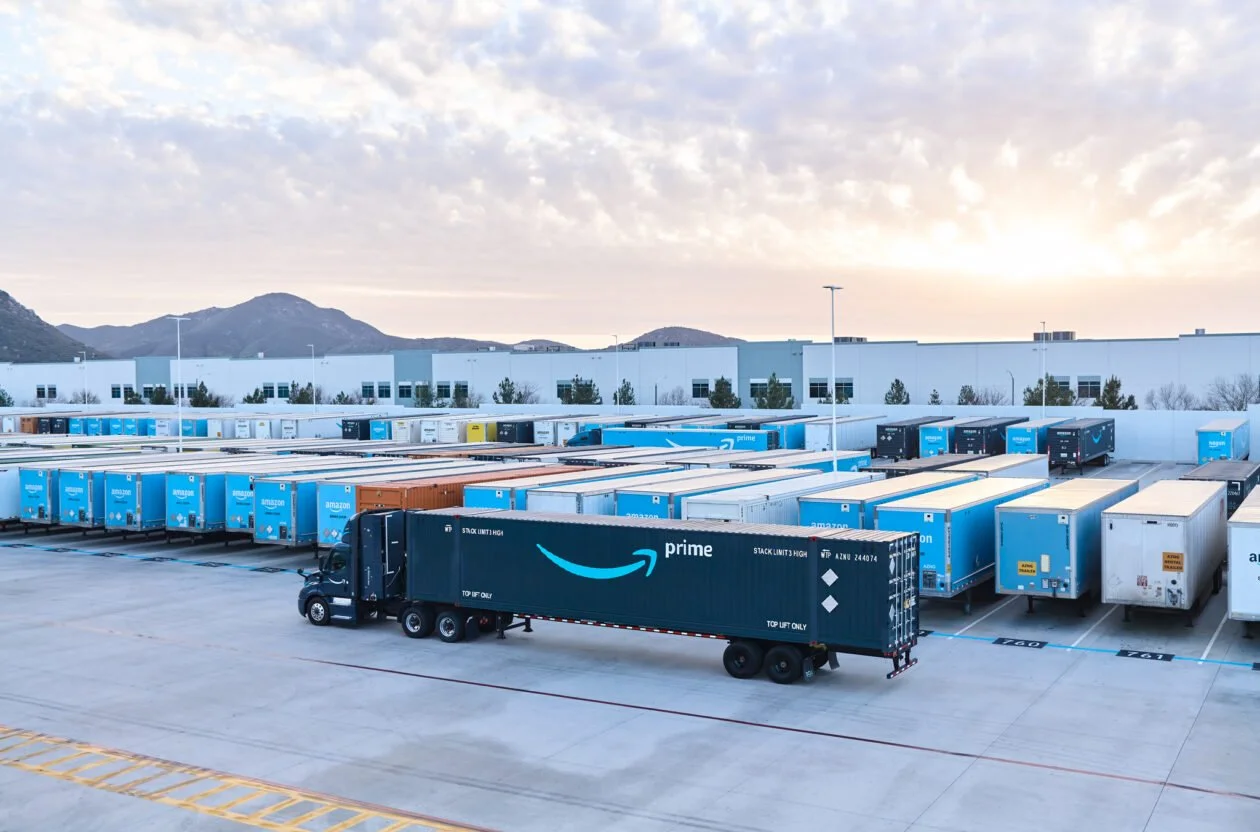
Amazon's Stealth Logistics Empire: The Massive Tailwind Coming for Tesla
How opening its entire supply chain to the world is about to create explosive demand for electric semis, autonomous vans, and humanoid robots.
Amazon has turned its vast internal logistics machine into a full-service platform available to any business. The new offering combines freight across ocean, air, ground, and rail; warehousing and distribution; same-style parcel delivery seven days a week; and AI-driven forecasting built on the largest commercial logistics dataset in existence. This isn't a minor expansion—it's the physical-world equivalent of AWS, launched into a $9 trillion market that's already projected to hit $13 trillion by 2035. For Tesla, the implications are generational: a single customer with global scale suddenly needs far more trucks, vans, robots, and autonomy software than it can source today.
Key Takeaways
Amazon Supply Chain Services bundles freight, fulfillment, parcel delivery, and predictive AI optimization into one plug-and-play system that any company can use—exactly how AWS turned internal infrastructure into a profit engine.
The move immediately pressures traditional carriers; UPS, FedEx, and logistics stocks dropped sharply on the announcement because Amazon already operates at a scale that rivals their combined fleets.
Tesla stands to benefit across four hardware categories: electric semis for long-haul freight, autonomous delivery vans to solve driver shortages, Optimus humanoids for warehouse labor, and the unified Full Self-Driving software stack that powers everything.
Amazon's existing assets—1.56 million employees, 1,200 logistics facilities, 40,000+ owned semis, 390,000+ delivery drivers, 30,000 Rivian vans, over one million robots, and its own air fleet—provide the perfect launchpad for rapid scaling.
At scale, a single humanoid robot could deliver labor at roughly $1.50–$2 per hour versus $25–$35 for a human worker, creating economics that make widespread adoption almost inevitable.
Watch for Amazon to break out Supply Chain Services revenue separately in coming quarters; that moment will trigger the same valuation rerating AWS enjoyed.

Why Tesla's Robotaxi Advantage Is Growing Faster Than Anyone Notices
It's not the current fleet size that matters most—it's the explosive growth in data miles and production scale driving down costs exponentially.
Tesla is pushing unsupervised robotaxis into more Texas cities, while competitors like Waymo operate thousands of vehicles across multiple metros. Yet the numbers reveal one player building an insurmountable lead through sheer data volume and manufacturing muscle. With 10 billion cumulative full self-driving miles already logged and the count growing by a billion monthly, the foundation for cheaper, smarter autonomy is solidifying rapidly.
Key Takeaways
Tesla's cumulative FSD miles stand at around 10 billion—50 times the roughly 200 million driverless miles accumulated by its closest rival across its entire history.
Both double autonomous miles approximately every nine months, but Tesla's vastly larger base means its lead widens dramatically each cycle.
Tesla achieves robotaxi costs near 81 cents per mile today, roughly 60% of competitors' current levels.
Production capacity gives Tesla the ability to manufacture hundreds of thousands of capable vehicles quarterly, dwarfing rivals reliant on third-party supply.
Paid unsupervised robotaxi miles nearly tripled quarter-over-quarter in early 2026, signaling accelerating commercial traction.
At scale, autonomous transportation could drop to 25 cents per mile, slashing annual personal mobility costs from hundreds to thousands of dollars.

The $130 Billion Lawsuit That Could Rewrite Nonprofit Law for the Next Century
One courtroom decision now testing whether a tax-advantaged charity can convert into a for-profit powerhouse—handing billions in equity to insiders while reshaping the rules for every hospital, university, and research lab in America.
This trial, which opened on April 27, 2026, in the U.S. District Court for the Northern District of California, is far larger than any AI chatbot rivalry. At its core sits a single question with trillion-dollar consequences: Can a 501(c)(3) public charity, built on tax-deductible donations and a charter promising public benefit, legally transform itself into a for-profit entity where employees, executives, and outside investors capture enormous equity stakes? The assets in play total roughly $130 billion. The precedent set here will echo through America’s entire charitable sector for generations.
Key Takeaways
OpenAI launched in 2015 as a 501(c)(3) nonprofit with an explicit charter to advance AI for humanity’s benefit through open research, collaboration, and resistance to corporate concentration of power.
By 2025 the organization had completed a full conversion to a Delaware public benefit corporation, removing earlier profit caps; the original nonprofit foundation retained an approximately 26% ownership stake valued at around $130 billion at the time of conversion.
The lawsuit claims breach of charitable trust and unjust enrichment, arguing that assets originally held in public trust were effectively transferred to private hands without meeting historical standards for nonprofit-to-for-profit restructurings.
Regulators including the IRS, California Attorney General, and Delaware Attorney General reviewed the changes, yet the case tests whether paper approvals satisfied the spirit and letter of century-old nonprofit law.
A ruling in either direction will directly affect the $1 trillion-plus annual U.S. charitable sector—hospitals, university endowments, research foundations, conservation groups, religious institutions, and more—by clarifying (or loosening) the rules for converting mission-driven assets into commercial equity.
Three plausible outcomes range from a full green light for future conversions, a hard reset enforcing traditional public-trust protections, or a hybrid ruling that adds stricter procedural safeguards going forward.
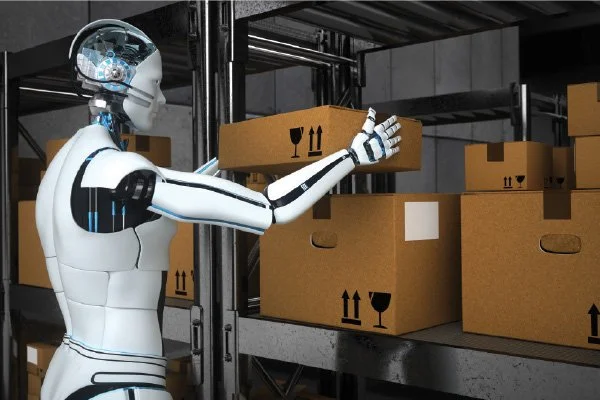
Robotaxis, Humanoids, and the New Logistics Empire: How Automation Will Make Goods and Labor Nearly Free
Inside the convergence of AI robots, autonomous fleets, and centralized supply chains reshaping the global economy.
Recent breakthroughs in humanoid robots and logistics infrastructure point to a future where physical goods move as easily as data in the cloud, while autonomous labor handles repetitive work around the clock. These shifts could drive costs toward zero for transportation, storage, and manufacturing—opening massive opportunities for businesses of any size while concentrating power in the hands of a few tech giants. The pieces are falling into place faster than most realize.
Key Takeaways
Humanoid robots are scaling production quickly, with at least one company now building a unit per day and using innovative wireless foot-charging pads that let them operate continuously without leaving their workstation.
Amazon has launched an end-to-end logistics platform that lets any business plug directly into its warehousing, shipping, and delivery network—essentially turning physical supply chains into a cloud service.
When combined with self-driving vehicles and humanoids, this infrastructure could make point-to-point movement and storage of goods extremely cheap and accessible, even for small operators with limited capital.
The result is accelerating centralization: a handful of companies could dominate labor, logistics, and data, echoing historical monopolies like railroads or oil but at global scale.
Tesla’s Robotaxi rollout faces a practical production bottleneck; early Cybercab output may include steering wheels and pedals to keep factory lines running at full capacity until unsupervised fleets can absorb volume.
Unsupervised autonomy, once achieved, unlocks enormous profit-per-mile margins—potentially $0.60–$1.00—driving rapid fleet expansion and dramatic company re-ratings.
Broader forces include corporations acting as the real power centers in geopolitics, with examples like China functioning as a single massive enterprise, alongside America’s commanding lead in AI, space launch, and defense technology.
The Operator Who Just Solved Elon Musk’s Biggest Problem
How one quiet executive is enabling the largest reorganization in tech history—and why it frees the world’s most ambitious engineer to move faster than ever.
The Musk companies are no longer operating as separate bets. They are converging into a single, vertically integrated machine built for the AI age. SpaceX and xAI have already combined. Tesla is the final piece. The person positioned to run day-to-day execution across all of them has spent nearly 25 years proving she can deliver at the hardest engineering problems on Earth. This shift lets Elon Musk leave the Tesla CEO chair he has openly disliked for years and return full-time to the work only he can do: first-principles engineering at planetary scale.
Key Takeaways
Elon Musk has repeatedly stated he does not want to remain Tesla CEO and has been searching for years for a successor he trusts to treat the company as a robotics and AI leader rather than a car company.
The February 2026 merger of SpaceX and xAI created a $1.25 trillion vertically integrated entity focused on AI, rockets, satellites, and orbital infrastructure.
Gwynne Shotwell, SpaceX president and COO since 2008, now oversees operations for the combined SpaceX-xAI business and is the clearest candidate to absorb Tesla’s execution responsibilities in the next phase of consolidation.
Her track record includes turning Falcon 9 into the most reliable launch vehicle ever, delivering Crew Dragon for NASA, scaling Starlink to tens of thousands of satellites, and negotiating critical government contracts that kept SpaceX alive in its earliest days.
The resulting structure creates the infrastructure layer of the AI era—orbital data centers, humanoid robots, autonomous vehicles, energy storage, and chip fabrication—all executing under one operational leader while Musk focuses exclusively on engineering breakthroughs.
Investors and technologists should view this not as Elon stepping away but as the company graduating to a new operating model that removes a massive constraint on his time and attention.

AI Leapfrogging: El Salvador's Gamble on Humanoids and Grok to Skip Traditional Development
From cleaning up gang violence to powering education with advanced AI and investing in robotics and geothermal energy, one Central American nation is charting an unconventional path forward. Meanwhile, discussions around AI abundance highlight how human value may increasingly center on irreplaceable in-person experiences and skill-based pursuits.
El Salvador offers a compelling case study in using security reforms as a foundation for rapid technological advancement. By prioritizing AI adoption, humanoid robots, data centers, and renewable energy from its volcanoes, the country aims to bypass decades of incremental progress. This comes as AI systems promise abundance, forcing a reevaluation of human roles—not through replacement, but through new forms of meaning found in live interactions, crafts, and personal mastery aided by intelligent machines.
Key Takeaways
Heavy but non-oppressive police presence has contributed to genuine public happiness and family-friendly public spaces after removing gangs from daily life.
Strategic focus on tech leapfrogging includes humanoids for labor, AI agents, data centers, solar and geothermal power expansion, and Bitcoin mining using volcanic energy.
Public education is transitioning to systems powered by advanced AI like Grok to rapidly build workforce capabilities despite historical under-education challenges.
In an era of AI-driven abundance, premium value accrues to authentic in-person experiences that cannot be easily replicated or spoofed digitally.
AI and robots can serve as highly effective coaches and training partners for sports, crafts, and hobbies, enabling continuous human skill improvement and deeper engagement.
Tesla is progressing on robotaxi deployment with hardware enhancements like improved memory bandwidth for better reasoning in edge cases, alongside Optimus humanoid development as a key long-term driver.
Geopolitical tensions and recent conflicts are accelerating innovation in affordable drone and defense technologies, favoring agile startups over traditional contractors.
Personal branding through content creation serves as a powerful marketing tool for in-person events and services in an AI-saturated media landscape.
AI Superpowers Are Already Here—Here’s How to Claim Yours Before the Transition Leaves You Behind
Adoption and initiative separate those building empires from those watching from the sidelines as AI turns impossible tasks into daily routines.
Artificial intelligence delivers raw leverage at a scale humanity has never seen. Early users report 10x output gains, one-person operations rivaling large teams, and businesses pivoting into entirely new valuations almost overnight. Yet polls show the majority remain deeply concerned—often without ever having used the advanced tools that actually move the needle. The gap between fear and reality is widening fast, and the winners are those who treat AI as foundational infrastructure rather than a novelty.
Key Takeaways
AI agents provide true execution power—turning ideas into completed work—far beyond what basic chat interfaces can achieve.
Most public anxiety stems from people who have never integrated advanced AI into their workflows; actual users see life-changing leverage.
Building AI directly into the foundation of your processes creates compounding advantages in speed, quality, and cost that widen with every model upgrade.
Initiative is non-negotiable: those who adopt early will outpace everyone else as AI becomes the ultimate multiplier of human uniqueness.
Businesses that delay risk total disruption—the classic Innovator’s Dilemma playing out at supersonic speed.
Driving down the cost of chips and electricity is essential for broad access and to prevent extreme wealth concentration.
Nations starting with clean slates and abundant energy resources hold a structural edge in building AI-native systems.
The technology is moving from digital agents to physical robotics and autonomy, unlocking economic mobility and productivity at previously unimaginable scales.
Ethical deployment at the individual and organizational level will determine whether AI creates abundance or chaos.
AI's Silent Takeover: Why Universal Government Checks Are Inevitable
As cognitive jobs disappear at record speed, the math of productivity and taxation is forcing a once-radical idea into mainstream policy.
The economy that powered the last 250 years—people selling their time, companies buying it, and everyone climbing the same ladder—has hit its limit. Artificial intelligence is not merely automating routine tasks. It is absorbing the very skills that once made human labor indispensable: writing, coding, analysis, judgment, and strategy. The result is already visible in hiring data, company headcounts, and government revenue models. The fix on the table is straightforward: direct cash transfers from the federal government, scaled to match the flood of AI-generated output.
Key Takeaways
AI tools have already cut the bottom rung of the career ladder for young software engineers and other cognitive roles, with entry-level hiring down nearly 20 percent in key tech fields even as industry revenue climbs.
Traditional technological shifts always created new human jobs; AI is the first to eliminate the need for human cognition itself, leaving no higher rung to climb.
Roughly 85 percent of federal revenue currently comes from taxes on wages and payroll; when AI displaces those wages, the entire funding model for Social Security, Medicare, defense, and infrastructure collapses unless the tax code shifts to capture AI and robotic production.
Real-world cash-transfer programs—Alaska’s oil-funded dividends since 1982, Stockton’s 2019 pilot, and Kenya’s large-scale randomized trial—show employment either holds steady or rises, poverty falls sharply, and inflation stays in check when production grows faster than the money supply.
The next five years will likely see federal checks issued to every citizen to offset displacement, funded by taxing AI output rather than labor; the only question is whether the system is designed deliberately or patched together during crisis.
Starship Version 3: The Rocket That Turns Physics Into Progress
How SpaceX's latest booster and Raptor engines are proving full reusability isn't a dream—it's the next engineering step.
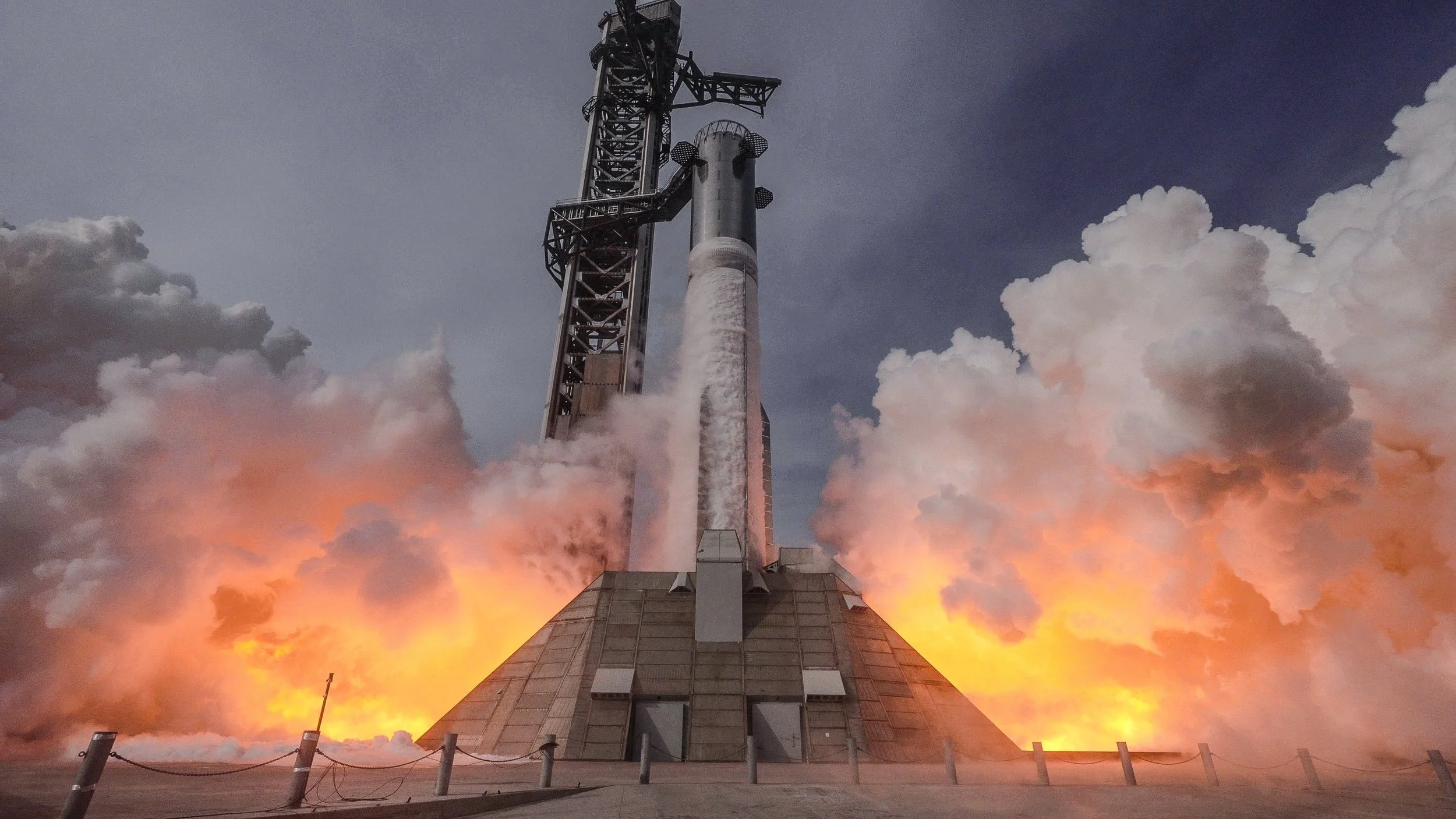
SpaceX has just pushed Starship Version 3 through its most intense ground tests yet. The first V3 booster completed a full 33-engine static fire after an initial 10-engine run, while the upgraded ship design cleared key orbital milestones in simulation and early checkouts. These tests highlight a system built for propellant transfer in space—the missing link that makes Moon landings routine and Mars missions practical. The scale, the simplifications, and the rapid learning loop show exactly how a company scales from small rockets to solar-system capability without breaking the laws of physics.
Key Takeaways
Starship Version 3 represents a clean-sheet redesign that directly fixes reliability and performance issues from earlier versions, enabling the booster to support crewed lunar landings and the first Mars city.
Raptor 3 engines feature massive simplification—fewer parts, higher integration, and improved reliability—making them cheaper, faster to build, and lighter while maintaining reusability on the level of commercial aircraft engines.
Testing follows a deliberate risk-reduction strategy: 10-engine static fires first on the new V3 booster to contain any problems before committing to a full 33-engine burn.
Orbital propellant transfer is the core technology that unlocks the entire solar system; once demonstrated, Starship can refuel in orbit and reach anywhere.
SpaceX's iterative flight-test approach delivered a successful booster catch in just five flights, proving the rapid cycle of hardware improvement and data-driven fixes.
Full reusability of both the booster and ship is the economic foundation for frequent, affordable access to orbit and beyond.
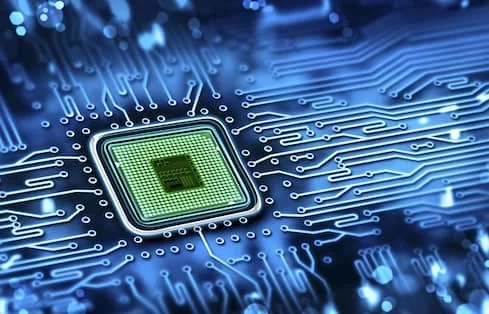
Elon Musk Just Made the Bet of the Century on Chips
Securing the entire AI supply chain with triple redundancy as Taiwan tensions escalate
The global chip industry faces its most precarious moment in decades. Advanced semiconductor manufacturing is concentrated in the hands of just three companies, one of which sits on an island 100 miles from mainland China. At the same time, demand for AI accelerators, robot brains, autonomous vehicle processors, and space-based compute is exploding faster than factories can keep up. Against this backdrop, Tesla, SpaceX, and xAI have executed an unprecedented series of moves that lock in capacity across every major foundry while building a fully vertical, US-based mega-factory capable of producing everything from raw silicon to finished AI chips under one roof.
Key Takeaways
Only three companies on Earth can manufacture the most advanced semiconductor chips below seven nanometers: TSMC in Taiwan (roughly 90% of global leading-edge output), Samsung in South Korea, and Intel in the United States.
Tesla, SpaceX, and xAI have secured dedicated production lines with all three foundries, creating triple redundancy for AI chips powering Full Self-Driving, Optimus robots, Grok training, and next-generation satellite constellations.
Terra Fab, a $25 billion vertically integrated facility on Tesla’s Austin campus, will handle the entire chip-making process—design, logic fabrication, high-bandwidth memory, advanced packaging, and testing—at massive scale, targeting 100,000 wafer starts per month initially and eventually scaling to one million.
An eight-year, $16 billion agreement with Samsung guarantees long-term capacity for the next-generation AI6 chip on the bleeding-edge two-nanometer process at Samsung’s new Taylor, Texas fab, just miles from Tesla’s Gigafactory.
US government backing through the CHIPS Act gives Intel roughly 10% public ownership, aligning national security interests with the success of the domestic foundry now partnering on Terra Fab.
AI chip demand currently runs three times higher than available supply, while high-bandwidth memory prices are projected to surge 130% through 2027, making secured capacity a decisive competitive edge.
This strategy delivers strategic insurance against potential disruption of Taiwan’s chip output, which military analysts project could trigger a $10 trillion global economic hit—worse than the 2008 financial crisis and COVID-19 combined.

Why Elon Musk May Reshape the 21st Century More Than Any Innovator Before Him
One person advancing seven major industries at once – while the same kind of backlash that hit Edison, Jobs, and Lincoln plays out in real time.
The conversation around Elon Musk stays stuck on personality, politics, and headlines. Yet the measurable outcomes tell a different story: a single entrepreneur has forced global automakers to electrify, slashed space-launch costs by 97 percent, deployed thousands of satellites for internet access in remote regions, and built AI, brain interfaces, and humanoid robots that are already moving from labs to real-world deployment.
History shows this pattern repeatedly. Visionaries who bend entire civilizations get hated in their own era and celebrated later. Musk’s work sits at the widest gap yet between current perception and actual impact – and that gap is closing fast.
Key Takeaways
Musk’s companies are simultaneously transforming seven industries: automotive and energy storage (Tesla), space launch and satellite communications (SpaceX and Starlink), frontier AI (xAI), brain-computer interfaces (Neuralink), and humanoid robotics (Optimus).
SpaceX reduced the cost of reaching orbit from roughly $65,000 per kilogram to about $2,700 – a 97 percent drop – while launching more mass to orbit than every other entity on Earth combined.
Tesla produces over 1.8 million electric vehicles annually and has pushed every major automaker toward full electrification; its Full Self-Driving software is already operating unsupervised in select cities, targeting millions of autonomous robotaxis.
Tesla’s Megapack energy-storage business now delivers higher gross margins than its vehicle side and is scaling grid-scale battery systems worldwide.
The companies form a single flywheel: AI trained on driving data powers robots, battery tech supports rockets, satellite internet connects everything, and each breakthrough accelerates the others.
Personal stakes have been extreme – repeated near-bankruptcies in 2008 and 2018, 120-hour workweeks, and every dollar of early wealth reinvested into high-risk ventures – mirroring the obsessive drive seen in every historical figure who redefined an era.
Long-term civilizational gains include fewer road deaths, accelerated clean-energy transition, abundant low-cost labor through robotics, restored mobility via brain implants, and the infrastructure for multiplanetary expansion.
Today’s polarization focuses on the person; tomorrow’s record will focus on outcomes that change daily life at planetary scale.

The 5 Levers That Unlock Million-Dollar YouTube Success
How to turn scroll-stopping ideas into sustainable revenue machines on the world’s biggest video platform
Creating content that consistently racks up millions of views and generates substantial revenue isn’t about luck or viral miracles. It’s the result of a deliberate system that aligns with how viewers decide what to watch and how platforms like YouTube prioritize recommendations. By focusing on five foundational principles, creators can dramatically increase their click-through rates, viewer retention, and long-term earnings.
Key Takeaways
The quality of the core idea determines everything—make it so compelling that the thumbnail and title almost write themselves.
Thumbnails and titles must stop scrolls instantly by being visually distinct and promising high intrigue or shock value.
The opening seconds must immediately fulfill the viewer’s expectation set by the title and thumbnail to boost retention signals.
Deliver fresh insights and entertainment that respect the audience’s time, targeting viewers who stay engaged longer and attract higher ad rates.
Anchor your content in genuine passion to sustain the long hours and emotional ups and downs required for mastery and consistency.
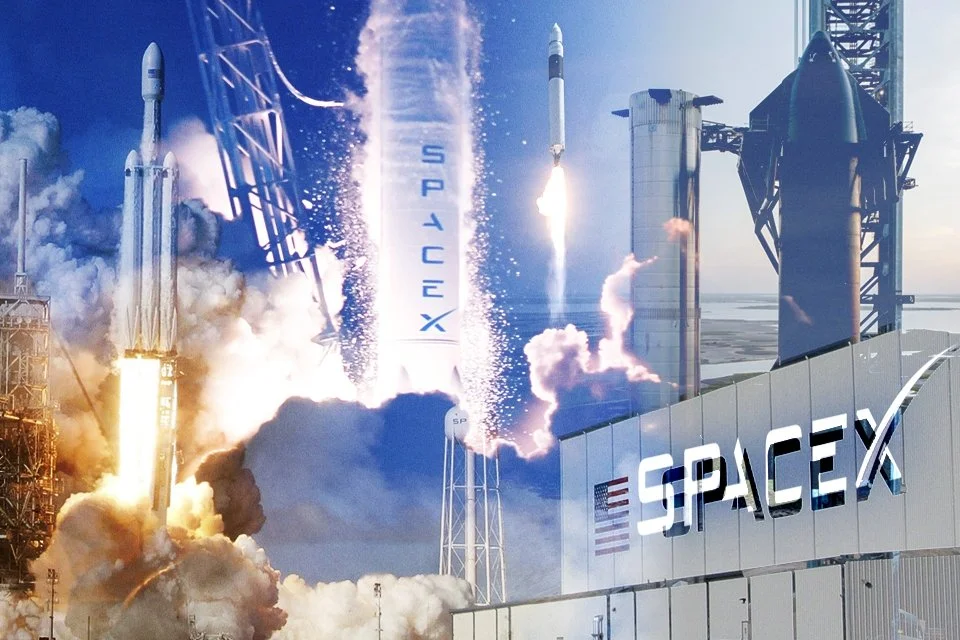
SpaceX at $2 Trillion: The Rocket Company That's About to Reshape Everything
Starship's cost revolution, Starlink dominance, and the potential Tesla merger signal the dawn of a multi-trillion-dollar space and AI empire.
SpaceX's confidential filing for a roughly $2 trillion valuation isn't just big news for investors. It marks the moment a private rocket company becomes one of the most valuable businesses on Earth, potentially raising $50–75 billion in the largest IPO in history. The numbers tell only part of the story. This is a company that already controls the majority of commercial launches, runs the world's largest satellite internet network, and is preparing to open entirely new frontiers in orbital computing, manufacturing, and global logistics through Starship.
Key Takeaways
SpaceX now handles 82% of the global commercial launch market and completed 165 Falcon 9 missions in 2025 alone.
Starlink has grown into the company's main business, with more than 10,000 satellites serving over 9 million paying subscribers and generating roughly $10–12 billion of the company's $15–16 billion total revenue last year.
Starship targets launch costs of $10–100 per kilogram to orbit—30 to 300 times cheaper than today's Falcon 9—through full reusability of both stages.
The economics unlock orbital AI data centers, space-based pharmaceutical and materials manufacturing, point-to-point Earth transport in under 45 minutes, and space solar power systems.
A $25 billion joint chip fabrication plant with Tesla and xAI already under construction in Texas will devote 80% of its output to space and orbital applications.
Merger speculation with Tesla could combine EVs, humanoid robots, AI training infrastructure, global satellite communications, and reusable rockets into a single vertically integrated entity.
The IPO would create thousands of new millionaires among employees while opening ownership to everyday retail investors for the first time.
The move strengthens U.S. strategic positioning in the renewed space race against rapidly advancing international competitors.

The New Luddites: Why Banning AI Data Centers Hands the Future to Rivals
History's lesson is clear—restricting the machines never stops disruption. It only exports the gains.
The push to halt AI infrastructure in the United States echoes a 215-year-old pattern that has played out across cars, nuclear power, and genetically modified crops. While energy demands and job shifts from AI are very real, attempts to pause the physical backbone of the technology have never protected workers or economies. They have simply moved progress to places willing to build faster.
Key Takeaways
The original Luddites were highly skilled English craftsmen who targeted exploitative machines, not technology itself—yet government force crushed their movement while the Industrial Revolution still transformed Britain.
Four major historical cases show the same outcome: Red Flag laws slowed British autos for decades, American farmers eventually embraced cars and tractors, U.S. nuclear construction stalled after Three Mile Island only for data centers to revive it, and EU GMO restrictions left farmers dependent on imports.
A U.S. moratorium on new AI data centers would not pause AI development—it would redirect massive training runs to China, the UAE, Singapore, and other nations racing to host them.
AI exposes far more tasks to automation than past technologies, but the real challenge is accelerating displacement outpacing new job creation since the late 1980s.
Long-term success has always come from policies that distribute gains—worker protections, retraining, and productivity-sharing—rather than banning the infrastructure.
Tech leaders who deploy AI today report massive efficiency gains, suggesting the difference lies in adoption strategy, not the technology alone.